(Unsplash/jebin ephrimraj)
by The Life Panelists
Consecrated life is not exempt from fear. There are times when it settles within us, making us question our decisions, our abilities, and even the path God is calling us to follow. Yet it is often in those moments of uncertainty that the Spirit moves most gently, opening unexpected doors, giving courage, and leading us forward one step at a time. This month, sisters reflect on those moments by responding to the question:
Have you ever felt "locked in" by fear or doubt, only to be surprised by the Spirit's guidance or encouragement? What happened, and how did it change the moment?
Sr. Grace Akunna John-Emezi is a member of the Congregation of the Handmaids of the Holy Child Jesus, an international congregation. She grew up in a Catholic and Anglican house in Nigeria. She works as a hospital administrator. She is a health care leader in public health advocacy, particularly breast cancer awareness by encouraging early detection, educating communities and building referral networks. She is passionate about women's health and leadership development among religious women, empowering others through education and compassion.
The transition from the Ascension to Pentecost is the most profound in-between space in our spiritual lives. At the Ascension, we stand with the apostles on the Mount of Olives, gazing upward. Our Beloved has returned to the Father, and while we are filled with hope, there is an undeniable sense of suspension.
I have often found that my own Upper Room is not just a place of prayer, but sometimes a citadel of my own making. There have been periods in religious life where the weight of my apostolate and my community have become thorns in the flesh, pushing me to lock the doors of my heart. I tell myself that I am protecting the flame, but in reality, I am hiding from the wind.
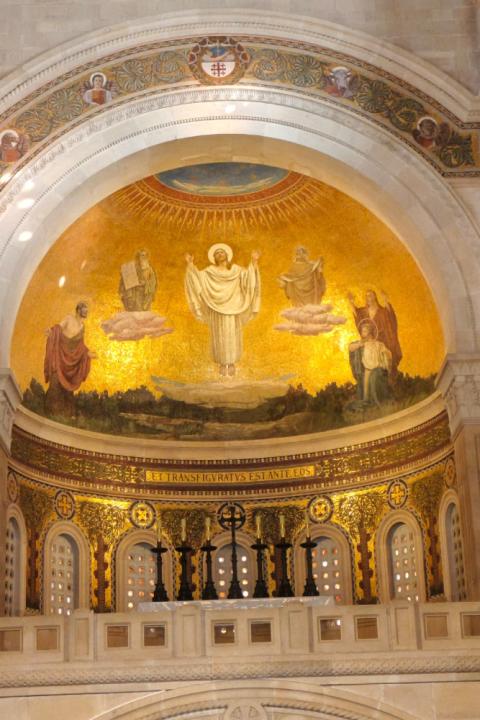
The Church of the Transfiguration on Mount Tabor in the lower Galilee region of northern Israel is pictured Jan. 23, 2026. (Courtesy of Grace Akunna John-Emezi)
I remember a period when I felt "locked in" by a deep sense of inadequacy regarding a mission I had been assigned. The fear was real. I felt like the disciples behind those heavy oak doors in Jerusalem, terrified. The surprise of the Spirit didn't come through a grand manifestation or a sudden influx of resources. It arrived through a local woman named Monica, who walked several miles in the heat just to bring me a small bag of garden vegetables. When I opened the door, I was ready to apologize for not visiting, but before I could speak, she took my hands and said, "Sister, your light in the window at night is how we know God has stayed with us in this village."
During a moment of quiet adoration in the chapel, the surprise did not come as a whirlwind, but as a quiet interior shift. It was an ascension moment with a gentle voice that said to me, "Stop looking at what you have lost or what you lack, and start looking at what I am about to do."
I was afraid, but also curious. The Spirit didn't show me the future, but gave me the courage to take the first step. That was my miracle of Pentecost. It didn't just comfort me in the chapel; it compelled me to step out in faith.
This is my daily Pentecost: allowing the Spirit to unlock the parts of my heart I've shattered, so that I may step out and speak the language of God's love to a world waiting to hear it.
Sr. Jean Flannelly, a Sister of Charity of New York, holds a doctorate in clinical psychology from Fordham University, a master of theological studies from Weston Jesuit School of Theology and a certificate in spiritual direction from Hesychia School of Spiritual Direction. She has devoted much of her ministry to preparing both lay and ordained individuals for church service. Previously a pastoral associate for faith formation, she managed liturgy, spirituality and faith formation in a large urban parish. Now based in rural New York, she continues her outreach to underserved communities, bringing spiritual guidance and support to those in need.
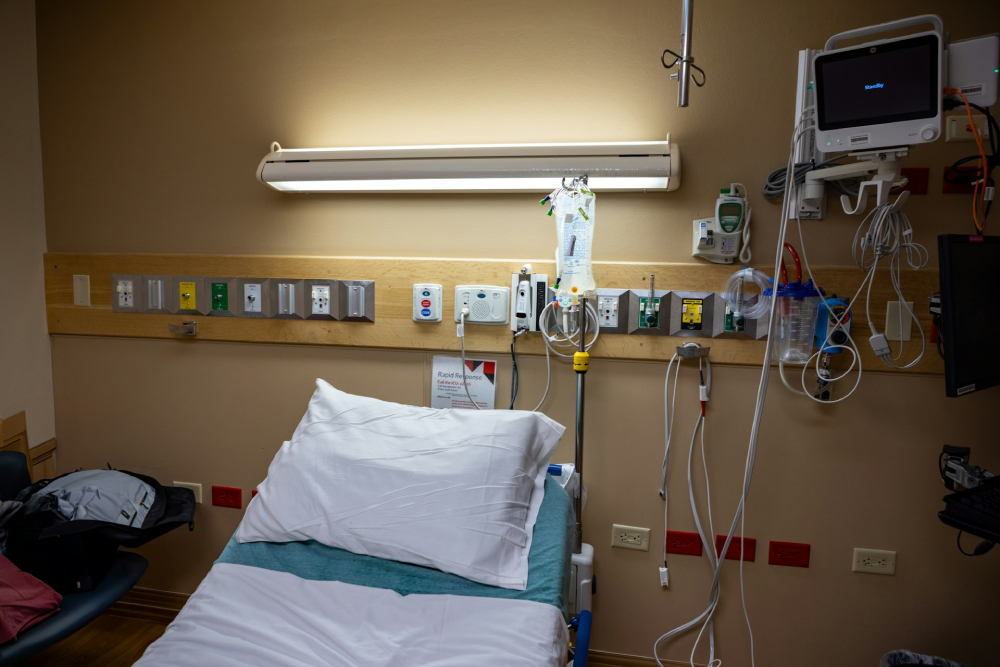
It was to be a routine clearance procedure for my aortic valve replacement. Nine years prior I had had the same one, an angiogram. Cardiac doctors and nurses do them all the time. The cards were stacked in my favor: competent and experienced professionals, common procedure and prior positive experience. Why, then, was I so anxious?
Maybe it was the feast — All Souls Day. That and the one before, All Saints Day, focus on death, but not with a negative lens. The Mass readings and prayers console us with proclamations of God's love and compassionate care. But the blanket of anxiety which engulfed me was armor preventing any good news from entering.
(Unsplash/Judy Beth Morris)
Before long, I was in the cardiac holding area, all-prepped for the operating room. Out of nowhere, an interior voice said, "Let me take care of you!" On hearing these words, peace penetrated the armor and embraced me.
The scientist in me tended to dismiss it as the result of anxiety and an overactive imagination. Or maybe the explanation could have come from my elevated anxiety level conflated with a nurse's voice urging me to relax and let her take care of me. But I am more than a scientist!
I am convinced that the Lord was behind this powerful message. It's consistent with our faith in a provident, loving God and its effects were discernable. Accepting this message, how do I incorporate it into my daily life? It's no magic wand that banishes anxiety. Like all beliefs we cherish about God, they need to be nurtured and stirred up when immediate experience challenges our faith and trust in God's presence and love for creation and for each of us.
An equally important learning from that special encounter was learning to surrender to belief in God's undeserved care for me. This learning is a slow process because as women and men of the 21st century we have a love affair with control.
In surrendering to God's care, we find that the discomfort, in whatever form it takes, dissipates. But the choice to surrender involves more than feeling better. If we stop when the discomfort dissolves, we are more than likely using "God" as a psychological crutch to make us feel better. Good therapy, poor theology!
The voice and the invitation are real. The other side of surrender is leaving ourselves open to where God wishes to take us. An appropriate prayer for this and other whispered invitations is, "Lead me Lord, where you want me to be!"
Sr. Mary Lilian Akhere Ehidiamhen, from Nigeria, is a member of the Sisters for Christian Community. She is a certified trainer on nonviolent communication with the Center for Nonviolent Communication in Austin, Texas. She majored in theological ethics with specific interest in social and peace ethics from KU Leuven in Belgium. Her ministry focuses on how nonviolent communication can contribute to Catholic Social Teaching on peace. She is currently teaching religious education at St. Ignatius College in Enfield, London.
One of the moments I have felt the Spirit's guidance in my life was when I was at a crossroads of making the decision to leave my former religious community. The reason for the decision was because my need for meaning, community, spirituality and contribution was not being met there. After careful research and a period of prayerful discernment guided by the Spirit, I was able to make an informed and sustainable decision that led me to my present religious community, where I am meeting these needs. The decision was not easy because of fear and the social stigma involved in stepping out of a community that identifies itself with the religious habit to a community that does not. I am from Nigeria, where the religious habit is seen as an essential part of religious life.
In Nigeria, there is significant focus on the external identity of a religious rather than the inner well-being of the person. The habit comes with significant privileges, honour and respect. Consequently, it can be difficult to step out of such an identity because of fear of being looked down on, lack of courage to begin again and lack of support from society.

(Unsplash/Melvin)
However, through the guidance of the Spirit in my discernment, the support of friends and understanding from my family members, I was able to make the decision and moved to my current community. The Spirit of God dwells in us to guide us and, at the same time, support us through others. Being in touch with one's needs and remaining open to the spirit is very important in making important decisions and living a meaningful life. When a person is connected to their needs and remains open to the Spirit, there is no fear of what people will say or how to survive beyond the status quo. My focus is on meeting my need for meaning, spirituality, community, and contribution because in them lies my life's energy, not in external approval.
Today, I celebrate the courage to follow the direction of the Spirit which allows me to live my religious life as a Sisters For Christian Community. The community is giving me the space to become the best I can be, as we are always in the process of becoming. I am contributing to the Church and society in a manner that makes sense to my understanding of what it means to be a human being in interdependence with others. One interesting thing about SFCC is that we do not take up a separate identity from the community where we live and serve. We live among people like the hidden yeast, birthing a new understanding of the reign of God.

Sr. Kum Shallotte Bi is a member of the Holy Union Sisters, an international religious congregation. She began her ministry as a teacher of mathematics and religious studies in secondary school before pursuing a career in nursing, driven by a deep passion for healing and compassionate care. Over the years, she has gained experience in leadership and clinical practice across maternity, surgical, medical and emergency units. She currently serves as a nurse anesthetist and head of a health facility in Baba I, a rural, conflict-affected area of Cameroon. Her mission focuses on improving maternal and child health through community empowerment, advocacy and enhanced service delivery.
There are moments in life when fear does not shout; it whispers. It settles quietly into the heart, disguising itself as prudence, humility, loyalty, or even responsibility, and sometimes it competes with the Holy Spirit in subtle ways. I vividly remember one such moment when I felt paralyzed by fear and doubt, convinced that speaking my mind would attract opposition while leaving me to stand alone.
It all happened after I completed high school, during a period of discernment about my future. It was then that I encountered the Holy Union Sisters in Bafoussam, a city in the western region of Cameroon. Each time I met the sisters, whether during Holy Mass or choir rehearsals, I felt an irresistible attraction to their way of life. This inner pull gently persisted. At first, I did not understand what it meant, but gradually I came to recognize it as a call to which God was inviting me to follow him in religious life. I remained trapped in fear, unable to share this desire with anyone.
Advertisement
One day, moved by grace, I gathered the courage to approach one of the sisters. When I expressed my desire to visit their community, I was surprised by the warmth and joy with which they welcomed me. I began visiting regularly, asking many questions. With patience and generosity, they shared both the beauty and demands of their vocation. They spoke honestly. They explained that as Holy Union Sisters, they did not live only for themselves. Their personal income was shared for the common good. They embraced a life without biological children. They lived in obedience, ready to be sent anywhere, whether the mission was joyful or difficult. These realities deeply unsettled me, but despite my fears, the desire to follow this path remained strong. And after a period of reflection, I told the sisters I was willing to try.
Then came the question that brought me face to face with my fears: "Have you told your family?" I had completely avoided that conversation with my family. I knew it would not be easy. My family had invested in my education and had hopes for my future. Becoming a religious sister felt like a betrayal of their sacrifices. When I asked the sisters whether my family must know, they simply answered, "Yes." That "yes" felt like a locked door. I was torn between loyalty to my family and fidelity to what I believed God was asking of me.
For a long time, I wrestled with fear, doubt and guilt, yet the inner fire did not go out. There came a point when I could no longer resist. One night, with a trembling voice, I shared my desire with my family. Everything I feared became reality: opposition, mockery, discouragement and misunderstanding. Surprisingly, however, beneath it all I felt a deep sense of peace. I had spoken my heart.
(Unsplash/Sophia Kunkel)
The day finally came for me to leave home and begin formation. I felt an overwhelming sense of loss and uncertainty. My family's negative words re-echoed in my mind and fear gripped my heart. One piercing question probed my mind: "What if I am making the biggest mistake of my life?" Then a spark of hope and courage stirred in my heart: "There is no harm in trying." If I succeed, good and fine; if I do not, at least I will not live in regret for not taking the chance. With trembling faith but firm determination, I took a leap into the unknown.
Looking back, that decision changed everything for me. I have experienced great joy and grown in ways I would have never imagined. I have loved deeply, served generously and encountered lives that have shaped my own. Today, those who once opposed my decision have become my greatest supporters. What strikes me most was the transformation within that decisive moment. Fear did not disappear, but it lost its power over me. The Holy Spirit provided enough light for the next steps. I came to understand that fear can be an invitation to deeper trust, and the Spirit sometimes shows up as persistence.
Many of us may know what it means to feel "locked in," facing decisions clouded by fear and doubt. In such moments, we often wait for clarity or confidence. I believe we can move forward despite our fear, trusting that God is already ahead of us. Beyond the very fear that holds us back, lies the life God is calling us to embrace courageously.
Sr. Sherly Thomas, a member of the Sisters of St. Joseph of Lyon, was born in Kerala, India. Deeply committed to the mission of justice, peace and care for creation, she has dedicated her life to empowering marginalized communities through education, livelihood initiatives and social awareness programs. Her ministry includes accompanying the vulnerable — migrants, scavengers (caste-based sanitation workers), LGBTQ+ individuals and survivors of human trafficking — toward dignity and self-reliance. Rooted in the Gospel and inspired by the charism of her congregation, Thomas strives to build inclusive communities where love and compassion transform lives.
There have been moments in my ministry when fear and doubt quietly closed in on me — when the challenges seemed too complex and the needs too overwhelming. One such experience stands out vividly during my mission in Assam. I used to visit a brothel area to reach out to women and children living in extremely vulnerable conditions. I still remember the hesitation within me as I approached that place.
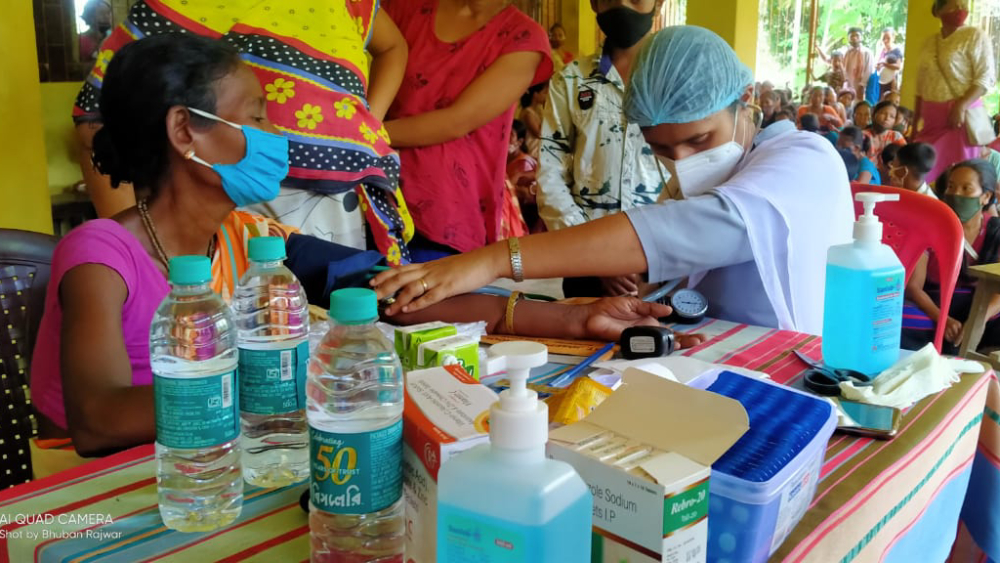
A medical camp in the brothel community of Silchar, Assam, India, provides health care, including medical checkups, counseling and health education, to women and other vulnerable residents. (Courtesy of Sherly Thomas)
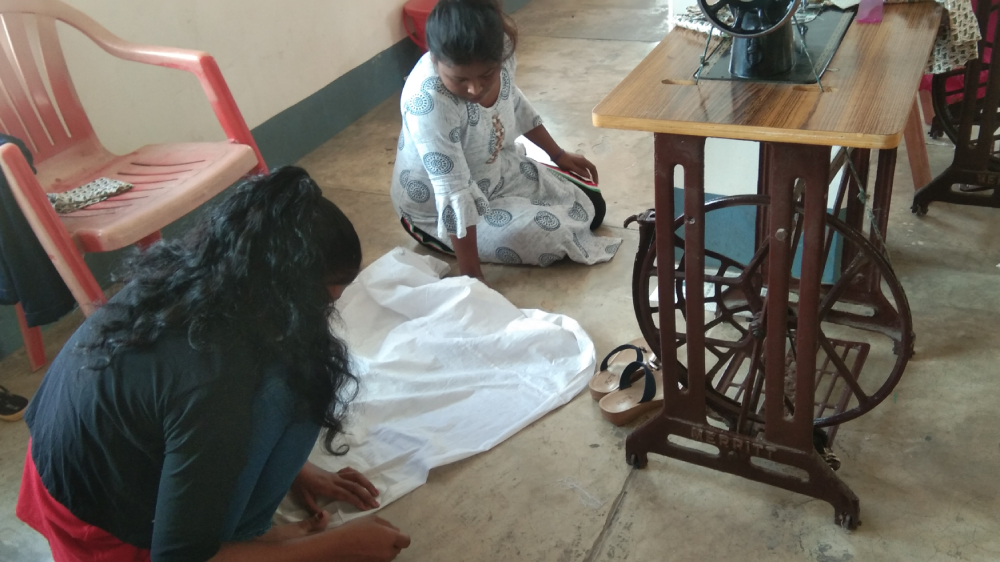
A skills training program for women and youth in the brothel community of Silchar, Assam, India, offers vocational training to build confidence and improve their livelihoods. (Courtesy of Sherly Thomas)
We were fearful because of the unfamiliar environment, but also because we didn't know how we would be received. The women, shaped by years of exploitation and mistrust, saw outsiders as a threat. When we first entered, there was visible tension. Some were defensive and even hostile towards us. At that moment, I felt unsure, and wondered whether our presence would do more harm than good.
I found myself wondering whether we were crossing boundaries and whether they would ever trust us. Or even whether we were truly able to respond to such deep wounds. Yet, in that uncertainty, something began to unfold. Instead of withdrawing, we chose to remain present. We decided to listen rather than speak and slowly saw the atmosphere begin to change. A few women started engaging in small conversations, their guarded expressions softened, because over time, they understood that we had not come to judge, but to affirm their dignity and seek a better future, especially for their children. What struck me was that the transformation began just with presence, with a patient accompaniment. I recognized the gentle work of the Spirit, opening doors that once seemed closed. Gradually, we began offering tutoring for children, tailoring programs for women, and medical camps.
This experience changed me. It taught me that fear often arises when we face suffering we cannot fix. But the Spirit does not ask us to fix everything, only to be present, and to trust that even small gestures of compassion can create the space for healing. Since then, whenever I face overwhelming situations, I remember that experience in Assam. What once felt like a closed and intimidating space became a place of encounter, where trust and dignity were reclaimed. I learned that the Spirit often works through the courage to stay, to listen, and to believe that even in fragile spaces, grace is already at work.