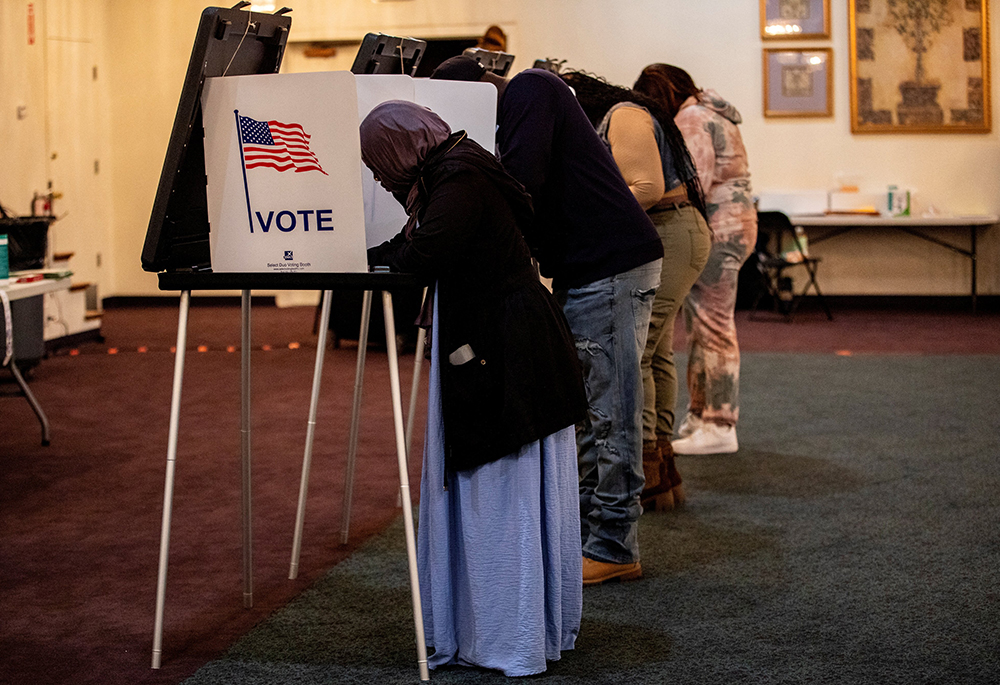
People vote at a church in Detroit during the U.S. presidential election on Election Day, Nov. 5, 2024. (OSV News/Reuters/Emily Elconin)

Within 48 hours, the U.S. midterm elections will be over. The intense campaigning we are experiencing in the coveted Michigan Senate seat will grind to a halt. The angry ads casting suspicion on the opponent's character, blaming and shaming a Muslim candidate through grainy pictures and dissonant music will cease. But will the hate?
And after the election, regardless of the winner, both candidates have the baggage of all those negative ads, which affects how we see them. I feel sick as I watch those ads and wonder what it is doing to me, to us, to those to whom it is directed.
What I know is that we are not immune to it. We know words, music and pictures can affect us in very physical ways.
Recently, a friend of mine said we need to let go of the word "hate." That intrigued me.
When we speak the word "hate" it puts a vibration in our field which spreads to everyone else. I likened it to the experience of being in a room having a great time when someone who is full of anger, disgruntled or known to be the bully enters. The atmosphere almost immediately shifts and people hunker down, and often that person takes over the conversation. Whereas the opposite is experienced when someone who is vibrant, friendly and kind walks in and contributes to the welcoming atmosphere of the group gathered.
I started thinking, how often does the word or feeling of "hate" arise in me and my speech? What words do I use, what expressions do I say about someone who doesn't agree with me? Am I conscious when I use the word "hate" and how I feel when I spit it out?
You might want to try a little experiment. Look into a mirror and say what you often say about a political candidate, or situation that you dislike. Watch what happens to your face? Your mouth? How does your stomach feel — tight, roiling? Are your neck and shoulders tight bunching up near your ears? What does your heart feel like?
Reflect on when you are in a group and someone begins a rant. What happens? Do more and more people begin to chime in? With each additional voice does the atmosphere get a little more intense? If someone dares to voice an opposing position, how is it received?
Advertisement
We need to get in touch with why we "hate" that person or that position. What does it mean? Do we really believe that about who or what we are talking about? Are there better terms to express what we're feeling rather than one which can roil our insides and help instigate more people to offer the same reaction?
Can we find ways to make our position known on an issue or a candidate that is less venomous and irritating? Will we be able to move forward regardless of who wins? Will we be able to look at the winner disconnected from the attack ads?
Can we make our voices heard, including dissent, in ways that won't hurt our bodies or contribute to the growing growl of hate?
It is important to become aware that what and how we do things affects us emotionally, physically and spiritually. That is both the material we bring to contemplation and its fruit.
As we enter into the quiet of our contemplative sitting and let go of all thoughts and emotions, allow the deep silence to penetrate to our center where Divine Mystery dwells. After the sit, continue to be still and attentive to what is arising within. Over time, something new might reveal itself; a new way of giving voice to our feelings.
We need new ways to be in this post-election time when wounds need healing. Let our words and attitudes release tensions and allow energy to flow freely like grace through us and into our world.