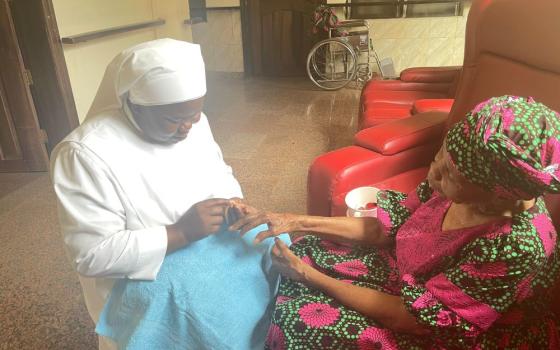
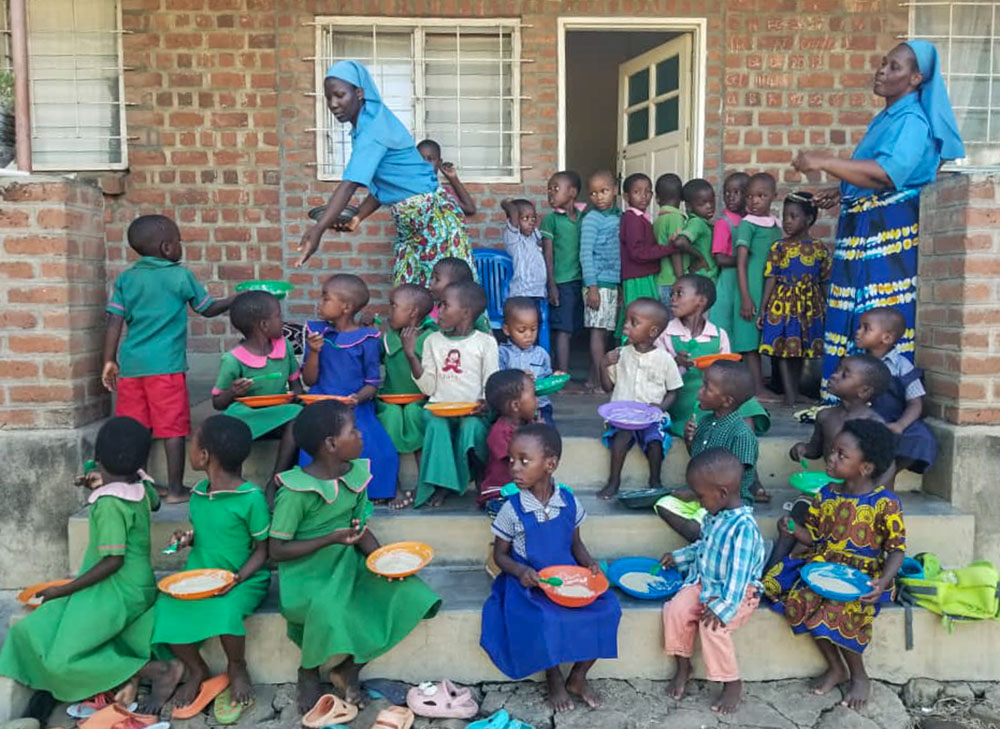
The Presentation of the Blessed Virgin Mary Sisters' convent shares food and resources for poor and marginalized families in Dedza, Malawi. (Courtesy of Jacinta Chiwayu)
by Sr. Jacinta Chiwayu
I live in Dedza, Malawi, in Eastern Africa. Our country is small and our economy is very poor. The last few years we have experienced drought and cyclones that destroyed homes and land. Many crops that were planted in recent years wilted, and families were left without food.
Because our Presentation mission is caring for orphans or children who come from poor families, we felt called to do something about this. So, as a response to Luke 10:37, where Jesus sends disciples to show mercy and compassion to others, we sisters decided to go the extra mile out to the poor and marginalized families of our area.
Even though we did not have much ourselves, we decided to share what we did have — maize. We made a kind of cereal, a mixture of maize flour and sugar. We packaged the mixture into individual servings and began going once a week from village to village to set up distribution points for those who needed food.
As we moved from place to place, along with sharing food, we also shared God's word and prayed together with the families. However, we soon discovered that the situation of the people in the villages wasn't as simple as we thought. Some of the people we met had challenges beyond our reach.
Advertisement
The first house we entered in our travels, we found an old woman who lived alone in an unroofed house along the lake shore of Chipoka. She openly shared her worries with us about what happens to her in the rainy season. Without protection in the rain, she can only cover herself with plastic paper until it stops. Then, she needs to remove the pools of water surrounding her to make a place to sleep. We could only imagine her many sleepless nights during this season.
Another very painful time she told us about was the wind season. The dust and dirt fly around freely, so that any food and water she has stored in the corners of her house become filled with the debris that falls from the sky and comes through the windows. She was also without any means of sanitation. Such living conditions mean that sickness was never far from her.
Unfortunately, she was not alone in these sufferings. We found many people without sanitation. Some were drinking water from the shallow wells where animals drink. Many people had died from cholera when the cyclones hit us. All of these stories we heard disturbed our hearts and touched us deeply.
Going from village to village, we met children wandering on the roads, seeking love, consolation and food. Some told us the only way to survive was stealing, sometimes food and sometimes money to make a living for themselves. We were choked up with the questions they asked us: Where is God? Why did God create us?
Many of them begged us to take them to an orphanage, but we did not have any. It was a helpless feeling for us as well.
We also met many dropouts from school who could no longer afford to pay fees or they had no food at home and were too hungry to study. Some told us they were getting up early each morning, going about seeking work in exchange for food. Children were often sent out by their families to search for food on their own. It was terrible to see these children and to hear their stories.
Flooding in 2023 left many families' land unable to be cultivated even up to now. Malnutrition has become too common and people then suffer from sickness and need hospitalization that they cannot afford.
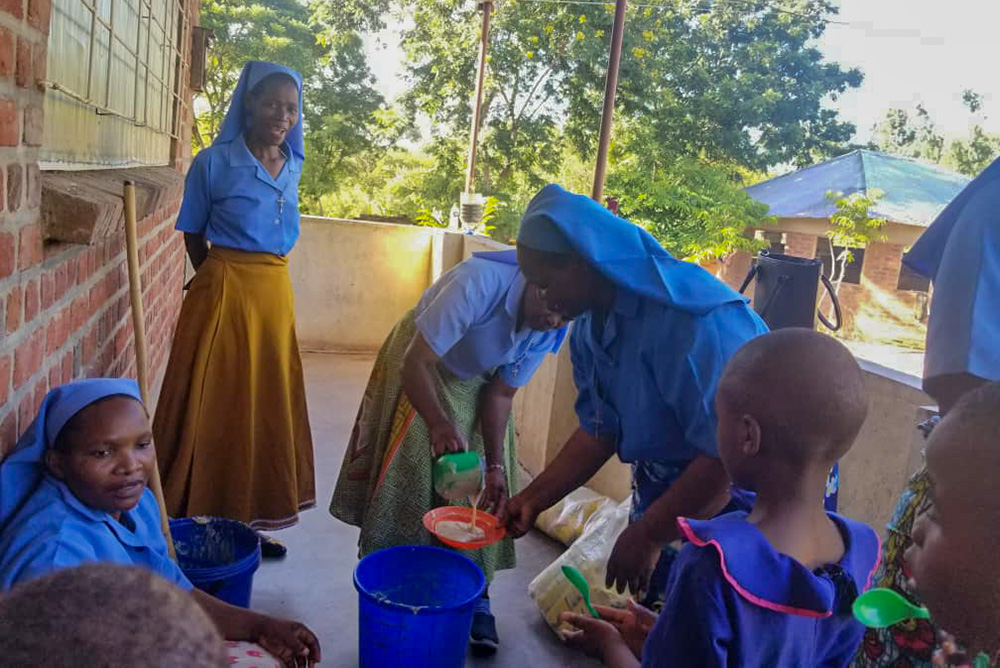
The Presentation of the Blessed Virgin Mary Sisters' convent shares food and resources for poor and marginalized families in Dedza, Malawi. (Courtesy of Jacinta Chiwayu)
We also decided to visit some families in our own town of Dedza. Here, we met widows and widowers who had been abandoned by their families and were now living alone in very poor houses. One widow was heartbroken. She had seven children who had all died because she could not feed them. She had tried to find work, but was often not paid enough for one day of food. We brought them porridge when we could, but we did not have resources to keep feeding them day after day.
We found one group of extended family members who had decided to live together. There were four siblings who all had children. Supporting one another, they have been able to start small businesses that provided them with daily food. Their big disappointment was they cannot earn enough to send their children to school. People value education because they know it is the only way out of poverty. It is painful to parents to realize that because of this, another generation of poverty will continue on.
We learned so much from our decision to have the feeding program. We became more deeply aware of the communities' and families' struggles around us. Yes, the people we visited, prayed with and shared food with were grateful and eagerly waited for each visit, but we too are grateful that they shared their stories with us and that we had a few resources so we could share.
However, we also realize that the poverty around us is much greater than we imagined and we wonder how long our small efforts can last. Our world is not at peace and we hope that as Presentation Sisters we can bring some comfort to the poor and destitute.