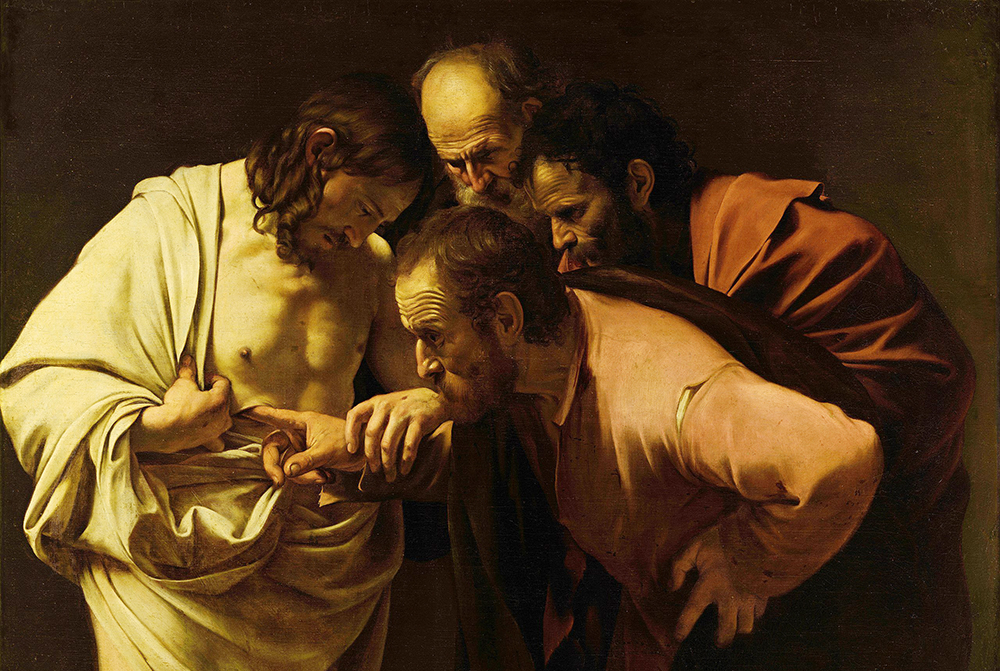
Michelangelo Merisi da Caravaggio's "The Incredulity of Saint Thomas," c. 1604 shows the moment the apostle Thomas came to believe in the resurrection of Jesus Christ. (OSV News/Wikimedia Commons)

by Consuelo Vélez
Editor's note: Welcome to Theologians' Corner, where each week a different woman theologian from around the world offers a fresh reflection on the Sunday readings.

Fifth Sunday of Easter
May 03, 2026
We continue in the Easter season, and the Gospel of John places us squarely in the dynamic of faith. Jesus himself asks his disciples to believe in God and to believe in him. As they do, their anxieties, fears and worries begin to fade. That is why Jesus tells them, "Do not let your hearts be troubled." The reason is that Jesus presents himself as the one who opens the door to salvation, expressed in the image of someone who goes ahead to prepare a place for us — a place he will lead us to. That place is none other than the Father's house, that is, life with God.
Even more, Jesus tells them that they already know the way. But Thomas responds that they do not know where he is going and, therefore, do not know the way. It is here that Jesus reveals himself as "the way, the truth, and the life" — the way to the Father, because he is the one who reveals the Father. Whoever knows Jesus knows the Father.
The Gospel account continues by showing the disciples' doubts. This time it is Philip who asks Jesus to show them the Father, and that will be enough. Jesus, with a tone of gentle reproach, says, "Have I been with you all this time and you still do not know me?" In other words, Jesus' works reveal the Father, and they have been witnesses to those works. Jesus has not acted on his own. He has done the works that God wills because he lives in perfect communion with his Father. Jesus keeps urging them to believe in him, in the Father, and in the communion of life they share.
Advertisement
This Gospel can challenge us when we find ourselves repeatedly asking how to follow Jesus better, what God's will is, what we should do, and so on. These are important questions because they show a willingness to be open and to live with greater commitment. At the same time, they can sometimes distract us from what we already know — from what Jesus has revealed through his words and actions, which we have yet to put into practice.
The Father's will is clearly expressed in the way Jesus lived and acted. The call is to live as he lived and to do the works he did. If we enter into that pattern of following Jesus' life, we will do greater works than he did — not in terms of greater grandeur or importance, but in our ability to respond to today's challenges with Gospel values, showing that the good news is just as powerful and relevant in our own time.