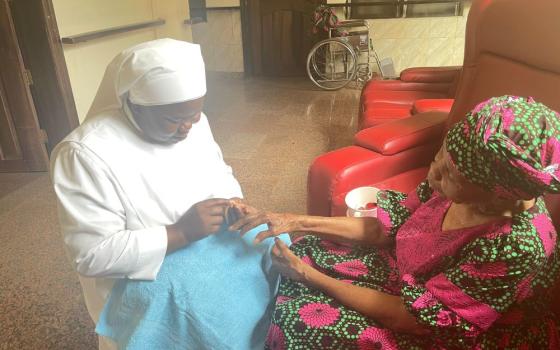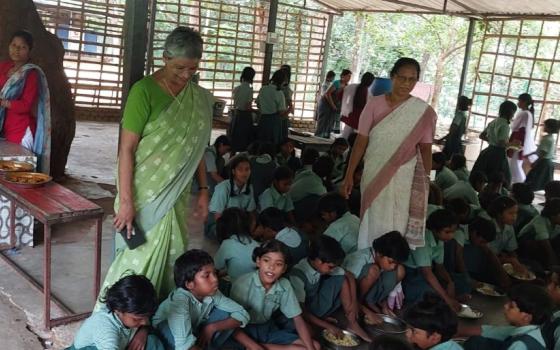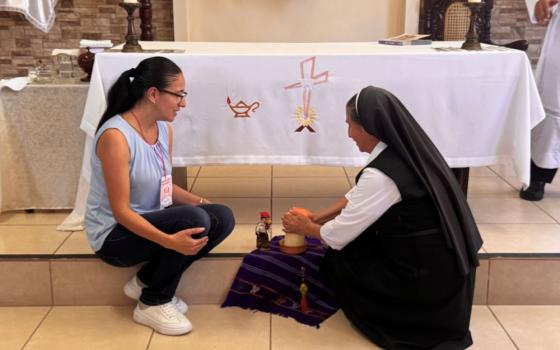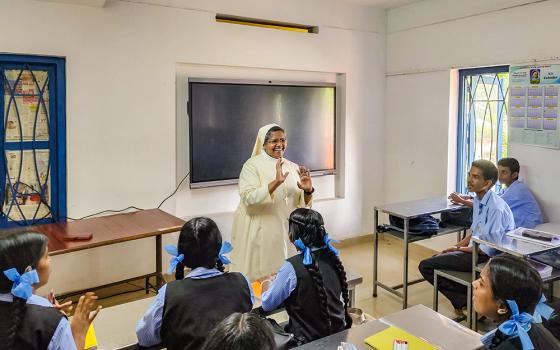
(Unsplash/Om Prakash Sethia)

Sr. Begoña Costillo
"Misericordia" is the monthly gathering that, for years now, has brought together more than 150 people of limited means at our monastery. We help them with food, clothing and other basic necessities, and we pray together. Our help is modest, simple, almost imperceptible when compared to the magnitude of poverty that pervades the city of Lima, Peru.
That Wednesday, like so many others, most of the sisters in the community, along with the volunteers who help us, were preparing for the gathering. Some were finishing up sealing the food bags, others were setting up chairs in the cloister to welcome those arriving. The hot chocolate we would serve for breakfast was being heated, and the biscuits were being placed on trays to be distributed. These are small gestures, but they require great love to have true meaning.
The goal is to let those who enter our home know that their lives are valuable and that they are loved and cared for by God. That they feel like people, dignified in their uniqueness, with all their history and their wounds. That they discover they are not bad people — something they have heard countless times throughout their lives. That we have seen many times the goodness of their hearts, their strength, and their humility. That they hear the word of God and experience his presence, his love and his providence.
It's all about something deeper than just delivering food, but we know that food is, in turn, essential to conveying that depth.
That Wednesday, that meaning became even clearer to me because it had been a year since I'd last seen them. My father was diagnosed last year with ALS (amyotrophic lateral sclerosis), a paralyzing and cruel disease that requires exhaustive and continuous care. I am fortunate to be available in such situations, and thanks to God and my community, I was able to go to Spain to accompany my father on this difficult stretch of the journey.
It has been a beautiful year, because God is clearly seen in those who love in suffering, as my father has done. It has also been a very hard year, because the extreme suffering of those we love invades our very lives to the core and wounds them. The extraordinary experience of going through this illness with my father would take a long time to recount.
Advertisement
He died in just under a year, leaving a legacy of humanity and love to the extreme that I am still coming to terms with. A few months later, I returned to Lima and resumed my journey here.
The intensity of this time has stayed with me. I carry it everywhere. The pain, the light, the compassion, the blood and the water, the gratitude, what I was able to give and what I kept to myself, the immensity of the good received, and an endless number of seeds that I cultivate as best I can, every day. This is how I live now, receiving it all in this inner soil that has just been sown and is still aching. This is how I awaited the encounter of mercy, after a year of absence, certain that I now owe myself to this mission and to these people.
That Wednesday, I walked toward the door with excitement, hoping to see familiar faces and embrace them sincerely. I wanted to convey through my gestures that essential meaning I spoke of earlier. I approached the entrance, where some sisters were checking in those who arrived. Upon seeing me, they welcomed me with great warmth.
Once we were seated in the cloister, waiting for breakfast, I was able to take a moment to settle in. Lucy, one of the women who receive food at the gathering, immediately came up to me and, before I could ask how she was doing, said to me: "Little sister, how much we have prayed for your father; I am sorry for his passing. How are you?"
The sincerity of her words was evident in her eyes. It wasn't just a polite remark. Lucy, who struggles every day to meet her most basic needs, who is full of problems and worries, who lives surrounded by poverty and illness — she had made room in her heart to remember me and pray for me. Lucy showed deep empathy toward me, as if what I had experienced were truly her own.
After her, many others spoke to me in the same way. With downcast eyes, a sad expression, as if they could feel the weight I carry.
They have within them a vast, empty space where they gather the tears and sufferings of others and, together with their own, humbly present them to God the Father.
Their words entered me like fresh water into a parched land. They let me know exactly what we try to convey to them: that my father's life, like mine, is valuable; that God is by my side; that I am capable of good, despite the shortcomings and failures I have had; that everything I have experienced is in God's hands and is saved in him; that we are only passing through here, and only the love we give and receive matters.
Then, I returned to the memory of caring for my father, to the difficult nights and his expression of pain. I returned to the wonder of seeing each morning his desire to keep loving in a thousand ways. I understood that, surely, much of the strength and light he had came from the prayers of Lucy, and of Pedro, of Alicia, of Maritza, of Juan, and so on.
It has been many of these "poor" people who, with their humble prayers and their remembrance, have sustained us. They, more than anyone, understand what pain and uncertainty, helplessness and extreme weakness mean.
They are poor in body, because they do not have enough to live on, and also in soul, because they have not accumulated inner security or riches. That is why they have within them a vast, empty space where they gather the tears and sufferings of others and, together with their own, humbly present them to God the Father. They trust in him above all things, and they know well that nothing is more important than living close to his love.
Once again, this truth becomes clear to me: that the kingdom belongs to the poor. We feel called by their need and go to them with a sincere intention. But we soon realize that we receive much more than we give, for they offer us the kingdom they possess.
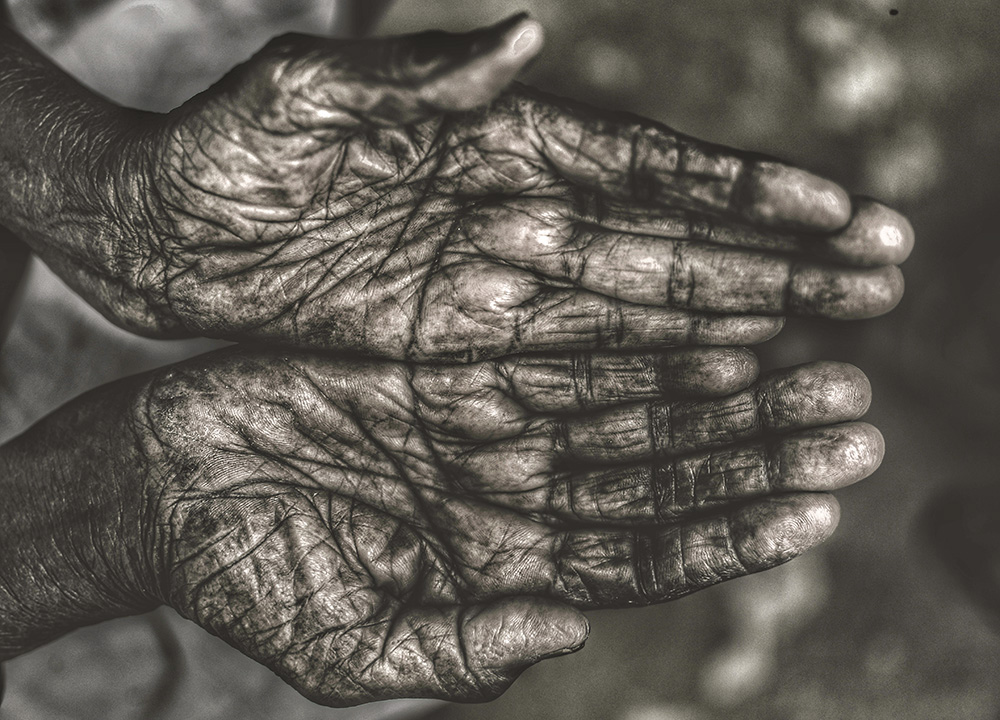
They come to us with empty hands, but they fill us with the truth that gives life to existence. They beg us for something to eat, for clothes, and in return, they nourish us with their faith. They weep with us over their sufferings, yet at the same time, they are the ones who pray for us with all their hearts. They ask us to teach them to believe in God, yet it is their lives that help us see the face of the Father, revealed to the simple.