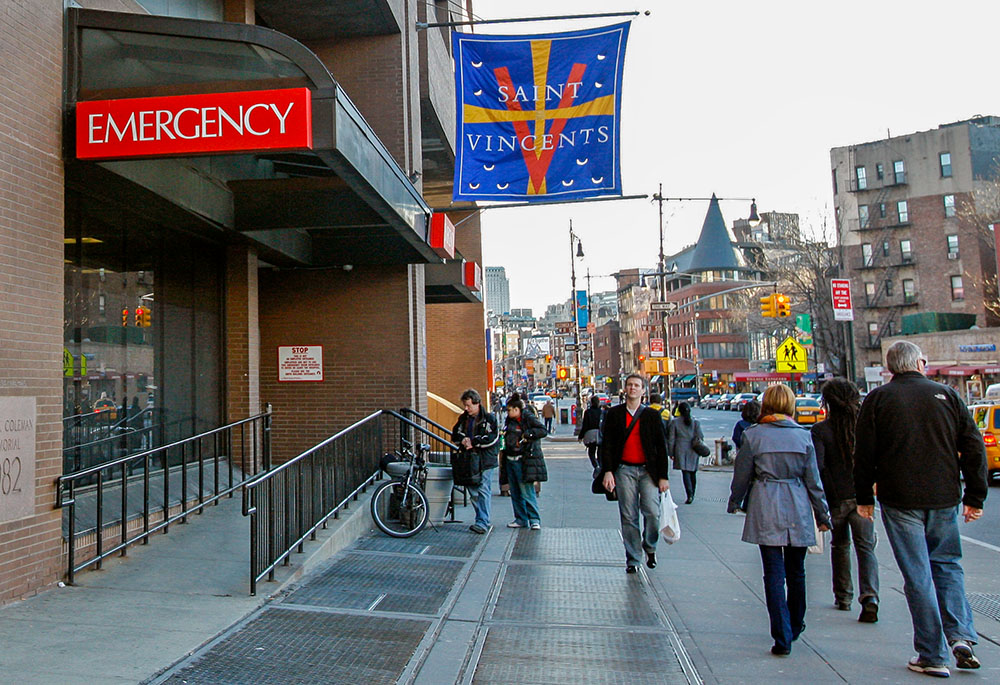
Pedestrians walk past the emergency entrance at St. Vincent's Hospital in New York, March 16, 2010. The 160-year-old hospital closed later that year. (AP/Kathy Willens)

by Michael J. O'Loughlin
NCR executive editor
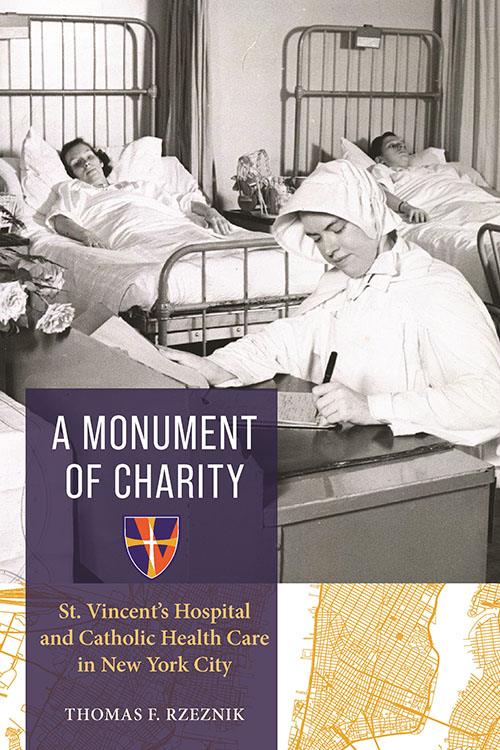
Even though New York City's former St. Vincent's Medical Center shuttered back in 2010, Seton Hall University historian Thomas Rzeznik says the hospital continues to provide important insights for other Catholic institutions today.

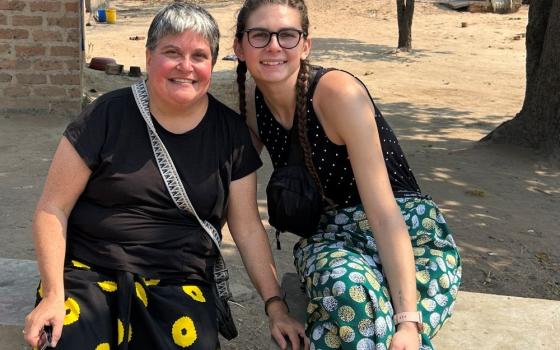
Thomas Rzeznik (Courtesy of Seton Hall University)
In a new book, Rzeznik chronicles the rise and fall of the storied hospital, arguing that its legacy touches on everything from the church's ongoing healthcare ministry to the role of women in the church. That's partly due to the unique role that individual sisters held in administering what was once considered a New York landmark, serving tens of thousands of New Yorkers in its hospitals and clinics each year.
"Catholic sisters were enmeshed in the power structures of the hospital at all levels, from working on the wards and working in the laundries and kitchens all the way up to the board of trustees, and later on serving as CEOs of healthcare institutions," Rzeznik told NCR in a recent interview about his book A Monument of Charity: St. Vincent's Hospital and Catholic Health Care in New York City.
Rzeznik, who is also a co-editor of the journal American Catholic Studies, said the history of St. Vincent's shows the unique role women religious have played in the church, and that the ways they navigated complicated dynamics in male-dominated spaces still provide insight today.
"This was a really remarkable pathway for women's advancement in a way that simply is not recognized," he said.
The Sisters of Charity of New York founded St. Vincent's Hospital in 1849, opening a 30-bed facility that from its earliest days served some of the city's poorest residents, particularly immigrants. Right upon opening, its physicians and nurses treated victims of a vicious cholera epidemic. In 1912, passengers rescued from the Titanic arrived at the hospital.
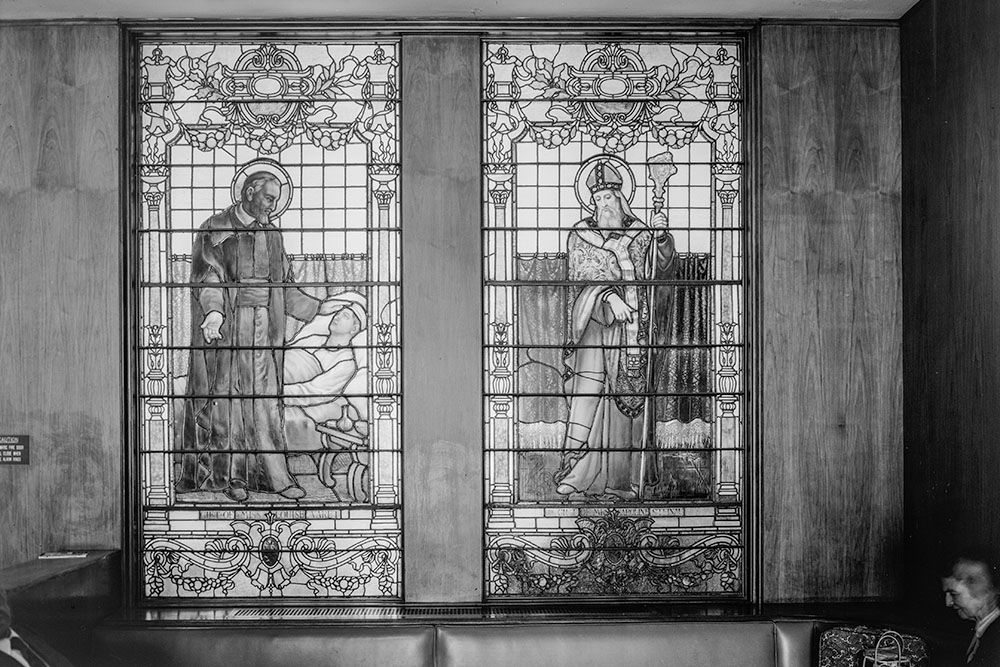
Stained glass windows are seen in St. Vincent's Hospital in New York City in 1933. (Wikimedia Commons/Library of Congress)
Because of its location in New York's Greenwich Village, St. Vincent's was one of the hospitals most affected by the HIV and AIDS crisis in the 1980s and '90s and, because of that, has been featured in a number of plays, films and books dealing with the epidemic.
Later, the hospital treated hundreds of patients following the Sept. 11, 2001, terrorist attacks on the Twin Towers, and as late as 2008 there were plans for modernization and expansion.
Rzeznik recounts a poignant scene in his book when, in the early months of 2010, some of the Sisters of Charity of New York who had been affiliated with the hospital had organized weekly prayer vigils in the hospital chapel. They even donated $100,000 from their own funds to help the hospital stay open, but with more than $1 billion in debt, the hospital needed many times that to stay afloat.
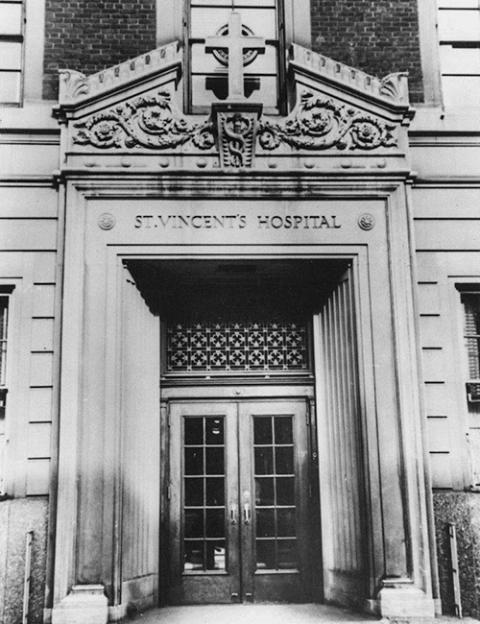
Thomas Rzeznik says the history of St. Vincent's shows the unique role women religious have played in the church. (Archives of the Sisters of Charity of New York)
Following years of consolidation and changes in healthcare, St. Vincent's Hospital shuttered that April.
Rzeznik said he felt called to write about it because St. Vincent's "captured the story of the Catholic Church in New York City, its institutional development and its impact on American society." St. Vincent's, he added, encapsulates "the story of one hospital, and it's also a story about so much more in terms of the history of New York City and the Catholic Church in the United States."
Sisters were leaders in what would become the early healthcare reform movement in the 1920s, Rzeznik said, seeking to make the hospital accessible to those who lacked the means to afford treatment at the city's more exclusive institutions.
"They refused to turn anybody away, and that was certainly a manifestation of their mission, but it was also a way of challenging the dominant values in the healthcare system of their day," Rzeznik said. "Other hospitals regularly routinely discriminated against the poor, and the sisters refused to do that."
Around that time, Rzeznik said, there was a push for hospitals to install leaders trained in management and administration rather than medicine. The Sisters of Charity stood firm, showing that not only could a charity hospital live out its mission while serving those in need but that women were capable of leading large, complex institutions.
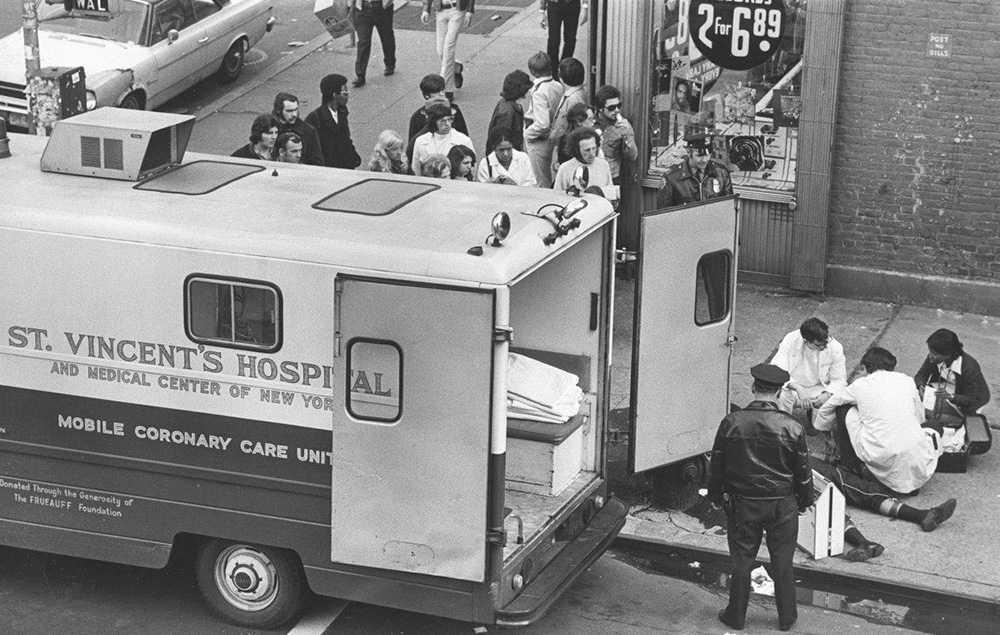
The Sisters of Charity of New York founded St. Vincent's Hospital in 1849, opening a 30-bed facility that from its earliest days served some of the city's poorest residents, particularly immigrants. (Archives of the Sisters of Charity of New York)
Advertisement
With various Catholic institutions today facing uncertain futures — declining religiosity, consolidations in healthcare and shrinking college enrollment — Rzeznik said one lesson that stuck with him from his research is the emphasis the Sisters of Charity placed on mission. The sisters refuted the common business maxim, "No margin, no mission," and instead turned it on its head.
"Mission has to be central for the institution," Rzeznik said, recounting his conversations with sisters and his research into the hospital. "It's the mission that attracts people to the hospital, it's the mission that instills a sense of pride and loyalty and devotion among those who work in the hospital, it's that mission that connects people to the institution and the work that it's trying to carry out."
Even to this day, Rzeznik recounts in his book, there is strong disagreement about what led to the demise of St. Vincent's. As for the Sisters of Charity of New York, in 2023 they decided not to accept new members, embracing a "path to completion." Their ministry in New York will effectively come to an end in the coming years. Acknowledging that reality can be difficult, Rzeznik said, but the legacy of St. Vincent's is a memorial to the important contributions the sisters made to New York.
"There's an immense sadness to the story, of course, to think about the closure of a hospital, and with the Sisters of Charity moving towards completion," Rzeznik said. "Even though I had never been a patient at St. Vincent's, I came to appreciate all that the sisters had done to build this institution, to maintain the institution, and to make healthcare more humane."