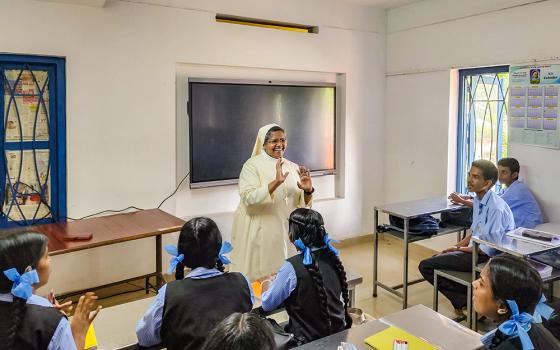
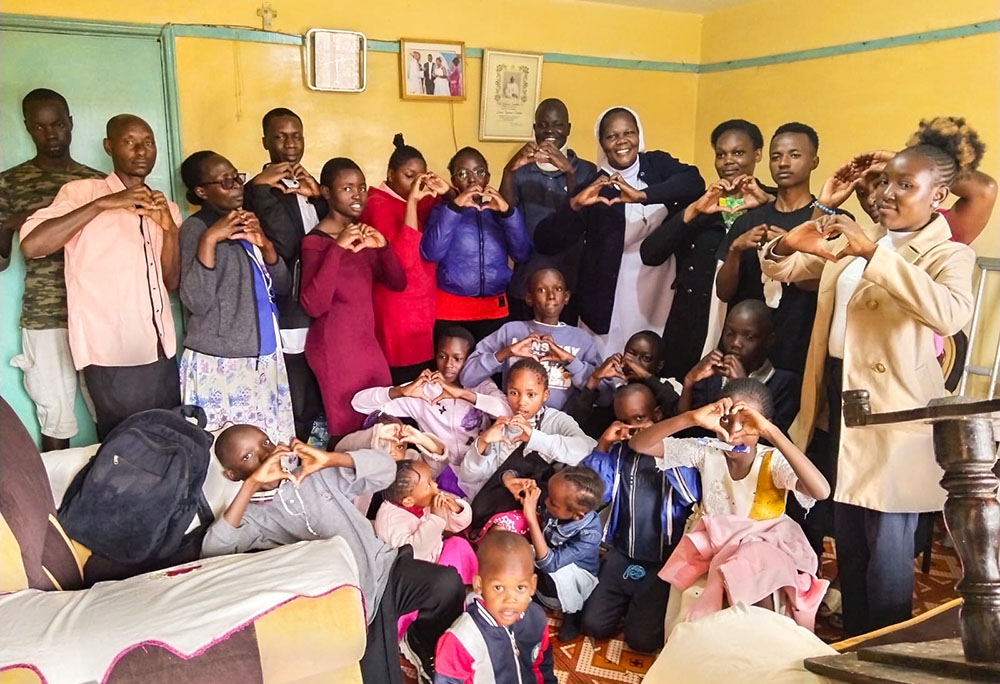
Sr. Josephine Adhiambo (back row in habit), a member of the Franciscan Sisters of St. Anne, participates in a sign language class in Nakuru, Kenya. (Shadrack Omuka)
Sr. Josephine Adhiambo, a member of the Franciscan Sisters of St. Anne, is focused, bright and soft-spoken. Her passion is to serve the deaf community in Nakuru City, approximately 156 kilometers northwest of Nairobi, the capital of Kenya.
Adhiambo is a sign language interpreter and tutor serving the deaf community in the Catholic Church, bridging the communication gap between the hearing and the silent community.
Her journey began more than 20 years ago when she was sent to Mater Dei Nakuru Hospitality College as a tutor. While there, she was able to interact with a few deaf individuals.
"At first, I had challenges communicating with the students who were deaf, though I tried what I could. I struggled a lot. But since I had passion, I did not give up. Instead, I wanted to know more about the 'silent' world," Adhiambo said.
While at Mater Dei, she taught life skills and trades and developed a deep calling to learn sign language and communicate with the students.
She began by learning basic sign language skills as she continued teaching, and later, she was sponsored by the church to study sign language at the Kenya Institute of Special Education in Nairobi. She later graduated with a certificate after three months of study.
Advertisement
After graduating, she attended the Holy Family Utawala of Kenya Sign Language School in Nairobi, where she pursued a diploma course and an advanced certificate course, equipping her with the skills to understand the dynamics of deaf culture.
The 54-year-old nun also mentors and counsels deaf couples. In 2024, she helped Grace Wanjiru and Thomas Misu formalize their marriage in the church. For such work with the deaf community, the sister's name has been applauded across the city and across the parishes.
As a tutor, she empowers individuals with the skills and knowledge to make them independent and contribute to the community, combating assumptions that deaf people are unable to carry out normal life activities.
She also provides spiritual support and guidance by helping the deaf find their voice and place within the faith community. According to Adhiambo, "For many years, deaf people have been left out of the faith community."
In church, Adhiambo interprets for the deaf. Sometimes, she is invited to events to help people hear the Gospel and receive useful information, ensuring they are not marginalized or overlooked.
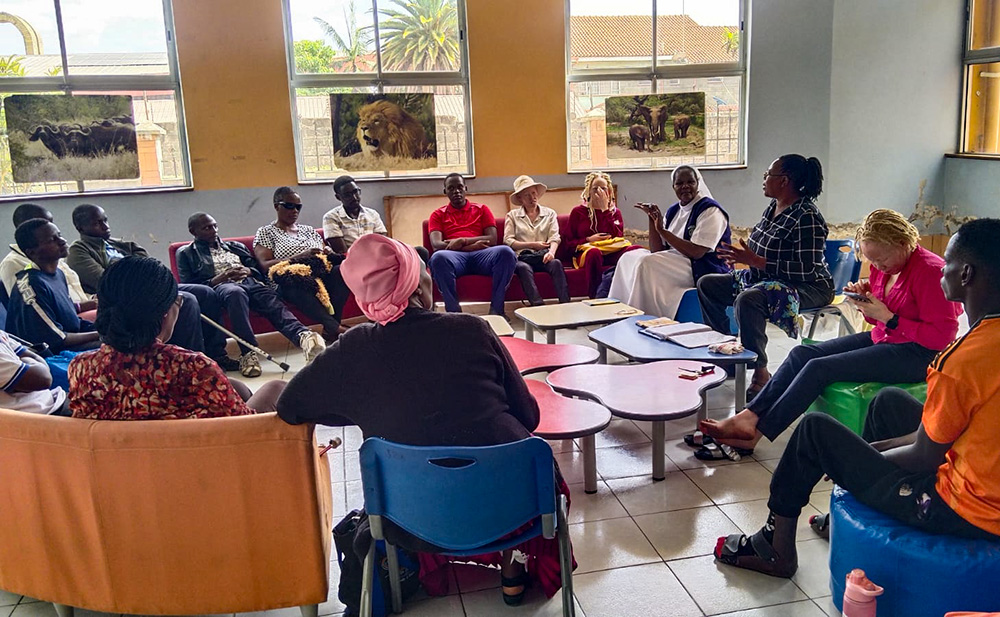
An evening skills training workshop for deaf people in Nakuru, Kenya (Shadrack Omuka)
She added that little has been done to assist the deaf in Kenya. Therefore, she encourages deaf individuals to join schools to learn skills that would enable them to become independent in life. She also trains individuals to become lecturers so that more deaf people can become educated.
She admitted that more Kenyan Sign Language interpreters are needed as the number of people with hearing loss continues to rise. Many deaf people experience loneliness and isolation, she said, and she encourages the local community to enroll in sign language schools to break the communication barrier between the hearing and the deaf.
According to the Kenya National Bureau of Statistics, there are 153,381 deaf people in Kenya aged 5 years and older. The report further shows that most (129,518) are in rural areas compared to urban areas (23,843). According to Adhiambo, many deaf people "suffer in silence, especially in rural areas where communication, skills training and empowerment remain limited."
To combat this, she visited the informal settlement in Nakuru, looking for people so that no one would be left behind. Despite the challenges, she has secured employment for the deaf both in the government and private sectors.
Through friends, she has also been able to help people access free medical services in local hospitals and clinics.