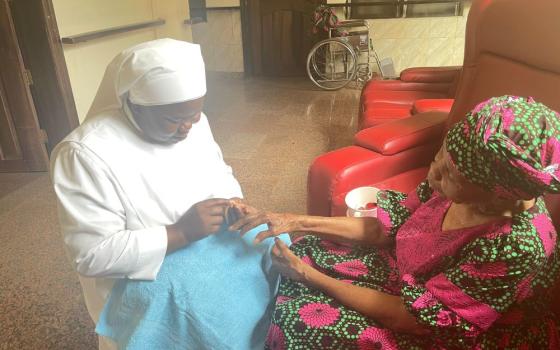
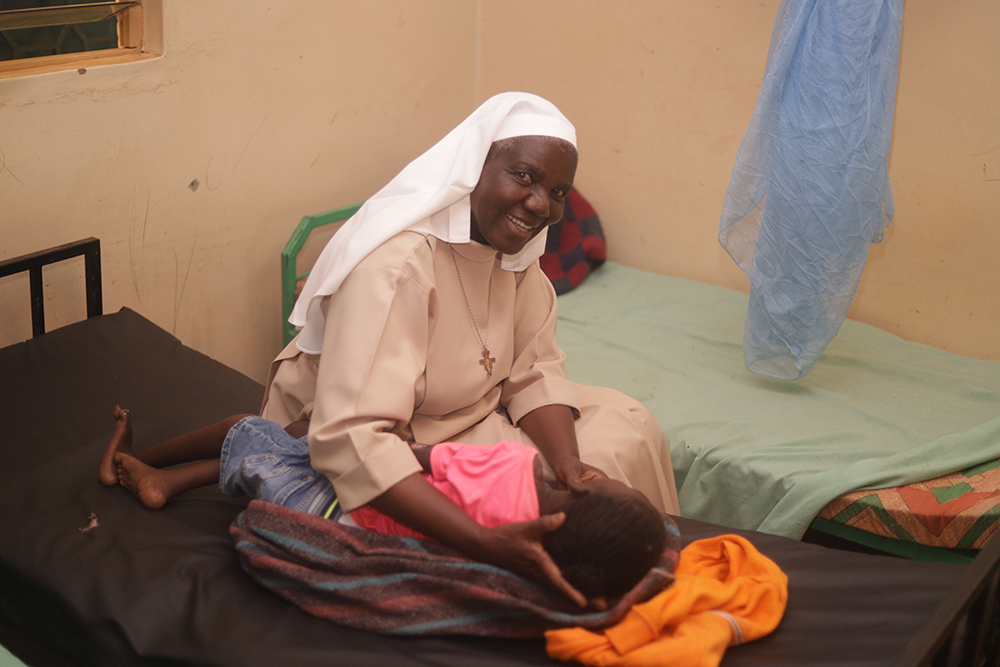
Sr. Mary Monica Amollo Owuor provides therapy support to a child at Sigomere Small Home in Siaya County, western Kenya. Many residents have living parents, but were abandoned due to poverty and stigma. (GSR photo/Doreen Ajiambo)

by Doreen Ajiambo
The motorbike arrives at Sigomere Small Home just before sunset, its engine cutting through the evening stillness of this rural village in western Kenya. Dust rises behind it as it slows near the iron gate.
An officer steps down and carefully lifts a plastic carrier from the back. Inside lies a baby wrapped in a faded leso, eyes open but unfocused, limbs stiff. A folded referral letter changes hands. No parent follows behind.
The exchange is brief, almost routine. Yet for the sisters waiting at the entrance, it carries the weight of another family pushed beyond its limits.
"Many of these children are brought to us by police or local authorities after being abandoned," said Sr. Mary Monica Amollo Owuor, administrator of the home and a member of the Franciscan Sisters of St. Joseph. "But most of them are not orphans [whose] parents have died. Their parents are alive."
That distinction shapes everything.
Sigomere Small Home, in Siaya County near Lake Victoria, was formally established in 1996 after church leaders responded to reports of children with disabilities being hidden or left unattended in surrounding villages. The ministry had begun a decade earlier, when a child with a disability was left at the sisters' doorstep. What was meant to be temporary became permanent.
Today, 52 children and young adults, aged 3-25, live on the compound. Many have cerebral palsy, hydrocephalus, spina bifida or profound intellectual disabilities. Some require feeding tubes. Others cannot control their limbs or communicate pain.
Each morning begins before sunrise. Caregivers lift guests from beds, bathe them, administer medication and feed those who cannot swallow independently. Physiotherapy sessions follow, then lessons in a modest special unit classroom.
"We focus on what they can do," said Christopher Onyango, a teacher at the home. "If a child learns to hold a spoon after months of trying, that is progress."
The sisters describe their work as accompaniment rather than charity. Yet the steady arrival of children raises a broader question. Why are families still separating from children whose parents are alive?
Advertisement
Reform promises, rural gaps
Kenya's Children Act of 2022 prioritizes family-based care and states that poverty or disability alone should not justify separating a child from family. The National Care Reform Strategy reinforces that goal, calling for stronger social protection and community-based rehabilitation.
On paper, institutions like Sigomere should gradually become less central. But in rural western Kenya, reform has collided with economic reality.
Siaya County remains among Kenya's poorer regions, with more than one-third of residents living below the national poverty line. Most households depend on subsistence farming, fishing and informal labor — incomes that fluctuate with rainfall and market prices.
When disability enters such a household, expenses rise sharply. Therapy sessions, assistive devices and transport to referral hospitals can exceed a family's monthly earnings. Meanwhile, one parent, most often the mother, must stay home full-time.
"In my area, poverty is one of the biggest challenges that we face," said Chief Wilfred Anyiko Otieno, the government administrator for Sigomere. "Many people are not educated, and even those who are educated have no jobs."
He pointed to teenage pregnancy as another factor.
"When young girls become pregnant, many do not go to hospitals," he said. "This affects the babies that are born. Once a girl gives birth to a child who is deformed, some abandon them."
Western Kenya also reports some of the highest disability rates in the country. The 2019 national census recorded that 2.2% of Kenyans live with disabilities, though researchers argue that figure likely underestimates prevalence. Studies in rural western Kenya have found significantly higher rates of functional difficulty among adults, with disability linked to reduced labor participation and heightened food insecurity.
Kenya's experience reflects a broader global pattern. According to UNICEF, children with disabilities are up to 30 times more likely than children without disabilities to live in residential care facilities.
Globally, an estimated 240 million children live with disabilities. In countries where social protection systems are weak, they face a significantly higher risk of separation from their families.
Research shows that the developmental impacts of institutionalization can be severe, depriving children of the social, emotional and intellectual stimulation critical for healthy brain growth, especially during early childhood.
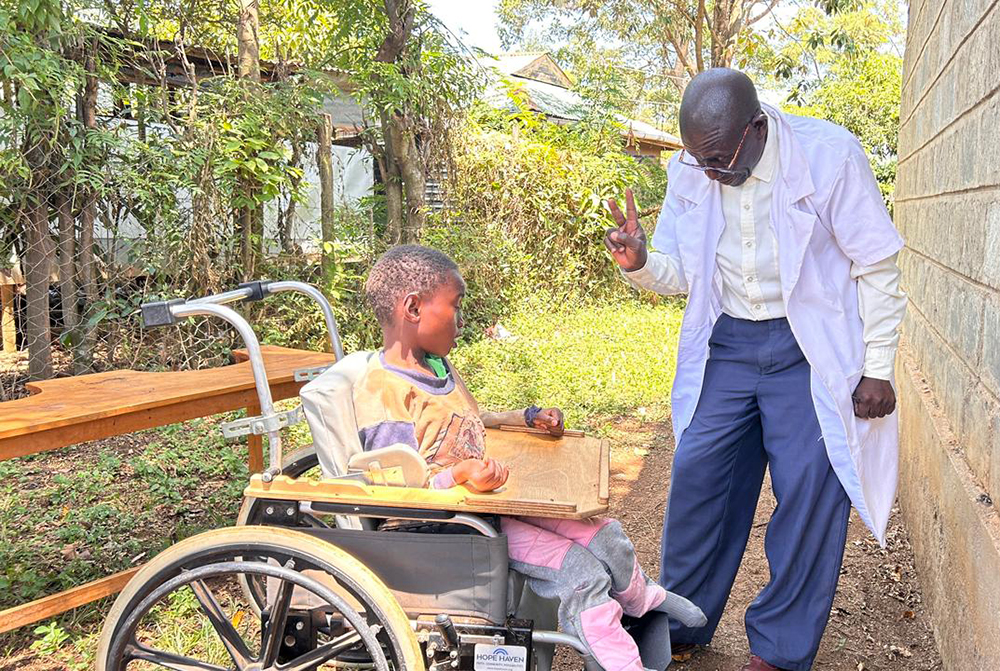
Christopher Onyango, a teacher at Sigomere Small Home, with a child during a lesson in Siaya County, western Kenya. Staff focus on building practical skills and celebrating small milestones. (GSR photo/Doreen Ajiambo)
Over the past two decades, many countries have adopted policies promoting deinstitutionalization and family-based care. However, implementation gaps, especially in low-income and rural settings, have slowed progress.
The contradiction is stark: Laws prioritize keeping children in families, yet children with disabilities remain disproportionately represented in residential institutions worldwide.
Otieno acknowledged that stigma still shapes decisions locally.
"These children are considered a curse in some families," he said. "When they are born, most families hide them for fear of stigmatization and rejection. The ones we find have often been abandoned."
In a nearby homestead, 75-year-old village elder George Odhiambo said such beliefs run deep and stretch back generations.
"In the past, when a child was born unable to walk or speak, people said something was wrong in the family," he said. "Some believed it was a curse or punishment."
He said women often carry the blame.
"When a mother gives birth to a child with a disability, people question her," he said. "They ask what she did wrong. Some husbands leave. Some families isolate her."
Though churches and schools have challenged those views, he said, stigma persists quietly in many homes.
"Things have changed, yes," Odhiambo said. "But even today, some families hide these children because they fear being laughed at."
As the local government representative, Otieno said he helps secure government development funds to support the home and plans to seek additional assistance from county authorities.
Yet even as public funds help sustain the institution, children continue to arrive at its gates. The government supports the home. The home continues to fill.
Kenya's reform strategy envisions fewer children growing up in institutions and more families supported to stay together. But in Sigomere, the reality suggests a gap between policy and implementation. While local leaders express solidarity, families say direct financial assistance, accessible therapy services and predictable support remain limited. Without consistent help at the household level, institutional care becomes not a last resort, but the most practical option.
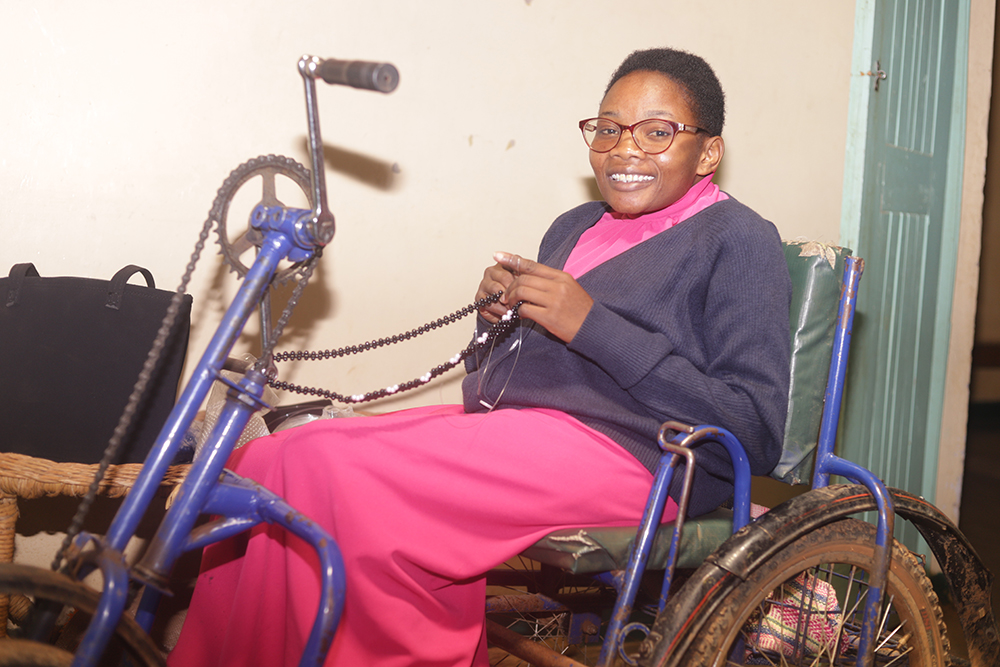
Emmaculate Omondi, born with spina bifida, sits in her wheelchair at Sigomere Small Home in Siaya County, western Kenya. She now earns income through beadwork after facing stigma and leaving mainstream school. (GSR photo/Doreen Ajiambo)
Poverty before birth
Awino was still in high school when she became pregnant. Fear of gossip kept her from attending antenatal clinics. When labor began, it was long and complicated, and she delivered at home without skilled medical assistance.
Her son did not cry at birth. Months later, doctors diagnosed him with cerebral palsy.
The diagnosis altered her life overnight. She left school. Suitors withdrew after learning she had a disabled child. And caring for him required constant attention, making steady employment nearly impossible.
"There were days I would lock him inside so I could look for work," she said quietly. "I felt ashamed, but I had to survive."
When she brought him to Sigomere, it felt like surrender.
"I did not want to leave him," she said. "But I believed he would live here."
For young adult residents like Emmaculate Omondi, Sigomere offers safety and belonging. Born with spina bifida, she remembers being mocked in mainstream school because of incontinence. Eventually, she dropped out.
At Sigomere, she learned beadwork and bag-making and now earns a modest income to support her grandmother.
"Here, I was not laughed at," she said. "I met others like me."
Yet permanence looms. Some children remain for years because reintegration into family life remains financially or socially unfeasible.
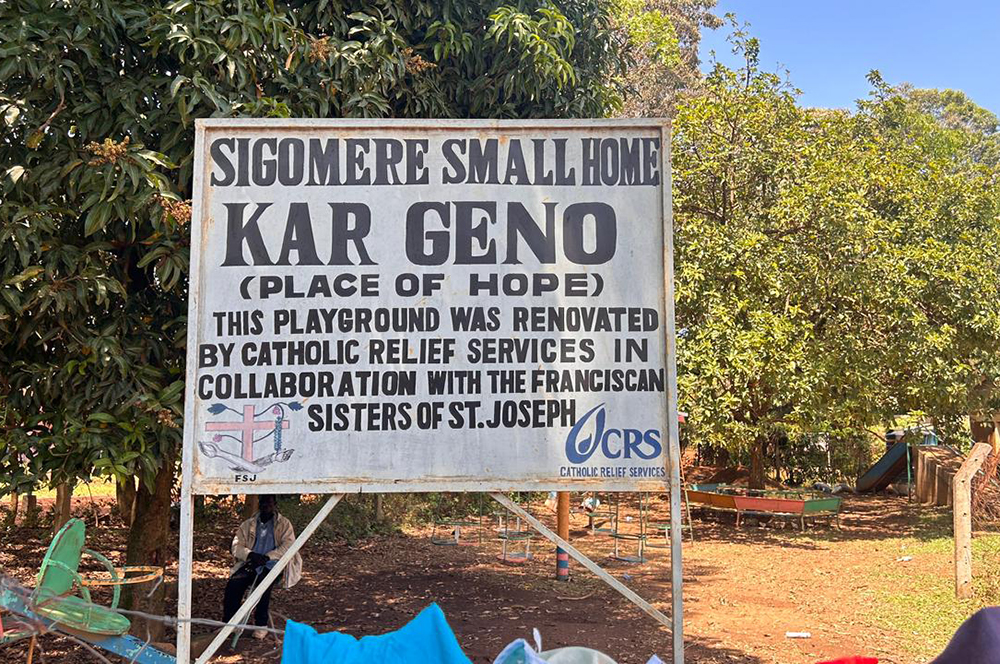
A sign marks the entrance to Sigomere Small Home in Siaya County, western Kenya. The Catholic-run institution was established in 1996. (GSR photo/Doreen Ajiambo)
"These are children we sometimes care for throughout their lives," said Sr. Mary Goretti Teresa, who assists Owuor in managing the home.
Each evening, Owuor walks slowly through the dormitories, counting beds before retiring. The ritual is both practical and symbolic.
Most of the children sleeping beneath mosquito nets have living parents somewhere beyond the compound walls.
Otieno insists the government recognizes its responsibility.
"It is our social duty to help these children," he said. "This institution is helping our community, and we must support it."
But as long as families see no viable way to raise their disabled children at home, the motorbikes will keep arriving.
Owuor paused recently at the gate where so many children have been handed over.
"These children are not separated because they are unloved," she said. "They are separated because their families are overwhelmed. The day a mother does not have to choose between feeding her family and keeping her child — that is the day this gate will finally stay closed."