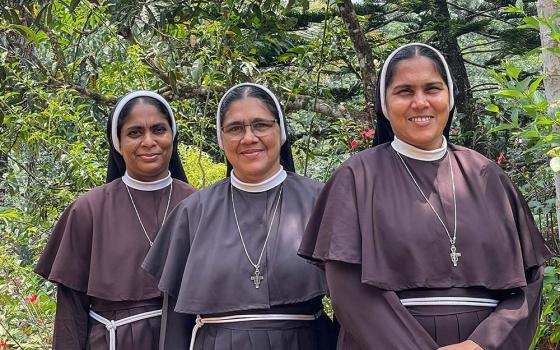
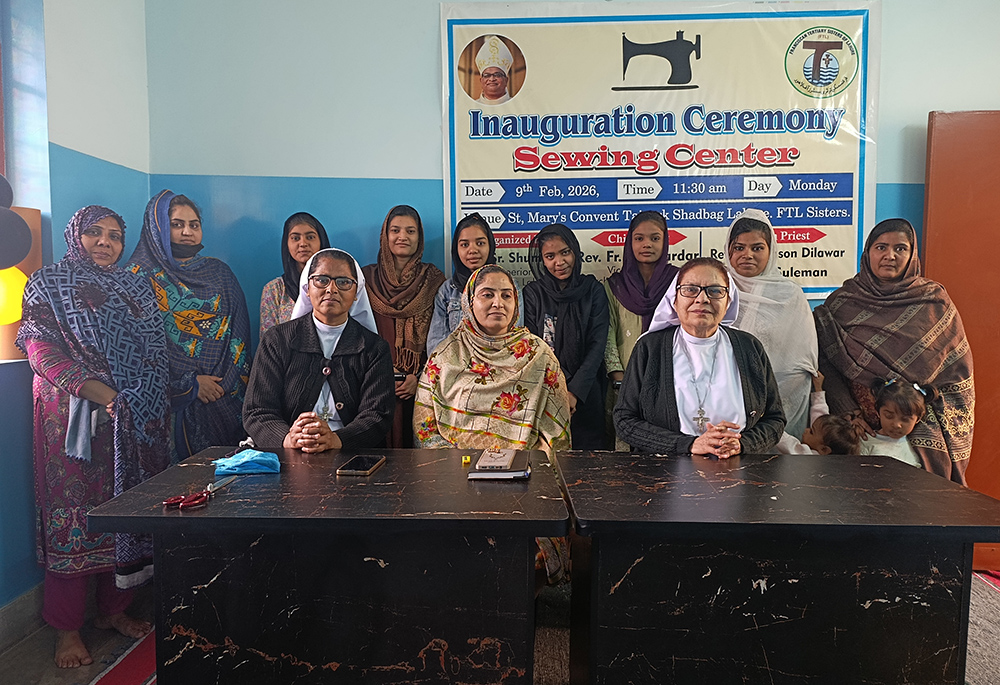
Srs. Mercy Lal, right, and Cecilia Joseph, left, pose with a group of trainees at their sewing center in Lahore, Pakistan. (Kamran Chaudry)

by Kamran Chaudhry
For months, Maryam Younas watched her world shrink within the narrow lanes of the slum where she lives in Lahore, Pakistan.
After completing grade 10 in 2024, the 18-year-old Catholic watched her hopes of higher education fade under the weight of rising costs and repeated setbacks.
Her father, Younas Manzoor, who operates a cutter machine in the city's iron market, enrolled her twice in private academies. Each time, financial strain forced her to withdraw before the annual exams.
"We couldn't afford the board admission fee. College studies are out of our reach," she said, her quiet voice carrying a restrained smile. "My father says we will try again next year, but with every year it feels harder."
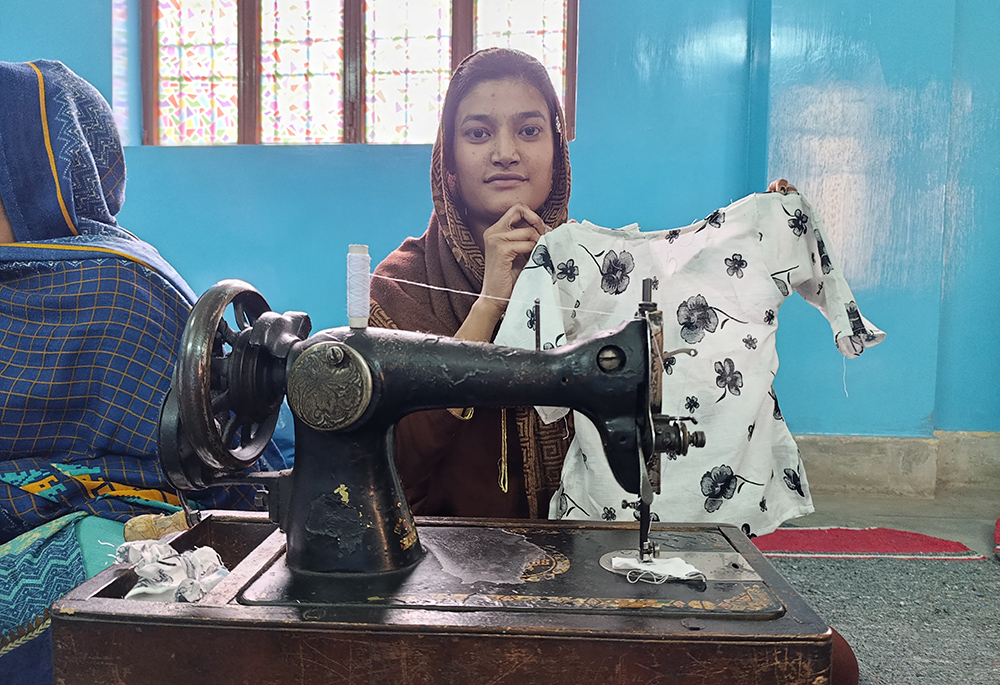
Maryam Younas displays a shirt she made at the sewing center run by the Franciscan Tertiary Sisters of Lahore. (Kamran Chaudry)
Days blurred into routine. She scrolled endlessly through social media and helped her mother, who was recovering from paralysis, manage household chores and cook for her two brothers, both of whom were sanitary workers. Her parents feared that time itself was closing doors on her future.
Hope arrived when the Franciscan Tertiary Sisters of Lahore announced at St. Paul's Church the opening of a sewing center for women near their home. What began as a simple parish announcement quickly became a turning point.
Advertisement
On Feb. 9, Fr. Asif Sardar, vicar general of the Archdiocese of Lahore, joined the sisters and 12 female students ages 17 to 30 to inaugurate the program at St. Mary's Convent, a renovated building once run by the Missionaries of Charity.
"This center is about restoring hope where opportunity has been denied, giving marginalized women the means to shape their own future with confidence and faith," Sardar said.
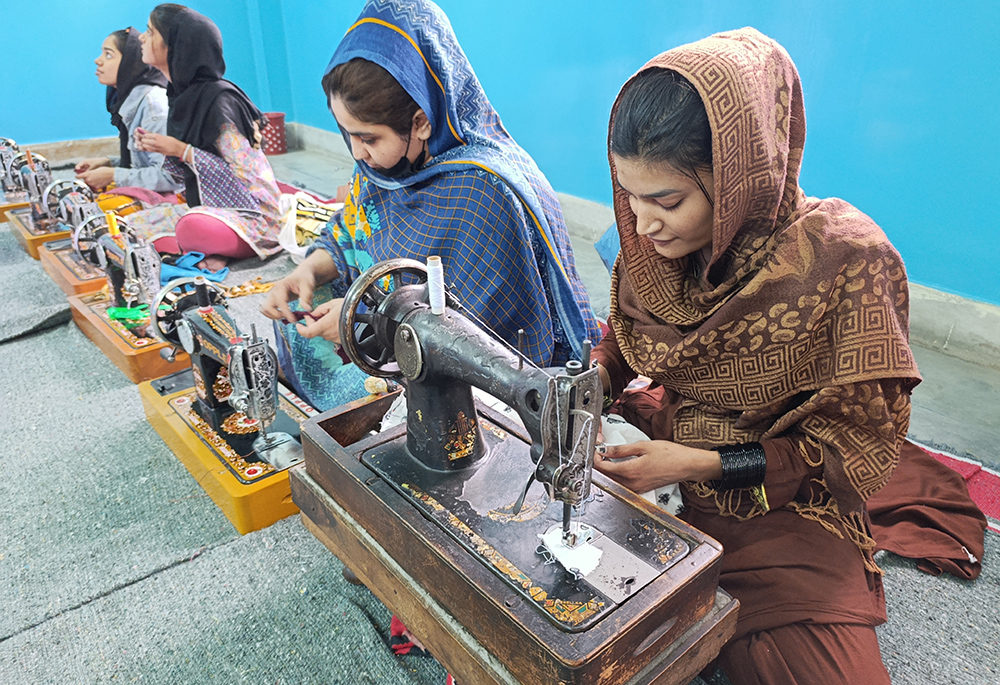
A group of trainees are pictured at the sewing center run by the Franciscan Tertiary Sisters of Lahore. (Kamran Chaudry)
The convent carries a legacy of service.
"They used to run a Montessori school, a sewing center, and support children with disabilities, even providing meals," said Sr. Mercy Lal, who oversees the facility. "But they left during Easter last year because of a shortage of vocations."
The Franciscan Tertiary Sisters of Lahore — an Indigenous congregation also known as the Sisters of Mariamabad — have now installed 11 sewing machines for aspiring tailors, while the Archdiocese of Lahore repainted and renovated the building.
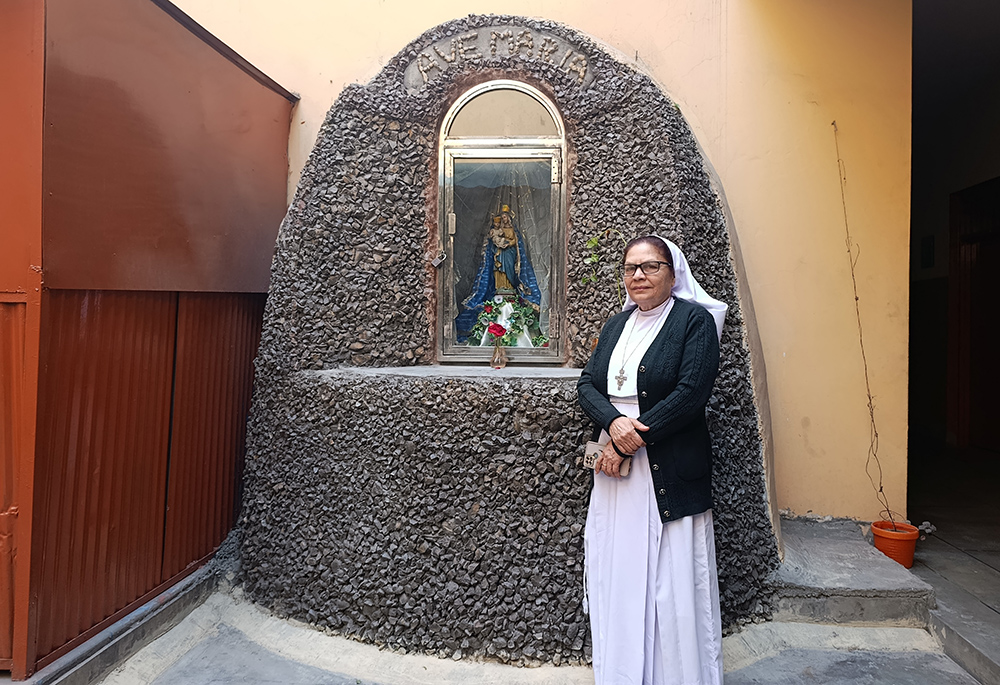
Sr. Mercy Lal oversees a sewing center for women in Lahore, Pakistan. The center is run by the Franciscan Tertiary Sisters of Lahore and open to women from low-income families, including those struggling with addiction and those working in sanitation — communities often pushed to society's margins. (Kamran Chaudry)
The sisters hope to open more sewing centers in remote communities, including at Mariamabad, home of the National Marian Shrine, and Sangla Hill, 122 kilometers (about 76 miles) west of Lahore.
The center offers three-hour daily classes — a six-month sewing course and a one-year embroidery program — for a monthly fee of 500 rupees ($1.79). However, no student has yet been able to pay.
At 62, Lal is among four nuns managing maintenance, cleaning, cooking and administration, while quietly wondering how long they can sustain their ministry.
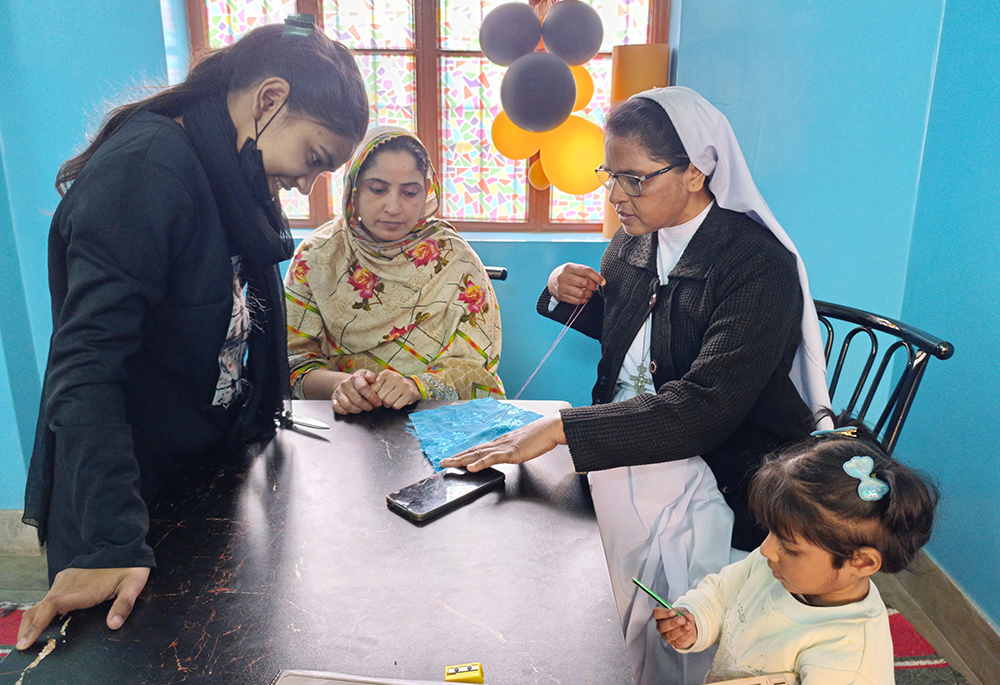
Sr. Cecilia Joseph teaches a trainee at the sewing center run by the Franciscan Tertiary Sisters of Lahore in Lahore, Pakistan. (Kamran Chaudry)
Still, the center remains open to women from low-income families, including those struggling with addiction and those working in sanitation — communities often pushed to society's margins.
For Younas, the steady hum of sewing machines is more than skill-building; it is the sound of possibility returning.
She is one of five former learners from the center previously run by the Missionaries of Charity, and had only learned basic crochet stitches. After the center closed, she paid 1,000 rupees for two months of lessons from a home-based teacher but grew discouraged by frequent holidays and irregular classes.
"I want to become so skilled that I can open my own center and give other girls the chance I almost lost," she said.