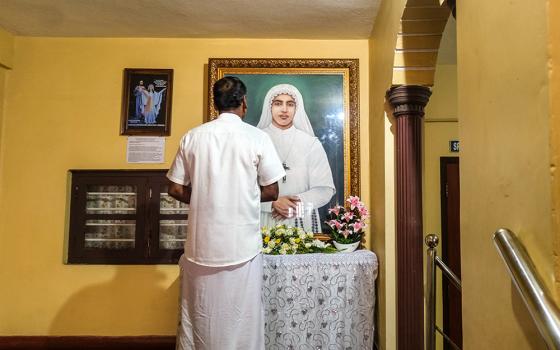
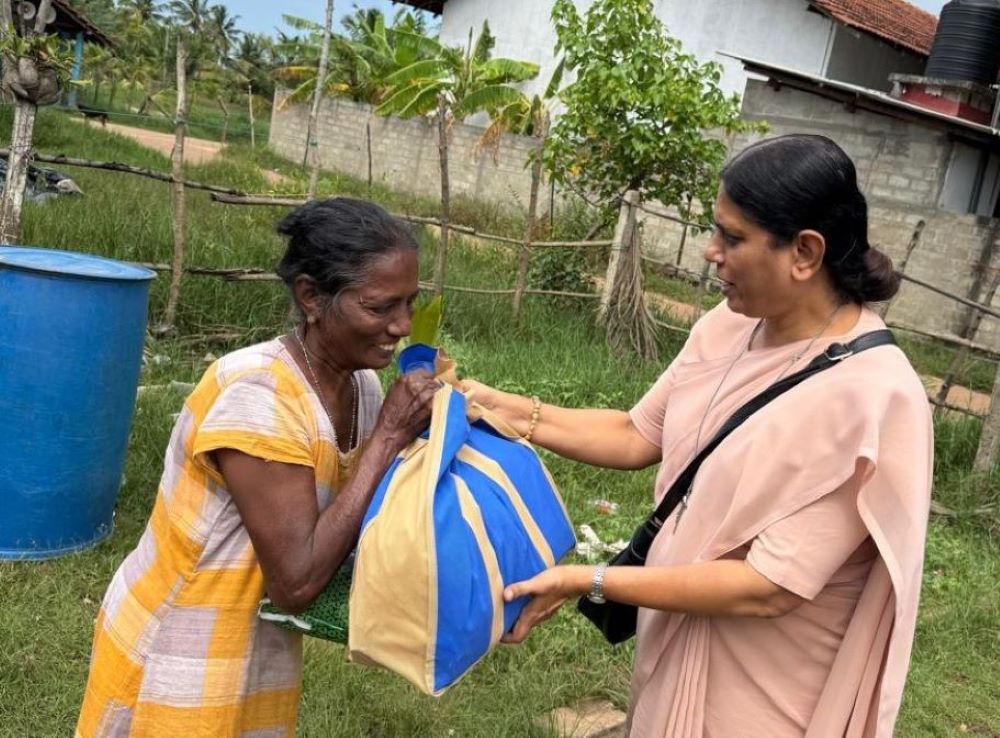
Apostolic Carmel Sr. Maria Nirmalini of India, the congregation's superior general, visits a person affected by Cyclone Ditwah in Sri Lanka. (Courtesy of Maria Ajantha)
by Thomas Scaria
Sr. Maria Ajantha is the superior of the Apostolic Carmel convent at Pussellawa near Nuwar Eliya, a tourist hill station with tea plantations in Sri Lanka. The late November Cyclone Ditwah destroyed the region. Catholic nuns are in the forefront, helping the affected people.
The cyclone killed more than 600 people and displaced thousands, mostly in the island nation's hilly regions of Kandi, Badulla and Nuwar Eliya.
The Apostolic Carmel sisters were among the first to reach out to the cyclone-hit in Pussellawa.
Global Sisters Report spoke to Ajantha over the phone about their efforts.
GSR: How did Cyclone Ditwah affect your region?
Ajantha: The Nov. 27 night was terrifying. I have never experienced such torrential rains and floods in my life. Mud and water filled our ground floor where our chapel is located. With no electricity, communications with the outside world were cut off. We heard trees falling and roaring flood waters.
Our convent has three members. We stayed on the upper floor and did not dare come out to see what was happening. We prayed the rosary the whole night.
Had you received any warning?
The rains started on Nov. 26 [in the] afternoon and continued for two days with short breaks. The government issued weather warnings on the second afternoon.
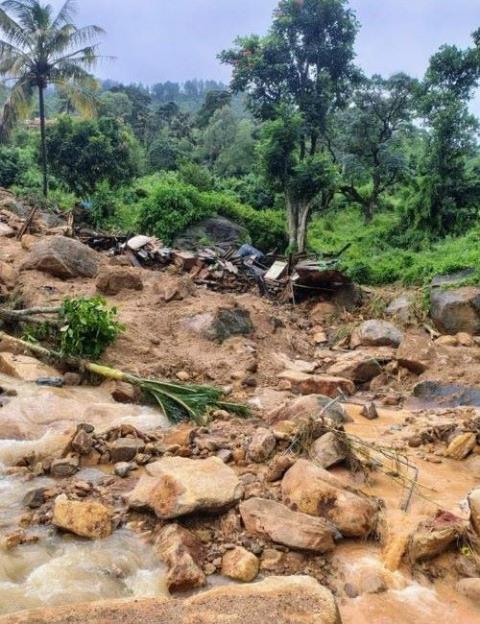
Landslides created during Cyclone Ditwah killed several people in the hill stations of Sri Lanka. (Courtesy of Maria Ajantha)
The government school where I teach closed soon after the government warning. We run a Montessori school at the convent campus. We were worried about them when the rain and storm started suddenly. Luckily, their parents came and took them away before the floods.
Did the cyclone affect other congregations in the region?
The Sisters of the Blessed Virgin Mary convent was destroyed. None of them was wounded, although many in their village died in the landslide. We lost three students who lived in the same village.
How did you start relief work?
Before we started visiting the people, our parishioners came to enquire about us. They assisted us [in] clearing debris and mud from our convent, our church and the Montessori school. Then, we worked as a team to reach out to others.
To be frank, we were short of provisions as it was the month end. All we had were some bedsheets, blankets and dry fruits that we had collected for distribution among tea plantation workers and villagers, an annual practice. Since the banks were closed, we had no money to travel. So, we walked to the people. Even the roads were washed away.
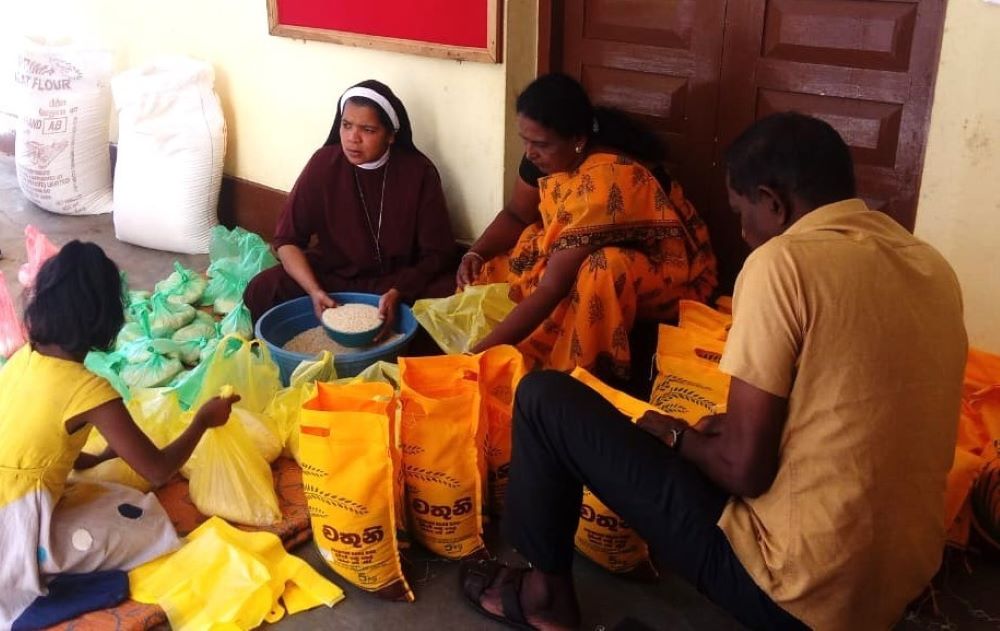
Apostolic Carmel Sr. Maria Ajantha and others in her community assisted people affected by the late November Cyclone Ditwah, which killed more than 600 people and displaced thousands in Sri Lanka.
For the first few days, we just supplied provisions to homes. When we realized the people had no means to cook, we started cooking food in our convent for people. But we had no clean water as our well was filled with mud. Everything was shut down. But suddenly God opened a door for us.
What happened?
You may not believe it, but a freshwater stream started behind our kitchen. Nowhere in the village did they have clean drinking water. The stream became the source of water for the entire village. We used the water to cook for the villagers. The villagers collected water from the stream, a phenomenon that we cannot explain. After nine days, the government restored the water connections, and gradually everyone forgot about this stream. We believe God performed a miracle for the people at a time of crisis.
Is the stream still there?
We wanted the stream to be there as a witness to the miracle, but God's plan was different. Once electricity and water were restored, the stream disappeared. We checked again after it rained, but there were no signs of a stream.
How did you manage the relief programs?
Our neighbor, a Hindu, offered us firewood, fruits and vegetables, and we worked as a team. Food items and clothes came from all parts of the nation. We distributed food to three different relief camps in our region.
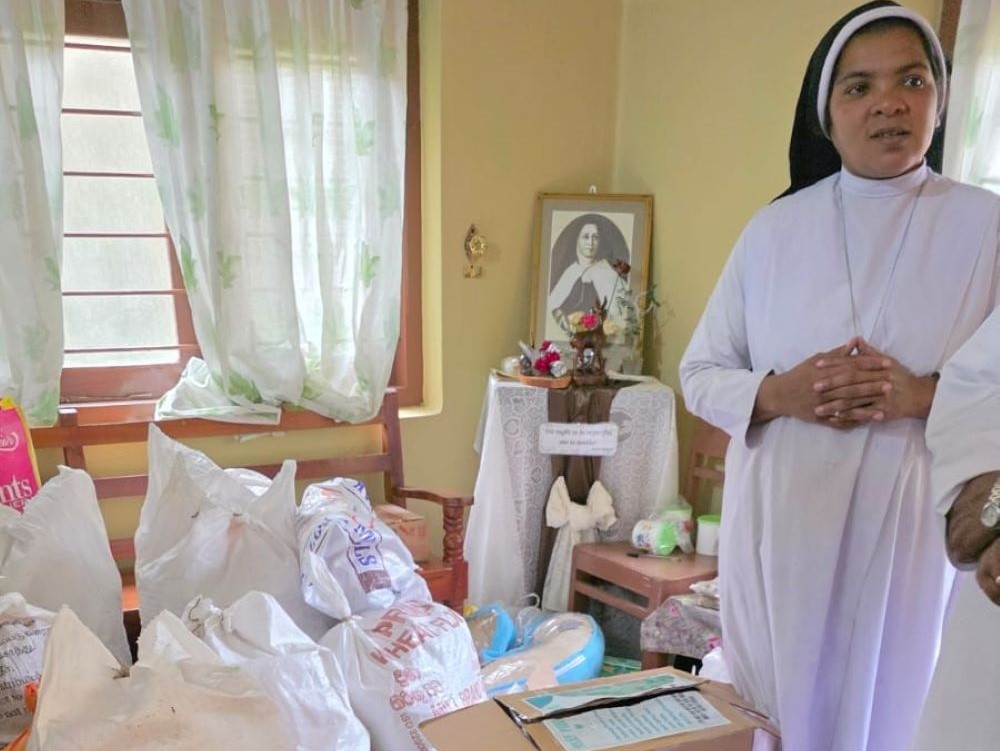
Apostolic Carmel Sr. Maria Ajantha prepares relief materials with villagers in Pussellawa, a hill station in Sri Lanka. (Courtesy of Maria Ajantha)
We started the relief work with no money, but we continue to be with the people even now. Sisters from our other convents volunteered to work with us. Initially, we could satisfy the people's needs, but we consoled them, saying that crises bring opportunities, too. Most damaged houses were dilapidated as they were originally built during the colonial period. (Sri Lanka became an independent nation in 1948.) Now, the government has announced new houses for the workers.
Any touching experience?
The most touching experience was when we visited the families of our three students who were washed away in landslides. We did not know what to tell their families. We stood silently, just listening to them. Later, we expanded this "listening ministry" and counseling as an integral part of our mission among the disaster-affected.
When was your communication system restored?
Only the radio worked in the first week. It helped us understand the severity of the cyclone, which spared no region on the island.
It did not spare any community. Hindu temples, Buddhist centers and churches were destroyed. In the hill stations alone, 65 churches and convents were damaged, but luckily, there was no casualty. Maybe God spared us [so that we could] reach out to the needy immediately after the disaster.
What are your future plans?
Housing is the most urgent need. People are still in the relief camps. The government has promised housing and distributed some money to clear the mud and trash from their houses. A permanent house may take time, so our immediate need is temporary shelters. We hope some donors may support this cause.
Advertisement
Are you working alone or with some other congregations?
Initially, we worked alone in our village, but many congregations and churches from other parts of Sri Lanka sent their help as well as volunteers. Church organizations, including Caritas Sri Lanka, are now involved in relief and rehabilitation. We don't have many congregations in the hill stations. The few who are there are involved in rebuilding the people.
How did your congregation support you?
We were surprised when our superior general from India and the local provincial visited us when no one was ready to drive to Pussellawa and other hill stations. They reached us somehow and offered us emotional support and manpower. This strengthened not only my vocation but also converted our fear of disasters into the joy of service and love.