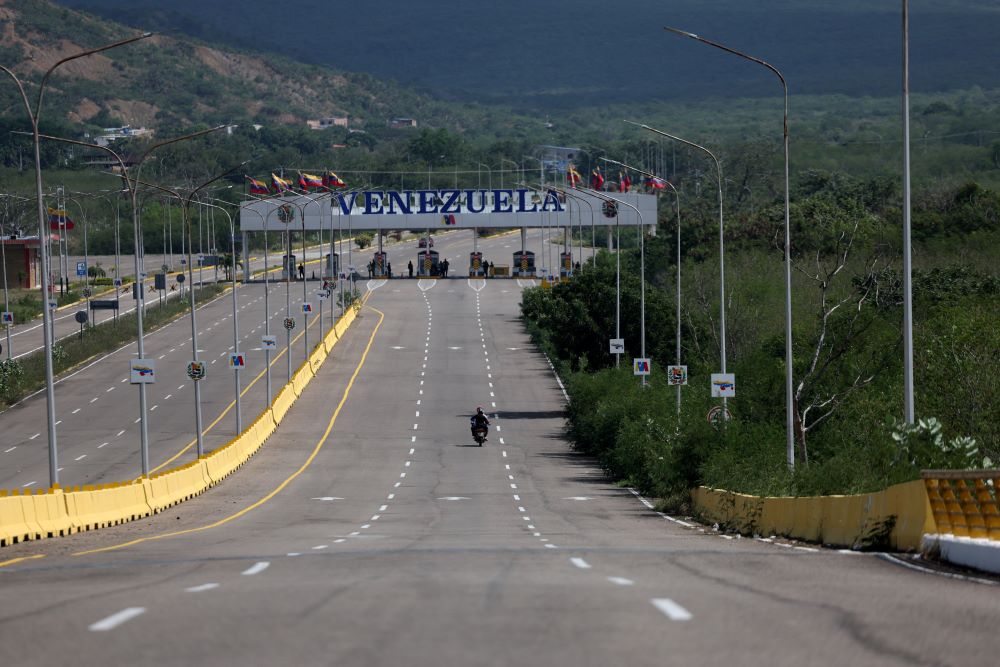
People ride a motorbike along an empty road at the Tienditas Bridge border between Venezuela and Colombia, in Cucuta, Colombia, Jan. 4, following U.S. strikes on Venezuela where President Nicolas Maduro and his wife, Cilia Flores, were captured the previous day. (OSV News/Reuters/Luisa Gonzalez)
by Eduardo Campos Lima
Catholic leaders in Venezuela have been cautious since the Jan. 3 U.S. military raid in their country and the capture of President Nicolás Maduro.
The nation's bishops have avoided issuing direct statements about the unprecedented military intervention, and many church leaders have asked lay Catholics to be careful about what they say in this time of uncertainty.
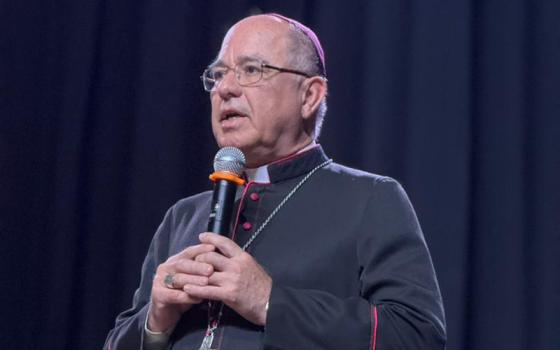
According to Archbishop Jesús González de Zárate of the Archdiocese of Valencia, who heads the Venezuelan bishops' conference, the bishops will meet later this week and work on issuing a joint statement.
"Of course, Pope Leo XIV has already manifested a few important ideas concerning [Venezuela's] national sovereignty, the rule of law and human rights. Those are fundamental aspects in order to analyze the facts that occurred here," González told the National Catholic Reporter.
He also said that, at a moment like this, the church must express its condolences for the victims of the U.S. strikes. At least 40 people, including Venezuelan military personnel and civilians, were killed, the New York Times reported.
Over the weekend, a few dioceses and parishes in Venezuela canceled some events and opted to livestream Masses. While various regions of the country interpreted the situation differently, most parish leaders advised people to take care with what they said.
At least 90% of Venezuela's population is Catholic.
According to a congressman close to the Evangelical community, most other Christian churches were cautious following the U.S. intervention.
"People have been praying together online. There are no religious services. That's the general recommendation," he told NCR, requesting anonymity due to safety concerns.
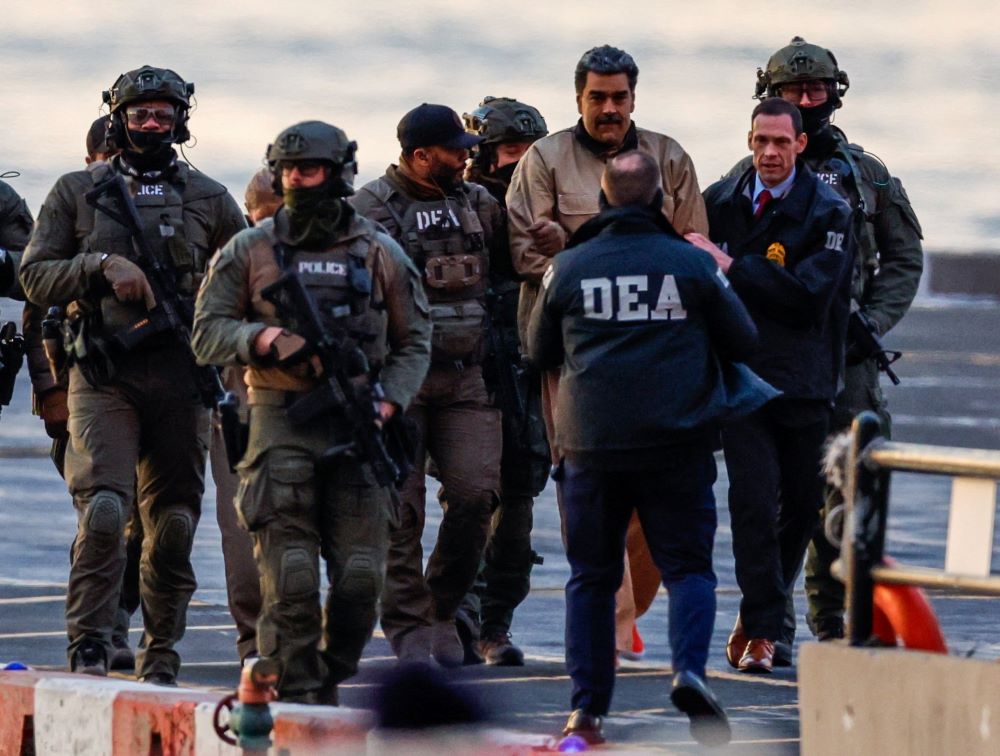
Captured Venezuelan President Nicolas Maduro arrives at the Downtown Manhattan Heliport in New York City Jan. 5 en route to a court appearance to face U.S. federal charges including narco-terrorism, conspiracy, drug trafficking and money laundering. (OSV News/Reuters/Eduardo Munoz)
González denied that churches were shut and affirmed that it was an ordinary weekend, with local limitations caused by a lack of transportation in some cases.
"But we advised priests to be cautious in their activities with churchgoers," he said.
The atmosphere has been one of "tense tranquility," González said, noting that most Venezuelans remained off the streets Jan. 3.
He said Venezuela has been impoverished and has been suffering with a serious sociopolitical crisis over more than a decade. Millions of citizens have left the country and moved to Colombia, Brazil and other neighboring countries as well as to the U.S.
"We still can't know if there will be conditions for them to come back," González said. "Of course, the idea is that all doors will be open for them to return — and families can live together again."
Lawyer and opposition activist Tulio Álvarez told NCR that most voters in the 2024 elections are satisfied with the leader's fall. Maduro claimed victory over Edmundo González, endorsed by opposition leader María Corina Machado, in a process widely accused of fraud.
Advertisement
Some people see the U.S. intervention as a "possibility for political change," Álvarez said.
"No Venezuelan views a foreign operation on our territory positively, but Maduro's regime — a systemic violator of human rights and responsible for the country's impoverishment — was itself backed by external interests: Cuban occupation, Chinese influence and Iranian penetration," Álvarez said.
He also thinks that a transformation is already underway in Venezuela, but its path to change and its implications remain unclear. It will depend on the control over the paramilitary groups that were financed by Maduro and on the degree of power that the Trump administration exerts, he said.
During a Jan. 3 press conference, President Donald Trump said, "We're going to be running [Venezuela] with a group and we're going to make sure it's run properly."
He also said that the U.S. was in contact with Maduro's vice president Delcy Rodríguez. She was sworn into office as interim president Jan. 5. Her new role under U.S. surveillance remains unclear.
In Latin America, many analysts ask if Rodríguez made a deal with Trump.
"She's the vice president and took office as soon as Maduro was captured. Anything beyond that is speculation," said the congressman who spoke to NCR.
Álvarez said he expects Rodríguez will play a limited role in leading Venezuela.
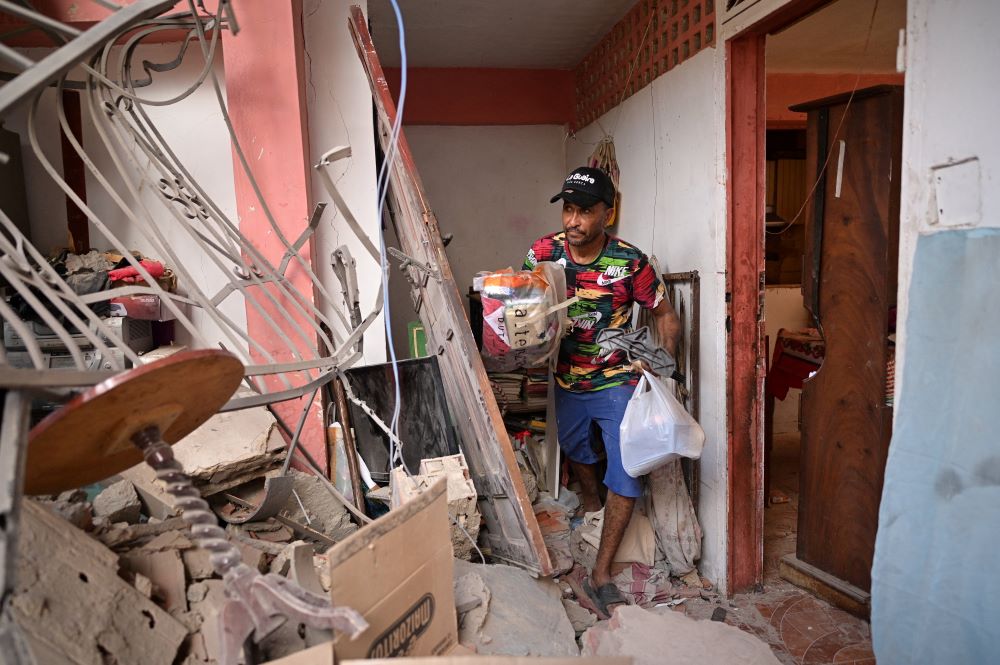
Jonathan Mayora collects items from his damaged family home in Catia La Mar, Venezuela, Jan. 4, after the U.S. launched a strike on Venezuela, capturing President Nicolas Maduro and his wife Cilia Flores. (OSV News/Reuters/Gaby Oraa)
The uncertainties in the domestic landscape also impact most Venezuelan priests who have been living in exile in recent years. Fr. José Palmar, for example, lives in Miami and told NCR that the situation is not politically defined yet. Only after a new path for the country is clear will people be finally ready to return, he said. He expects at least one-third of immigrants to return within six months or a year.
Fr. Lenin Bastidas, who left Venezuela a year ago and lives in Spain, said that a transformation hasn't occurred yet.
"The situation is still risky," he said. "We don't know how much time [we] will have to wait for at least a government change. Maduro was taken out, but people as dangerous as him remain there."
Bastidas said he marched in protest against Maduro in 2016 and urged bishops to take a stand.
González said that despite uncertainty, the Venezuelan church will keep trying to offer hope.
"That was what we did last year, following the pope's invitation for us to be pilgrims of hope. And that's the message we have always tried to convey, not only through words but also through concrete gestures," he said.