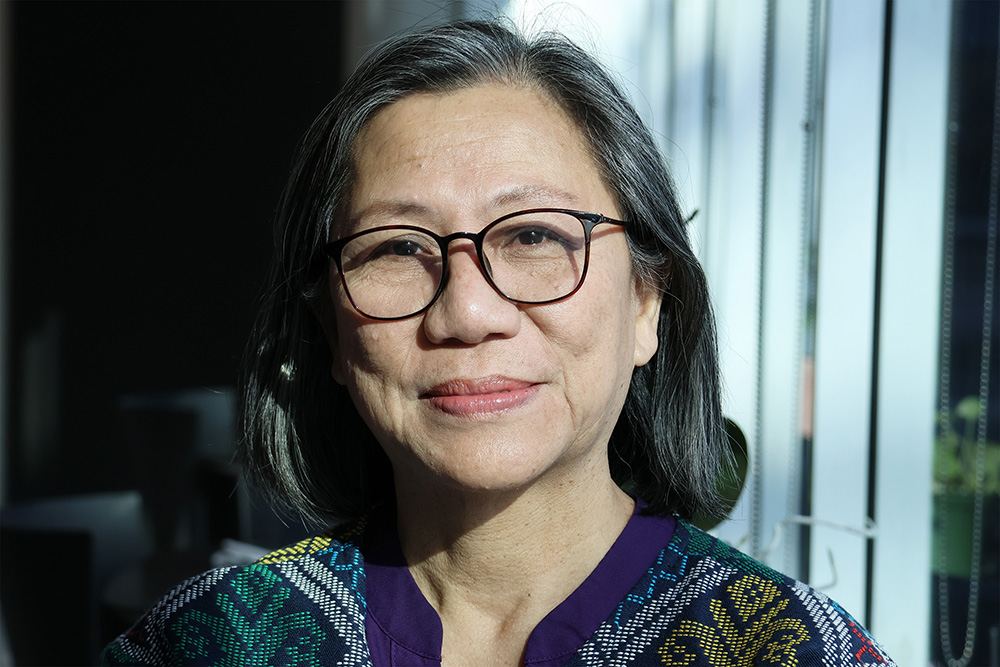
Marla Asis is a sociologist with more than 30 years of research experience studying international migration and social transformation, with a special focus on Asia. (Courtesy of Maruja M.B. Asis)
Marla Asis is a sociologist with more than 30 years of research experience studying international migration and social transformation, with a special focus on Asia. She has extensive experience leading transnational research projects and is actively involved in numerous scientific and consultative bodies.
Asis helped develop resource materials for pastoral workers in Asia's migrant ministry, serves as a consultant to the Vatican's Dicastery for Promoting Integral Human Development, and previously served as director of the Scalabrini Migration Center in Manila, Philippines. From 1997 to 2023, she also held various roles with the Asian and Pacific Migration Journal.
In this conversation with the University of Michigan's Bryan Goh, Asis discusses the "Migrant Ministry by Catholic Sisters in Asia" report, produced by the Scalabrini Migration Center in partnership with the Missionary Sisters of St. Charles Borromeo — Scalabrinians — for the Vatican.
The report, part of a series on good practices in migrant ministry published since 2021, documents 30 case studies of Catholic sisters across Asia working directly with migrants and refugees. Asis, who served as a discussant at the January 2025 Framing Migration conference hosted by the Initiative for the Study of Asian Catholics, shared her perspective on the report's findings. Here are excerpts from the conversation.
What is your affiliation with the Scalabrini Migration Center right now, and could you elaborate on your research interests?
I've been connected with the center for the greater part of my working life. In 2024, I transitioned from full-time work to become a senior researcher, focusing on selected projects. Currently, I'm trying to complete two European Union-funded projects: one on the decision-making of Asian migrants moving through Europe, and another on how migration can be used as a strategy to address labor shortages in more developed EU countries.
Can you tell us a little more about this report?
This started in 2023 when the Dicastery for Promoting Integral Human Development asked if we'd be interested in documenting the role of sisters in Asia's migrant ministry. We said yes, of course, because the focus on Asia was notable. The dicastery had already produced various reports, but there wasn't much specifically about Asia.
On a very personal level, I thought highlighting these migration-related initiatives would be a concrete way to acknowledge the multifaceted contributions sisters have made in our part of the world. The dicastery commissioned the report to the Scalabrini Migration Center and published it in late 2024.
[The Dicastery for Promoting Integral Human Development is a department of the Roman Curia — the Vatican's central administration — responsible for issues of justice, peace, human development, migration, and humanitarian aid.]
Is it true that the report covers different locations, each attended to by a different religious order, reporting on how migrants are doing in that place?
The Scalabrini Migration Center has long run training programs to equip people in pastoral ministry. Over the years, I've had the blessing of meeting many pastoral workers, including sisters. So I already had a strong sense of their vital supportive and leadership roles across Asia.
This report is truly a product of collective effort. We started with a list of women's congregations provided by the dicastery and reached out to them. We also did our own outreach, asking networks for referrals. The Manila-based Scalabrinian sisters, particularly Sr. Beth Pedernal, helped by sharing the project on Radio Veritas Asia and at various meetings.
Asia is vast, and we hoped to cover more, but time and resources were limited. What's in the report is really the tip of the iceberg. Ultimately, we covered 23 initiatives. Except for the Asia-wide profile of Talitha Kum — which was based on existing reports — the other 22 profiles were built on interviews and email exchanges. We later shared each profile with the sisters for their approval. It was a genuine co-production with the sisters, the dicastery and our research assistants.
[Talitha Kum is the global network of Catholic congregations coordinating action against human trafficking, established by the International Union of Superiors General.]
Could you share some of the major findings? How would you summarize the role of the Catholic sisters in Asia, and the importance of this report?
Highlighting the sisters' work is important because it's an inspiration to others. Many of their initiatives are sources of good practice that could be considered globally.
Advertisement
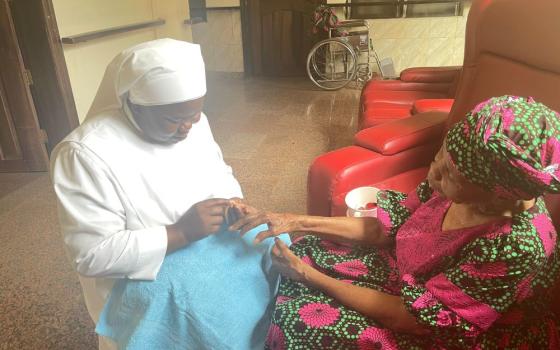
To organize the highlights: The sisters are involved in a real variety of work. In destination countries, this often takes the form of direct services — language classes, counseling, legal support, and ongoing migrants' rights education. On the lighter side, they organize recreational and cultural activities. This matters because it's not just about the serious aspects of life, but making it fun and fostering a cultural dialogue with host communities.
Turning to origin countries, examples from the Philippines show interesting initiatives to support "left-behind families." In temporary labor migration, most workers leave their families behind. This long-term separation raises real concern. In response, Philippine initiatives include school-based programs reaching both the children and parents of migrants.
In Nepal, Caritas Nepal, led by Sr. Cecilia [Shrestha], promotes sustainable reintegration so people have a reason to stay. We also captured livelihood programs — especially for young women and girls — giving people the option to remain rather than being forced to migrate. Providing educational opportunities is an important way to raise women's status within their families and the wider community.
The report captures the resourcefulness, generosity, dedication and competence of the sisters. What makes these programs distinctly Catholic is the centrality of the human person. They take a holistic view of migrants, appreciating their multiple needs, and emphasize the faith dimension in accompanying them. I hope this report is a window into these initiatives; I'm sure there are many more we couldn't cover.
[Caritas is the Catholic Church's global confederation of charitable and development agencies; Caritas Nepal is its national member organization.]
Based on the report, it seems the Catholic sisters are already doing so much to influence migration in Asia. Does this influence have to do with the religious orders themselves? And relatedly: What more do you think the Catholic Church and its religious orders could do to facilitate and improve conditions for migrants?
We found that the involvement of sisters operates at different levels. Take Talitha Kum, a global intercongregational project whose concerted efforts against trafficking are well-known. It operates from the global level down to the grassroots.
Other initiatives are taken by a single congregation. For example, the Scalabrinian centers accompany Filipino students to Taiwan, and the Daughters of Charity in the Philippines expanded their ministry to focus on refugee families.
There aren't many refugees in the Philippines, but that fills a gap in services. Other congregation-wide examples include the Sisters of Notre Dame supporting multicultural families in South Korea, and the Good Shepherd Sisters in Thailand helping trafficking survivors rebuild their lives.
In other cases, sisters are part of a local church's migrant ministry, released by their congregations to contribute. It might look like an individual effort, but it's supported by the congregation. Some programs reach a wide population, while others are micro-level, focusing on just a few families.
What more do you think these congregations, the religious orders, and the church can do to better facilitate or improve conditions for migrants in Asia?
It's a matter of what more we can do as a community and as a church. It's important to share experiences and learn from what worked — and what didn't.
There could be more coordination between churches in origin and destination countries. Across Asia, we deal with a range of migration profiles: origin, transit and destination countries. Our work isn't just about welcoming migrants with genuine hospitality; it's also about addressing migration's impact on origin countries, specifically on left-behind families.
Importantly, this coordination must extend beyond the church. We need to build bridges with other stakeholders, including government institutions, to scale up initiatives and achieve sustainable, lasting solutions. This shouldn't be the work of the church alone; it's the work of broader society. A lot more cooperation and synergy needs to happen.
Does the difference in religious orders translate into a difference in how they engage with migrants? Do different groups of sisters do things differently, or is there unity within that diversity?
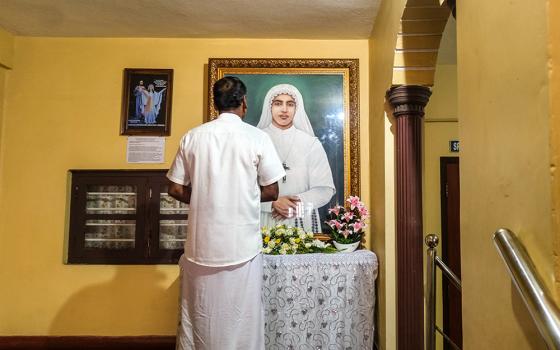
Asis: The Scalabrinian family of missionaries is distinct in that their charism is specifically the care of migrants. Their founder, St. John Baptist Scalabrini, was canonized in 2024, and the Scalabrinian sisters also have co-founders: Venerable Fr. Joseph Marchetti and Blessed Assunta Marchetti. In a sense, the care of migrants is in their DNA.
This emerged from a historical context: Italy was a major country of emigration around 1895 when Scalabrini was bishop of Piacenza during the great wave of Italian emigration to the Americas.
What I find interesting is that even congregations without a specific charism for migrants are able to read the signs of the times. They respond and accompany our migrant brothers and sisters, which I attribute to how the Holy Spirit works. If it were purely about charism, only the Scalabrinians would be involved. But many others minister to migrants and refugees, especially given the forced nature of how refugees leave their origin countries.
Given the 23 cases in the "Migrant Ministry by Catholic Sisters in Asia" report, and your own involvement with the Scalabrini Migration Center — what do you think is the role of Catholicism, the Catholic faith, in framing migration?
I think it's very foundational. It follows Jesus' commandment to love one another, to be a good Samaritan, to welcome the stranger. The Catholic Church has amplified this through its social teaching on migration.
Many don't realize the church has a rich body of reflection on migration going back to the era of Pope Leo XIII. We not only have the faith dimension, but also the social teaching, which continually reflects on what the movement of people means for us and how we should respond.
Another advantage is how our institutions are organized. Alongside the social teaching providing guidance, we have flexible structures that run from the universal to the grassroots level, helping us stay organized.
But the most important part is the Spirit that moves us to act and to read the signs of the times. Our world is in motion, and some are in more difficult circumstances than others.
One lesson I've personally taken from this report is that while migrants may be in need at some point, they don't stay in that position forever. Migrants can become agents of change — our partners in enabling others as well.