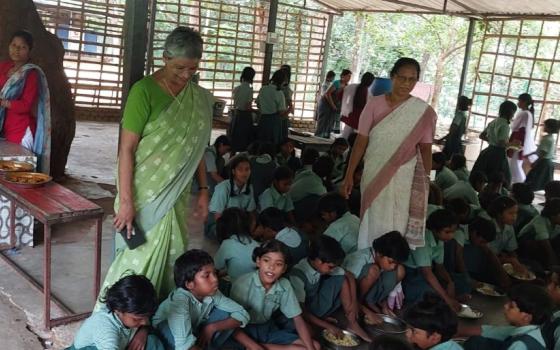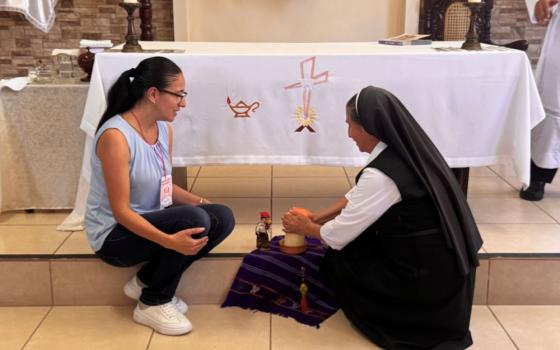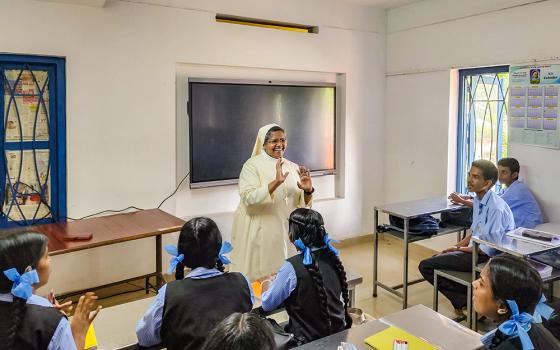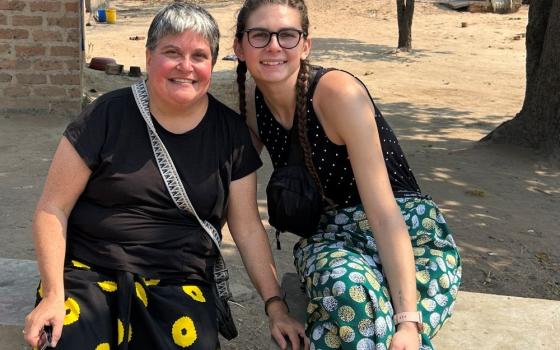
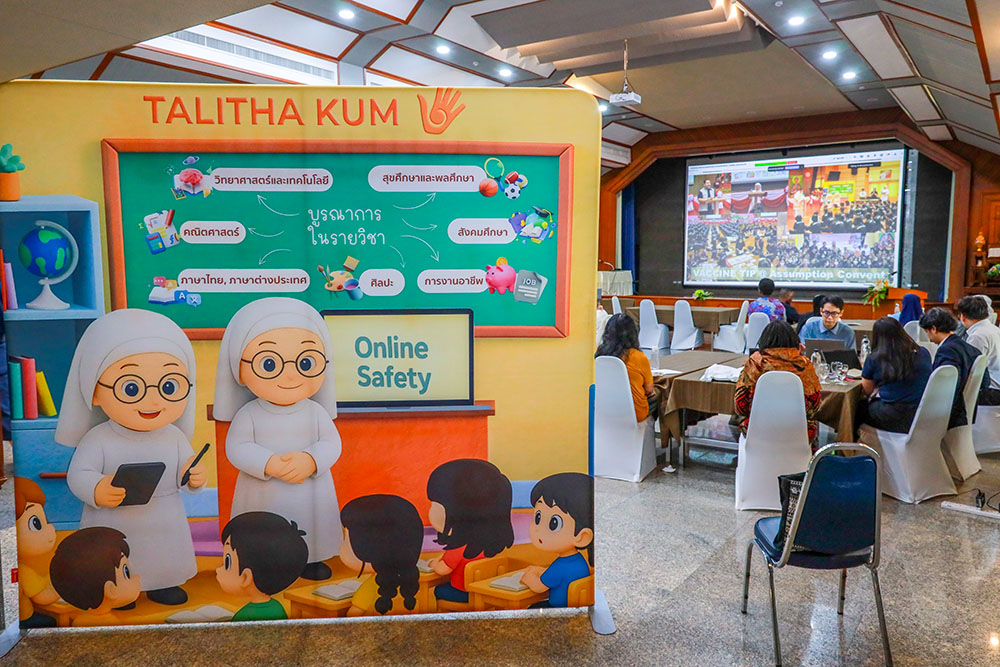
One of the themes explored by participants during the June 24-29, 2026, Talitha Kum leadership training program in Bangkok was that of best practices. (Courtesy of Talitha Kum)

A recent leadership training course in Bangkok by the sister-led anti-trafficking coalition Talitha Kum will significantly strengthen the group's ability to minister to those affected by the global crime, says its international coordinator.
Such training is needed more than ever given that the "trends of human trafficking are really evolving drastically," particularly in the use of online artificial intelligence, or AI, said Sr. Abby Avelino, coordinator of the Rome-based coalition.
"We want to make sure that our sisters on the ground stay updated so we can equip them as effectively as possible," Avelino told Global Sisters Report. She said the June 24-29 training focused on prevention, communication skills and leadership development.
"This is a global formation," said Avelino, a Maryknoll sister from the Philippines. She noted that 28 sisters and lay partners participated in the training, with representation from 23 countries in Asia and the Pacific, Africa, the Middle East and the Americas.
The training was held at the Baan Phu Wan pastoral training center near Bangkok. Support came from the International Union of Superiors General and the Hilton Foundation. (The Hilton Foundation is a major funder of Global Sisters Report.) Talitha Kum International also collaborated with Tangaza University in Nairobi, Kenya, and the Pontifical University of the Holy Cross in Rome to organize the event.
In a report, Sr. Bernadette Reis, a member of the Daughters of St. Paul who was covering the event for Talitha Kum, noted that prior to the in-person training in Bangkok, participants attended a six-month online introductory training.
The in-person residency, Reis said, further developed content "and focused on Talitha Kum's spirituality, synodality, specific aspects of leadership development, communication skills and integrative leadership."
Advertisement
Both the online and in-person portions of the hybrid leadership program are important but it is particularly useful for participants to meet each other and engage in person, Avelino said.
"When you are there, you really put yourself in the position of engaging with others," she said.
In her report, Reis noted that a key part of the training was a presentation by Talitha Kum Thailand, which has developed an educational model in Catholic schools with the help of students called Talitha Kum Youth Ambassadors.
A cornerstone of that program identifies students and teachers who help educate young people and peers about the dynamics of human trafficking. It was developed under the guidance of Sr. Marie-Agnes Suwanna Buasap, a member of Sisters of St. Paul of Chartres who participated in Talitha Kum's first leadership training course in Rome in 2018.
"We're equipping young people to be leaders in global networks," Avelino told GSR, noting that the youth ambassadors program began in 2021, and that it serves as a pilot model Talitha Kum hopes to replicate in Asia and globally.
Schools in Thailand that have implemented the curriculum were recently honored with an exemplary educational institution award from the Thai Minister of Social Development and Human Security.
Another highlight from the training included visiting a center run by the Good Shepherd Sisters in Bangkok that ministers to survivors of human trafficking and others caught in vulnerable situations.
Representatives from the Thai Division of Anti-Trafficking in Persons, ASEAN-Australian Counter Trafficking Program, the U.N. International Organization for Migration, Jesuit Refugee Service, Stella Maris and Caritas Thailand all spoke of the changing context of human trafficking globally and in Asia specifically.
Southeast Asia is becoming a major hub for online scam centers, Avelino said. The centers recruit people desperate for work who end up trapped and forced to engage in digital-based fraud work.
Another type of crime is for people to send money to traffickers for travel, but then arrive at a destination country and not realize that they are being set up by an AI program.
"They don't even know who they're talking to," Avelino said. "So, there's no way for trafficked persons to know who's behind this crime."
She added, "Human trafficking has become more sophisticated over time. One of the biggest challenges we face now is the evolving trends in human trafficking, so we need to mobilize our network to educate young people."
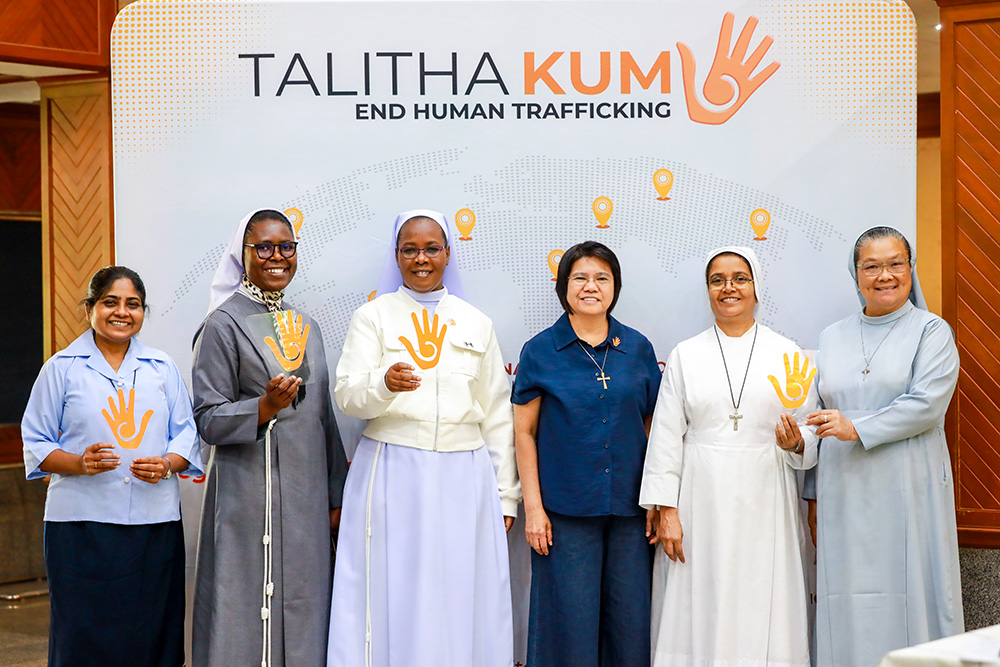
Sr. Abby Avelino (in dark blue), coordinator of the anti-trafficking coalition Talitha Kum, is joined by a group of sisters from Bangladesh, Kenya, Cameroon and Myanmar during the coalition's leadership training program June 24-29, 2026, in Bangkok. (Courtesy of Talitha Kum)
Online trafficking groups are increasing their recruitment because of the prevalence of online usage throughout the world, she said.
A leading cause of much human trafficking is that in many countries, such as the Philippines, employment opportunities are scant. That leads young people to immigrate to another country in order to find employment.
"That's why traffickers really take advantage of people's vulnerability because many people are desperate to leave the country," Avelino said. "And often many young people are searching for better job opportunities."
Training participant Sr. Suporna Rozario, a member of the Missionary Sisters of the Society of Mary in Bangladesh, is the secretary and bursar of Talitha Kum Bangladesh. She told GSR it was useful to meet and network with fellow sisters involved in the work against human trafficking. She found it particularly helpful — and alarming — to learn how online scamming is becoming more prevalent.
"Human trafficking is a huge concern, especially in our country and in Asia where the young generation is being targeted and trapped," she said, adding that it is important to fight against trafficking as a way "to respect the dignity and protect each person."
Talitha Kum, founded in 2009 by the International Union of Superiors General, now coordinates anti-trafficking efforts in more than 90 countries. The International Labor Organization estimates that 27.6 million people worldwide are trapped in forced labor.