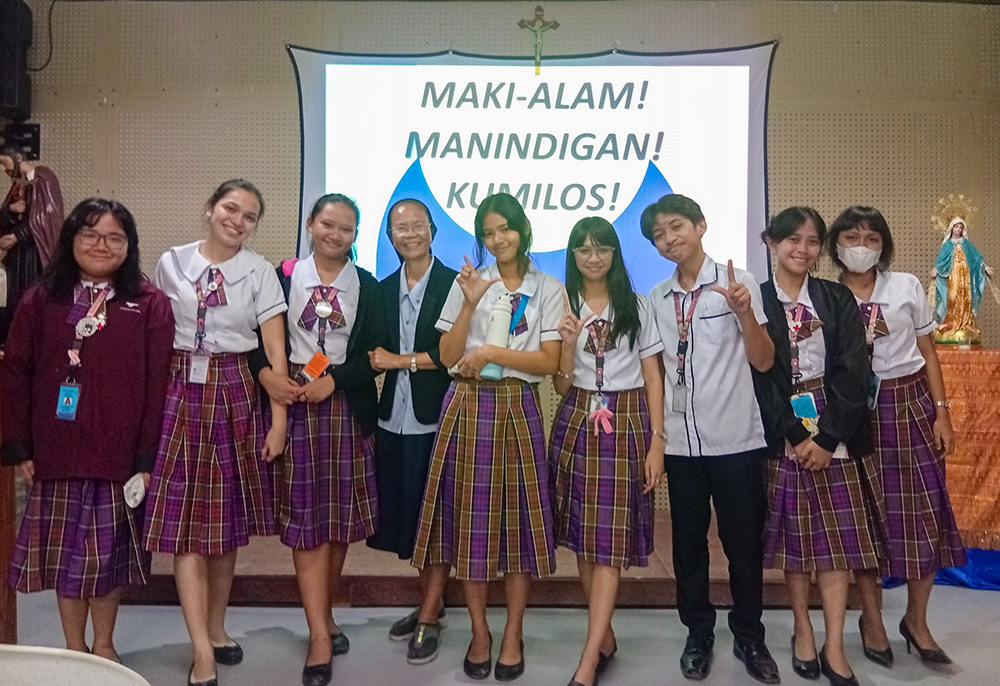
Daughter of Charity Sr. Liza Rueda (fourth from left) during a voter's education talk with Filipino youths and students in April 2025 (Courtesy of Liza Rueda)
by Ronald O. Reyes
Daughter of Charity Sr. Liza Ruedas travels throughout the Philippines, working to educate and inspire students, farmers and Indigenous communities about ways to build a nation of justice, peace and progress.
Ruedas advocates for voter education, helping ordinary people recognize honest, transparent and ethical candidates and representatives. Her work aims to raise awareness among people about their sociopolitical rights and responsibilities in this Catholic-majority nation, which makes headlines for ballot rigging, poll violence and political murders.
Her congregation first established a Justice and Peace and Social Concerns Desk in the Philippines during the 1980s, and has been active in this work ever since. In 2017, Ruedas was appointed team leader of this desk, where she aimed for more assertive engagement on good governance, truth and transparency.
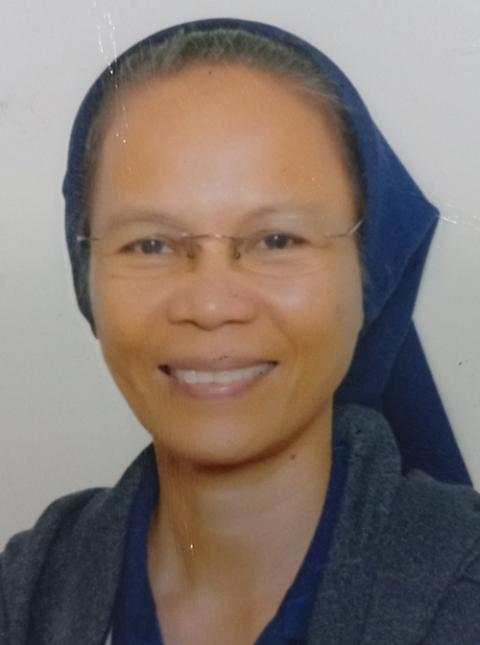
Daughter of Charity Sr. Liza Ruedas (Courtesy of Liza Ruedas)
The pursuit of truth, social justice and good governance shaped her spirit and identity as a consecrated religious, and she feels the same deep longing that the oppressed, victims and survivors find peace, hope and justice in a loving and just God.
In the following interview with Global Sisters Report, Ruedas shared about her work and its challenges.
GSR: What drew you to this mission?
Ruedas: After nearly 38 years as a consecrated religious, what drew me most to this work was to love God and serve the lost, the least, the last and the poorest.
For nearly 20 years, I was involved in pastoral work across various dioceses in Mindanao, emphasizing Christian-Muslim dialogue and ecumenical relations. Mindanao, one of the three main island groups in the Philippines, is a Muslim stronghold where about 90% of the country's approximately 7 million Muslims reside.
Working in Mindanao was a profound awakening. I learned how people there live and evangelize amid their unique demographics and sociopolitical, religious and cultural divides.
Animosity, social discrimination and apparent divisions are less common in areas where our Muslim brethren are few. However, it was disheartening to see Christians seemingly marginalized and pushed to the edges in some areas.
Advertisement
The struggles of Indigenous communities for self-determination, land rights, equal opportunities and human dignity have strengthened my commitment to pursuing justice. I envision standing with low-income people and helping them defend their rights and find respect.
What do you do to help voters?
We network with like-minded partners, collaborating with them to inform, instruct, and form minds and consciences. We coordinate with communities in the peripheries, especially voters in the middle, lower-middle and lower classes.
We educate voters by shaping their values, examining past attitudes and practices, and raising their awareness of the effects of partisan politics, political dynasties and the influence of powerful families in politics.
Part of our approach is to analyze the problems and impacts of vote buying, as well as to present the realities, backgrounds and platforms of candidates and politicians. We take a practical approach so that truth and transparency are clear, and people make informed choices about their leaders.
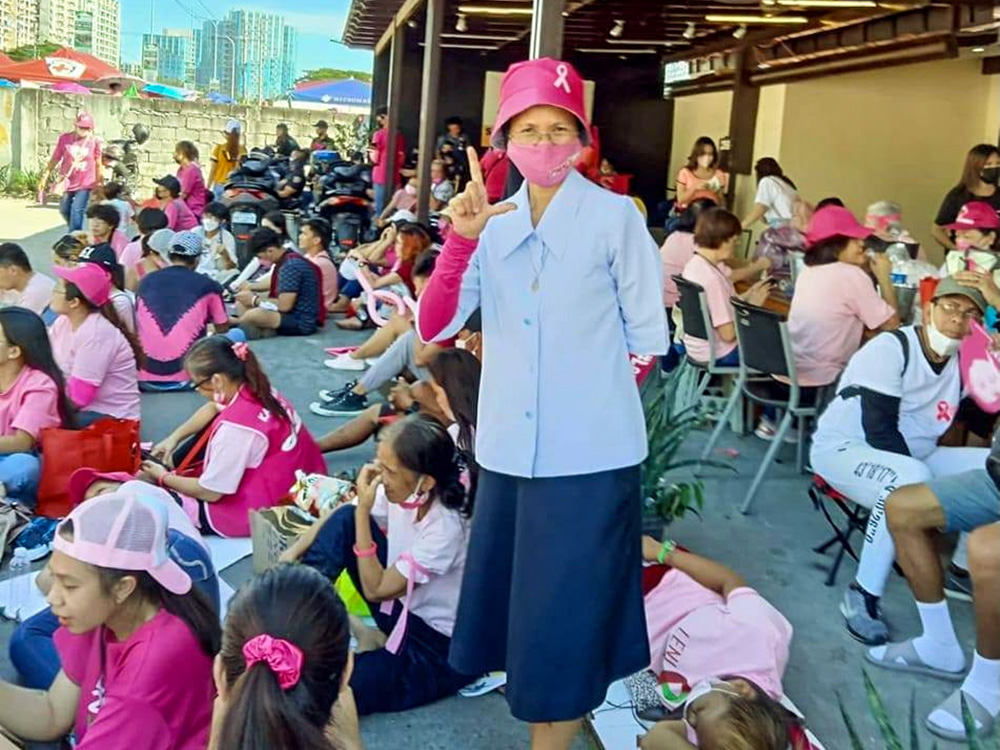
Daughters of Charity Sr. Liza Ruedas flashes an "L" (laban or "fight") sign during a voter's education campaign and gathering in April 2022. (Courtesy of Liza Ruedas)
We are not always able to see how partisan politics and political dynasties influence vote-buying culture, or how commercial ads and social media shape voters' choices. Still, we sense that we are on the right track in helping voters select the best leaders.
We have a system of placing some leaders on the ground to strengthen their formation after we leave the communities. Sometimes, we see a shift in their choices from corrupt, traditional politicians to new ones with potential for good leadership.
Isn't your fight against political corruption an involvement in politics?
Not at all. We are empowering the poor to claim their rights. The political and socioeconomic climate in the Philippines, marked by accusations of corruption, struggles, dissent and protests, reveals the victims of abuses and violations, the poorest of the poor.
The church's mission is to stay committed to supporting the least, the lost and the marginalized. Religious groups and Christian communities must demonstrate they cannot be silenced in their efforts to advocate for the persecuted poor. We stand with the poor and victims, and we empower communities to do the same.
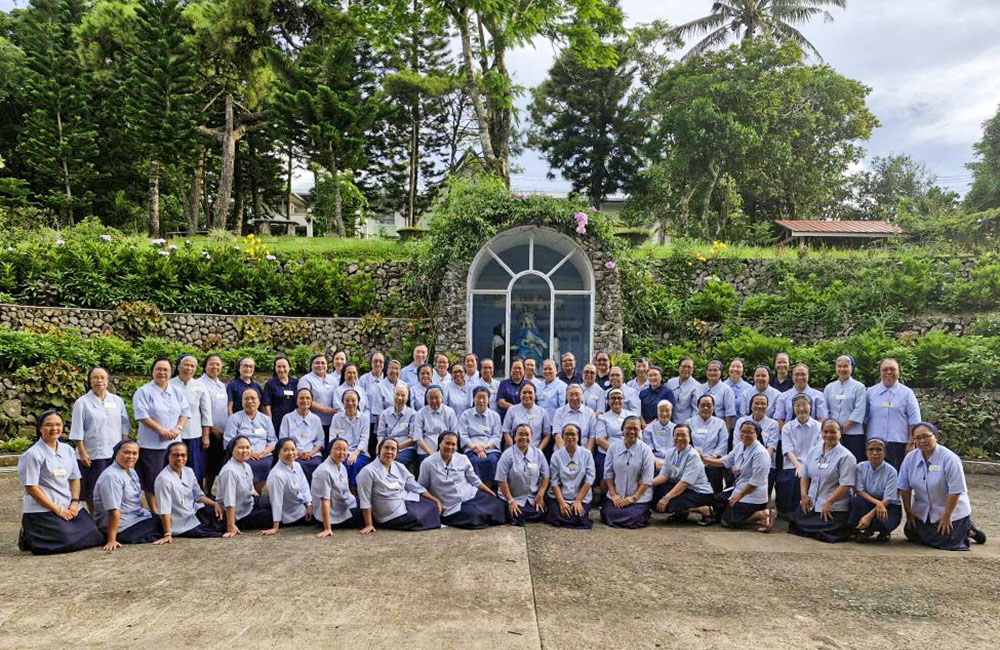
Daughters of Charity members gather in Tagaytay City, Philippines, in July 2025. (Courtesy of Liza Ruedas)
In the face of inequality, political unrest and disinformation, the church and religious communities must become artisans of peace and hope to stand with those who are abused and violated.
What are your hopes and plans for the future?
I remain hopeful despite the unsettling voices and realities and uncertainties. I find hope in my interactions with young children who seek truth, guidance, safety and protection; in the eyes of the dying and elderly; and among those who have been abused and violated.
We must continue educating our people. They need honest individuals to help them clarify doubts and understand difficult realities. Many seek good governance, and many hope for strong leaders. That gives me hope for a better Philippines.