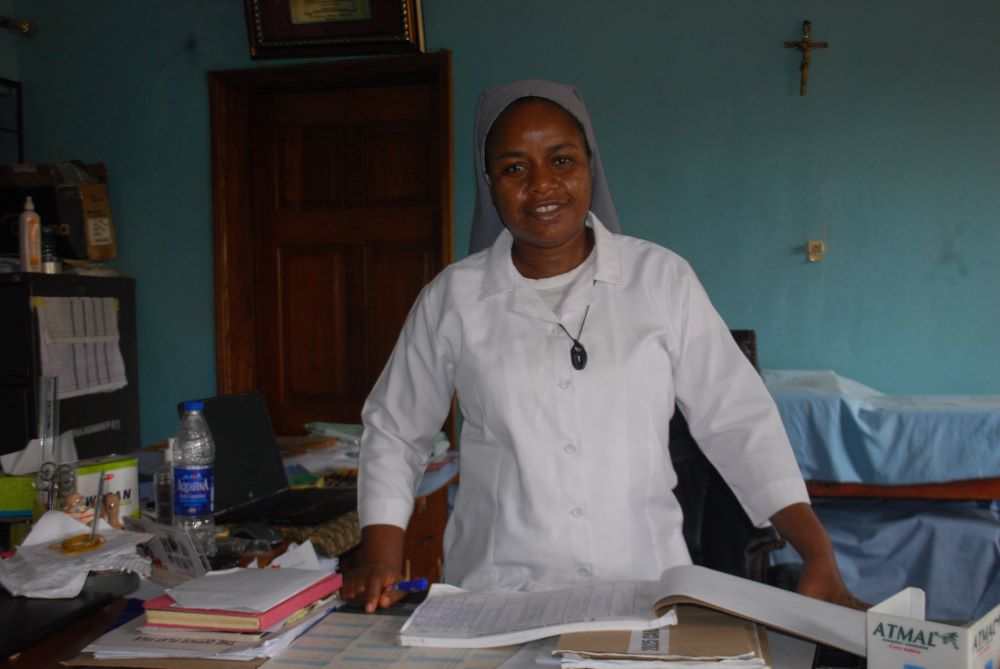
Sr. Nwanneka Udu, a member of the Congregation of the Medical Missionaries of Mary, poses in her office at the Mile Four Hospital in Abakaliki, Nigeria. She and other sisters and medical staff at the facility care for people with leprosy, including maternity and neonatal care, and other medical services. (Valentine Benjamin)

by Valentine Benjamin
When Sr. Nwanneka Uduh speaks about her calling, it is with the ease of someone who has wrestled with destiny — and won.
Born in Abatete, a culturally rich town in the southern corner of Nigeria's Anambra State, Uduh grew up in a blended family shaped by humility. She was the only surviving child of her mother, a quiet fact that forged in her both resilience and depth. Long before she ever wore a veil, she knew she wanted to become a sister. Yet the path that led there was anything but straight.
After secondary school, her mother — hoping the desire would fade — approached the parish priest. He summoned young Nwanneka and cautioned her against religious life. "He said sisters could be jealous," she said. "He said this to check my resolve to live the life of chastity; his advice after was straightforward: Go to school first."
She obeyed. From 1999 to 2002, she trained at Our Lady of Lourdes Hospital School of Nursing, Ihiala, then went on to complete her midwifery training at Bishop Shanahan Hospital School of Midwifery, Nsukka. What began as reluctant compliance slowly unfolded into revelation.
"Watching someone who is almost dying come back to life — that made me fall in love with nursing," she told GSR.
Even as a competent nurse and midwife, something within her stirred. A government job beckoned, but Uduh felt no peace: "I wasn't moving forward. I wasn't moving backward," she said. She paused to pray and even stepped away from church, seeking clarity. Then, one decisive day, she chose religious life — and the peace returned immediately.
Uduh joined the Medical Missionaries of Mary in 2007. Following her formation in Akwa Ibom and Ibadan, she professed her vows in 2010 and received a mission assignment in Fuka, Niger State, where she served until 2013. She later returned to Family Life Hospital in Mbribit Itam, a faith-based facility established in the 1980s and run by her congregation, which specializes in the treatment of maternal birth injuries, including vesicovaginal fistula, rectovaginal fistula, uterine prolapse, and perineal tears of different degrees.
Today, Uduh serves as the administrator of Mile Four Hospital, overseeing a range of health care services, including maternal care, child welfare, and treatment for HIV, tuberculosis and leprosy patients.
GSR: Can you describe Mile Four Hospital and the community it serves, especially those affected by leprosy?
Uduh: Mile Four Hospital was founded in 1946 to care for people with leprosy. The area that now houses the leprosy section of the hospital was once a place where people with leprosy were abandoned, as they were described at the time. In 1946, Bishop [Thomas] McGettrick invited our foundress, Mother Mary Martin, to visit and see whether she could work with people affected by leprosy. She accepted, and the hospital began as a leprosy center — treating patients, dressing their wounds, helping them to walk, and offering occupational and physiotherapy alongside ongoing wound care.
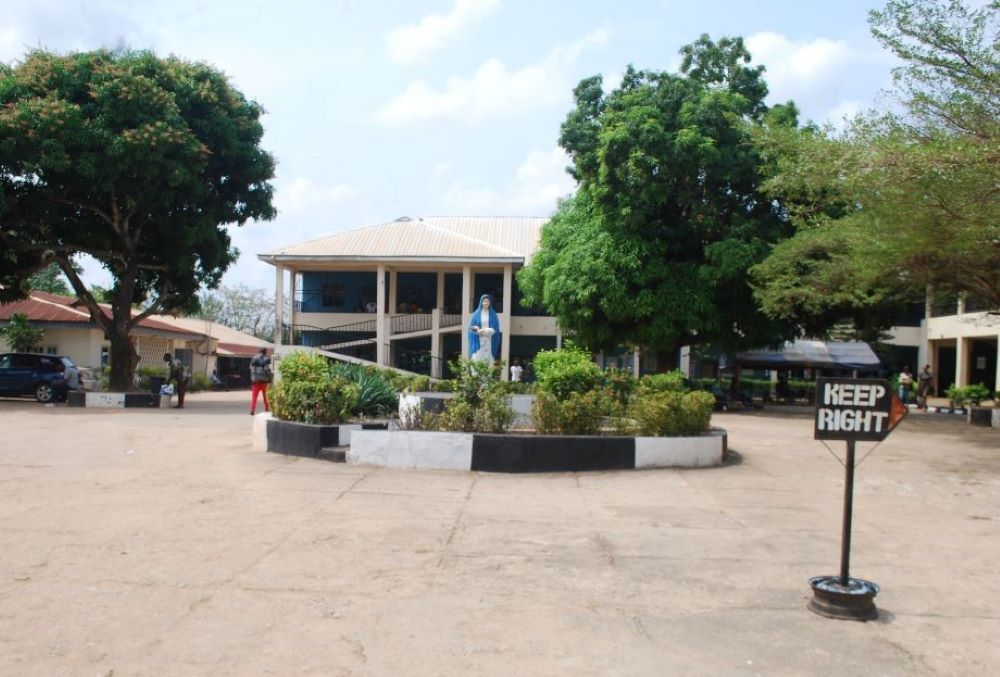
Sr. Nwanneka Udu serves as administrator of Mile Four Hospital, Abakaliki, Nigeria. This building houses the maternity department, where Udu and the staff provide health care services to newborns and pregnant women. (Valentine Benjamin)
Because it was a "leprosy village," women living there eventually began to have children. Some were unmarried; others married within the community. They were not accepted in town, and when they went to other hospitals for antenatal care or delivery, they were turned away. In response, the sisters built a small maternity unit for them. This marked the beginning of the hospital's maternity services.
Over time, women without leprosy also began coming to deliver at the hospital, and the maternity unit expanded, even though leprosy care remained the hospital's primary focus. Today, our services have grown to include child welfare, an HIV unit, a [tuberculosis] unit, and a multidrug-resistant TB unit. We also run a labor ward, a children's ward and a general outpatient department.
We provide X-rays and other diagnostic services and are deeply involved in mobile clinics, operating about 13 outstations or outreach centres that offer both general care and leprosy services.
Many people assume leprosy is a disease of the past. What realities do you encounter that challenge that assumption?
When people come to the maternity ward and you mention leprosy, they say, "Ah, that thing is in the Bible; we only read about it in the Bible." I then tell them, "Come, let me show you people who are living with leprosy."
The stigma remains very strong. Many people don't believe — or don't want to believe — that leprosy still exists, so those affected often delay seeking treatment until their condition is very serious. Some arrive with severe contractures and can no longer use their limbs or walk. That is the worst impact of stigma: nobody wants to be associated with leprosy, so they go everywhere else, searching for any diagnosis except leprosy.
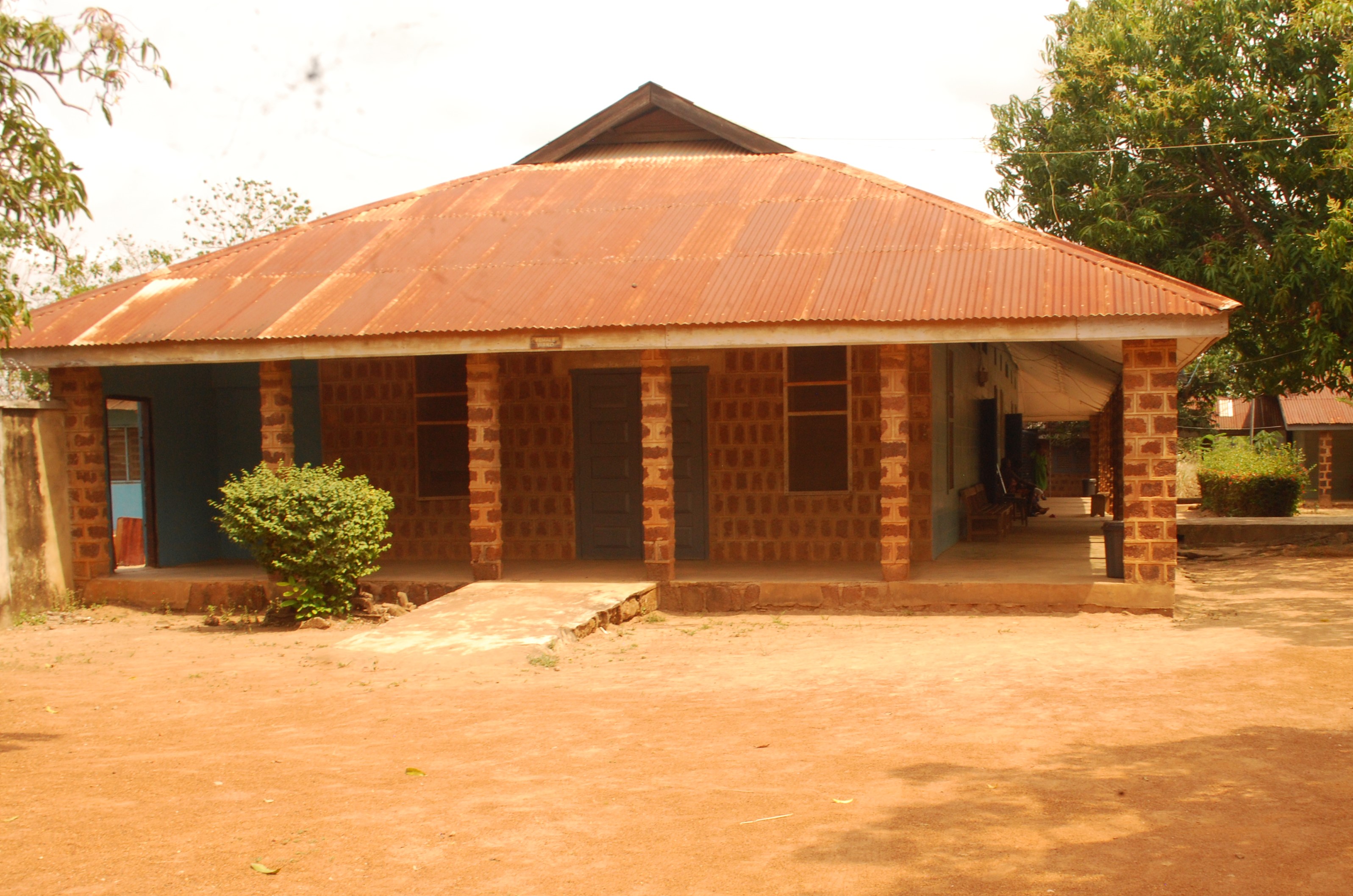
Leprosy and tuberculosis patients receive care at this building at Mile Four Hospital in Abakaliki, Nigeria. (Valentine Benjamin)
This mindset affects the medical team as well. Many doctors and health workers struggle to diagnose leprosy because, in most people's minds, leprosy is no longer present in Nigeria. As a result, even when patients go to the hospital, they are often not diagnosed correctly. They're treated for a generic skin disease — given creams and tablets — until their condition becomes very severe.
How does leprosy affect patients beyond their physical health, in their families, livelihoods and sense of dignity?
First, families may abandon them. We had one boy who died late last year; his family only brought him here because they thought he was already dying.
Families often turn them away because of the sores. Once your family rejects you, you have no support. Many can't walk because leprosy damages the nerves. If you are a driver, you may no longer be able to work, especially once the disease has advanced. You may not even be able to hold a hoe to farm. If you're a trader, customers may avoid you because of your appearance. You might look unkempt and, without treatment, the wounds can cause a bad smell.
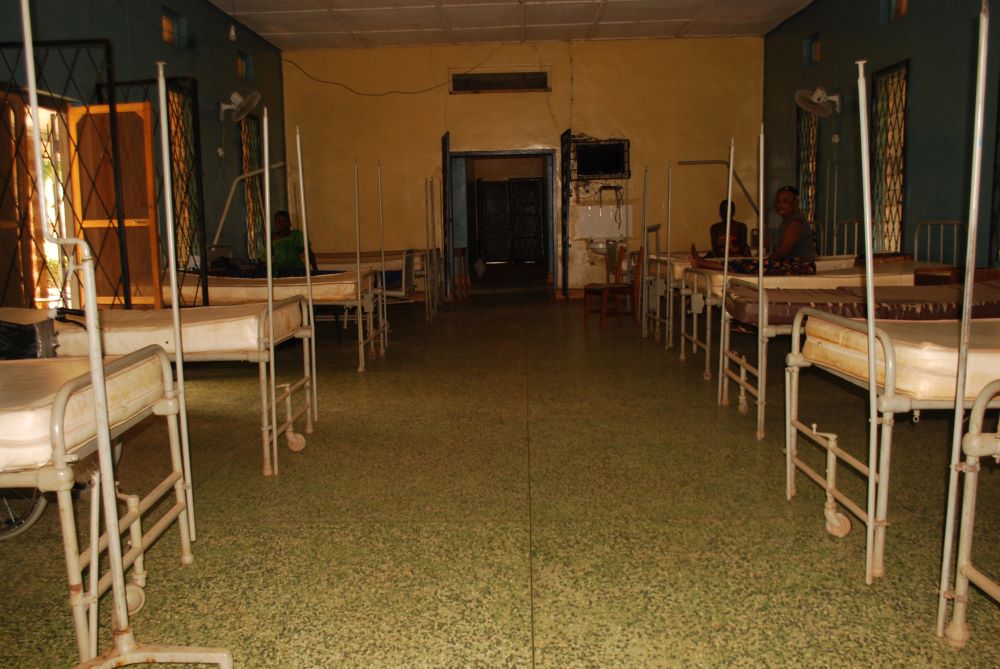
Newborn babies and their mothers receive health care services from the sisters of the Medical Missionaries of Mary in the maternity ward at Mile Four Hospital in Abakaliki, Nigeria. (Valentine Benjamin)
This suffering runs deep. They go to church and on many Sundays hear the reading about the 10 lepers and how people with leprosy were cast out. It hits them emotionally because it mirrors their reality. Leprosy affects every aspect of their lives — spiritual, physical and mental. There is also something called self-stigmatization: They begin to isolate themselves from others even before anyone else rejects them.
Could that be because of the things they have heard?
Yes, because they expect to be rejected. As Christians, we remember how Scripture describes people with leprosy — required to carry a bell wherever they went and forbidden to be touched. Patients already know this history of exclusion, and many have experienced it firsthand. Their families have often rejected them, so they preemptively isolate themselves. Long before others can turn away from them, they have already withdrawn. That is the mental and emotional dimension.
In the past, when we had a leprosy colony here, patients formed a close-knit community because nearly everyone there was affected by the disease. Today, however, the approach has changed. We focus on treating them and reintegrating them into society, helping them return to their own communities. As people see them regularly — healthier, well-kept and living normal lives — they slowly begin to accept them, not least for the sake of their children. Without this, many would refuse to marry into their families or associate with them.
So, leprosy is not just a physical disease; it touches every aspect of a person's life.
Advertisement
As a Medical Missionary of Mary, how does your congregation's charism shape the way you approach healing and accompaniment?
Our charism is healing — our healing charism. From the very beginning of our congregation, we have sought out those whom society has rejected. From our earliest formation, we are taught to accept every person. Hospitality is one of our core values, and it extends to everyone: we are to treat every person as Christ. After all, Jesus touched and healed the lepers in the Bible.
This spirit shapes our health care ministry. In health care, you can encounter any kind of person with any kind of disease. From the start, we are formed to accept every person — no matter who they are, the nature of their illness, how they look, or how they smell — and to treat each one as Christ. This is at the heart of our core values: hospitality and treating every person as Christ.