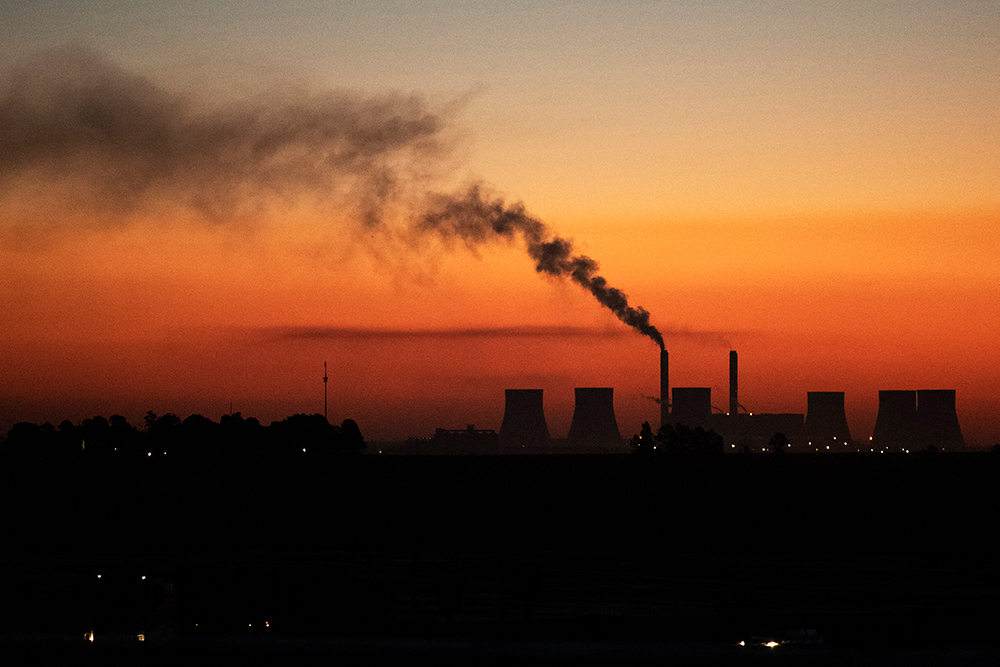
Steam comes from a coal-fired power station in Emalahleni, South Africa, Oct. 11, 2021. (AP/Themba Hadebe, file)

by Doreen Ajiambo
Editor's note: This story is part of Global Sisters Report's yearlong series, "Out of the Shadows: Confronting Violence Against Women," focused on the ways Catholic sisters are responding to this global phenomenon.
(GSR logo/Olivia Bardo)
Coal dust settles on Emalahleni before the sun rises, coating tin roofs, school uniforms and bare feet. By nightfall, smoke from power stations and cooking fires thickens the air, burning throats and eyes. In this mining city east of Johannesburg, extraction is not just an industry. It is the atmosphere people breathe and the ground they walk on.
It is also where children and young girls are disappearing.
Built at the heart of South Africa's coal belt, Emalahleni, whose name means "place of coal" in isiZulu, sits in Mpumalanga province, about 70 miles east of Johannesburg. For decades, coal and gold mines here powered the national economy and promised jobs, stability and development. They drew workers from across South Africa and neighboring countries, reshaping families, migration patterns and entire communities.
Now, as South Africa struggles to regulate thousands of abandoned and poorly rehabilitated mines, illegal mining networks have expanded into spaces the state has failed to govern, creating conditions where poverty, gender-based violence and child exploitation converge.
Religious sisters working quietly in mining communities say they are seeing a rise in cases involving girls coerced into sexual relationships, early marriages and survival sex linked directly to illegal mining settlements. The abuses often go unreported and unpunished.
As global demand for minerals accelerates — driven in part by the transition to green energy — Emalahleni has become a warning. The same extraction that powers economies and climate ambitions is also deepening local harm. Mineral wealth continues to flow upward, while children and women absorb the cost.
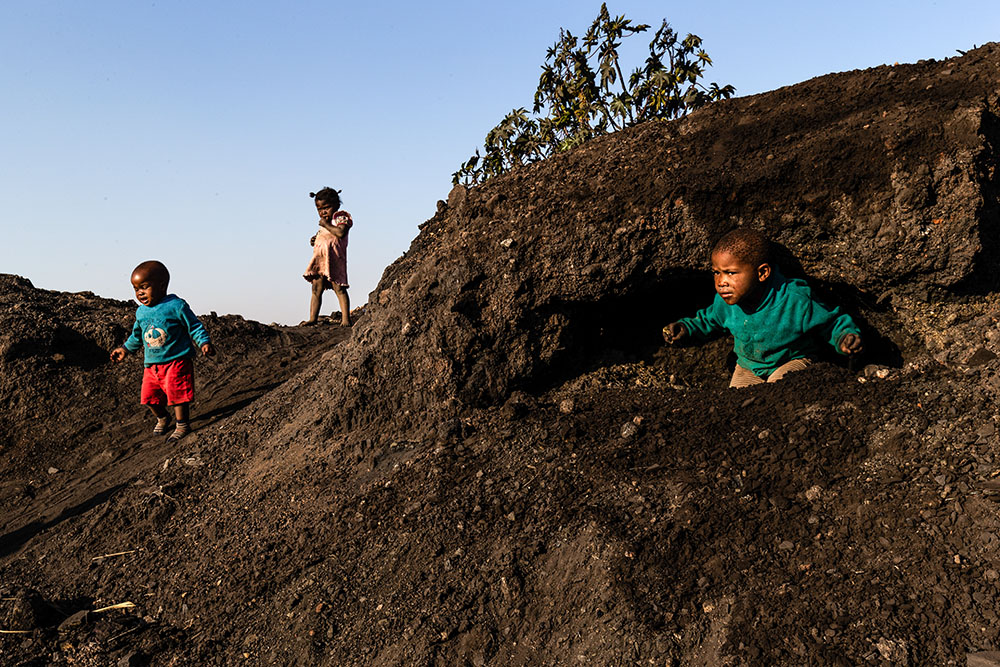
Children play in the midst of a coal mine dump in Emalahleni, South Africa, June 28, 2019. Many of the youngest have severe respiratory diseases. (Newscom/ZUMAPRESS/Stefan Kleinowitz)
Today, alongside operating mines and power stations, Emalahleni has become a gateway to a darker economy rooted in abandoned shafts, illegal mining and violence. In those unregulated spaces, criminal syndicates control access underground, and women and children are often treated as expendable.
Quietly, and at growing personal risk, Catholic religious sisters are trying to pull them out.
"We meet children after they have already been broken," said Holy Cross Sr. Sophia Phiri, who runs a registered community center serving vulnerable children. "By the time they reach us, abuse has already happened. Our work is to make sure it does not define the rest of their lives."
Working with priests, trauma counselors and local partners, the sisters rescue children from sexual abuse, trafficking and forced relationships linked to illegal mining networks. Their work unfolds largely out of public view — in informal settlements, clinics and unmarked safe houses — often without state protection and sometimes under intimidation from both police and criminal groups.
From economic engine to extraction trap
South Africa has one of the world's richest mineral endowments. Gold, coal, platinum and diamonds shaped its industrial rise and still anchor major exports. Mining towns like Emalahleni grew around pits, shafts and power stations that employed thousands.
But when mines age, close or downscale, the damage does not disappear. Human rights and mining experts estimate South Africa has more than 6,000 abandoned and ownerless mines nationwide. Many were left without proper closure or rehabilitation, creating open shafts and underground tunnels that are easy to reenter.
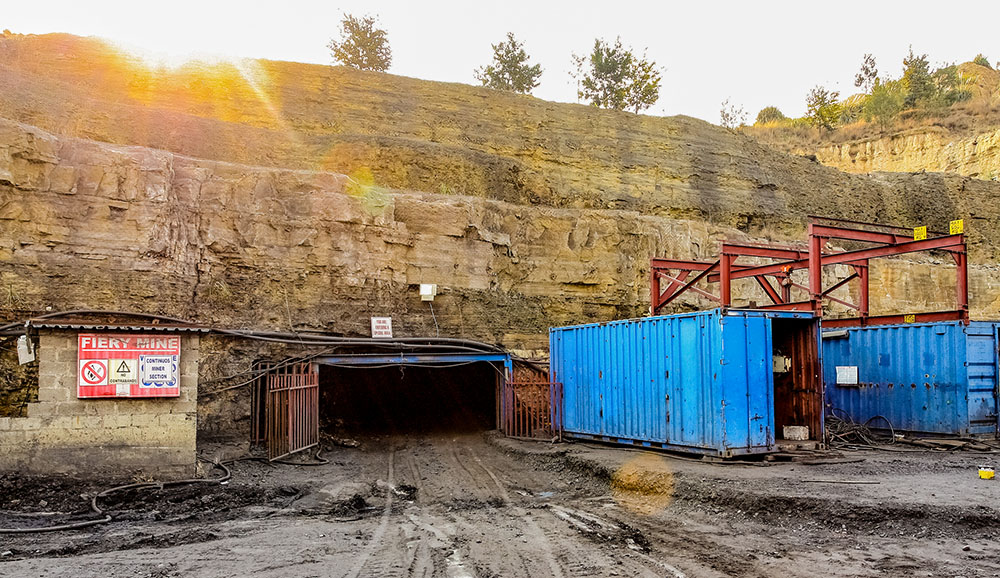
The entry to an underground coal mine in Emalahleni, South Africa, is seen in a file photo from July 2011. (Dreamstime/Michael Turner)
Those spaces have become magnets for illegal miners, known as zama zamas, who extract remaining ore and sell it through illicit supply chains. Armed syndicates enforce control through violence and intimidation, while surrounding communities live between fear of gangs and fear of police raids.
Sr. Dominica Mkhize, who works with the Justice and Peace Commission of the Southern African Catholic Bishops' Conference, said cases reaching her office reflect the deep damage mining has inflicted on families and communities.
"Mining is both a blessing and a curse," said Mkhize, a member of the Daughters of St. Francis of Assisi. "Economically, it provides livelihoods. But socially and morally, it has devastated many lives."
The commission receives cases involving young women abused in mining communities, former mine workers sickened by unsafe conditions, and families pushed into early marriages by poverty, she said.
"Poverty is the main reason young girls marry mine workers," Mkhize said. "Not because they understand marriage, but because they are trying to survive."
During visits to mining areas, she said, she has seen young men working without protective gear and girls married too early, already with children. "You ask yourself: What future do these children have?"
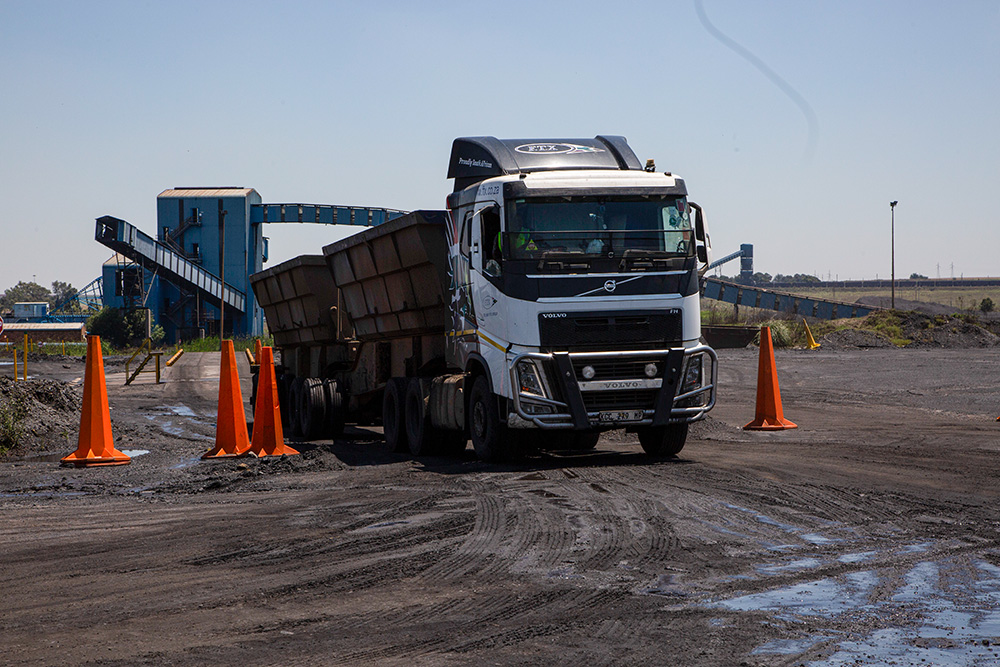
A truck is loaded with coal near Emalahleni, east of Johannesburg, South Africa, on Nov. 17, 2022. (AP/Denis Farrell, file)
In this underground economy, women and children are especially vulnerable.
Girls are drawn into early unions with miners, described locally as "mine wives." Others are promised jobs, money or protection and instead are raped, trafficked or forced into survival sex. Boys drop out of school to work underground, believing early income is the only way out of hunger.
"You don't choose this life," said one woman who described herself as a mine wife, speaking on condition of anonymity because of safety concerns. "Hunger chooses it for you."
"At first, he helps you," she said. "He buys food. He pays rent. He says you are safe. Then you realize you belong to him."
"If he tells you to sleep with another man, you do it," she said. "If you refuse, you are beaten or chased away. At night, with nothing, where do you go?"
Girls as young as 14 arrive alone, she said. "Some leave with babies. Some leave sick. Some don't leave at all."
"The police come for raids, not for us," she said. "If you talk, you are finished."
Hunger and control in Emalahleni's mining settlements
A man who said he worked illegally in abandoned shafts near Emalahleni agreed to speak anonymously, describing how girls are drawn into mining settlements through dependence rather than force.
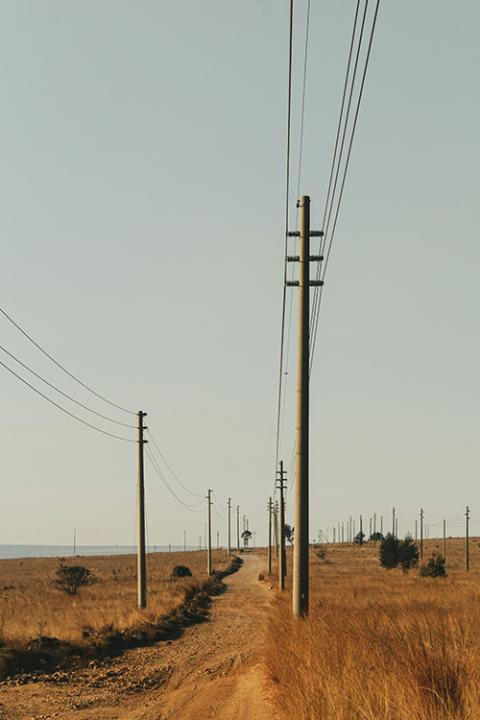
A dirt road is seen in Emalahleni, South Africa. (Unsplash/Auston Mtabane)
"We know they are struggling," he said. "You buy food, you give money, you tell her she can stay. Once she depends on you, it's finished."
Some miners describe the arrangement as marriage, but he rejected that label.
"It is not marriage," he said. "It is control."
Thandiwe, 32, lives near mining operations in Emalahleni and has worked as a cleaner for about a decade. She moved there at 18 after following a man who promised stability. She believed mining jobs offered a way out of poverty. Instead, she faced rising costs and responsibility for younger siblings after her parents died of HIV and AIDS.
"When you are poor, marriage becomes survival," she said, adding that reporting abuse can mean losing everything and that she fears her daughter will repeat her life.
Lesedi was 17 when she became a miner's wife. Now 25, she lives in Soweto, raising three children alone. She left school and followed a man to a mining settlement, where she said she was beaten, forced to cook for miners and subjected to repeated abuse.
"We cried every day," Lesedi said.
Pregnant and with nowhere else to go, she stayed before later fleeing back to her village, where support was limited. Her life changed after she joined a church and met Catholic sisters.
"They did not ask why I stayed," she said. "They helped me leave."
With the sisters' help, she later established a small salon.
Advertisement
Reporting under pressure
While reporting in Emalahleni, Global Sisters Report traveled with Catholic sisters and priests to one of the mining areas. Police stopped the vehicle, questioned those inside aggressively and warned that arrests were possible.
The encounter underscored the risks faced by those who document abuses in mining communities, where scrutiny from authorities and criminal groups can quickly shut down access. To continue reporting, Global Sisters Report later blended into the community, appearing as a local resident seeking assistance — a common strategy in areas where visibility can end both reporting and rescue work.
Church workers say intimidation comes from multiple directions: criminal gangs guarding illegal shafts, community members afraid of retaliation, and authorities who see inquiries as interference.
South Africa has adopted national strategies to combat illegal mining and gender-based violence. But enforcement has struggled against the scale of abandoned mines, organized criminal syndicates, corruption and deep mistrust of police.
Survivors often do not report abuse because cases stall, evidence disappears or perpetrators return to the community on bail. Heavy-handed raids may disrupt illegal mining temporarily but rarely dismantle the networks that sustain exploitation.
The result, church leaders say, is a protection gap.
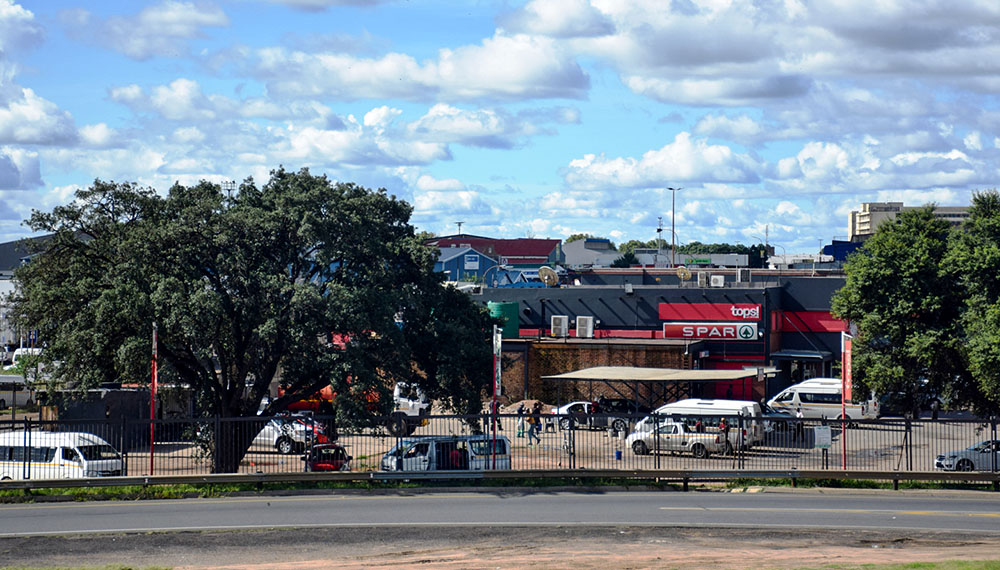
A view of Emalahleni, South Africa, in February 2025 (Flickr/János Korom Dr.)
Between 2022 and 2024, Phiri said her center assisted about 150 survivors of gender-based violence, providing shelter, trauma counseling and long-term follow-up.
"We don't just receive cases," she said. "We walk with them."
The work is coordinated through the Emmaus Project, a pastoral approach developed by the Justice and Peace Commission of the Southern African Catholic Bishops' Conference. It emphasizes accompaniment, listening and sustained presence.
"When systems fail, presence matters," said Fr. Stan Muyebe, the commission's director. "You stand where people are wounded."
"Our role is not to replace the state," Muyebe said. "It is to refuse to look away."
For survivors like Lesedi, escape came only because someone intervened.
"I want my children to study," she said. "But school needs money. Food needs money. Mining is always there."
She stopped, then added: "But at least now, when I look at my children, I know they are not underground."
In Emalahleni, coal continues to fuel the nation's power stations, and global demand for minerals continues to rise. But beneath that wealth lies another ledger, one measured not in tons or profits, but in childhoods lost and lives constrained by hunger and fear.
"We do not rescue everyone," Phiri said. "But for the one child who sleeps safely tonight, that is enough reason to keep going."