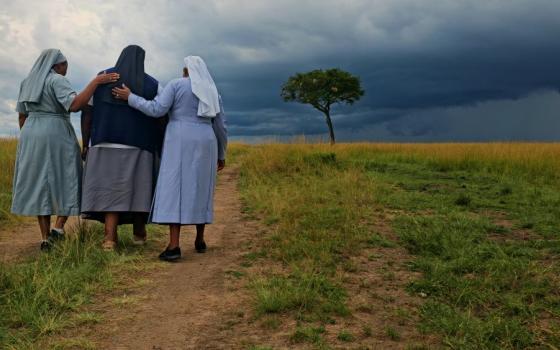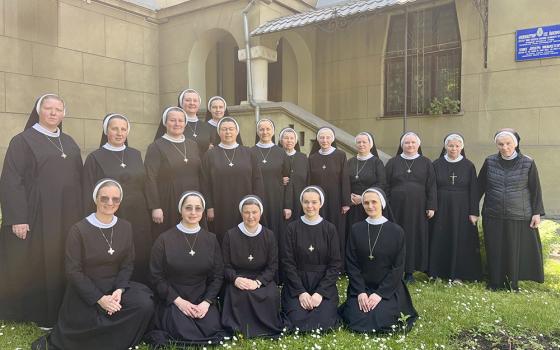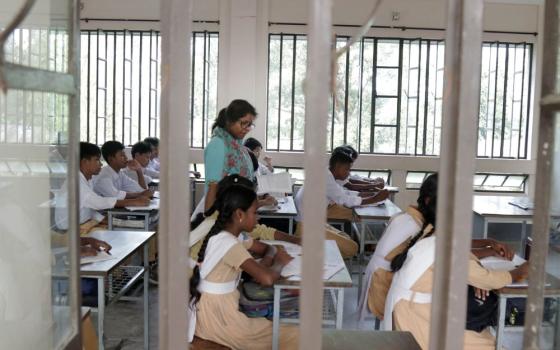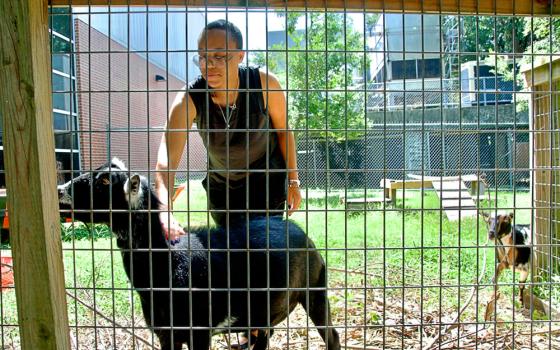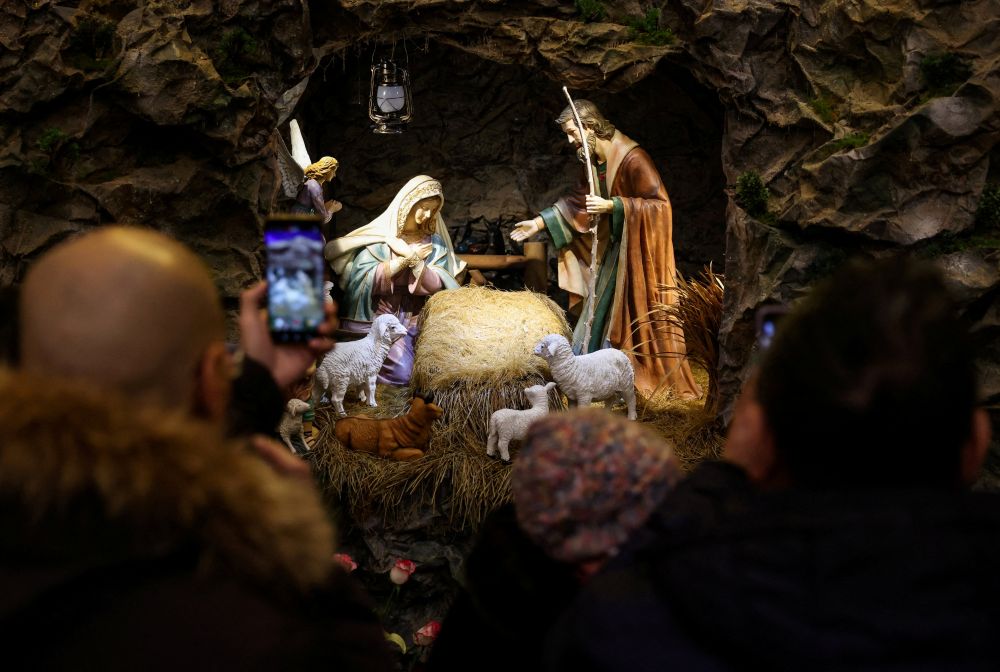
Worshippers take photos of a Nativity scene at Christmas Eve Mass at Xishiku Church, also known as the North Church, in Beijing Dec. 24, 2025. (OSV News/Reuters/Maxim Shemetov)

by Tracey Edstein
This reflection was inspired by a typically frank conversation with a dear friend in the "liminal space" between last Christmas and the beginning of the new year. I am single; she is widowed and has no children. We live far away from each other.
We were, unsurprisingly, sharing our stories of Christmas 2025. Each of us had been with family, and each of us has nieces and nephews who are partnering, parenting and generally getting on with life.
Each of us had been made to feel more than welcome, but, we agreed, we occupied what she called "a peripheral space."
This expression led me to think more about the spaces each of us occupies at significant times: Christmas, Easter, significant birthdays, mourning, holiday times, weddings — and so on.
To me, it's not as simple as one's "space" being determined by one's "state" in life. Your level of confidence, your ability to be comfortable in your own skin; your capacity to contribute to the planning, the hosting, the catering, the decoration; your differing relationships with the others present — all these are real and can significantly affect how you navigate the situation.
I began to think, not only about the life of the extended family, but also about the parish family.
It seems to me that the same observations apply. There is the "in crowd" — those whose names appear on rosters, who carry keys (literally or metaphorically), who know what's happening.
There are those who neither desire nor need to carry keys or to know what's happening, but who are committed and supportive.
And then there are those who don't really feel at home in the parish setting, but who nevertheless show up when they feel a pull to be part of a larger community, or because Christmas or Easter Mass is a family tradition, or because grandma wants us all to be together. These individuals, though present, may feel somewhat peripheral to the celebration.
Regardless of what happened — or didn't happen— to make the parish peripheral for them, Christmas, of course, is the perfect time to be welcoming — not "welcome back," just "welcome." Last year our diocese provided postcards for Mass-goers to deliver to people whom they wanted to invite to Christmas Mass, carols and so on.
I left one in the letterbox of a gentleman who had drifted away from the church (not from faith) for various reasons, including the tragic loss of a son. I was surprised how disappointed I was that — as far as I know — he didn't accept the invitation. Maybe next year …
The event that Christmas celebrates — the birth of a child under unusual and threatening circumstances — creates its own peripheral space.
Mary and Joseph are away from the familiar and the safe, with few resources.
Joseph is told in a dream to escape into Egypt, to thwart King Herod. He is then told that it is safe to return to Israel, but he fears Herod's son, who has succeeded his father, so he takes his little family to begin life in Nazareth of Galilee.
It seems highly unlikely to me that the cool, calm and collected Mary of most nativity scenes bears any relationship to reality! Quite possibly she and Joseph felt peripheral themselves in the unfolding story of salvation, living with loneliness, uncertainty and fear.
And remember, while we laud Mary's willingness to become the mother of God, there would surely have been much talk and many questions in her community about having conceived before the couple had come to live together. Even her own family members may have harbored doubts.
Perhaps Norman Rockwell-inspired images and Christmas movies that promote effortless togetherness along with matching pajamas and the requisite happy ending are not serving us well, creating quite unreal expectations and hopes?
Perhaps — dare I say it — Christmas is all about being in a peripheral space, without certainty or guarantees.
Perhaps many of our traditions and customs are unconscious attempts to fill that space — with trees and trinkets, with endless get-togethers and entertaining, with shopping and gift-giving, with "the latest look" and the "newest thing."
Advertisement
Yet Christmas, or Advent, really, has an uncanny habit of exposing us — our fears, our insecurities, our long-buried doubts. Surely this was true of Mary and Joseph — and Mary was so very young, with little life experience!
If the Advent and Christmas seasons are all about dwelling in peripheral spaces, after all, how do we respond to this as people of faith who welcome the Christ-child into our lives?
Can we try to accept — even welcome — the discomfort of this season as integral, and unavoidable?
I'm not saying this is easy, but doing so can embed our observances in the simplicity and mess of the Christmas story, challenging the charming, almost immaculate nativity scenes we often encounter.
Accepting this discomfort might remove the foolish expectation that this year, all will be well. There will be no family or community disagreements on, or leading to, Christmas Day. Everyone will play their liturgical part flawlessly. Everyone will appreciate the efforts of their family members, fellow parishioners and community members.
Also, if we sacrifice some comfort, we may experience the joy of solidarity with those who know insecurity and hardship every day. As Jesus told us, they will always be with us.
What peripheral spaces do you expect to occupy this Christmas? Can you identify people in your community who might feel especially peripheral this Christmas? How can you support them?