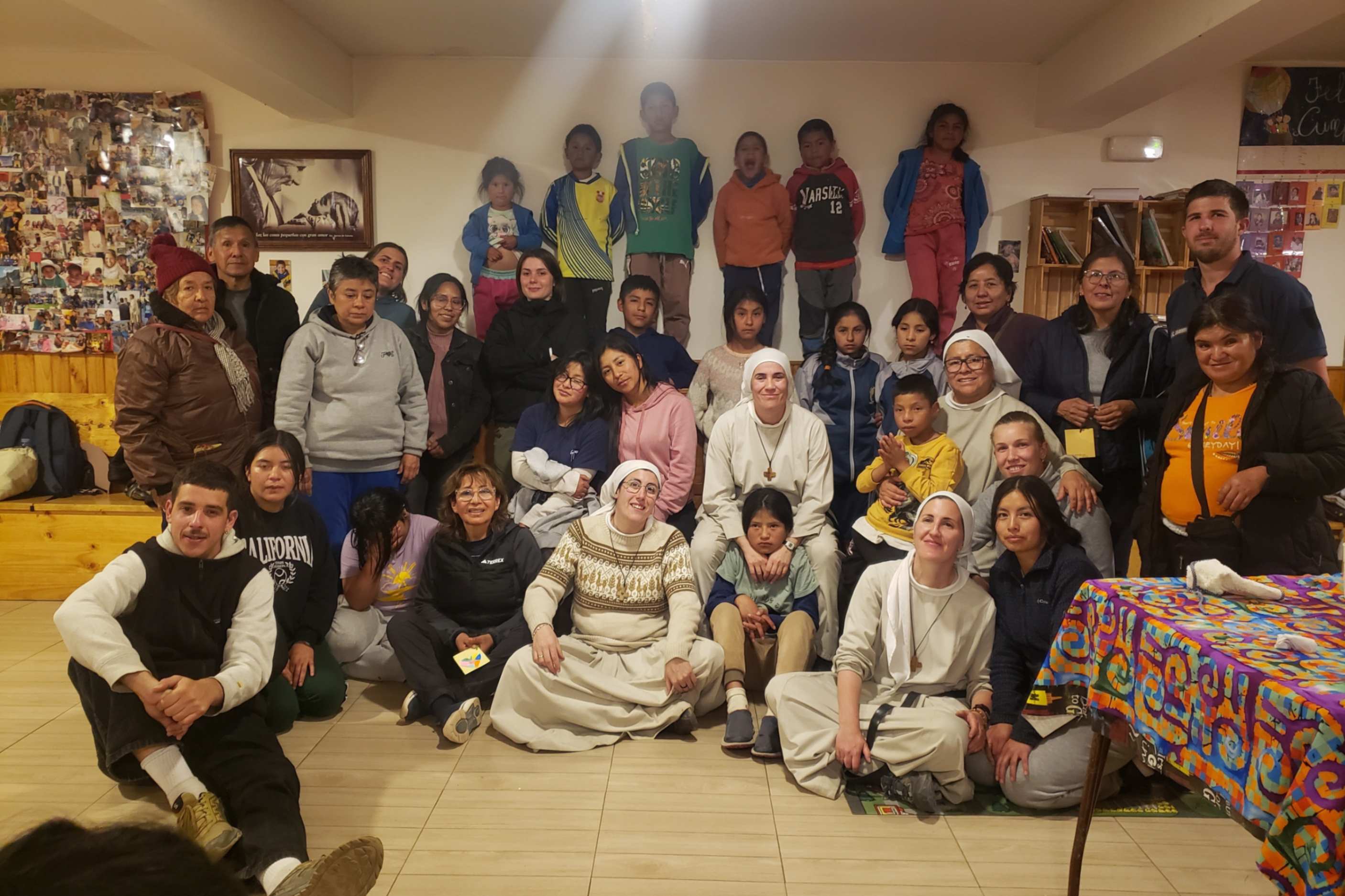
The central hall of La Casa del Niño, with its wood-paneled walls and lit stoves, brings together sisters, volunteers, "aunts" (women caregivers) and children. (Courtesy of Sr. Begoña Costillo)
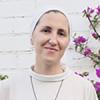
Sr. Begoña Costillo
La Casa del Niño belongs to everyone. A few years ago, it became my home too, and whenever I can, I drop by for a few days, or an afternoon, or just a few hours — whatever my schedule allows. It's located on a hillside in the Peruvian Andes, in a town called Chuquibambilla. Everyone knows it, because everyone feels at home there.
I see it from afar as I walk up the street that leads to its door, and just seeing it, I'm enveloped by its homey atmosphere — the children's laughter, the colors of their rooms, the simple and peaceful joy — you can feel it there. The atmosphere in that house helps me understand the stories Jesus told: "The kingdom of heaven is like a mustard seed," "The kingdom of heaven is like yeast …" La Casa del Niño is like those parables; it is like the mustard seed, or the yeast, or the salt in food. They are small things — and sometimes hidden — that germinate silently and slowly fill everything with abundant life. It happens without much effort, without grand plans, as if it were easy to draw life and light from stories that, at the outset, seemed destined for disaster.
The children who live there — a group of 12 or 15, depending on the time — have been taken in because the circumstances of their families, or of those who were caring for them, are extremely fragile. Each one has their own situation; no two are alike. Little by little, I've come to know them: problems with addiction, violence, poverty, teenage pregnancies, illness and so on. They all stem from the mystery of the human condition — that is, from our infinite need for shelter, care and bonds that nourish us. And in this regard, La Casa del Niño excels at sheltering, caring for, welcoming, loving and forming bonds. These are verbs that take on a concrete and real meaning there, because they are not only heard but also seen and felt.
I see it and feel it every time I'm there. The shelter provided by the casa extends into my own life and seeps into the most hidden, mysterious corners of my history and my fragility; it shields me from the coldness of life, from that inner loneliness we all carry within us simply by being human. It is a warm shelter that envelops anyone who sets foot in that house. It's in the air and on the faces of the children who, as soon as they see a new guest, welcome them with spontaneous and truly sincere hugs. What freedom, what simplicity there is in those hugs.
The children convey a restored sense of trust through their hugs and gestures. You can see in their eyes that they have suffered, and that they still suffer, but at the same time, it is evident that the mustard seed has already begun to grow within them. You can taste the flavor of a new salt; you can feel the richness of the leaven. They have received the seed of the kingdom through care and love, and they already carry the genuine joy of the blessed.
Advertisement
In the home, sowing takes place in many ways: from the care given to the spaces to the depth of the gestures that weave relationships among those who live there. I see this as I enter the main hall, designed as an open and very spacious area, with wood-paneled walls to retain heat and two stoves in the center of the room that are always lit. The walls of the living room are decorated with hundreds of photos of the people who make up the vast network of connections that have grown out of the Casa del Niño: the children who have passed through the home over the years, the "aunts" who care for them as if they were their own mothers, the hundreds of volunteers from Peru, Italy, and other parts of the world who dedicate part of their time to caring for these children, the children from the village who are invited to the casa to play and talk about God, the children's families, our priest friends, the nuns who occasionally drop by, and a very long list of others.
To enter the dining hall at mealtime, the children must line up at the door and enter in silence. Before eating, they say a prayer of thanksgiving together to God the Father and ask him to bring bread to their families' tables and to those of the poor. The caregivers help them remain silent, join hands, and become aware that life, bread, family and friends are gifts from God. They speak to them with tenderness, but also with a sense of security on which the children can rely and find the existential stability they need.
The rhythm of daily life in the home clearly shows that the compassion and tenderness of love also involve discipline. For this reason, the "aunts" teach the children to clean the common areas, to care for the youngest children, to be responsible in their daily household chores, and even to help the poor in the village on Saturday mornings. They are encouraged to grow in the fundamental dimensions of their personhood through sincere and selfless affection.
The children feel deeply loved by the "aunts" — the young women who act as mothers in that home — because they know these women have put their own lives on hold to care for the children. They are part of "Operation Mato Grosso" (OMG), an Italian volunteer movement founded in the 1960s by the Salesian Fr. Ugo de Censi, with more than 60 missions in different areas of Peru. Some of these "aunts" spend a few months at the Casa del Niño, others a few years, and still others, like Anna, have chosen to dedicate their entire lives to the children, unconditionally.
Anna arrived in Peru from Italy as a young volunteer at the age of 23. She got to know various OMG missions, and a few years later, she let herself be drawn by the inexplicable inner pull that kept bringing her back to this land, and she decided to stay and live here. At the mission, she discovered that life has meaning when you give of yourself and that true joy lies in "giving life away." When I meet her at the Casa del Niño, I realize that the expression "giving life away" is no metaphor. Anna, like the other "aunts," pours her time, her energy, her creativity, and all her affection into ensuring these children grow up healthy in body and spirit. Anna's life consists of caring for them, taking them to the doctor, attending school meetings, baking cakes for their birthdays, mediating between them and their biological families, teaching them to pray, and doing everything a mother would do for her children.
The lives given by Anna, Nayelli, Leyla, Liz, Marina and Yeri become seeds that fall into the lives of each of these children and take root within them. And so, by giving of their lives to sow the lives of others, the house has become a great tree under which many can find shelter and come to understand that the joy the heart desires comes when one "gives of one's life."