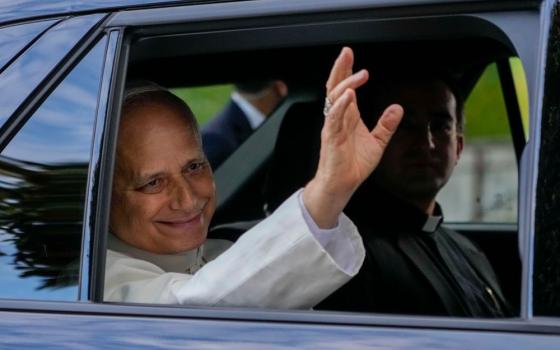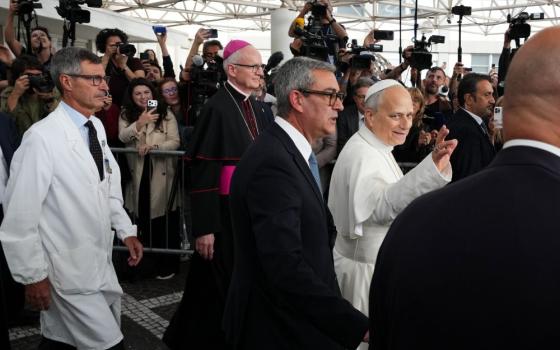
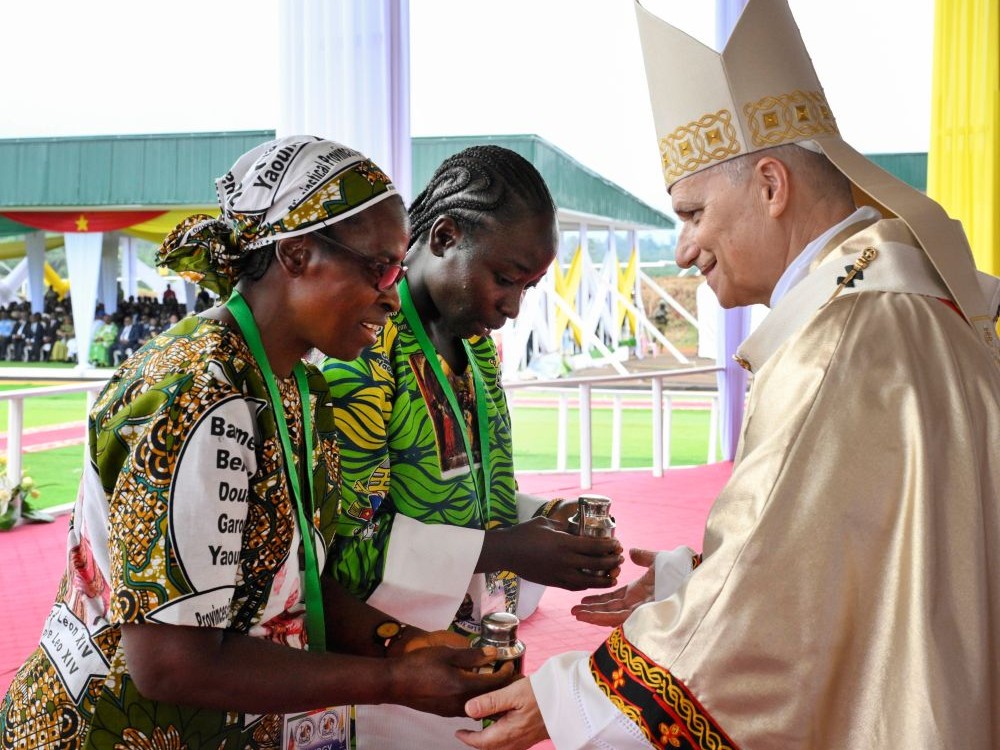
Pope Leo XIV receives the offertory gifts as he celebrates Mass at Bamenda International Airport in Cameroon April 16, 2026. (OSV News/Vatican Media/Simone Risolutii)

by Doreen Ajiambo
When Pope Leo XIV arrived in Africa, the world saw what it expected.
During his April visit to Algeria, Cameroon, Angola and Equatorial Guinea, crowds stretched far beyond the edges of public squares, and choirs carried hymns into the open air. In these countries, the welcome reflected something deeper than ceremony — faith that has endured under pressure and, in many places, continues to grow.
For a global audience accustomed to declining participation in parts of Europe and North America, these scenes offered a contrasting image of Catholic life. Across the countries on the pope's itinerary, parishes remain active, congregations are expanding, and vocations to priesthood and religious life continue to rise.
This contrast has increasingly been noted by church leaders, researchers and Vatican observers, who point to Africa as one of the most dynamic centers of Catholic life today.
At the same time, the visit brought into focus a more layered reality — one that extends beyond the images of large crowds and vibrant liturgies.
Across much of the global North, Catholic institutions continue to navigate secularization, declining attendance, and questions of credibility. In contrast, many African communities continue to engage the Church as a central part of daily life, where faith is closely tied to survival, dignity and social cohesion.
This difference is not only demographic. It signals a shift in where the church's vitality is most visible — and how it is sustained.
That reality becomes clearer when one steps away from the spectacle of the visit and into places like Bamenda.
Bamenda is not simply a stop on the pope's journey. It is a place shaped by prolonged instability linked to the Anglophone crisis, where daily life continues under persistent uncertainty. Here, the pope's message of peace resonated deeply because it spoke into an existing wound — one that remains unresolved.
His presence brought visibility to a region that has often been overlooked. For many residents, that visibility mattered.
But the conditions people returned to did not change.
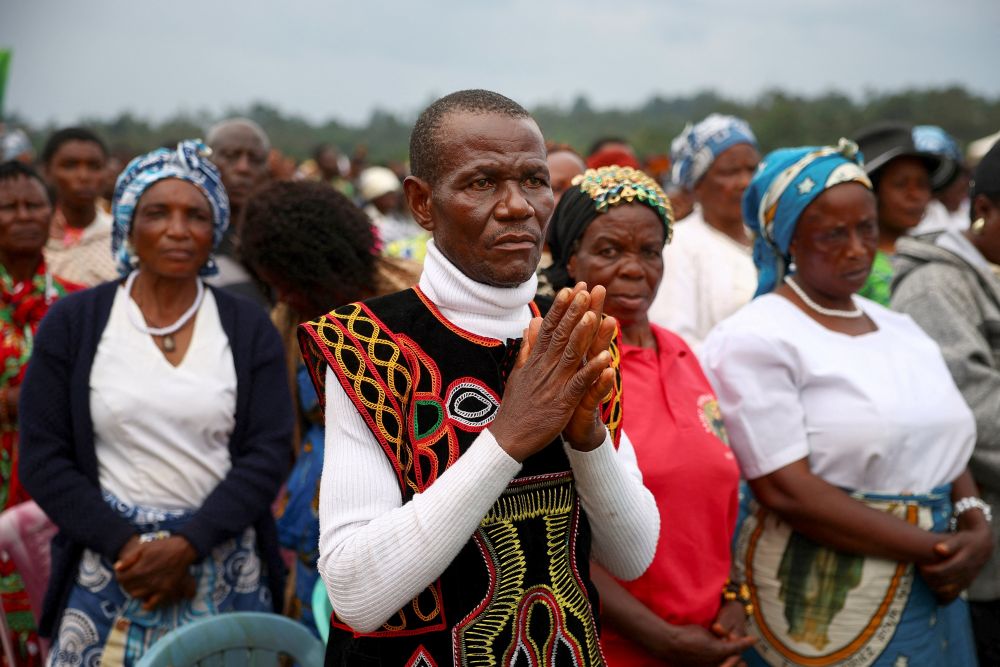
A man prays as Pope Leo XIV celebrates Mass at Bamenda International Airport in Cameroon April 16, 2026. (OSV News/Reuters/Guglielmo Mangiapane)
Joseph Nfor, a local catechist and religious scholar in Bamenda, reflected on the visit with a mix of gratitude and realism: "We were happy the pope came. It gave us hope. But life here is still the same. We still wake up not knowing what the day will bring."
That tension — between recognition and reality — ran through much of the visit.
In Angola, economic growth driven by natural resources continues to coexist with deep inequality at the community level. In Equatorial Guinea, the church operates within tightly structured political conditions that shape its public engagement. In Algeria, Christian communities remain small, sustained through quiet resilience and local relationships.
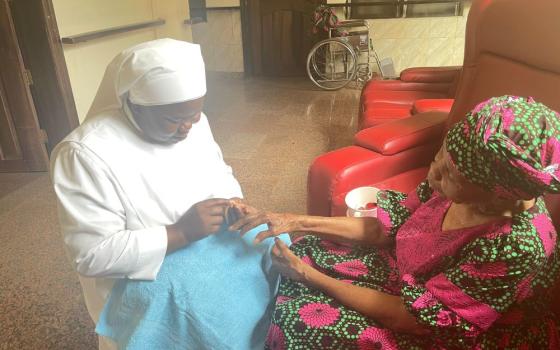
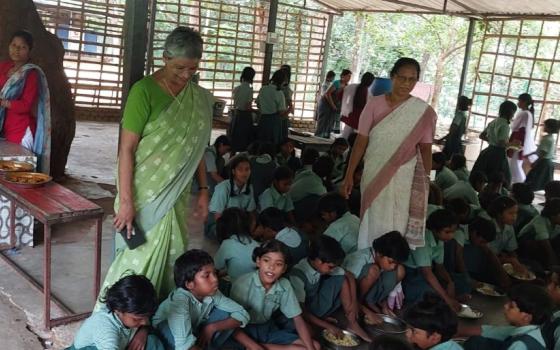
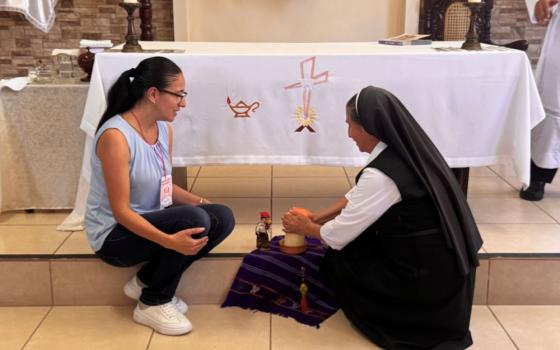
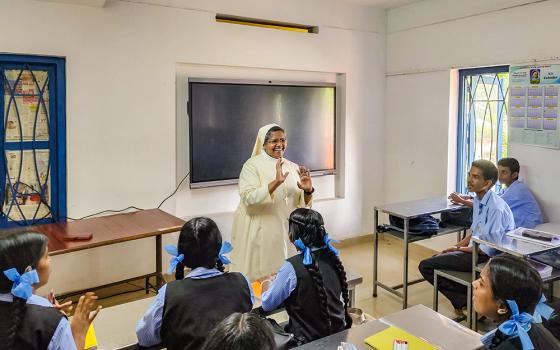
In many African settings, sisters are deeply involved in education, healthcare, peacebuilding and humanitarian work. Increasingly, they are also working alongside lay collaborators, forming networks that extend the church's reach into communities where formal structures may be limited.
This model of shared responsibility reflects how the church is often built at the local level — not only through hierarchy, but through relationships.
A pastoral worker familiar with church structures in the region described this shift in simple terms: "Africa is no longer just receiving the church. In many ways, it is already shaping how the church is lived."
What emerged across the pope's visit was not a church waiting to be strengthened, but one already carrying the weight of renewal through local initiative, religious commitment and lay collaboration.
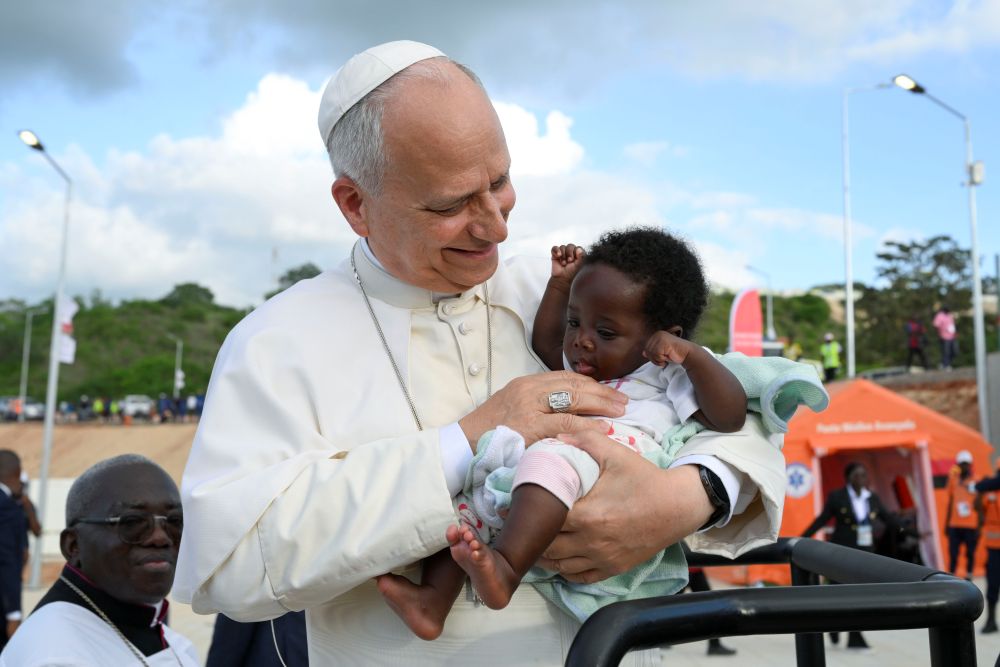
Pope Leo XIV holds a baby at the Sanctuary of Our Lady of Muxima in Muxima, Angola, April 19, 2026. During his visit to Angola, Leo prayed at a Catholic shrine located at the site of an important hub of the African slave trade. (OSV News/Vatican Media/Simone Risoluti)
In places like Bamenda, that renewal is not abstract. It is visible in the daily work of communities that continue to gather, rebuild and sustain one another under difficult conditions.
Women religious play a particularly visible role in this process.
They serve in areas affected by conflict, displacement and environmental stress, offering continuity and stability where systems have weakened or failed. Their work often takes place beyond global visibility, yet it is central to how the church remains present and credible in fragile contexts.
In a recent conversation, Sr. Jane Wakahiu, a member of the Institute of the Little Sisters of St. Francis, Kenya, and director of the Catholic Sisters Program for the Conrad N. Hilton Foundation, reflected on how this lived reality connects to broader questions of leadership within the church: "I hope to see greater representation of Africans, including African women, appointed to leadership roles within the church in Rome, particularly among the cardinals or women religious. At the same time, I am proud to see African women already serving as members and consultors in various dicasteries."
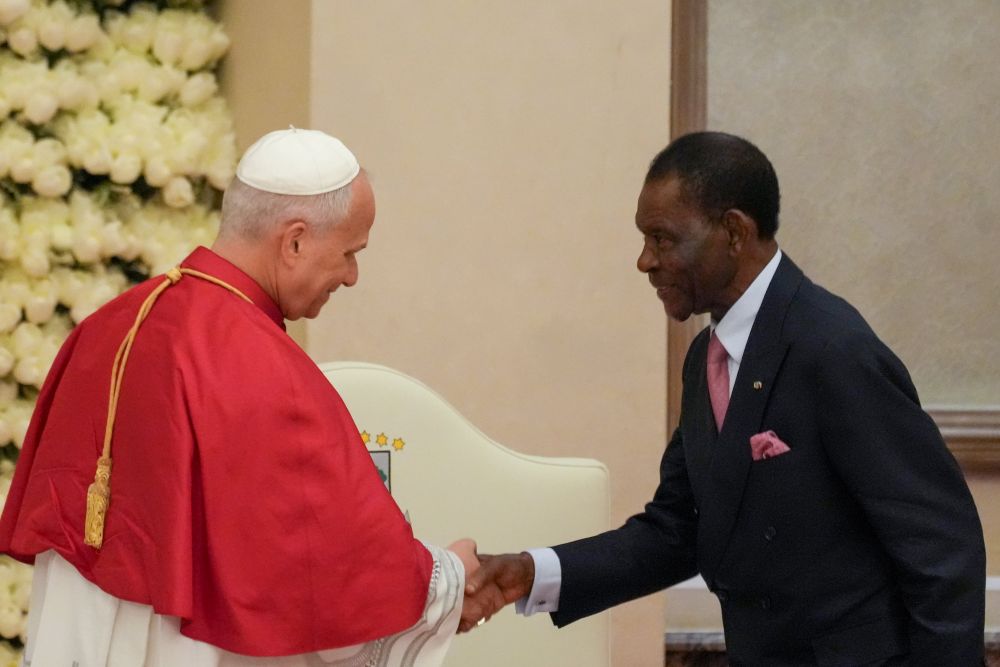
Pope Leo XIV shakes hands with President Teodoro Obiang Nguema Mbasogo during a meeting with government authorities, civil society and the diplomatic corps at the Presidential Palace in Malabo, Equatorial Guinea, April 21, 2026. (CNS/Lola Gomez)
These developments suggest progress, even as questions about representation and influence remain.
The language often used to describe Africa as the "future of the church" reflects recognition of its growth. Yet it also raises questions about how that growth is integrated into present structures of leadership and decision-making.
The pope's visit brought these questions into sharper focus.
Conflict continues to affect regions such as Cameroon's northwest. Economic inequality persists in countries with significant natural resources. Climate pressures are increasingly shaping livelihoods across multiple regions. In many of these contexts, church institutions — and particularly women religious — play a central role in responding to these challenges.
Their work, however, often remains outside global visibility.
Advertisement
As the visit concluded and attention shifted elsewhere, what remained were the communities that continue to navigate these realities each day.
The visit offered affirmation and recognition. It also revealed the depth of engagement already taking place at the local level.
Across Africa, the church is not only growing in numbers. It is evolving in how it is lived, sustained and shared.
The question that emerges from this moment is not whether Africa will shape the future of the church.
What remains less clear is how that reality will be reflected in its present structures of leadership and decision-making — and how quickly those structures are prepared to respond.
That question remains open.
And it is likely to continue shaping conversations within the global church long after the memory of the visit fades.