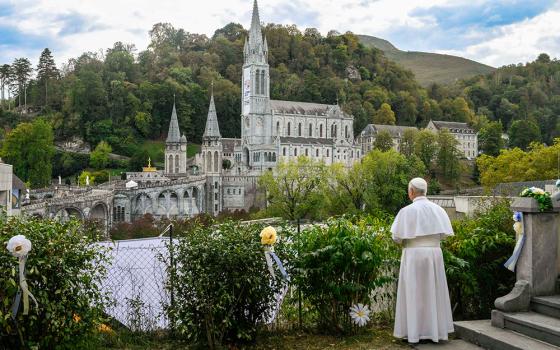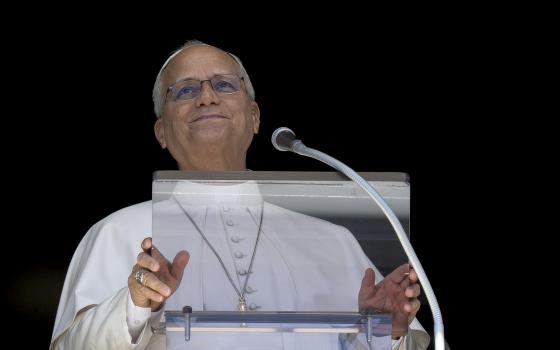
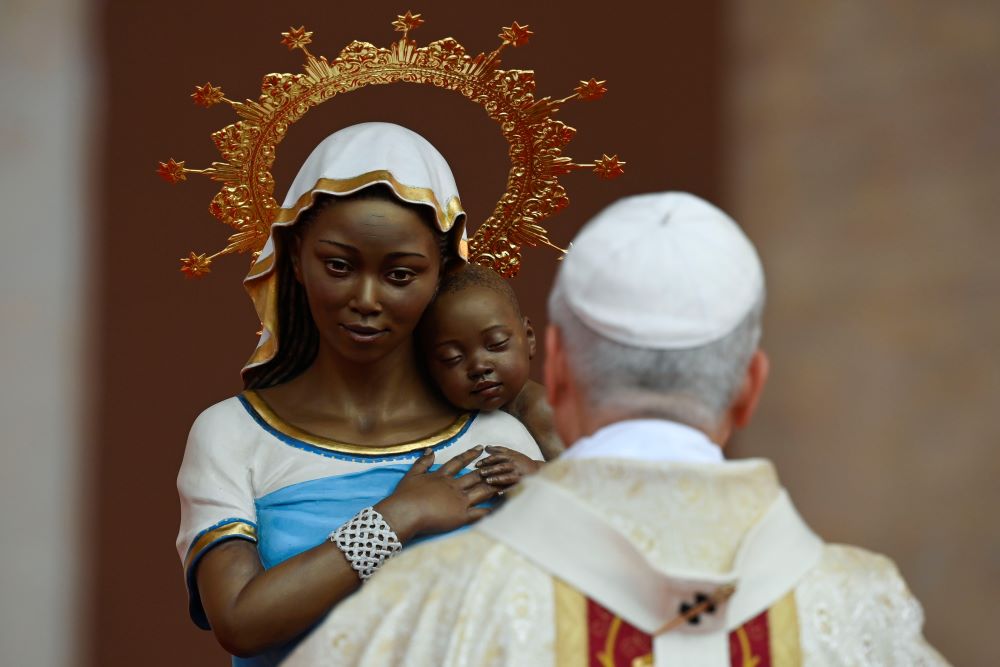
Pope Leo XIV prays in front of a statue of Mary and the Christ Child as he celebrates the final Mass of his apostolic journey to Africa at Malabo Stadium in Equatorial Guinea April 23, 2026. (OSV News/Vatican Media/Matteo Pernaselci)

by Doreen Ajiambo
As Pope Leo XIV departed Malabo on April 23, María Nsue stood quietly along the airport road, watching the final moments of a visit that stirred hope and raised expectations across this small Central African nation.
Only later did the meaning begin to settle.
"We were encouraged," she said. "But now we must see what follows."
In Equatorial Guinea, that question carries weight. Despite decades of oil-driven wealth, many citizens still struggle with limited access to health care, jobs and basic services. The country remains one of sub-Saharan Africa's top oil producers, yet the World Bank estimates that a significant share of the population continues to live in poverty, a stark gap between national wealth and everyday reality.
Nsue spoke of young people searching for work and communities that feel excluded from the country's prosperity.
"We want fairness," she said. "We want leaders to remember the people."
During his visit, the pope addressed those concerns directly, urging leaders to govern with integrity and ensure national resources serve the common good. He warned that development without justice leaves societies fragile and deepens divisions, a message that resonated strongly in countries where inequality has long outpaced reform.
'May this not remain a celebration. It must push us to place the poorest at the center.'
—Sr. Natália Miguel
His stop in Equatorial Guinea was part of a broader journey through Cameroon, Angola and Algeria, where Leo delivered a consistent message throughout his April 13-23 trip: ethical leadership, justice as the foundation of peace, and a church rooted among the poor.
Observers say that consistency could shape the trip's long-term impact. Rather than offering country-specific solutions, the pope outlined a moral framework, leaving governments, church leaders and communities to interpret and act — a shift from expectation to responsibility.
Across Africa, where more than 280 million Catholics now live, making it one of the fastest growing regions of the global church, such messages carry particular weight, especially among young populations navigating unemployment, migration pressures and rising social frustration.
For many sisters, that responsibility is immediate.
In Cameroon, where conflict in the Anglophone regions has displaced more than 600,000 people, according to humanitarian agencies, the visit carried particular urgency. Schools remain closed in some areas, and families continue to navigate insecurity alongside economic hardship, often with limited state presence.
The pope called for reconciliation, urging dialogue and warning against deepening divisions. He also visited the sick at a Catholic hospital, a gesture widely seen as a sign of solidarity with those suffering both spiritually and materially.
Sr. Solange Lomessoas, a Dominican sister based in Yaoundé and working with young people and women, said the visit felt like a moment of truth.
"It was like a liberation," she said. "He named the suffering we see, unemployed youth, frustration, violence. That gave us hope that things can change."
Lomessoas said many young people feel trapped by lack of opportunity, leaving them vulnerable to despair or exploitation. In response, sisters are strengthening community support, expanding education and offering vocational training — often filling gaps left by weak public systems.
"We are trying to live what he said," she added. "To be more understanding, more united."
Still, expectations remain cautious.
"It is too early to speak of real change," she said. "We have been challenged, but now we must act."
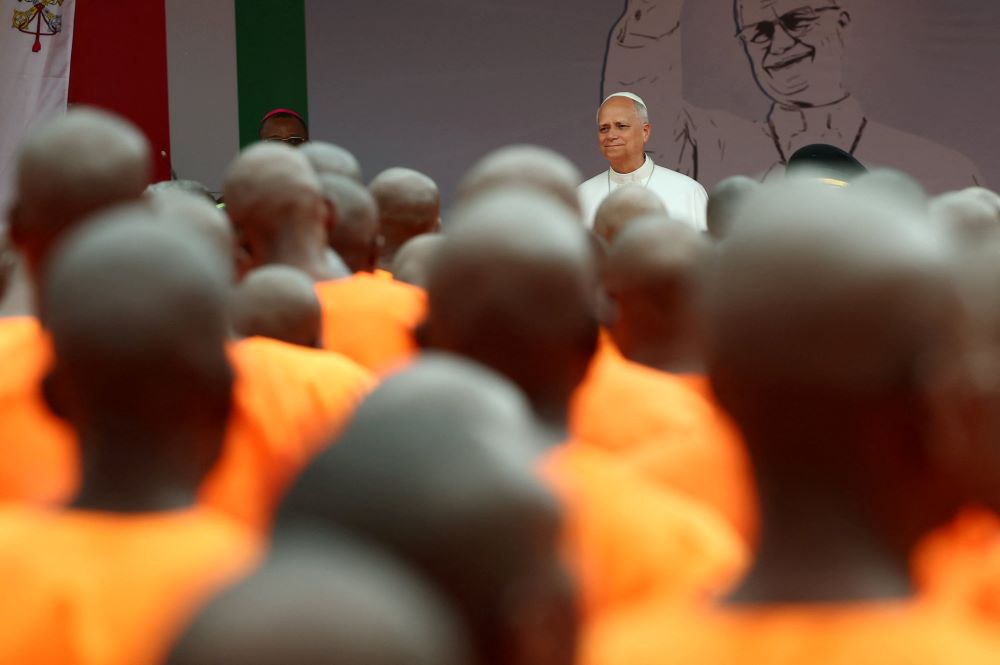
Pope Leo XIV smiles as inmates look on during his visit to Bata prison in Equatorial Guinea April 22, 2026. (OSV News/Reuters/Kevin Thoma)
Church leaders echoed that view. Bamenda, Cameroon, Archbishop Andrew Nkea Fuanya said the visit's impact will depend on whether there is genuine political will for reconciliation, a test that extends beyond symbolic gestures.
In Bamenda, catechist and religious scholar Joseph Nfor said the pope's message was deliberately demanding.
"He did not come with easy answers," Nfor said. "He came to awaken responsibility."
He added that the emphasis on justice is critical in Cameroon, where many believe root causes of the crisis remain unresolved.
"If those root causes remain," he said, "then the message risks being heard but not lived."
From Angola to Algeria, the message returns to daily life
In Angola, the pope's message intersected with youth unemployment in a resource-rich country marked by inequality. He warned against systems that exclude the poor and called for renewed commitment to dignity and opportunity.
Sr. Natália Miguel, provincial superior of the Salesian Sisters in Angola, said the message reflected what she sees daily.
"When young people lose hope, they lose direction," she said. "It becomes a wound for the whole society."
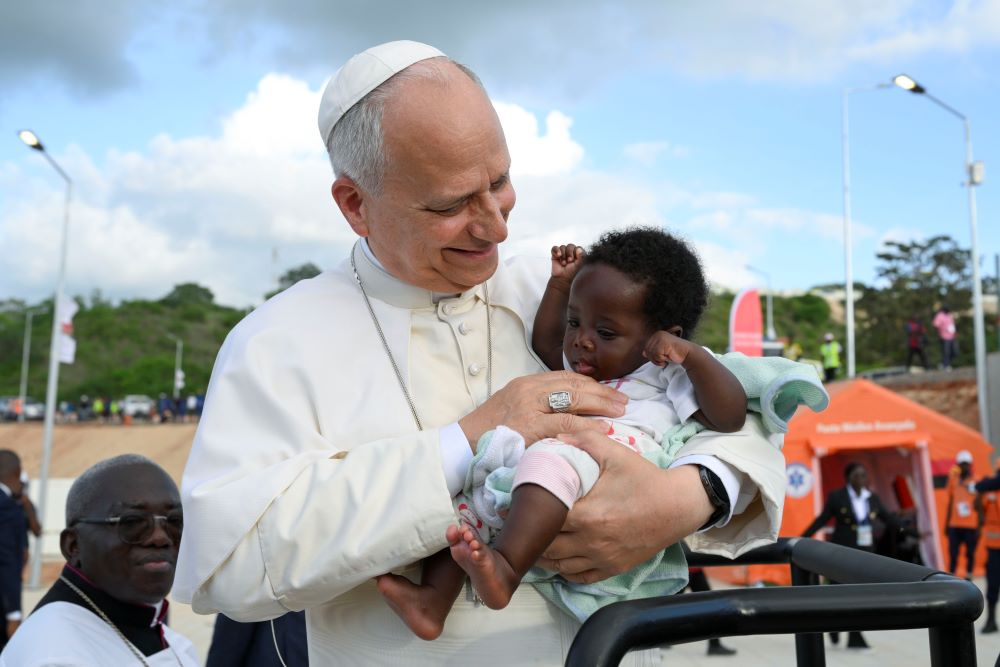
Pope Leo XIV holds a baby at the Sanctuary of Our Lady of Muxima in Muxima, Angola, April 19, 2026. (OSV News/Vatican Media/Simone Risoluti)
Miguel said limited access to jobs and education continues to shape young people's futures, but expressed hope that the visit would inspire deeper action, not only at the national level but within communities themselves.
Even so, she pointed to resilience within communities, particularly through collaboration among church groups and local actors working to support those in need, informal systems that often sustain families where formal structures fail.
"The unity we see gives us strength," she said. "It reminds us that life is stronger than crisis."
In Algeria, where Christians are a small minority, Leo's visit carried a quieter significance.
Miriam Hassina, an Algerian Italian Catholic, said its meaning lies in what happens after the moment passes. "We move from something extraordinary back into ordinary life," she said. "That is where the real challenge begins."
She said the visit did not change the sisters' mission, but rather, deepened it.
"They continue as before, close to the people," she said. "That is how the message remains alive."
Even after emotional encounters, Hassina added, sisters returned quickly to teaching, caregiving and daily presence in their communities.
"That is where the message continues," she said. "In how we live it every day."
For Nfor, these quieter testimonies reflect the church's deeper strength.
"It is not built on events," he said. "It is built on daily commitment."
Africa's shared responsibility
Nfor said the visit's significance extends beyond the continent, linking local challenges to global issues such as migration, inequality and youth unemployment.
"When young people do not see a future, they move," he said. "And that affects the world."
He added that sisters offer a grounded perspective often missing from global debates. "They are closest to the people. They see the human impact every day."
Advertisement
Back in Malabo, Nsue said the excitement of Leo's visit is already fading, but the challenge remains.
"We were happy to receive him," she said. "But now we must see if anything changes."
In Cameroon, Lomessoas expressed a similar tension.
"If nothing changes, it could bring more suffering," she said. Still, she continues her work, accompanying those most affected.
For many across Africa, the pope's visit was not an end. It was the beginning of responsibility.
And as expectations settle into reality, Nsue offered a final reflection that captures both hope and urgency:
"The pope's visit gave us words," she said. "Now the truth will be in what we are brave enough to change."