
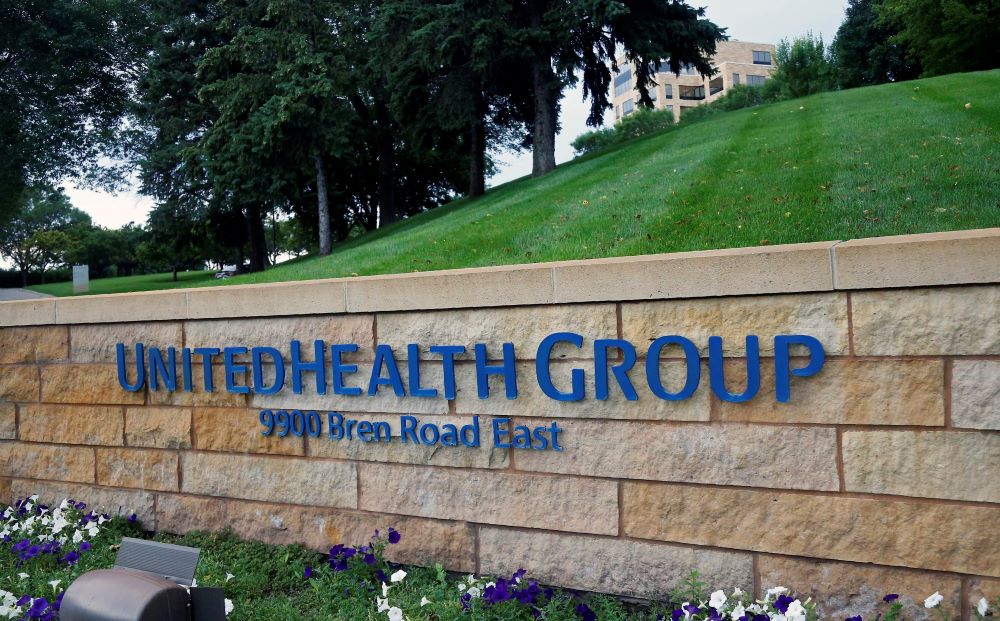
A July 12, 2019, photo shows the UnitedHealthcare headquarters in Minneapolis. The Sisters of the Holy Names of Jesus and Mary have sued the company over its refusal to consider examining how its rapid growth and vertical integration affect health care in the U.S. (AP/Jim Mone)

A congregation of Catholic sisters is suing the nation's largest health care insurer over its refusal to consider examining how its rapid growth and vertical integration affect health care in the United States.
The Sisters of the Holy Names of Jesus and Mary filed the lawsuit against UnitedHealth Group in federal district court March 20, after the Securities and Exchange Commission refused to intervene in the dispute.
The sisters had asked for a shareholder resolution to be put forth at the company's annual meeting; resolutions are routinely put before the shareholders to be voted on and congregations of sisters file several of them every year. This resolution asked the company to report on whether its spree of acquisitions is making health care less accessible.
"Shareholders have rights and there needs to be transparency," Sr. Linda Haydock, general councilor of the Sisters of the Holy Names, told Global Sisters Report. "The company has been under scrutiny for some time and there are significant issues here."
Until recently, when corporations rejected a shareholder proposal, the filers could lodge a complaint with the SEC, which would investigate the issue and determine whether the company was within its rights to deny the request. But in November, the SEC announced it would no longer investigate those complaints and would instead simply issue a letter saying the agency has "no objection" to the corporate decision.
The sisters said that change left them no choice but to file a lawsuit seeking to overturn the rejection.
The Interfaith Center on Corporate Responsibility, of which the Sisters of the Holy Names are members, sued the SEC on March 19 over change in policy, alleging it violates the agency's own rule; the SEC failed, in violation of federal law, to explain why the decision was made; and did not follow its own regulations on changing policies.
"The SEC's actions in undermining the shareholder proposal process are a short-sighted departure from decades of precedent in which shareholder proposals … have led to important improvements in corporate governance and corporate practices that benefit both companies and investors," said ICCR CEO Josh Zinner in a statement announcing the lawsuit. "This long-standing process has given generations of American investors greater voice and power, in turn helping build a stronger and more dynamic economy, and safeguarding the investments that millions of American families depend upon."
The ICCR reports at least five lawsuits similar to the Sisters of the Holy Names case over shareholder proposals.
The Health Care Un-covered blog says UnitedHealth Group has been buying other firms for a decade, and as a result now has nearly 2,700 subsidiaries, resulting in more than $1 of every $4 in claims the insurer pays going to its own companies. In addition to health insurance, UnitedHealth Group is a third-party administrator, a pharmacy benefits manager and a large health care network with thousands of providers, the blog says.
"Last year we submitted our resolution with UnitedHealth because we knew that sunlight is the best disinfectant and that shareholders have a right to clarity around how strategic decisions made by corporate leaders will impact the value of their shares and the wider sector in which they operate," said Timnit Ghermay, a representative of the Sisters of the Holy Names, in a statement.
"Rather than work with us on our reasonable request, UnitedHealth decided to try and exploit the ongoing lack of both vigilance and commitment to accountability on the part of the SEC's current leadership. This lawsuit is in response to those attempts and flows from our belief that our rights as shareholders are worth defending."
Haydock said it only makes sense for a massive health care company to look at the impact it has on health care.
"We have a real concern about the access to care for people in the United States, especially those on the margins," Haydock said. "We think it's incumbent upon us to use our shareholder rights to ask the company to be transparent. …It's a reasonable request to say, 'What are the consequences of all these acquisitions you've made over the years?' "
She noted that the SEC approved a similar resolution a year ago, but now refuses to intervene over the same issue.
Advertisement
This year, congregations of Catholic sisters are the lead filer on shareholder resolutions at Chevron, General Motors, Tyson Foods and Wendy's, and are co-filers on one before Wells Fargo & Company.
Even when the resolutions fail, they often get executives to start a dialogue around the issue.
"We've seen this over and over with companies over the years," Haydock said. "They've made changes and it's been to the benefit of the company."