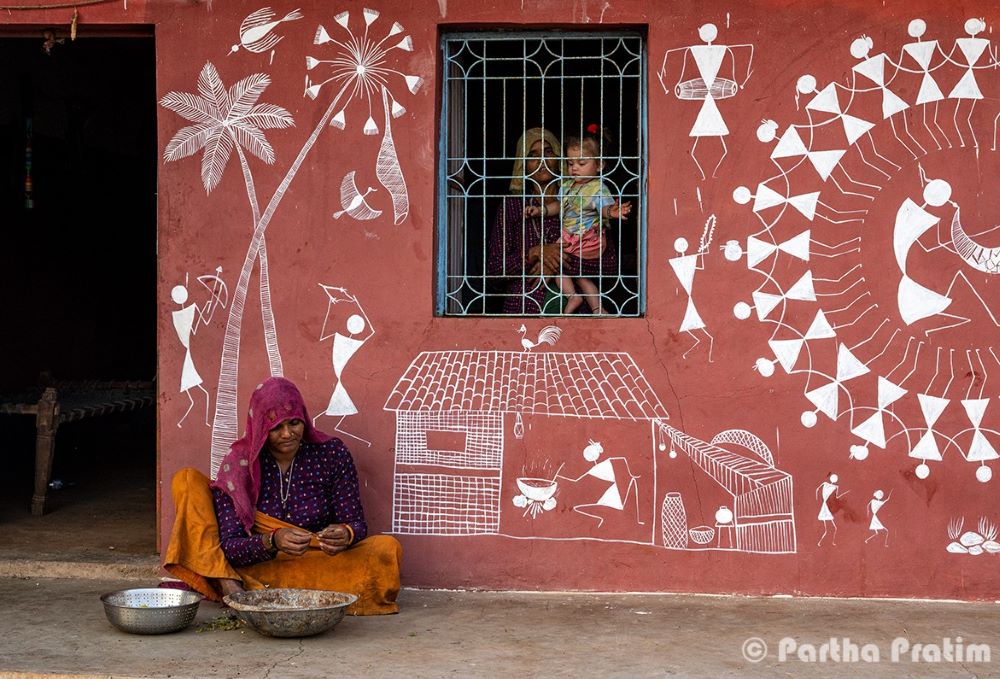
Warli painting is a traditional tribal art form from Maharashtra, India. (Wikimedia Commons/Sahakol41)
by Sr. Molly Fernandes
Situated between Gujarat and Maharashtra, Dadra and Nagar Haveli, a Union Territory in Western India, is known for its greenery, wildlife sanctuaries and vibrant culture. It's awesome to see the dense forests, nature's arches while on a journey and serene rivers. This picturesque location is known for famous places like the Dongar Mauli pilgrimage at Dudhni, the Dudhni Lake and the Vasona Lion Safari.
I treasure the years spent with the people of God. I call them the people of God because, like Moses, who met God on a mountain, and Jesus, who spent time in prayer on the mountain, these people — the Adivasis of Dadra and Nagar Haveli — live on the mountains and in the valleys, tilling and caring for the land. I had the privilege of serving the Mission of Daman, a part of the Archdiocese of Goa and Daman, in the year 2006 and 2013, at Nazareth Seva Sadan in Chisda.
The Adivasis, including tribes like Warli, Dhodia, Kokna, Koli Dhor, Kathodi, Naikda, Dubla and Kolgha, are the Indigenous people of India. Each community, locally known as Adivasi — meaning original inhabitant — has its own culture, traditions and dialects. Their folklore, music and dance tell the stories of their ancestors and their bonding with nature. Unique artistic expressions like Warli painting depict intricate scenes of daily life and mythology.
They practice farming and fishing, as laws now prohibit hunting small animals. Their homes are typically made from local materials and are called tapras, constructed using bamboo and mud, designed to stay cool in the hot climate. Through the forest produce they eke a living. They live for the day, like the lilies of the field.
Let the light of our traditions shine brightly, illuminating a path of harmony and unity.
I was impressed while on a home visit — the elder of the house told the child to take the nagli (or ragi) and Urad Dal (black gram), to the mill, required for the day with instructions. They store their homegrown ragi and dal on the raft, which is like a first floor. They have vast traditional knowledge of herbal medicines. They treat any bruises on the legs or deep cuts with the juice of certain leaves from a plant. They treat illnesses using herbs, roots and tree barks.
I wondered how they lived in the mountains, walking long distances. I too had a share of walking long distances due to lack of transport in the thickly dense forest areas and hills. Even at night, we walked with headlights on, catering to their spiritual needs. This increased my missionary spirit and love for missions. Today, their lifestyle has changed significantly, influenced by the media, the internet and young people moving to urban areas for jobs. Those studying in mission schools have also been in service.
Rituals and festivals are integral to Adivasi life, emphasizing community, preserving nature and oral traditions passed down through generations. Through this they honor their deities and ancestors for prosperity and protection. Their colorful dress adds joy and vibrancy to life.
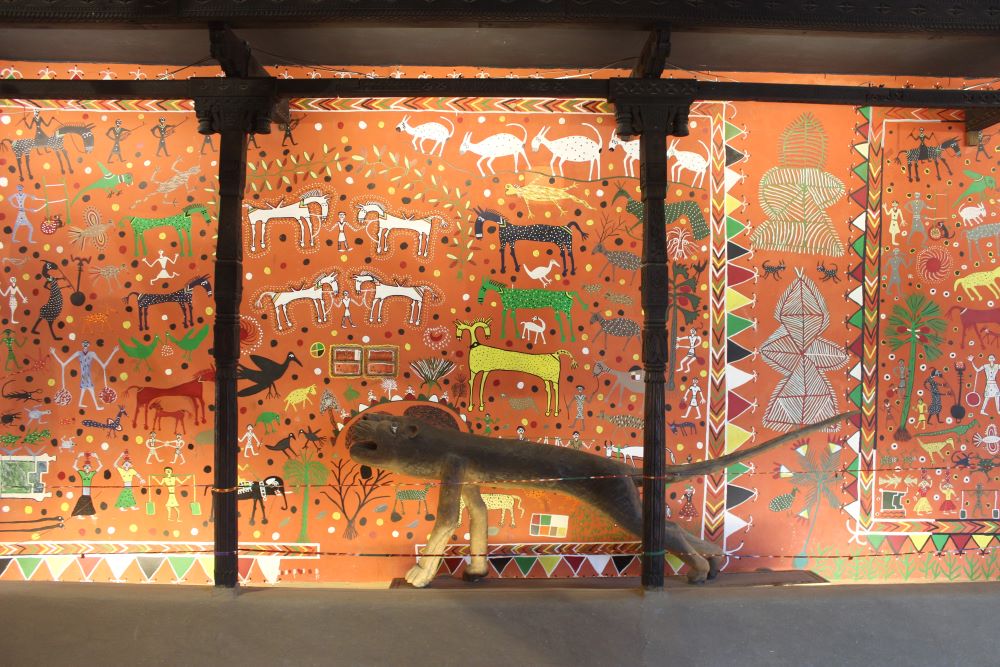
A vibrant Warli-style mural features tribal art, animals and human figures, with a life-sized animal sculpture in the foreground. This artwork represents the deep connection of Indigenous communities with nature and their cultural heritage. (Wikimedia Commons/The open draft)
The people of God celebrate a variety of feasts, with dances like the Tarpa dance, where men and women dance in circles, symbolizing unity and the cycle of life.
My experience of participating in the Tarpa dance under the moonlight was fascinating. While I tried to learn the steps and the gradual speed of the dance, I was panting with deep sighs. The warmth and hospitality of these simple people, their natural smiles, is welcoming and heartwarming. I learnt to adapt to their food and traditional dishes like rice cooked in bamboo tubes, tasty bamboo shoot pickles, and even a vegetable from a garden plant considered poisonous in Goa.
One of the most loved celebrations is the Christmas season. It begins with serenading long before Christmas to the far-off wards of the main parish. The zest and fervor of the youth and young ladies were something I marveled at. This tradition involves groups going from house to house, singing carols in their dialect, spreading festive cheer. The scene with Mother Mary and a live baby with small lambs, is vivifying. While serenading in the chilly climate, I shivered; however, the warmth of each welcome, the exchange of sweets, and the Christmas message infused strength to continue the journey.
They decorate their houses with beautiful stars made from natural twigs, seeds and shells. Their homes are adorned with mango leaves, marigolds and paper streamers, adding to the festive spirit.
The Adivasis celebrate Christmas with traditional dishes, including rice puddings, meat, stewed vegetables, spicy chutney and sweets. The three-day Christmas celebration is the most loved observation of the year.
Advertisement
The simple lifestyle of these people has influenced my life. Having my roots in a similar environment, it has deepened my appreciation for cultural diversity and the importance of preserving Indigenous traditions. It has had an impact on my understanding and witnessing their way of life, nevertheless, influenced me to seek simple joys and happiness that strengthen neighborhood bonds and community life. Certainly, living among the Adivasis has transformed my perspective on simple living and high thinking.
Pope Francis said, "Advent is a continuous call to hope. It reminds us that God is present in history to lead it to its ultimate goal and to its fullness, which is the Lord Jesus Christ. God is present in the history of humanity, He is the 'God-with-us', He walks beside us to support us."
The experience of celebrating diverse heritages unraveled the embroidery, the mosaic and symphony of love and intimacy, as depicted in Warli paintings, signifying our bond and togetherness. Let the light of our traditions shine brightly, illuminating a path of harmony and unity. May the love of baby Jesus fill our hearts with peace and joy as we embrace the warmth and unity of this festive season of grace and hope. May the birth of Christ bring peace to our world torn apart with war.