(Unsplash/Paul Moody)

by Sr. Quincy Howard
Contributor
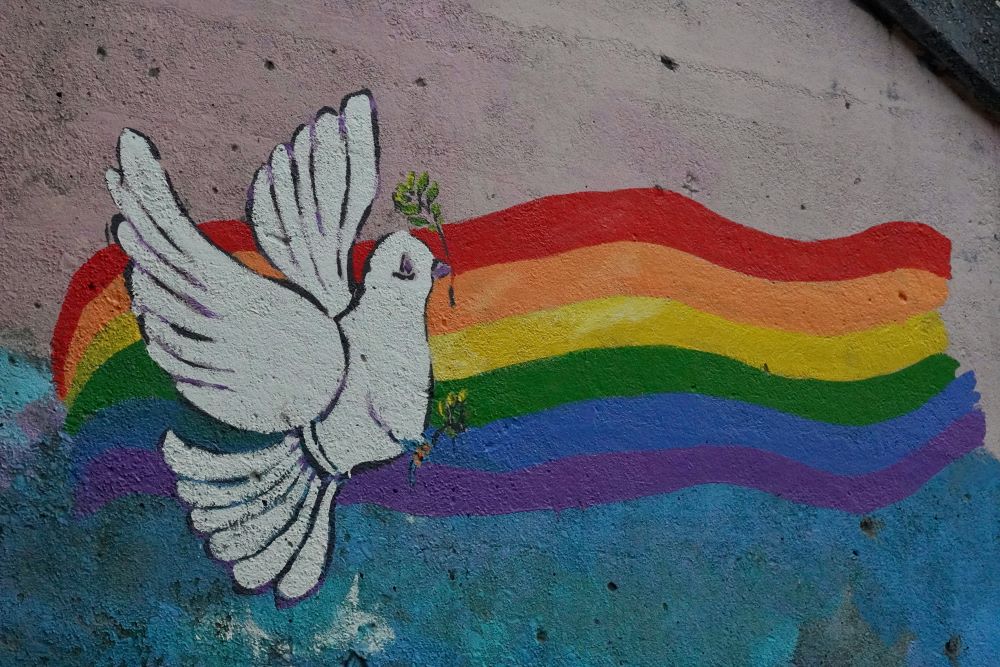
Many of us have entered 2026 carrying not only the grief of a world marked by war and division, but also the quiet ache of conflict closer to home. Within the global zeitgeist of might-makes-right and the technological advancement of weaponry, the Gospel presses us to take a hard look at a radical idea: that nonviolence is not passivity, but an active form of resistance essential for survival.
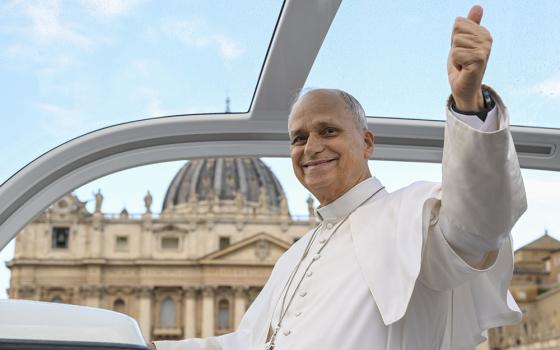
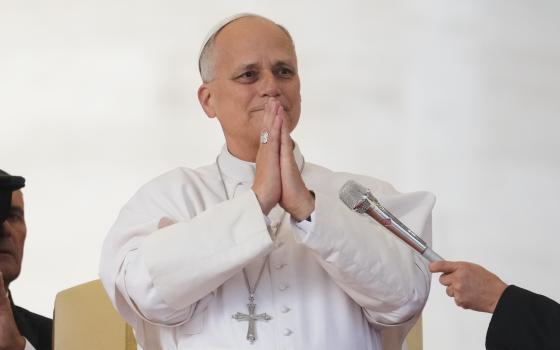
Pope Leo XIV's message for the 2026 World Day of Peace offers a stark and hopeful vision. The pope calls the church to a peace that is "unarmed and disarming, humble and persevering." In her interview with Vatican press, Marie Dennis of Pax Christi clarifies that this is not withdrawal from reality but a radical return to the Gospel — peace grounded not in dominance, but in Christ's way of resisting evil without replicating it.
An unarmed peace of this nature is unsettling precisely because it dismantles our preferred defenses. We have been conditioned to believe that peace requires leverage and that survival depends on force — physical, rhetorical or institutional. Yet the peace of Christ, Dennis insists, does not rely on coercion or arms. Instead, it actively resists fear by disarming the habits that make enemies of one another. This dynamic of fear-based oppression and force is not only playing out across humanity, on global and national scales, but is present in our own interpersonal relationships. And if we are honest, it also exists within each of us as individuals.
Pope Leo insists that peace must be disarming not only globally but within the interior and communal spaces we inhabit. Violence does not always announce itself with bombs or guns. It often appears as hardened positions, inherited resentments, or the conviction that one side must prevail for truth to survive. Disarmament is necessary wherever fear governs our reactions.
Marie Dennis of Pax Christi International, a longtime advocate for nonviolent action, participates in a vigil near Capitol Hill in Washington May 21, 2018. (CNS/Tyler Orsburn)
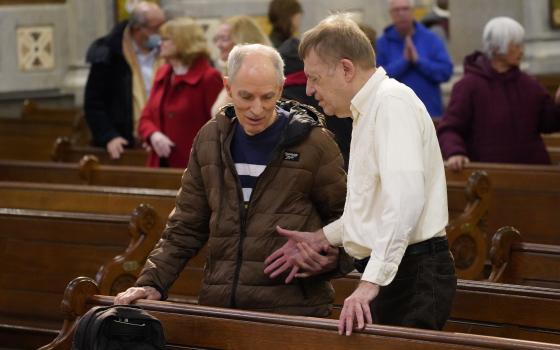
I share this example from my own Dominican congregation as we collectively engage in the slow, exacting work of practicing nonviolent communication amid longstanding internal controversies. Our community of more than 200 sisters holds deep differences in theology, culture, age, authority and belonging. These disagreements are not trivial. They touch our identity and conscience — even the choice of wearing the Dominican habit has become a fault line. Historically, our sisters are conflict avoidant, which means that decades spent living out the mission together has resulted in untended wounds, resentments and disagreements that have marked our sisterhood. We are human, after all.
Along with my sisters, I am learning how to engage in a new way of relating to each other through nonviolent communication. I've witnessed how practicing it together is moving us into a deeper, more honest realm of engagement as sisters. This audacious congregation-wide initiative has breathed new life into our community — even those in their 80s and 90s recognize the value of this work.
Practicing nonviolent communication is, in fact, sacred work that's renewing our sisterhood. It is also what we can offer towards a different global paradigm — towards a new creation as envisioned in the Gospels. If nonviolent engagement must first emerge through personal and interpersonal practices, then we must be the change we wish to see.
Contrary to what many think, nonviolence is not conflict avoidance. Conversely, conflict is not inherently violent, but is an unavoidable aspect of being human. Conflict can, however, be disarmed by refusing to reduce one another to positions, by learning to listen without preparing an attack, and by staying in relationship when withdrawal or domination feels easier.
Advertisement
Dennis notes that nonviolence is often dismissed as naïve, yet evidence shows it frequently produces more durable change than coercion. In my own congregation, I have seen this truth appear when conversations de-escalate, when a sister feels heard rather than defeated, when trust — fragile but real — begins to return.
Nonviolence is also sometimes incorrectly characterized as weak. In fact, courage and endurance are key to sitting with conflict and resisting the urge to react in-kind.The pope calls this a persevering peace: patience when progress is slow, courage when wounds reopen and fortitude when winning would be easier than remaining faithful. This is how our own internal labor mirrors the church's wider call to become "houses of peace" where dignity is protected and disagreement does not collapse into dehumanization.
Consider another example, sharpening the contrast in approach. Earlier this month, Buddhist monks walked 2,300 miles from Texas to Washington, D.C., embodying nonviolent witness through disciplined presence and silence. Early on their journey, a group of Christian protesters responded belligerently, yelling things like "You're going to hell" whenever the monks asked those gathered to focus on breathing in silence. The monks refused to engage in the provocation. Instead, they quietly continued their journey as planned. Eventually, they drew thousands of bystanders touched by the simplicity and integrity of their message. This demonstrates nonviolence at work as resistance and as moral clarity enacted step by step.
This reflection is not offered to shame, but to invite examination. Convictions matter. For Dominican sisters devoted to truth, this examination is unavoidable. While our work to engage in difficult conversations together does not promise agreement, it protects the communion that is integral to our identity as Catholic sisters.
Convictions matter. And convictions can also result in the interior conflicts that we secretly experience. How do our actions and voice reflect the convictions that we espouse? What is stirring within as videos of cruelty and oppression stream across our devices? When hateful, dehumanizing rhetoric frames tragedies as they unfold in real time? Forcing our misgivings out-of-mind, denying or subverting them due to politics or fear is a subtle, yet violent way of betraying our convictions. The nonviolent Christ called out injustice even as he invited conversion.
As the year begins, the church's call to nonviolence asks us to resist both force and fearful silence. As wars escalate, resources dwindle, and millions suffer, nonviolence is the only option left for human survival because it is the only one that preserves our humanity. In divided communities and in ordinary relationships, this quiet, costly resistance is where the Gospel does some of its most consequential work. May this year find us willing to be disarmed — by the Gospel, by one another and by the grace that refuses to give up on communion.