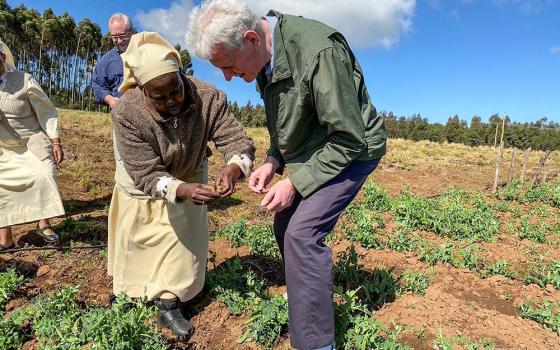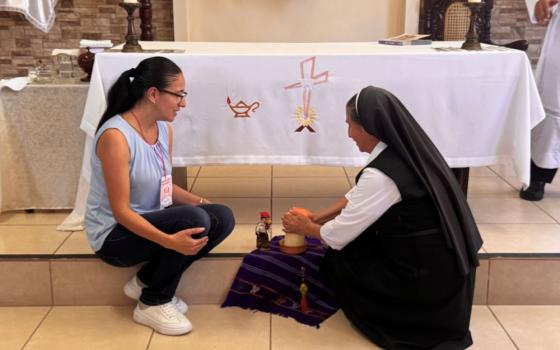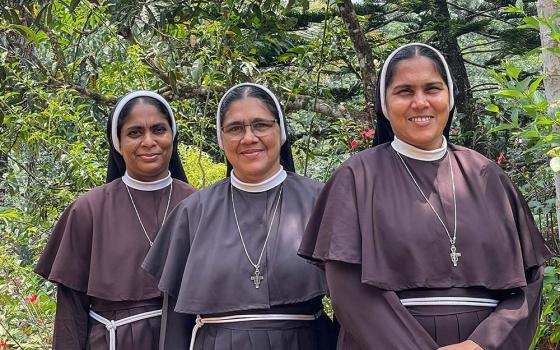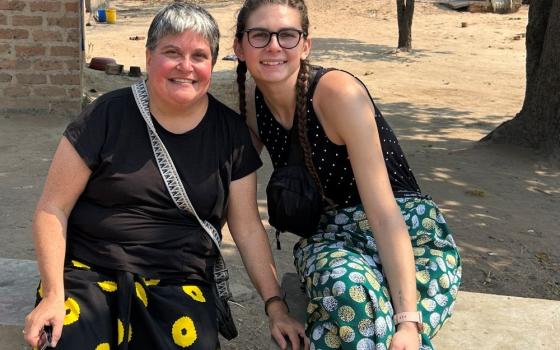
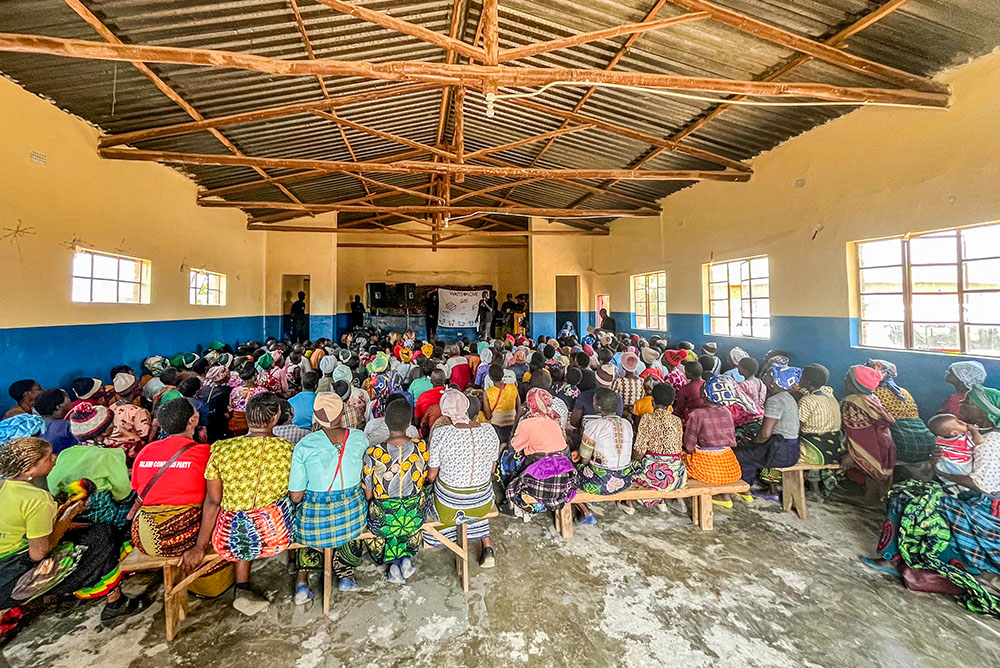
Community members in Malawi listen to a Watts of Love financial literacy training before receiving solar lights during a four-day session at Mponela Lodge in October 2025. The training focuses on saving money formerly spent on kerosene or batteries, investing in livestock and using extended hours of light to generate additional income. (Courtesy of Watts of Love)
I live in the town of Dedza located about 70 km (43 miles) from the capital city, Lilongwe, Malawi, in Central Africa. I serve as a project coordinator in the Dedza Diocese, where daily life is shaped by close relationships with local communities and their needs.
My vocation was inspired at an early age by Presentation of the Virgin Mary Sisters I saw each Sunday at Mass. They often visited my local community to listen and respond to the needs of people. I later joined them, attracted by our charism to proclaim the good news by helping orphans, the elderly and all vulnerable people in our communities.
I live with six sisters who are engaged in a number of ministries. One of our most important works is at St. Cornelius maternity hospital and outpatient clinic. One sister serves as administrator, while another works as a pharmacy technician. Our hospital also oversees early child development centers: six at Mtendere Parish, and two each in Dedza, Ntakataka, Chipoka and Sharpe Valley. We also operate a small farm for income generation to support our community.
Alongside my work for the diocese, I became involved in a project called Watts of Love, founded by Nancy Economou in the United States. The project addresses the lack of access to light in many rural communities. During a trip to the Philippines, she had observed how without light, children could not study at night and women struggled to complete simple tasks like caring for their families because of the dark evenings.
Advertisement
Economou had a dream to light the world, even though she didn't know how. When she returned home, she prayed for guidance and eventually the idea came to her. She designed a simple solar light that could be attached to the forehead, similar to a miner's light.
She knew she could not supply the entire world, or even one continent, with this device. She needed to find a way to make her dream sustainable. Her solution was to design a training program for women and men to learn basic finance and management skills so they could generate income, invest in more lamps for their families and meet other household needs.
Economou first came to Malawi in 2019 with her idea to distribute solar-charged lamps to communities throughout the country. She knew that sisters worked closely with local communities, so she engaged Sr. Bernadette Munyenyembe, of the Sisters of the Holy Rosary, to serve as national coordinator of Watts of Love in Malawi. Munyenyembe then worked through the Association of Women Religious in Malawi, asking each congregational leader to identify sisters to be trained as trainers in the Watts of Love project.
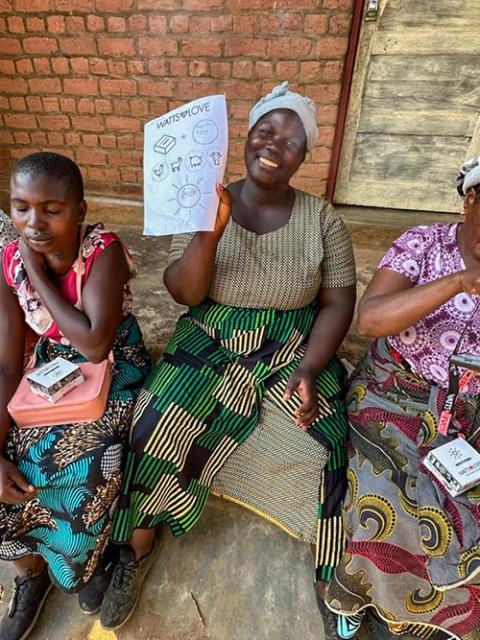
A woman in Malawi who recently received a Watts of Love solar light and financial literacy training displays her empowerment form, outlining her plan to save money previously spent on batteries and invest in livestock, with the long-term goal of buying a home for her family, during a four-day session at Mponela Lodge in Malawi in October 2025. (Courtesy of Watts of Love)
I was chosen by my congregation in 2021 to attend the sessions that Economou and her staff organized for potential community-based trainers. During the four-day session at Mponela Lodge, we learned the goals of the project and were taught the skills needed to present the program to our local communities.
After the training, each sister trainer was commissioned to organize a diocesan team. I helped form a team of three Presentation Sisters, five other women and four men. Our task was to identify, register and train women and men in our area in the management and financial skills we had learned. Once we were confident they could implement these skills, the lamps were distributed and they began their work.
With the funding available, only 400 households out of about 3,000 have been trained, even though many people in our region are registered and qualified. The main reason for delay is the need for additional funding for more training sessions.
This gap has been a major challenge for our team because we had raised expectations among the people who now need to wait. Some have expressed suspicion about our intentions. Although the process is purely humanitarian and not political, it has sometimes been perceived as a political tactic, especially in a year when Malawians are going to the polls to elect a president, members of Parliament and local councilors.
Another challenge we face is the continued depreciation of our local currency, the Malawi kwacha. Budgeted costs for travel, materials and allowances continue to increase, resulting in the need to trim some activities or omit some items needed for our work.
Transportation has been greatly affected as well. We are often forced to hire small vehicles for team travel, which is more expensive, and having drivers wait until our programs are finished also adds to the costs.
We have also found it necessary to emphasize the importance of taking care of the lamps and keeping them safe from theft, damage or loss. We had to explain clearly that according to project policy, lamps that are damaged or lost cannot not be replaced without payment.
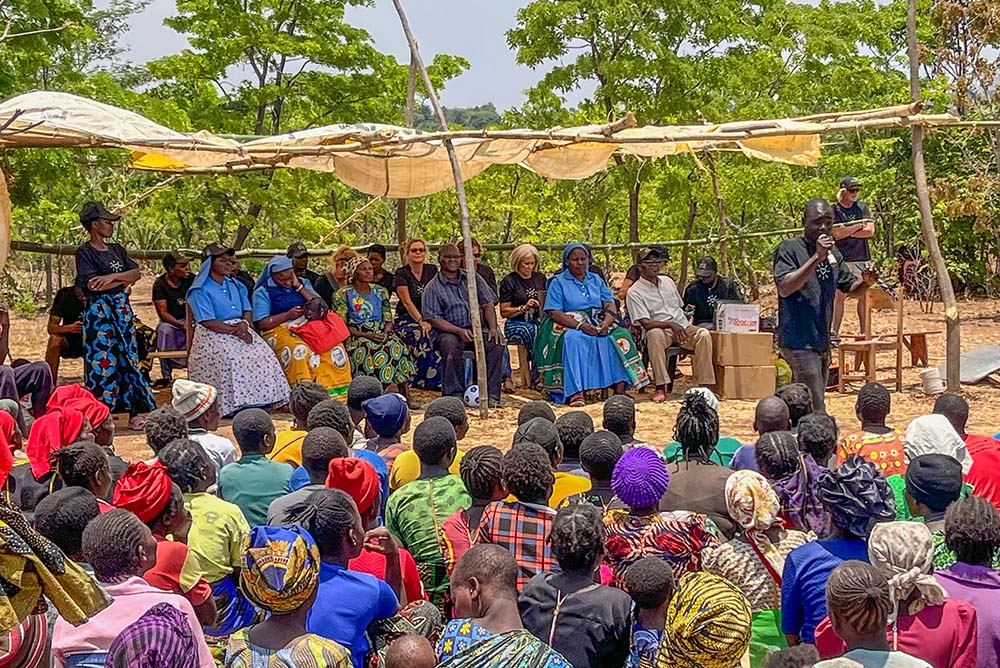
Village chiefs, community-based Watts of Love trainers and travelers participate in the distribution of solar lights and financial literacy education during a four-day training session at Mponela Lodge in Malawi in October 2025. (Courtesy of Watts of Love)
Despite these challenges, it is pleasing to note that hundreds of people have already benefited. People are now able to work more hours, students can read for longer periods and the lamps work as well as an electric bulb or better.
Our team has made new friends throughout the region, not only among community members but also religious leaders and local chiefs. Wherever we go, we are greeted with smiles and stories of how the Watts of Love solar charging lamps have changed their individual lives, families and communities.
The project has strengthened our Presentation community's relationship with local communities and made it more vibrant as people experience our leadership. It has also made us more visible as people see us working in the communities, not only in church.
This project is another way we are proclaiming the good news, as people are learning that they can depend on God, while also recognizing their own ability to develop other aspects of life they never thought were possible. It is our hope and prayer that funders will step forward so future batches of lamps will be available in the thousands to benefit the many registered families still waiting for their chance for light.