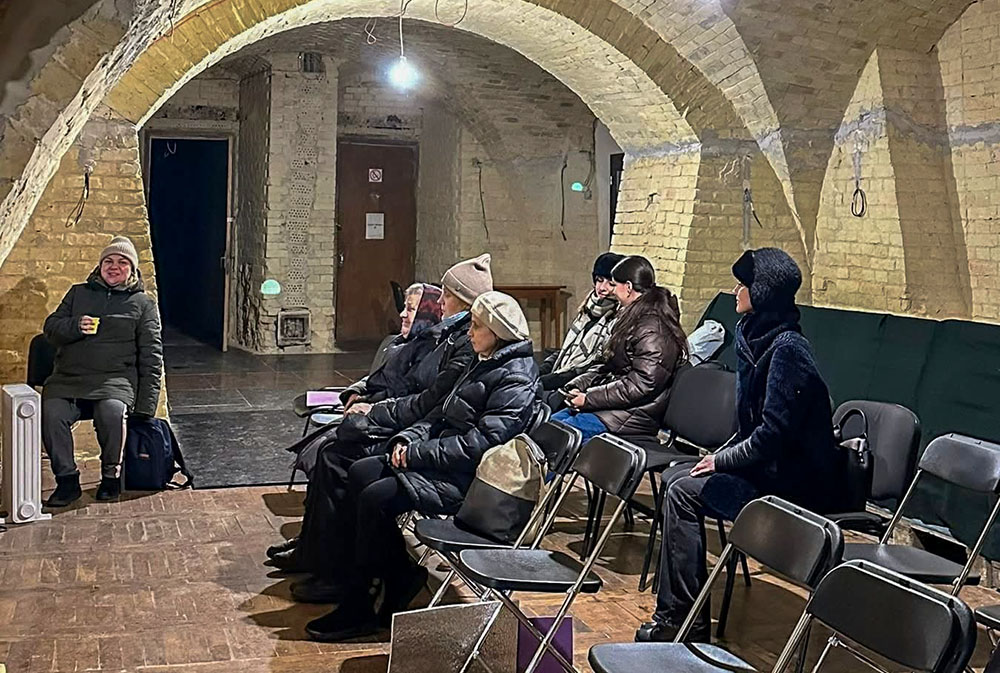
A “point of invincibility” in the basement of St. Nicholas Roman Catholic Church in Kyiv, Ukraine (Courtesy of Olga Shapoval)

by Sr. Olga Shapoval
I live and serve in Kyiv, Ukraine. Today, my city is experiencing a real humanitarian crisis that affects not only material living conditions but, above all, human dignity.
For three weeks now, there has been no heating in our apartment; the temperature in the rooms has dropped to 6 degrees Celsius (42.8 degrees Fahrenheit), forcing us to move to another place outside the city. Outside, the frost reaches -20 degrees C (-4 degrees F).
Electricity is available for only four hours a day. During this short time, we try to manage everything: warming up, cooking food, charging our phones, and writing to loved ones to let them know we are alive.
After the almost daily horrific bombardments of Kyiv and many other Ukrainian cities during this long and difficult winter, Ukrainian families celebrated Christmas and the New Year by candlelight and flashlight, without heat or electricity. In many homes, there is not only no electricity or heating, but no water either — because thermal power plants and water pipelines have been destroyed. When electricity appears, even that brief moment of light is perceived as a gift.
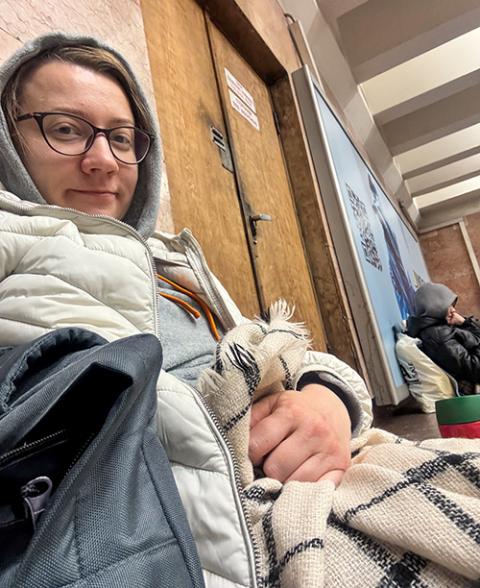
Sr. Olga Shapoval hides in a subway station in Kyiv, Ukraine, during a nighttime missile attack. (Courtesy of Olga Shapoval)
Ukrainian children are familiar with the sound of sirens and are very good at distinguishing between the sounds of missiles, drones and air defense systems. We are bombed almost every night, so instead of sleeping on our beds, we sleep on floors in corridors, in bathrooms or in the subway.
When you spend the night on the cold floor of a subway station, among hundreds of people hugging their children and pets, you come very close to understanding what the homeless and the poor experience every day. These are not temporary inconveniences but our constant reality — cold, uncertainty about tomorrow, dependence on the kindness of others.
Such a reality touches the depths of the soul, shatters the illusion of comfort and safety, and prompts a deeper awareness of human dignity. We suddenly realize that in everyday life we possess far more than we once thought: a roof over our heads, warmth and the freedom to choose.
At the same time, we come to understand that every person in need is not a mere statistic, but a living human being in whom Christ asks to be welcomed. It is precisely here that the call to mercy is born — not out of pity, but out of brotherhood — for "whatever you did for one of the least of these brothers of mine, you did for me" (Matthew 25:40).
In many parts of the city, "points of invincibility" have sprung up — tents or temporary shelters where people can warm up, work remotely, charge their phones or simply rest for a while. Our churches have also become centers of resilience, offering warmth, a place to recharge devices, and support for those in need. This has been made possible thanks to generators and charging stations generously provided by our benefactors from abroad.
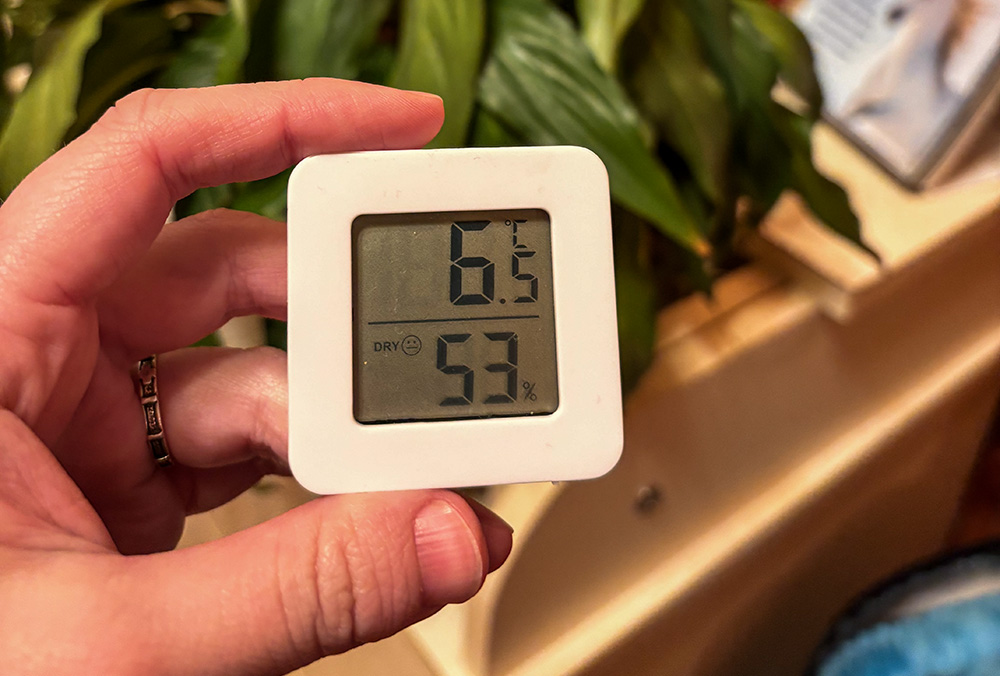
The current temperature inside an apartment in Kyiv, Ukraine, where many homes remain without heat after Russian attacks on heating facilities (Courtesy of Olga Shapoval)
Often, it is these simple things — light, warmth and the presence of another person — that save people from despair.
Our mutual sisterly care also sustains us. Sisters from other cities welcome us and other people into their homes, so that we may warm ourselves and regain our strength to carry on. I know that I can always go to my sisters in the west of the country, to Lviv or Khmelnytskyi, to warm up and find rest. It is in these small gestures of love that weary souls are healed, and hope is born that even in times of trial, we remain one family in God.
In all that is happening, we actually see much goodness: People share what little they have — blankets, candles, warm clothing, words of support. At the same time, the number of those needing basic assistance is growing: food, medicine, warmth, shelter and spiritual care. The psychological trauma of children and adults has become an everyday reality for the city's residents.
Consecrated persons, remaining close to those who suffer, seek to be signs of hope — through prayer, service and concrete help.
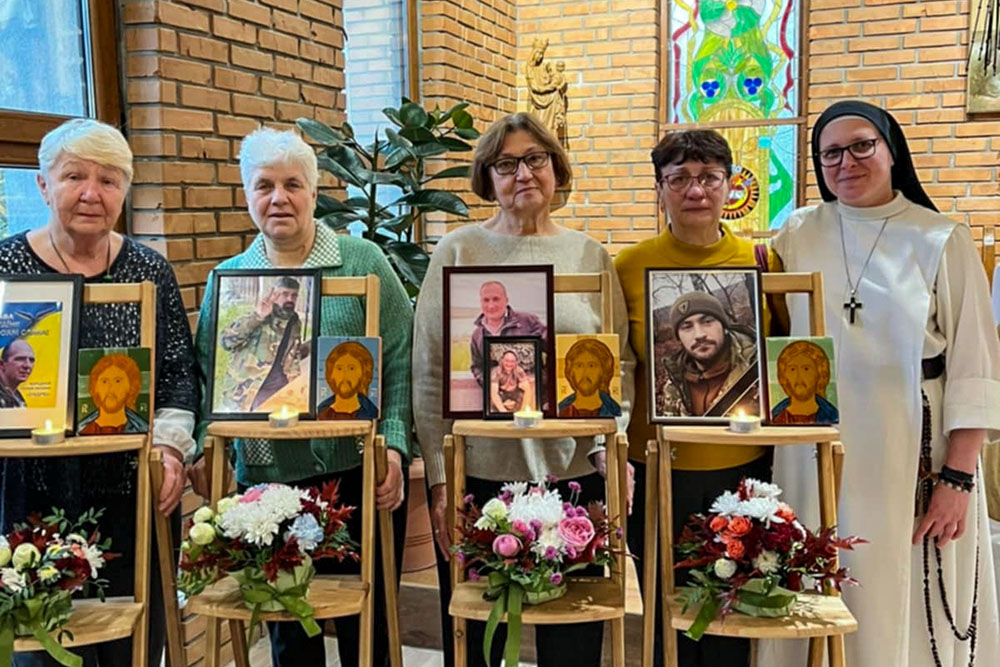
Dominican Sr. Daniela Radomska with mothers of fallen soldiers in Kyiv, Ukraine (Courtesy of Olga Shapoval)
One such example is Dominican Sr. Daniela Radomska, originally from Poland, who faithfully serves in the Kyiv region, conducting art therapy courses for the mothers of fallen and missing soldiers, displaced families, and children from Kherson. Through creative expression, she helps them communicate pain, fear and loss without words, gradually opening a space for healing and inner peace.
Her presence, attentive listening, and heartfelt prayer become a source of support for many, reminding them that even in the most difficult circumstances, no one faces their suffering alone.
Many sisters also run community rooms for children while their own homes lack light and warmth. Sisters provide comprehensive psychological support to victims of the war, and open orphanages for children left without parents due to the conflict. These acts of love and sacrifice testify to the great power of God, revealed amid our human fragility.
Today, the voice of the church in Ukraine is a call to the Christian responsibility — to compassion, to prayer and to active love that does not grow accustomed to war.
Advertisement
It is difficult to understand, yet Jesus gives us hope that, despite everything, he is Emmanuel — God with us, "always, until the end of the age" (Matthew 28:20). We hold a deep conviction that darkness does not have the final word, that we are neither alone nor abandoned. Love and goodness cannot be destroyed by bombs. And even if the powerful of this world have been unable to stop this horror for four years, we firmly believe that it will ultimately be stopped by the Prince of Peace.
That is why we continue to live, pray and serve — not because we feel no fear, but because hope and faith are stronger than fear. Amid the cold, darkness and uncertainty, we are learning once again to trust, to share our last resources, and to keep the light alive within us. Every act of assistance, every prayer and every gesture of mercy becomes a sign that evil is not all-powerful.
We ask only that you stand with us in prayer, in compassion and in support. For it is together that we bear witness to the fact that humanity can endure even in the face of war. And we believe that the day of peace will come — not as a coincidence, but as the fruit of truth, love and the faithfulness of God, who never abandons his people.