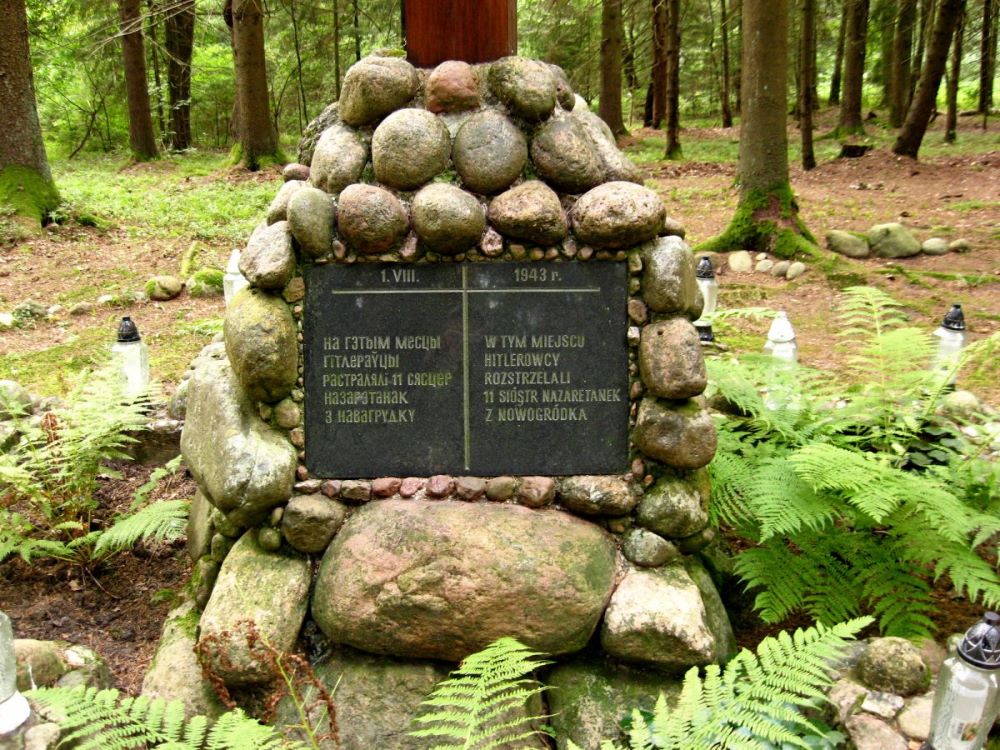
This monument in Nowogródek, Belarus, is dedicated to the 11 sisters of the Holy Family of Nazareth who were executed by German forces on Aug. 1, 1943, during the Nazi occupation. (Wikimedia Commons/CC-BY-SA 3.0/Valery Nikiforov)
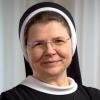
by Sr. Karolina Luczak
Holiness does not always reveal itself in dramatic gestures or moments that make history books. More often, it is woven quietly into the fabric of ordinary life, shaped by fidelity, memory and perseverance.
On March 5, 2000, the church beatified the martyrs of Nowogródek — 11 sisters of the Holy Family of Nazareth who were executed by German forces on Aug. 1, 1943, during the Nazi occupation of present-day Belarus. They are remembered for a single, decisive act of courage: freely offering their lives in place of local civilians, many of them fathers of families. Their execution by firing squad sealed their witness, and Pope John Paul II would later describe them as witnesses to love that triumphs over hatred.
Yet the story of Nowogródek does not end with those 11 deaths.
There was a 12th sister.
Sr. Małgorzata Banaś was not present at the execution. Spared by circumstance and, as many would say, by providence, she survived the war. While the other sisters entered the church's memory through martyrdom, Sister Małgorzata remained — to remember, to grieve and to bear witness in a far less visible way.
It was she who searched for and found the place where her sisters had been executed. She cared for their burial site, tended their grave, and stayed faithfully by their side over the years. Her life unfolded far from public recognition, shaped not by a single heroic moment but by decades of quiet fidelity. She carried the weight of memory and the solitude of survival, remaining faithful to her community and its story until her own death in 1966.
Holiness is not limited to extraordinary deeds. It is also found in steadfast presence, in the courage to remain, and in fidelity stretched across an entire lifetime.
The contrast between the 11 sisters and the 12th reveals two faces of holiness. The first is unmistakable: the courage to give one's life in a moment of radical love. The second is quieter and easier to overlook: the courage to live on, to remember, and to remain faithful when history has moved on and the world's attention has faded.
Sister Małgorzata's witness speaks powerfully to the experience of many women religious today. Across the world, countless sisters live lives that will never be publicly recognized as heroic. Their days are filled with routine, hidden service and perseverance amid diminishing numbers, aging communities and cultural invisibility. Yet it is precisely in this ordinariness that holiness continues to take shape.
Remembering the martyrs of Nowogródek, then, means remembering all 12 sisters — those who offered everything in an instant and those who offered everything slowly, day after day. Together, they remind us that holiness is not limited to extraordinary deeds. It is also found in steadfast presence, in the courage to remain, and in fidelity stretched across an entire lifetime.
In a world that often equates meaning with visibility and impact with immediacy, the 12th sister offers a countercultural lesson. Holiness, her life suggests, is not only revealed in moments that change history, but also in lives that quietly guard memory, sustain hope and endure with love — long after the spotlight has moved elsewhere.
Advertisement