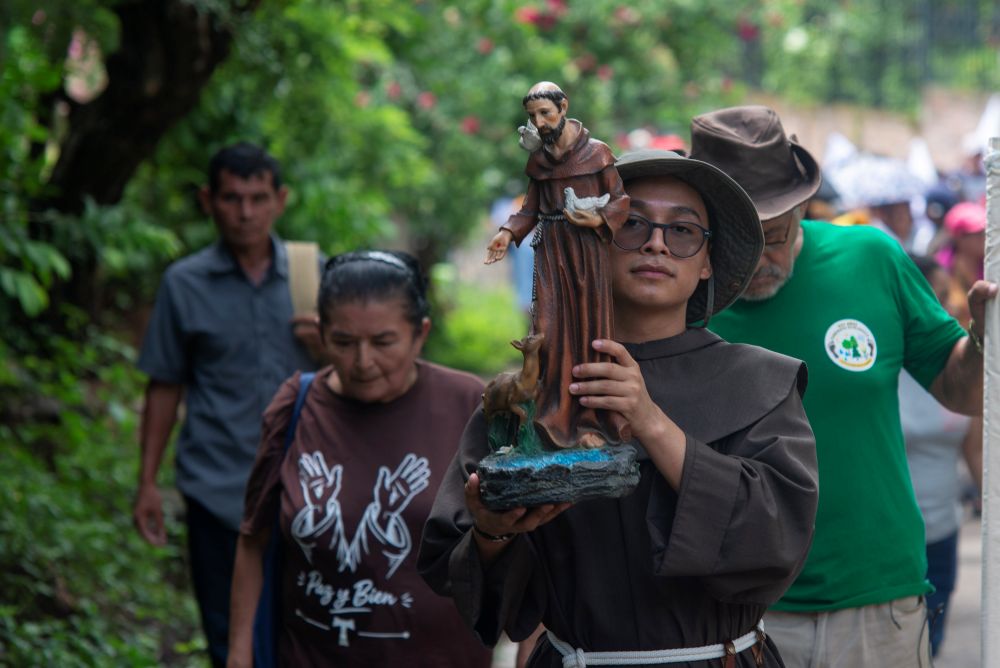
The people who participated in the Sept. 26 walk in San Francisco Angulo, El Salvador, called for the intercession of St. Francis of Assisi, patron saint of animals, ecology and the environment. (Lissette Lemus)

by Rhina Guidos
Félix Laínez remembers his youth in the picturesque rural Salvadoran village of San Francisco Angulo, where an overabundance of fruits and vegetables grew without anyone planting them, thanks to the incredibly fertile soil, a benefit of the lava of a nearby volcano and the pristine rivers that surrounded it.
He never worried about carrying bottled water because there was always clean water from the rivers and springs, which he'd cup in his hands to quench his thirst during long walks.
"Now I wouldn't even put my feet in [the water]," Laínez said.
Much of the water consumption for the rural community has for decades come from wells and aquifers, including some that have been contaminated over the years by chemicals from sugar mills as well as extractive activities. But residents say the problem has recently worsened. They say they saw the color and smell of their water supply change, and spotted raw fecal waste in the river adjacent to their community shortly after the 2023 construction of what the Salvadoran government likes to call its "mega-prison."
The government has hailed its CECOT prison (Terrorism Confinement Center), and its capacity to hold as many as 40,000 prisoners, as the solution to El Salvador's gang problems. But it's created a different problem: an environmental one that affects the health of small rural defenseless communities, say those who live in its proximity.
On Sept. 26, women and men religious from different parts of El Salvador took part in an ecological walk to show their solidarity with residents of San Francisco Angulo as they observed the Season of Creation, Sept. 1 until the Oct. 4 feast of St. Francis of Assisi. That's when the Catholic Church joins other Christian churches around the world urging its members to take some kind of action to care and protect the environment.
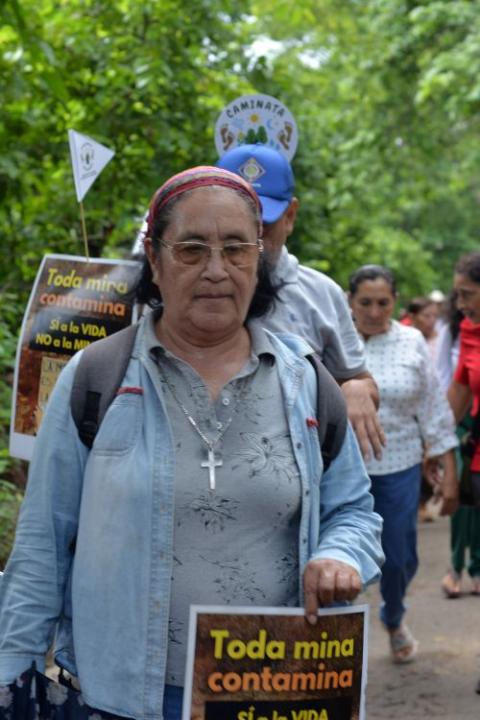
Notre Dame Sr. Carmela Pérez Morales participates in the Sept. 26 walk in San Francisco Angulo, a village in El Salvador. (Lissette Lemus)
"I came to pray and to support our 'Common Home,' as Pope Francis used to say, and to voice my option to care for water, the environment and against its contamination because contamination is something that takes away human life," Notre Dame Sr. Carmela Pérez Morales, who attended the gathering, told Global Sisters Report. "People here want to care for their land, their surroundings, nature, to prevent the water they consume from contamination."
In 2024, a human rights group had the village's water tested and found high levels of fecal bacteria in the supply the community uses to shower, wash dishes and water crops. But that's not the only environmental problem the historically agricultural community is facing.
A couple days before Christmas last year, heavy machinery started rolling in. Residents say they were surprised to learn that, without their knowledge or consent, a company started digging a large hole for a landfill.
During the ecological walk, they prayed a few yards from the large pit and asked for the intercession of St. Francis, patron saint of animals, ecology and the environment, to protect their home. One Franciscan friar carried a small statue of the saint and led the group.
"San Franciso Angulo is not a garbage dump," they chanted. "We live here and from here we will resist."
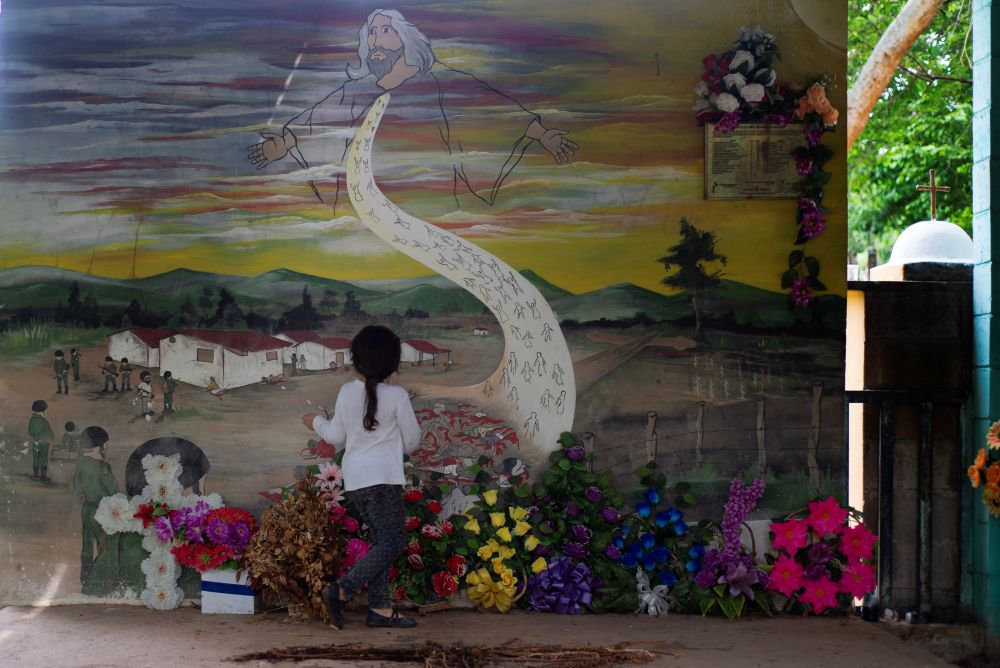
A 4-year-old girl plays in front of a mural commemorating the victims of the 1981 San Francisco Angulo massacre. (Lissette Lemus)
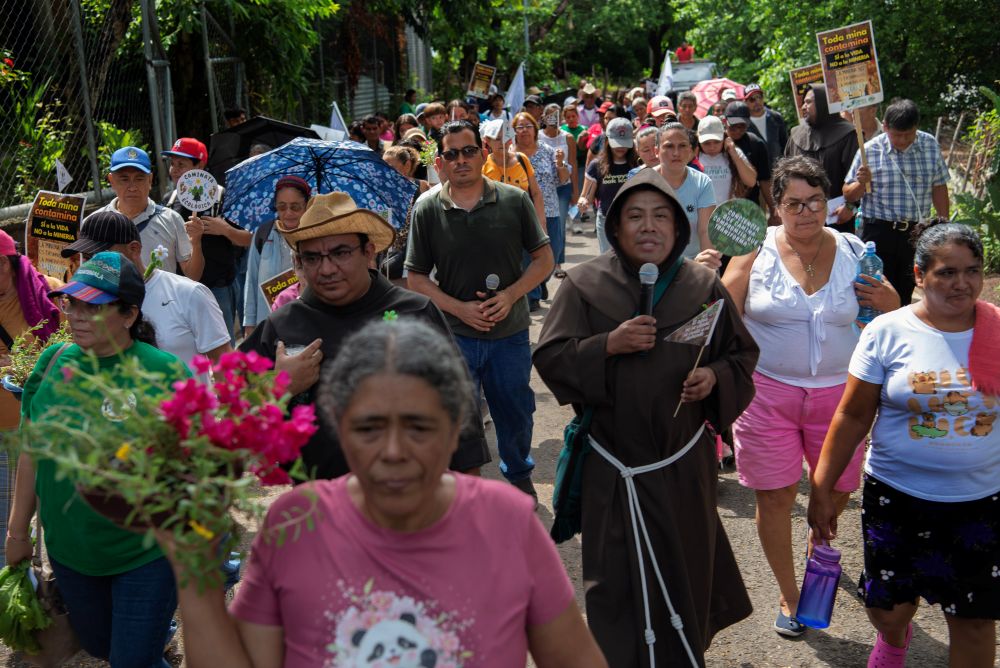
Women and men from different parts of El Salvador, including residents of the San Francisco Angulo community, walked on Sept. 26 against environmental pollution, as part of the Season of Creation. (Lissette Lemus)
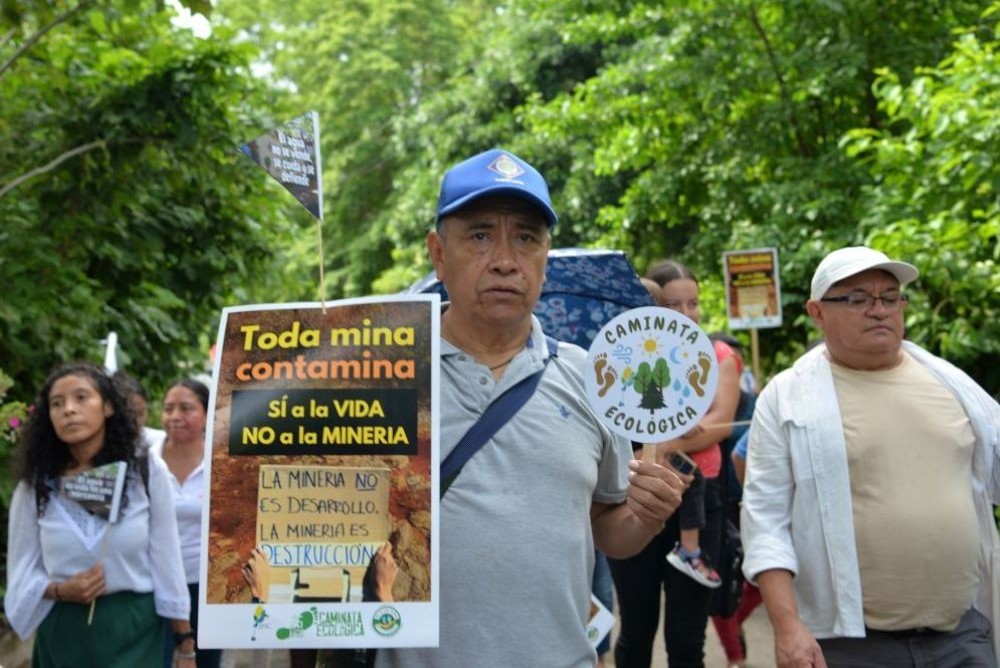
Women and men from different parts of El Salvador, including residents of the San Francisco Angulo community, walked on Sept. 26 against environmental pollution, as part of the Season of Creation. (Lissette Lemus)
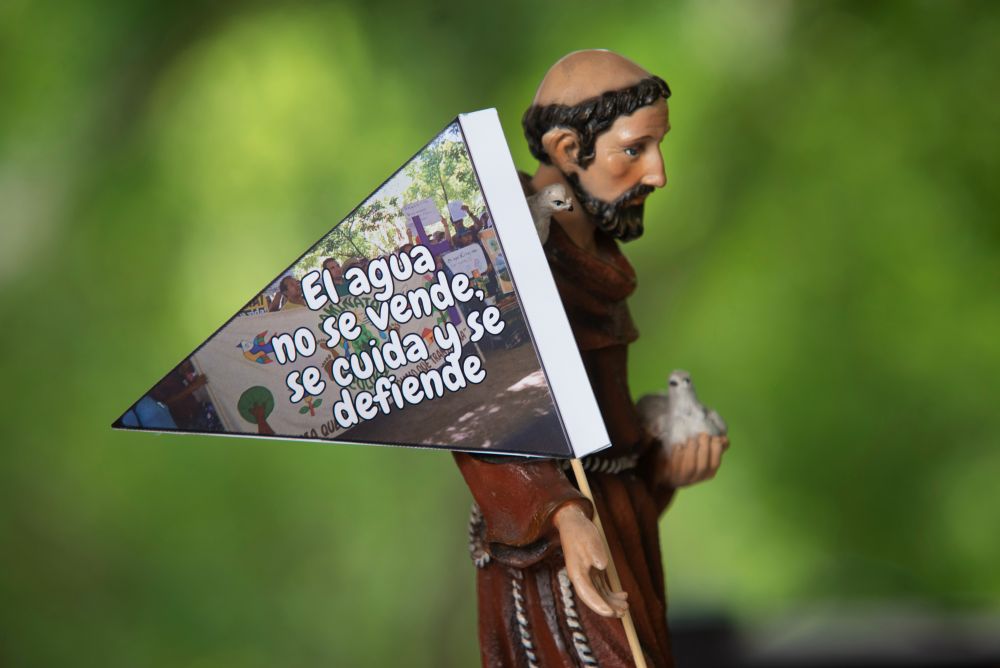
A banner reading, "Water is not for sale; it must be cared for and defended," was placed on a statue depicting St. Francis of Assisi on Sept. 26 in San Francisco Angulo, El Salvador. (Lissette Lemus)
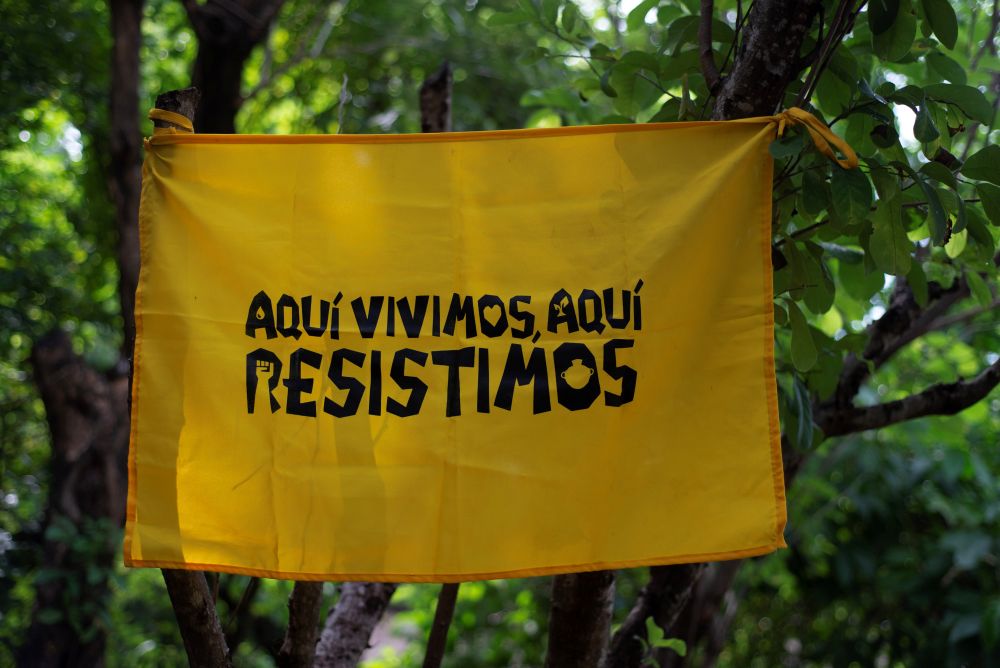
A banner with the message, "We live here, we resist here," was placed among the branches of a tree in the San Francisco Angulo community on Sept. 26. (Lissette Lemus)
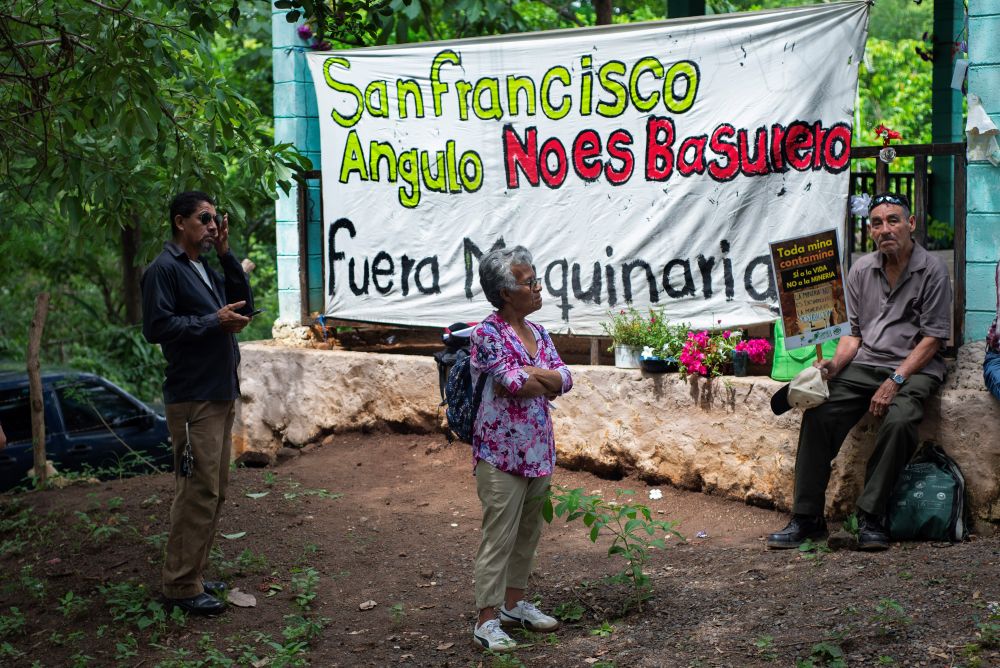
Residents of the San Francisco Angulo, El Salvador, community stand in front of a banner protesting pollution in the community on Sept. 26. (Lissette Lemus)
That local resistance has found strong allies in the justice and peace movements of various religious congregations. Franciscan Fr. Edison Zamora, coordinator of the friars' justice and peace office in San Salvador, explained that the reason Franciscans attended the walk was to support those who've peacefully assembled to call out the injustices foisted on them.
"We wanted to accompany them by raising our voices in prayer," he told GSR. "They have had this imposed on them, this construction and destruction of the environment, and the realities it entails for their community. That's why we elevate our prayers. It's a question of health. We're not trying to provoke."
For her part, Pérez, a member of El Salvador's Conference of Religious' peace and justice committee, said her congregation linked the territorial struggle to Pope Francis's encyclical Laudato Si' on caring for the planet, and warned against rapid urbanization, not just in San Francisco Angulo, but around the country.
"We are concerned about deforestation; where I live, farms have been sold to build housing, and the entire 'lung' of San Salvador is being destroyed," she said.
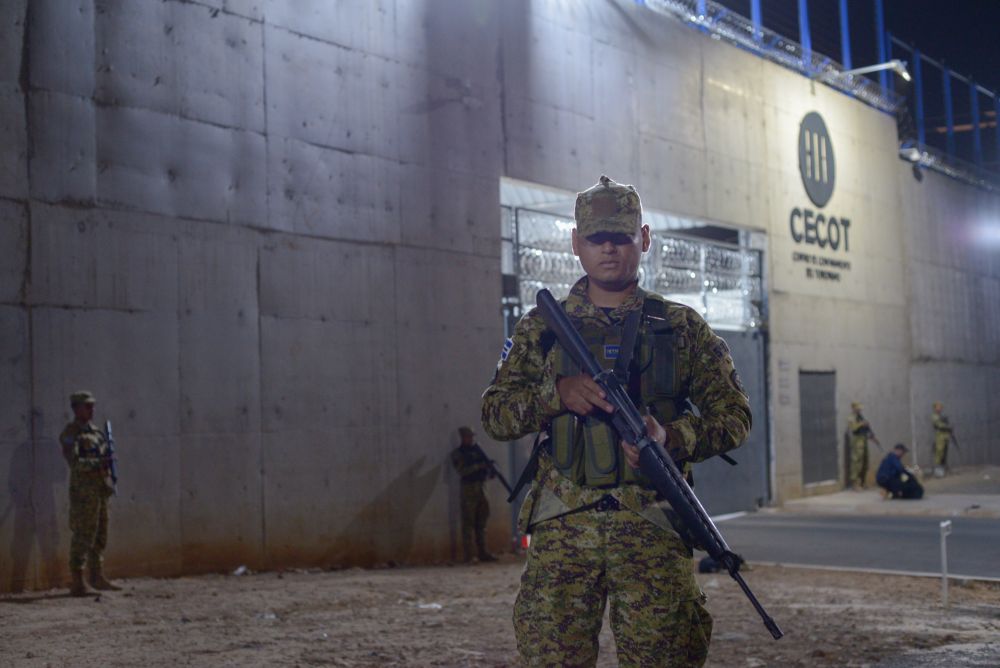
Members of the Armed Forces provide perimeter security outside the Terrorism Confinement Center (CECOT) in Tecoluca, El Salvador, which can hold up to 40,000 inmates. (Lissette Lemus)
Some residents voiced worries about the militarization that has accompanied what they consider environmental abuses, saying soldiers have escorted some of the machinery and construction, making them feel as if they have no one to protect them.
The Franciscans said that along with prayers for the environment they also are praying for peace in the community because tensions have been rising. They sang popular hymns of peace associated with St. Francis as they walked toward a chapel that serves as a community center.
In addition to addressing the ecological emergency, the community denounced an affront to historical memory: the landfill is being built where remains of victims of massacres from the civil war of the 1980s, including children, have been found. They say the construction work is desecrating sacred ground and they voiced fears that the project's progress will lead to forced evictions of locals who are still trying to find the remains of loved ones.
"We want life, not death," Pérez said.
Community leader Laínez said he knows he runs a risk in speaking out but said he couldn't live with himself if he makes no attempt to fight the contamination his children and grandchildren, along with his neighbors, will inherit.
"They've tried to win over the community with shady projects, and the community says, 'No, because we want life, we want peace, we want to live happily,' " he said. "We're not terrorists or criminals."
Advertisement