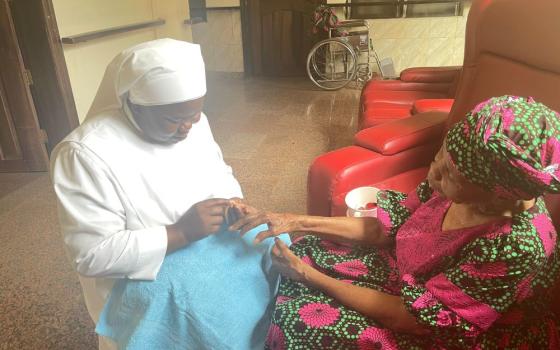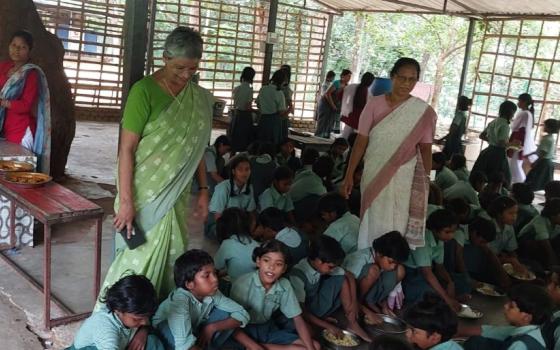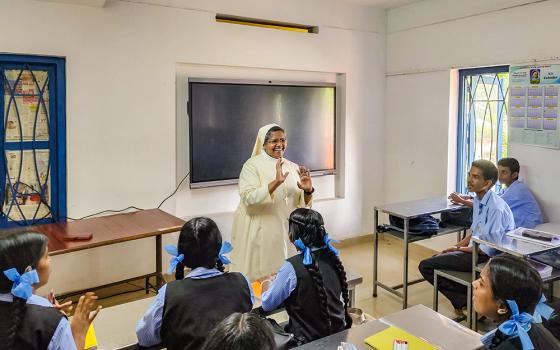
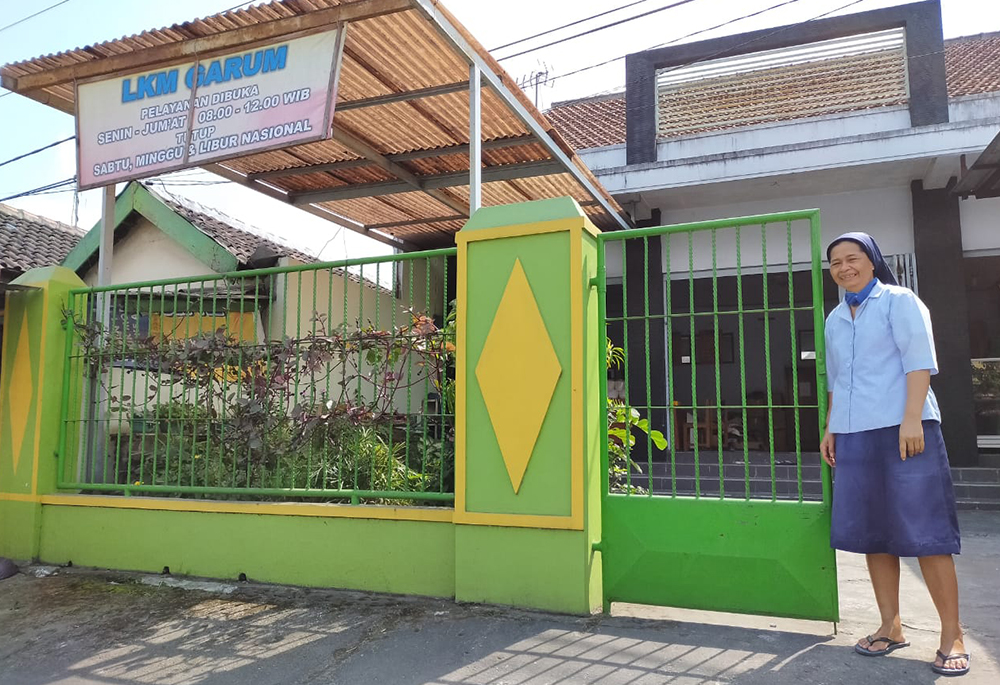
Sr. Gracia L. Suparti of the Daughters of Charity gets ready for a home visit. In 2019, Suparti founded the Migrant Family Association in Garum, a small sub-district near Blitar's capital, to help migrant families with their expenses and navigating poverty-related issues. (Courtesy of the Daughters of Charity)

by Jacobus E. Lato
For Sr. Cicilia Susi Indrayani of the Daughters of Charity, her mission among Indonesia's migrant workers is an integral part of her daily life.
Indrayani's mission in Jakarta began in 2008 when she was 27, and gave her firsthand experience of the harsh realities faced by those on the margins of the city. She told Global Sisters Report that this experience also compelled her to commit to working with the poor.
At Soekarno-Hatta International Airport, she managed the bodies of Indonesian migrant workers who had died overseas and witnessed their helpless families receive their loved ones returning in sealed coffins.
"Handling the bodies of Indonesian migrant workers arriving from abroad is not an easy task. We often have to deal with brokers demanding money," she told GSR.
Often, migrants leave their home country through illegal recruitment agents, who claim that the deceased has not fully paid their fee, and demand money from the family to release the body.
Reports indicated that about 1,900 migrant workers died abroad in one year, with at least two bodies arriving daily at Indonesian ports. Approximately 4.3 million Indonesians work abroad illegally according to some estimates, and at least the same number of workers are moving abroad illegally.
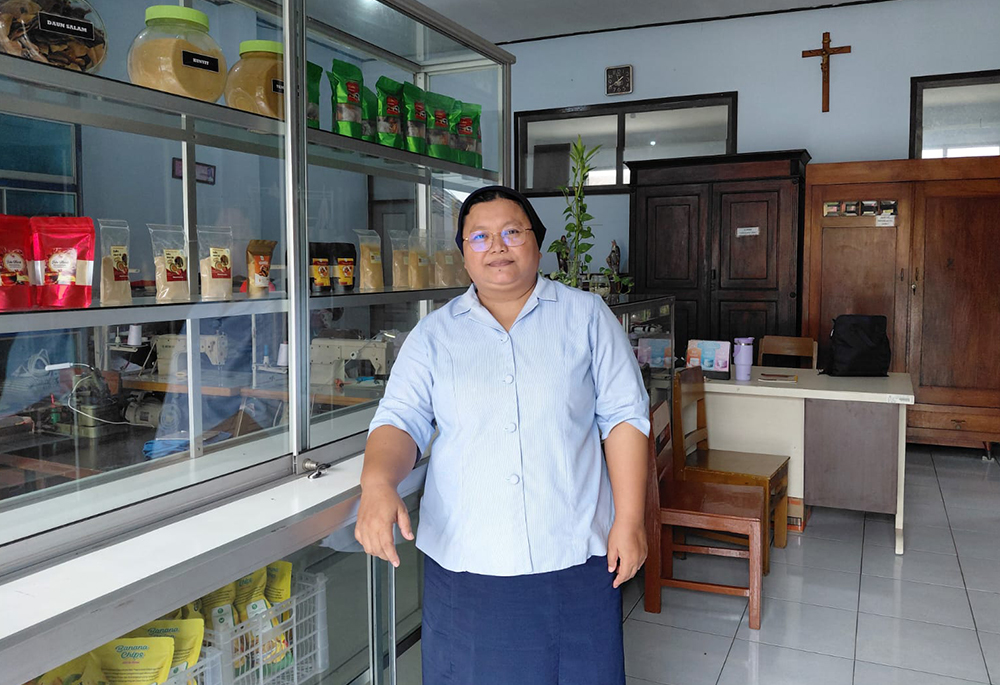
Sr. Cicilia Susi Indrayani of the Daughters of Charity is pictured at her office in the St. Vincent De Paul Minor Seminary in Garum, a small sub-district near Blitar's capital. (Courtesy of the Daughters of Charity)
Many workers choose to face the challenge of going abroad illegally to escape extreme poverty.
"Jakarta's street life is worse than your worst idea of poverty," Indrayani explained.
She has witnessed not only exploitation within migration systems but also the vulnerability among street children scavenging for food amid sexual predators and violence, the homeless, and families living under flyovers.
She said this work was "exhausting, and at times boring because barely any progress was made," but in hindsight, she views it as "physical, mental and spiritual preparation" for her future.
In 2022, her supervisors assigned her to work in East Java, her home province, which is also Indonesia's largest source of migrant workers. There, her role shifted from crisis response to rebuilding lives.
At the time, her congregation had already been working with migrants. However, organized efforts began after the congregation's general meeting in 2015, when a serious, focused effort aimed at empowering migrant families was mandated.
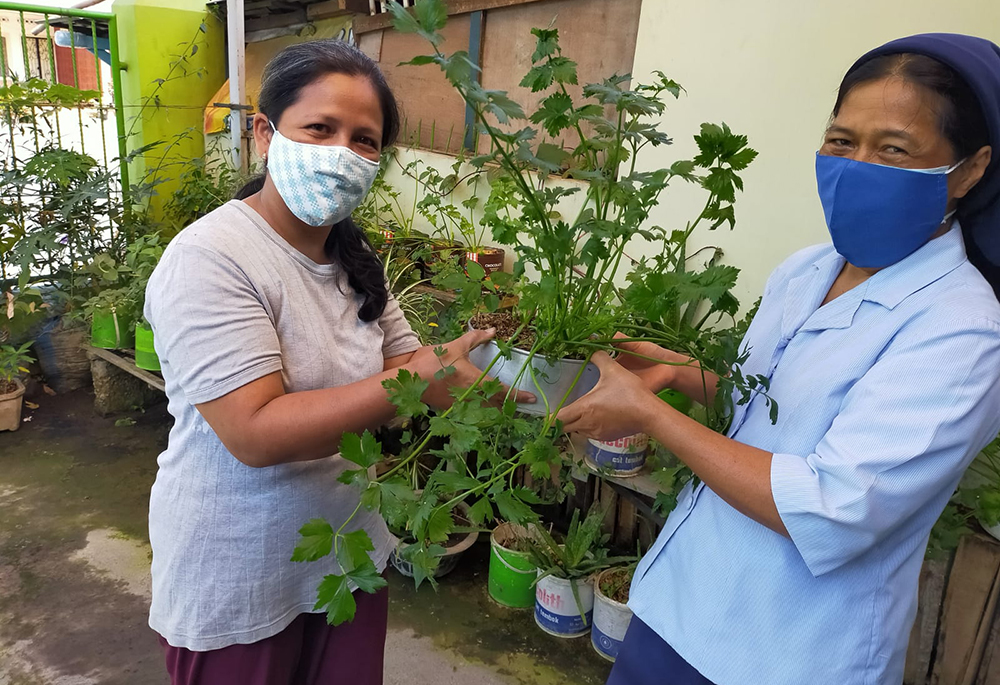
Sr. Gracia L. Suparti of the Daughters of Charity, right, with one of the members of the Migrant Family Association. In 2019, Suparti founded the Migrant Family Association in Garum, a small sub-district near Blitar's capital, to help migrant families with their expenses and navigating poverty-related issues. (Courtesy of the Daughters of Charity)
In 2019, Sr. Gracia Suparti of the Daughters of Charity founded the Migrant Family Association in Garum, a small sub-district near Blitar Regency's capital, to help migrant families with their expenses and navigate poverty-related issues. The association started with 92 member-families, but currently has 34 families as the sisters have helped many escape poverty.
After Suparti moved out of Blitar, Indrayani continued her work.
"The lives of migrant workers, who returned home, are not as good as they expected them to be. Only a very few are successful, and many come back into greater poverty," the 57-year-old nun said.
"They often find that all the money they sent home is gone because of their family's mismanagement and now struggle to manage with what remains," she said.
Suparti told GSR that gaining the trust of mostly Muslim villagers was a challenging task. She said her congregation met with local officials to identify migrant homes and visited the village head's office, which allowed the sisters to hold various meetings. "This helped us to avoid the accusations of trying to convert people to Christianity," she said.
Advertisement
The sisters' perseverance paid off. One family that opened up to them introduced them to another, and that led to yet another. For example, if someone sold food or drinks near a school but didn't have a cart to sell in another location during school holidays, the sisters helped them buy a cart. They also assisted others with loans to lease land for ginger cultivation.
"I told them that the sooner they repay their previous interest-free loan, the quicker they can secure the next loan, because it shows they're passionate about developing themselves," Suparti said.
Indrayani still visits villages on Mondays from morning until evening. Together, she and another sister provide lessons on hygiene and healthcare, and engage the community in exploring solutions to poverty. She explained that they encourage solutions that align with community-based activities and promote teamwork and mutual learning.
She also regularly visits the homes of the association's members on weekends to facilitate workshops on sewing and making banana chips and herbal medicine to help women turn their creativity and local knowledge into marketable products, and generate income for their families.
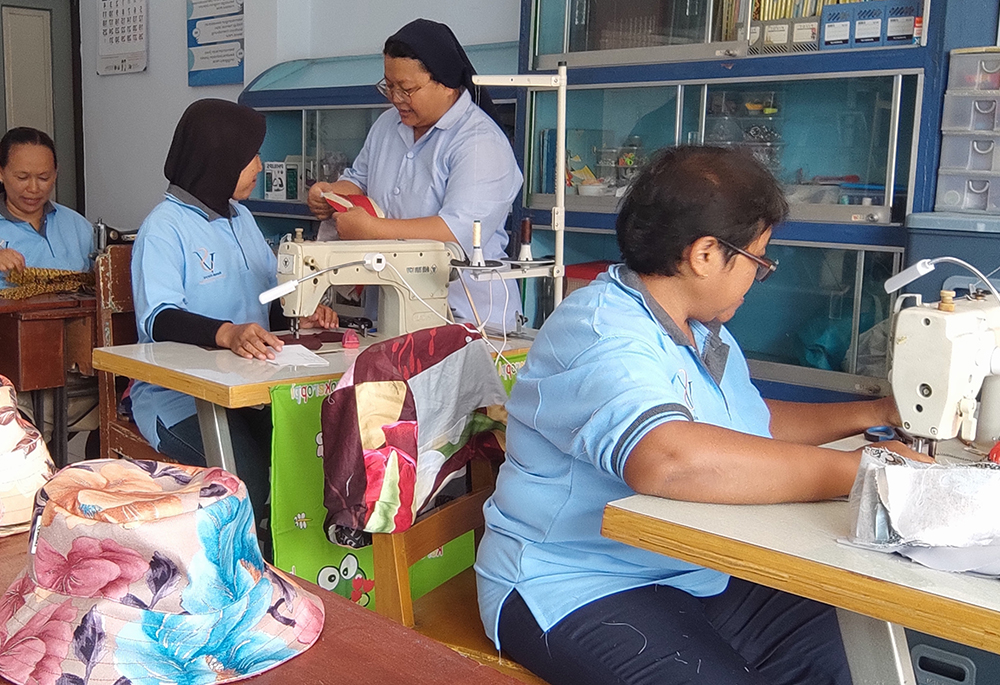
Sr. Cicilia Indrayani of the Daughters of Charity teaches women how to sew and helps prepare them for the garment industry in the region. (Courtesy of the Daughters of Charity)
"There is a lot of joy when herbal medicine concoctions prove to be healthy for those who use them, and people proudly buy the products as souvenirs to take to other cities," Indrayani said.
However, initial funding — approximately $50 to 100 — for such projects remains a challenge. But various church institutions, such as the Diocese of Surabaya's Socio-Economic Development Commission, step in during such situations.
"Besides guiding them in small business management, we also encourage them to save a small amount for their personal expenses," Indrayani said.
Over time, these savings are transferred to a church-affiliated credit union — Sawiran Credit Cooperative in Malang — helping people benefit from larger loans for their businesses.
Carmelite Fr. Eko Aldi, executive secretary of the Justice and Peace and Pastoral Care for Migrants Commission of the Indonesian bishops, said, "The nuns' work is outstanding. It demonstrates the church's tangible presence in the current situation in Blitar."
Indrayani said she and the sisters are happy when the association membership dwindles. "Each family that moves out of poverty is a success story," she said.