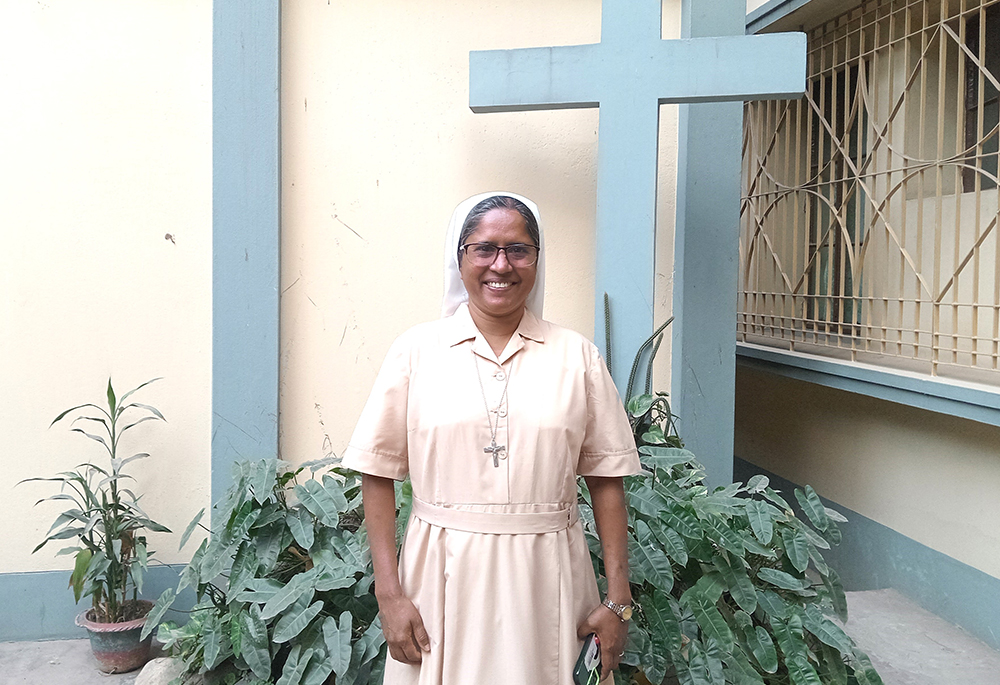
Sr. Shuly Rozario poses for a photo at the Missionary Sisters of the Immaculate Provincial House in Dhaka, Bangladesh, on March 26, 2026. (Sumon Corraya)

by Sumon Corraya
Sr. Shuly Pascalina Rozario, 48, a member of Missionary Sisters of the Immaculate, grew up in Banpara Parish in northern Bangladesh, where the witness of the sisters quietly shaped her vocation. She joined the congregation and made her first profession on Feb. 8, 2002.
After nearly a decade of teaching and formation work in Italy and Bangladesh, followed by a brief period of parish ministry, Rozario was sent as a missionary to Brazil in January 2022. Today, she serves at St. Sebastian Parish in Parintins, a town near the Amazon River.
She said that many more missionaries are needed abroad, noting a serious crisis in religious vocations.
"There are fewer priests and sisters and fewer people to care for the spiritual lives of communities," she said, adding that efforts are underway to encourage local vocations.
On a recent visit to Bangladesh, she spoke with Global Sisters Report about her pastoral work, challenges and hopes.
Global Sisters Report: You are working in a parish near the Amazon. What does your pastoral ministry look like on a daily basis?
Rozario: I serve as a parish-level coordinator. Our parish includes 20 small Christian communities, and much of my work focuses on children and adolescents between the ages of 2 and 14. I provide catechesis and religious education using materials prepared by the parish. Along with faith formation, we also offer moral education, art activities like painting and sports, which help the children feel connected and safe.
Another important part of my ministry is visiting families and bringing Communion to the sick in their homes. Whenever young people organize programs or activities, they invite me to accompany them and offer support. Many people also come to me for counseling. If someone is struggling and asks for help, I try to listen, encourage them and, when needed, guide them toward further support. My pastoral work is deeply centered on being present to children, adolescents and families in vulnerable situations.
You emphasize listening in your ministry. Why is listening so important?
Listening is essential, especially in Brazil, which is a very large and fast-moving society. Many families are fragile or broken, and people often feel alone. Elderly and sick people, in particular, suffer from a lack of care and attention. In broken families, children may live partly with their mother and partly with their father, surrounded by conflict and disagreement. These children grow up carrying deep emotional wounds and feelings of inferiority.
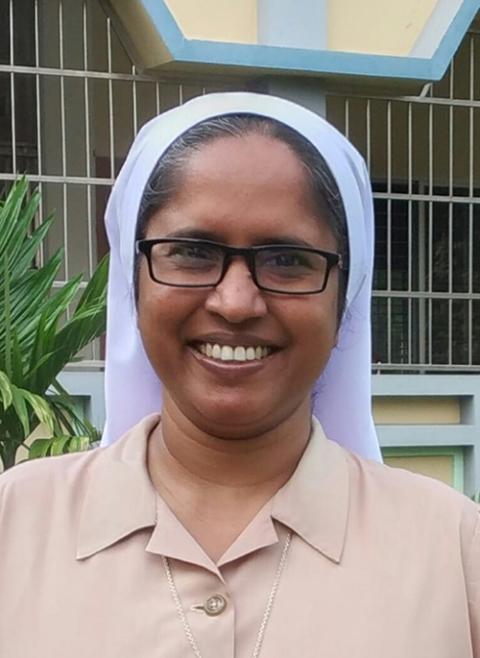
Missionary Sisters of the Immaculate Sr. Shuly Rozario (Courtesy of Shuly Rozario)
Often, there is no one to whom they can express their pain. In pastoral work, listening is sometimes more important than speaking. Many people do not even wait for advice; they simply need someone to hear them. When I listen with patience, they begin to open their hearts. I speak only when needed, offering words of comfort or simple guidance. This makes them feel lighter, as if someone has shared their burden.
I see this especially among adolescents. They grow up in a very free society, and that freedom sometimes leads them into difficulty. When problems arise, they distance themselves from their families and the church, and some turn to drugs. After listening to them carefully, I try to offer gentle suggestions or connect them with people who can help. In this way, some young people slowly find direction and healing.
Why do you think spiritual services are so necessary for families in Brazil today?
Many people identify as Christians, but their faith is often not deeply practiced. There is a serious shortage of priests and religious sisters, and in some remote areas people may attend Mass only once or twice a year. Some communities go months without hearing the Gospel proclaimed.
Because faith formation is weak, family life is also fragile. Children move between parents' homes, and by the time they are 12 or 14 years old, many begin relationships very early. There is also a strong reluctance to marry in the church. In my four years of experience, I have not seen a single young couple marry in the church before living together. Many couples live together for decades, raise children, and only later seek a church blessing.
Independence is highly valued, but it often leads to separation rather than reconciliation. When relationships become difficult, people simply walk away. In this context, spiritual accompaniment is urgently needed to help families rediscover faith, commitment and forgiveness.
As a Bangladeshi missionary in Brazil, what kind of testimony do you aim to give through your life?
I did not come to Brazil in my own name but as a representative of the Catholic Church in Bangladesh. I try to give my best and witness through love. Just as Jesus has loved me, I want to reflect that love through my words, actions and behavior. When I meet people, I try to greet them with a smile, even those who are suffering deeply. Joy and kindness open hearts.
Brazil was a new country for you. How did you feel about going there as a missionary, and what challenges did you face?
At first, I did not like it at all. Everything was new to me — the food, clothing, culture, climate and way of life. I felt like a small child again. Language became my biggest challenge. When I could not communicate, I felt helpless, almost as if I were mute. I cried a lot in the beginning because I knew no one, and no one spoke English. The sisters encouraged me to focus only on learning Portuguese, so even Italian was discouraged. For basic needs, I had to rely on gestures.
There were moments when I wanted to return to Bangladesh. Then I realized that mature sisters had trusted me with this mission and sacrificed to send me. That awareness gave me strength. I slowly began spending time with children at school, listening and observing. Later, I received a language tutor.
The physical challenges were also significant. Parintins is near the Amazon forest, with temperatures reaching 40 to 45 degrees Celsius. Insects are everywhere, and I suffer from allergies caused by them. Still, I see all these difficulties as part of carrying the cross with Christ.
Today, the same people who once could not speak with me now consider me close to their hearts. Their love is the joy of my resurrection. If I had not endured the suffering, I would not have experienced this joy.
How do laypeople in Brazil support the local church?
The lay faithful are very generous and actively involved. Unlike in Bangladesh, where priests often cover most parish expenses, in Brazil parish priests usually sit with the people and make decisions together. When infrastructure projects are needed, the community assumes much of the responsibility.
Many catechists even pay for their own studies so they can better teach the faith to the next generation. This sense of ownership and service deeply touches me and strengthens the local church.
Advertisement
Drug addiction and fragile families are major challenges. What initiatives exist to address these issues?
The government does have programs to treat drug addiction, but follow-up is often weak, and the scale of the problem is overwhelming. Human trafficking, especially involving women and children, is another serious concern.
Within the church, networks of laypeople, priests and religious sisters work together to respond quickly when cases are identified. When someone hears of a child at risk, they alert the network so that immediate action can be taken to protect and support those affected. It is not enough, but it is a sign of hope.
Missionaries move between Bangladesh and Brazil today. What does this exchange mean to you?
In the community where I live, there are sisters from Italy, Bangladesh and Brazil. Two Bangladeshi PIME [Missionary Sisters of the Immaculate] sisters serve in other parts of Brazil, along with Bangladeshi PIME and Xaverian priests. At the same time, two Brazilian missionary sisters serve in Bangladesh. This has created a beautiful bridge between our countries.
There is a mutual exchange of culture and faith. On special occasions, I wear a sari and cook Bangladeshi food, which people appreciate greatly. It makes me proud to share my culture.
For me, this exchange is also a sign that the church in Bangladesh has matured. Missionaries once came to sow seeds of faith in our land. Now those seeds have grown into trees that bear fruit. With more than 50 Bangladeshi missionaries serving abroad, we are no longer only receiving; we are also giving. I am deeply grateful to the missionaries who came before us, because without them, we would not understand today what it truly means to be sent.