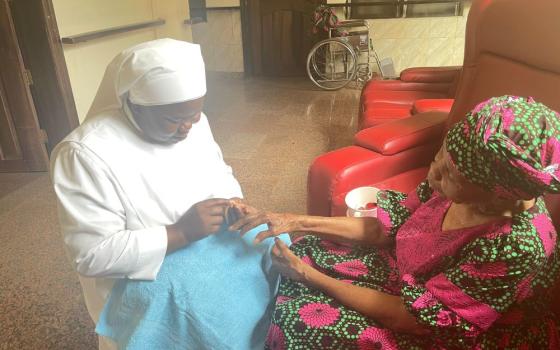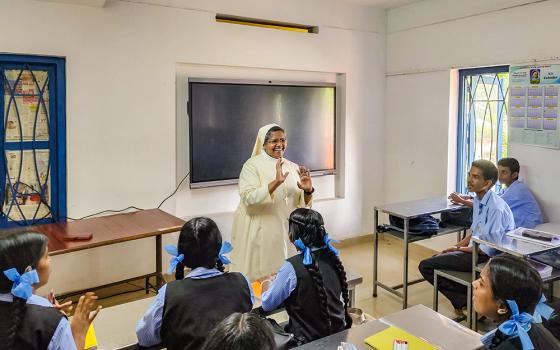
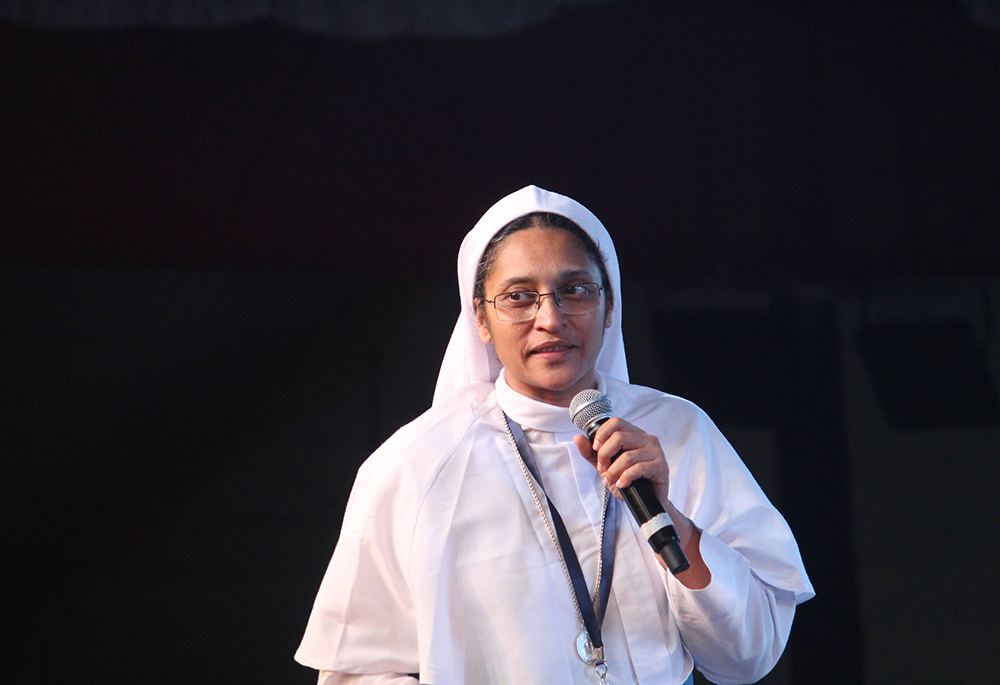
Sr. Paulina Melite of the Missionary Sisters of Mary Immaculate, who heads the Indian Catholics United for Life, a national network of pro-life organizations. (Courtesy of Paulina Melite)

by George Kommattam
Sr. Paulina Melite has been active since 2016 in pro-life ministry in India where more than 15 million abortions have taken place annually.
In 2024, the 46-year-old member of the Missionary Sisters of Mary Immaculate was appointed the head of the Indian Catholics United for Life, a national network of pro-life organizations approved by the Catholic Bishops' Conference of India.
She started her pro-life ministry in 2016 as the diocesan animator of the movement in the Kalyan Syro-Malabar Diocese in western India. Later, she served as the national secretary of the Catholic Charismatic Renewal International Service based in New Delhi.
Melite played a central role in organizing India's first national march for life in 2021, an annual event since then.
She shared with Global Sisters Report about her ministry, Indian laws on abortion, pastoral concerns and her hopes for the future.
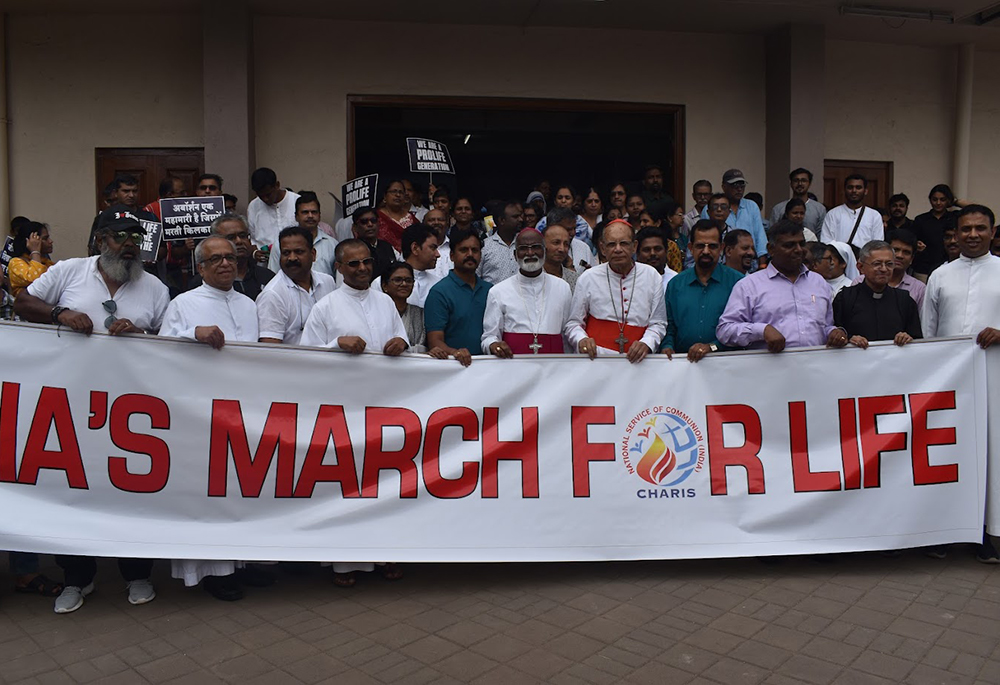
India's March for Life 2023, held on Aug 10, 2023, at Pune, southern India, and organized by the Catholic Charismatic Renewal International Service (or CHARIS) India under the Catholic Bishops' Conference of India. The event was hosted by then-Bishop John Rodrigues of Pune and Archbishop Francis Kalist of Pondicherry-Cuddalore, the episcopal adviser to CHARIS India and the bishops' conference in-charge for pro-life activities. (Courtesy of Paulina Melite)
GSR: Why did you join the fight against abortion in India?
Melite: It was when working with the pro-life movement in Kalyan Diocese that I realized the needs of unborn children and their mothers in India.
To me, this ministry is God's call at this time. Since 2016, I have worked at diocesan and national levels to build awareness, expand the pro-life movement and unify Catholic efforts to save the unborn.
How prevalent is abortion in India?
The first national estimate of abortion in India took place in 2015 and it revealed that an estimated 15.6 million abortions take place annually in India. In other words, one child is aborted every two seconds in India.
This is the official figures. Many more abortions take place that do not appear in official records.
We worry about the increase in teenage pregnancies in the country. Lack of awareness of abortion is another worry.
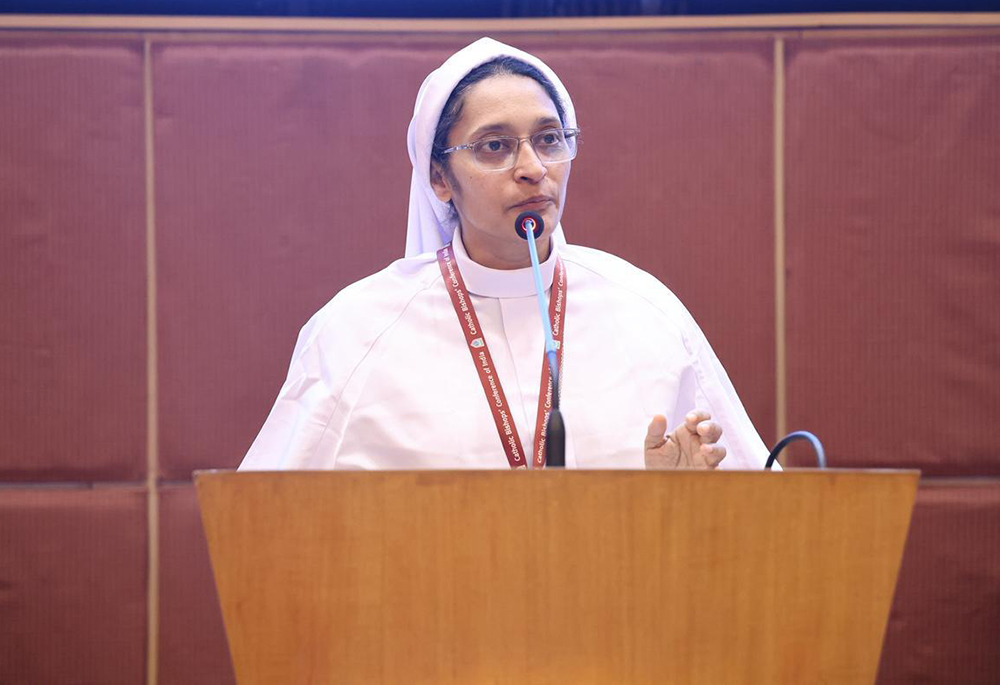
Sr. Paulina Melite of the Missionary Sisters of Mary Immaculate addresses the 37th general body meeting of the Catholic Bishops' Conference of India on Feb. 7 in Bengaluru, southern India. (Courtesy of Paulina Melite)
What is the legal status of abortion in India?
Abortion became legal in 1971 under the Medical Termination of Pregnancy Act. The law originally permitted abortion up to 12 weeks under certain conditions, later it was raised to 20 weeks. In 2021, the the law was amended to make the upper limit for abortion to 24 weeks — applicable when the pregnancy poses a risk to the mother's life, fetal anomalies, rape or failed contraception for specific groups of women.
Above 24 weeks, a woman had to approach the courts for permission.
However, early this year, the Supreme Court allowed abortion up to 30 weeks in a particular case, a decision that could have significant legal and societal implications.
Advertisement
What are your concerns about this apex court ruling?
I am deeply disappointed. Such rulings not only weaken the protection for the unborn but erode cultural respect for human life.
The ruling would greatly increase abortion cases in India.
How do you plan to counter it?
We cannot remain silent, but should speak out more boldly against abortion. We have organized a signature campaign asking the government to recognize the basic right to life of the unborn child. We have submitted the signatures to the prime minister's office and the federal ministry of health and family welfare.
Instead of discouraging us, such developments make us stronger. We have received greater support from bishops, priests and lay leaders who want a unified Catholic response to this grave matter.
Please explain your pro-life ministry? What is its relevance today?
Our pro-life ministry is rooted in the belief that every human life is sacred from conception to natural death. We conduct pro-life outreach programs for dioceses, parishes, colleges, schools and for various groups. They address abortion, contraception, IVF [in vitro fertilization], mercy killing, sexual morality, and the culture of life.
We also organize pro-life retreats, awareness exhibitions and other programs. We have conducted sessions in more than 40 dioceses in India, speaking with couples, youth, teenagers, children and families about abortion and its consequences on women, sexual morality and culture of death.
This ministry is essential today because many people lack awareness of the gravity of abortion in our country.
Even within the Catholic community, pro-life is often misunderstood as merely encouraging having more children.
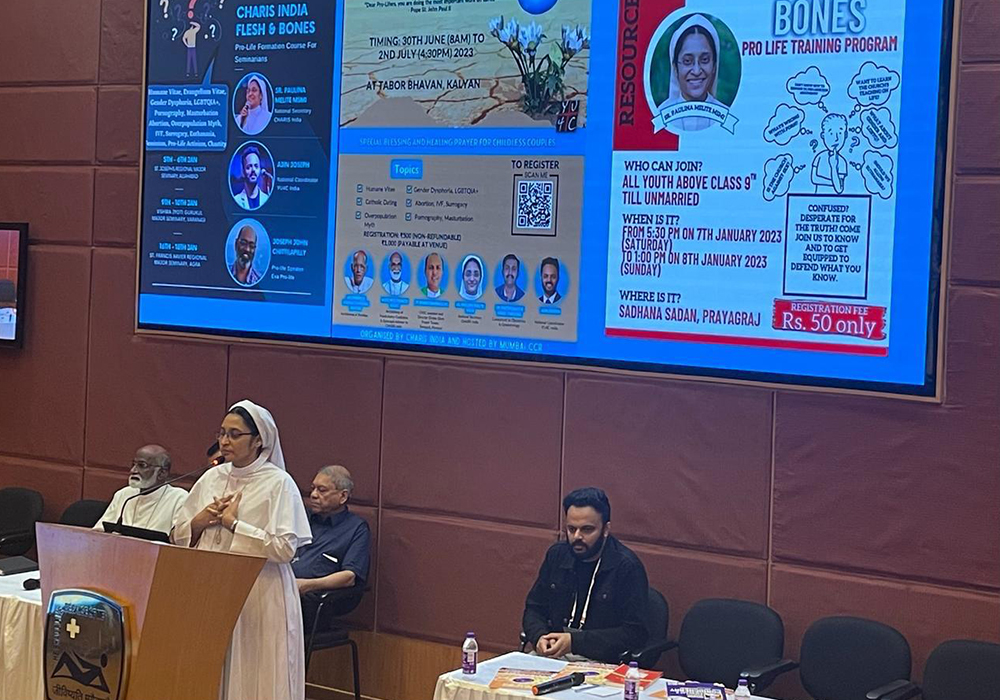
Sr. Paulina Melite of the Missionary Sisters of Mary Immaculate speaks at the general body meeting of CHARIS India at Allahabad, northern India, in February 2024. (Courtesy of Paulina Melite)
For us, this is not just a social campaign — it is a spiritual battle. We pray, especially at abortion centers and IVF clinics. For us, this is a warfare for the souls and lives affected by modern culture of death.
I often say that we are like David facing Goliath. The challenge is massive — laws, policies, cultural silence, stigma, but we continue with faith.
In the words of St. John Paul II in Evangelium Vitae, we are called to be witnesses to the inviolable dignity of every human being and to combat what he described as the "culture of death" permeating our society.
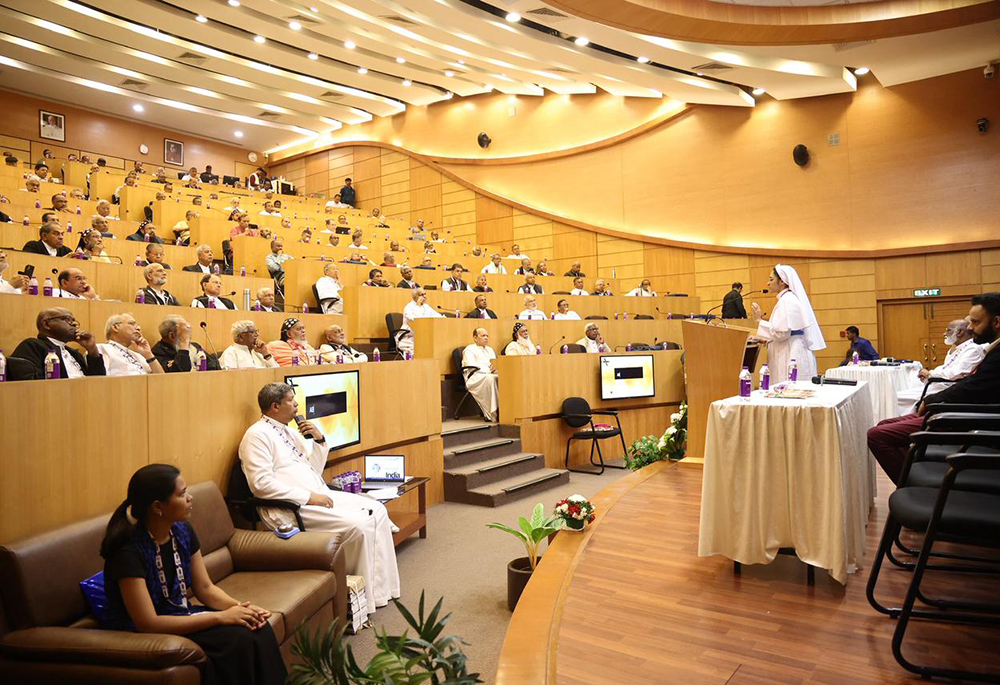
Sr. Paulina Melite of the Missionary Sisters of Mary Immaculate addresses the general body meeting of the Catholic Bishops' Conference of India on Feb. 7 in Bengaluru, southern India. (Courtesy of Paulina Melite)
What are your main challenges?
The biggest challenge is funds. It is difficult to get funds because the beneficiaries of this ministry are unborn children. Many donors prefer causes with visible, immediate outcomes.
Another challenge is limited awareness, even within the church communities. Many Catholics say they have rarely heard abortion addressed in homilies or parish programs.
There is also a broader cultural silence. Topics such as abortion, contraception and IVF are often avoided in families and public forums.
We need legal advocacy for the unborn. I plan to set up a Christian lawyers forum to offer legal advocacy for unborn life and engage policymakers more systematically.
India is a land of several religions. Are other communities equally concerned about abortion?
Yes, they are. Abortion is not a concern limited only to Catholics. For example, pro-life initiatives have also emerged within the Jain community in Mumbai. Leaders from various faiths support life-affirming activities. It shows that abortion is fundamentally a human issue, not just religious.
Why did you begin the national march for life?
India did not have a visible, united platform for people to stand together for the unborn. Different groups worked in isolation.
We realized the need to make the silent cry of the unborn heard by lawmakers and society.
So in 2021, 50 years after India enacted the abortion law, we organized the first march for life in New Delhi with about 250 participants. Since then, we organize the march every year at different places.
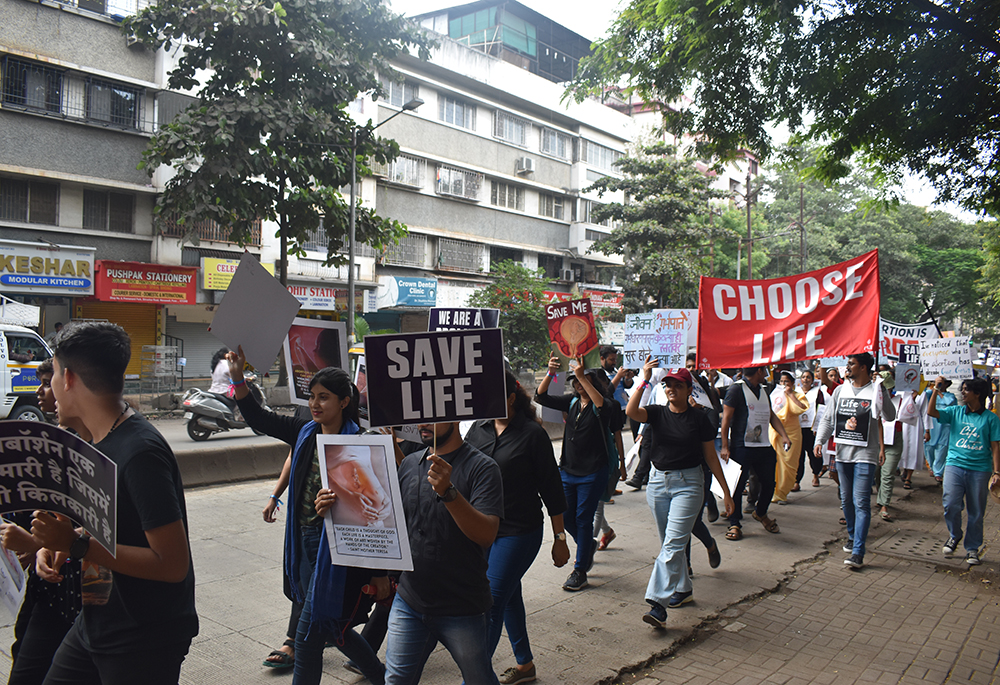
Young people take part in the March for Life organized by the Catholic Charismatic Renewal International Service (or CHARIS) India in Bengaluru, southern India, in 2025. (Courtesy of Paulina Melite)
We hold the march on Aug. 10, the date associated with the enactment of India's abortion law, as a symbolic affirmation of our commitment to life. The local diocese hosts the march which is organized largely through collaboration with bishops, clergy, religious, and lay volunteers.
Preparations for the 2026 march in Chennai [capital of Tamil Nadu in southern India] are already underway, with a 180-member organizing committee. We expect 100,000 participants.
What has been the public response to the march?
The response has been steadily growing, especially among youth and laypeople. Young people are involved in planning, mobilizing and even creating slogans and banners.
At the same time, the movement has drawn criticism, especially online criticism from a feminist portal.
However, we welcome attention, both positive and critical, because it means the issue is being noticed.
What gives you hope for the future?
I am hopeful because young people are increasingly engaged. They understand our talks about the dignity of human life and respond with conviction. The Catholic Bishops' Conference of India allowed us to talk about the ministry at its last biennial plenary. Collaboration among dioceses is growing. Lay participation and even interreligious support too are increasing.
Our inspiration is Mother Teresa. In her 1979 Nobel Peace Prize speech, she said, "The greatest destroyer of peace today is abortion."
If America could challenge abortion laws after many years, we can also work for change. India is known as the land of ahimsa [nonviolence]. If we truly believe in nonviolence, it must begin in the womb.