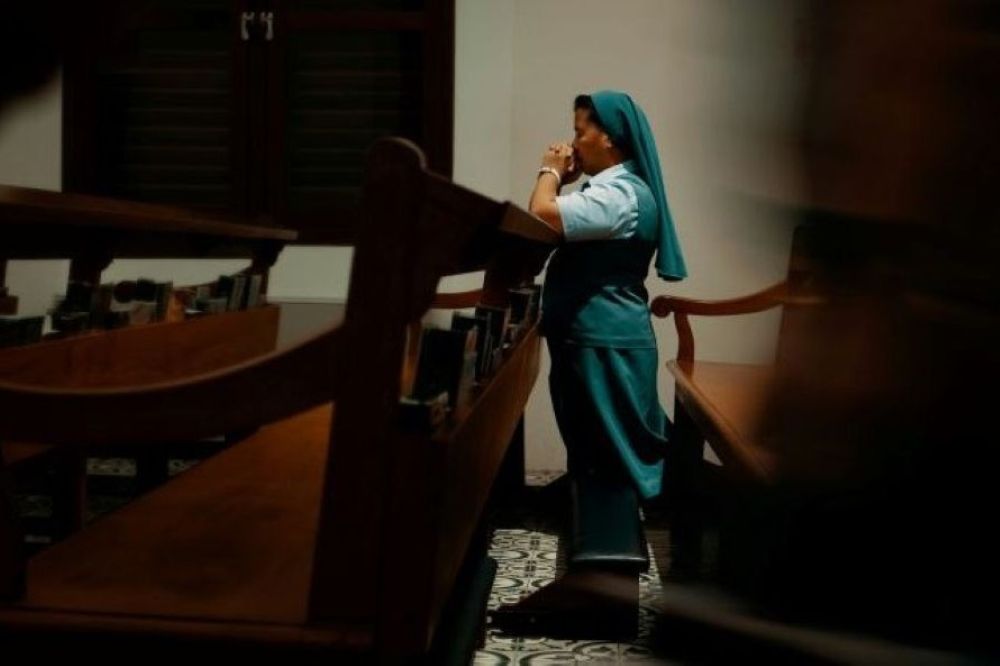
(Unsplash/Pang Yuhao)

by The Life Panelists

Some lessons from formation are expected: how to pray, live in community and serve others. Yet some of the lessons that stay with us the longest are the ones we did not fully understand at the time. A word of advice, a practice or an experience can reveal its meaning only years later. Formation may have a beginning, but its lessons continue to unfold throughout our lives.
This month, sisters share one insight from formation that still surprises them or guides their decisions today.
Sr. Catherine Martinez is a member of St. Joseph Monastery, an autonomous Benedictine community based in Tulsa, Oklahoma. She was raised in southern California. Her current ministry is coordinating a high school equivalency program with Catholic Charities of Eastern Oklahoma. She has a passion for creating relationships with diverse populations. Her various trips to Mexico with her grandmother developed her openness to new experiences and supported her facility in acquiring languages and making connections with all whom she meets. She enjoys reading, writing, all types of crafting and traveling.
When asked to perform a task that seems impossible for me, how can I address my concerns appropriately and feel I was heard?
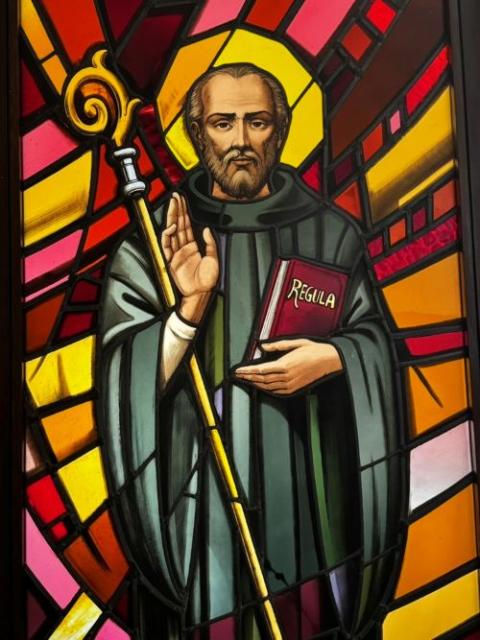
St. Benedict is depicted in a window at the Monastero delle Benedettine de S. Giuseppe in Assisi, Italy, in June 2026. (GSR photo/Helga Leija)
The Rule of St. Benedict teaches that when a legitimate request is made that appears to be impossible, there is a process to address one's concerns. The teaching instructs the monastic to calmly and thoughtfully explain the source of the hesitancy. Ultimately, however, if the superior continues to hold firm in the initial request, the person needs to turn to God's grace to provide the strength necessary to complete the task. Over the years, I have grown in my ability to accept requests to complete tasks that seem impossible and daunting at the start. These invitations to growth have taught me listening, trust and humility.
Listening deeply is a key component of this process. It requires that I listen fully to what the other person is saying and remain present in the conversation. The ability to remain present during this dialogue has been essential for me because even if the request remains the same, if I listen carefully, I might hear a piece of wisdom that provides the grace I need to fulfill the task. Sometimes, just feeling that my concerns were heard can be enough for me to gain the grace necessary to complete the task. It is also important for me to listen to myself so that I can discover the source of my initial hesitancy.
I grow in trust of others when my prioress asks me to consider a new ministry that takes me away from one in which I feel most comfortable. This trust is grounded in my belief that the prioress holds a desire for both my good and the good of the entire community in her heart.
I have also grown in my trust of God. At some point, I need to acknowledge that if I accept the request willingly, God will provide the wisdom, strength and grace I need to perform the task.
Through navigating this process, I have grown in humility. In order to accept a request that appears daunting, I must be willing to consider the possibility that this is an invitation to further growth and conversion. I might learn an important lesson about myself through this process of obedience.
When I lay down my fears and limitations and embrace the process of navigating what seems to be an impossible request, I find that I grow in my ability to love. It is not a love that is based on personal preferences, but one that leads to closer union with God, stronger bonds within the community and greater self-awareness.
Sr. Helen Mueting, a Benedictine Sister of Mount St. Scholastica, taught high school English in Kansas, Missouri and Iowa. Currently, she is secretary for the community in Atchison, Kansas. When not working in the office, she enjoys mowing, gardening, extracting honey and working outside. Her favorite Scripture quote is "My Father's house has many rooms; if that were not so, would I have told you that I am going there to prepare a place for you?"
When I look back on my formation, there are many lessons and insights that have inspired my faith process and continue to wiggle their way into my mind when I am making decisions. One of the most quoted sayings of my formation director was "Be where you are; do what you're doing." Although this was drilled into me as a postulant and novice, I still find myself not being present where I am.
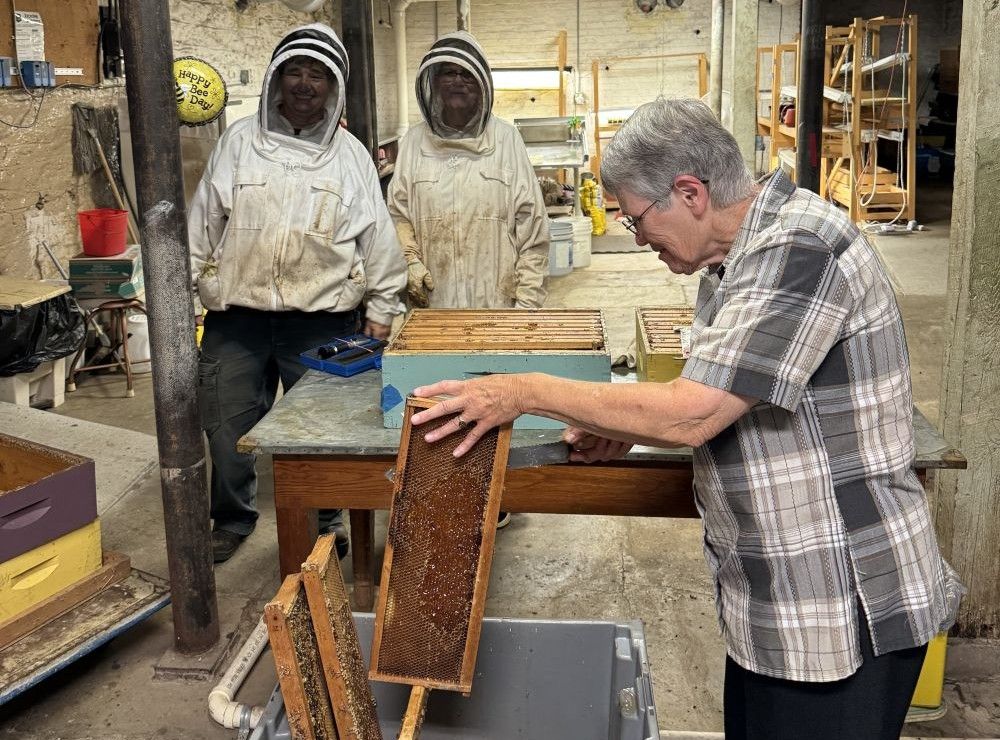
Sr. Helen Mueting extracts honey at Mount St. Scholastica Monastery in fall 2024. Last year's honey crop totaled a little over 900 pounds. (Courtesy of Mount St. Scholastica)
It sometimes seems like my mind is running ahead of me to what is coming in the next hour, the next day or even the next year. Instead of concentrating on what I am currently working on, I get distracted by worrying about a meeting the next day or a job that needs to be done. Instead of really listening to the person who is talking to me, I am thinking about what work I still must do or what I want to tell the person rather than listening to what they want to tell me. This distraction does not make for the best communication or portray me as a good listener. I need to reset my mind and truly focus on seeing and hearing the person with whom I am present. "Being where I am" is a continuous struggle for me, one I need to continue to work on.
Sometimes I think I did not learn this lesson at all. Then I look back on my life and see events where I was fully in the place where I should have been. When I graduated from college, I taught English for two years before I joined four other sisters in pastoral ministry. We worked in a rural area covering two counties and served in about eight parishes. We met once a week with the priests in those parishes to discuss the events of the week. Although I had never done pastoral work, I found myself working with religion teachers in three of the parishes and helping the pastoral team with other activities. I didn't even think about needing to be where I was and doing what I was doing. I just believed in my ability to be present to the situation and was encouraged by one of the sisters to do things I never had done before and succeeded in what I did.
When rural areas were facing many foreclosures in the early '80s, I felt a call to be present to them in their need. I and four other sisters discerned founding a community in rural Iowa to be with them. Again, I was not qualified to work with them. I just knew this was where God wanted me at that time. Our first few years together were a test of our ability to work together and to listen to the ideas of each person with whom we lived. Again, we created workshops and discussion groups to help farm families who were struggling to hang on to their farms. I also applied to a local school to teach English and taught there for 29 years.
When I retired, I came back to my community to become community secretary, a job I was only qualified for because I had taught English and writing. I have been in this position for 14 years, being where I have been called to be. This position enabled me to be present to another need: ecology. I got involved in efforts to protect our planet: chairing our Wangari (ecological) Committee, working in our organic garden, helping harvest our honey, and helping our committee and our community compose our Laudato Si' platform through Catholic Climate Covenant
As much as I may feel I failed at "being where I am and doing what I am doing," my efforts were not totally a failure. I would not have succeeded in any of those positions if I had not been present and open to learning and working with others. These bigger successes remind me not to get too discouraged with all the times I failed to be fully present to others and truly focused on what I was doing.
Sr. Josephine Kwenga is a member of the Sisters of St. Joseph of Tarbes, an international congregation whose charism is living and building communion. She serves as the development coordinator for the Kenyan province, a role focused on resource mobilization to support mission initiatives. Her passion lies in advocacy for sustainable development, partnership building and collaboration. In 2023, she received the People's Choice SDGs Award from the United Nations' Journalists and Writers Foundation for her outstanding contribution in promoting regenerative agriculture. Kwenga holds certificates in project management and fundraising, peacebuilding, leadership and advocacy, a diploma in education, a degree in development studies, and a master's in social transformation.
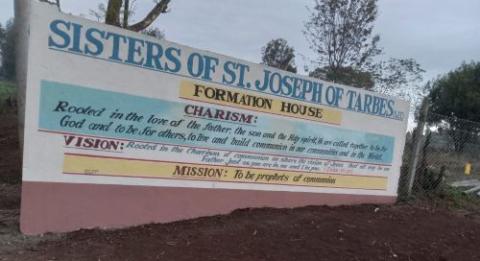
Formation house of the Sisters of St. Joseph of Tarbes in Kenya, where Josephine Kwenga underwent formation (Courtesy of Josephine Kwenga)
When I reflect on my religious life formation journey, one lesson that continues to guide my decisions today is the importance of resilience grounded in faith in God and my vocation. Religious life has taught me that vocation is not simply about joy and fulfillment, but also about perseverance, sacrifice, and trusting God even in moments of fear, uncertainty and suffering. Throughout my journey, I have experienced both joys and challenges that tested my strength and commitment to my vocation, but one thing that encouraged me to keep moving forward was God's gift of strength and perseverance.
There were moments when I encountered attacks by robbers, situations of insecurity and even threats to my life from al-Shabab during ministry assignments. These experiences were frightening and difficult, and at times they made me deeply aware of the risks involved in serving God's people in difficult environments. Yet, despite these serious challenges, I never reached a point of wanting to abandon my vocation or return home. Deep within me, I always felt that God had called me to a mission greater than my fears.
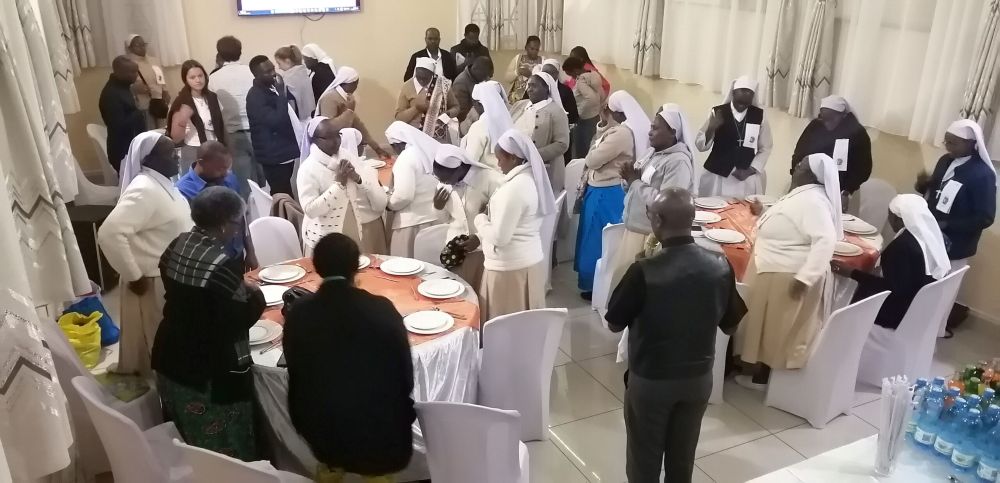
Sr. Josephine Kwenga greets people during an event at the formation house of the Sisters of St. Joseph of Tarbes in Kenya. (Courtesy of Josephine Kwenga)
Apart from external dangers, community life itself has also been a place of formation and growth. Living with sisters from different backgrounds, personalities and perspectives is not always easy. There have been moments of misunderstanding, personal differences, disappointments and emotional struggles within community life. However, these experiences have taught me patience, humility, forgiveness and the importance of dialogue and mutual understanding. I came to realize that community life is not about perfection, but about learning to love and walk together despite human weaknesses.
Looking back today, I can clearly see how God has used every experience to shape my life and ministry for the better. The difficulties I went through strengthened my resilience and deepened my compassion for others who face struggles in life. Through my ministry and service, especially in empowerment and community transformation initiatives, I have witnessed lives being touched, families gaining hope and communities becoming stronger.
One thing that continues to surprise me is how God can transform painful experiences into blessings for others. What once seemed like obstacles have become opportunities for growth, service and witness. My religious life formation journey has taught me that hardships will not always be absent from this path, but God will continue to give me the courage to remain faithful despite them. Above all, I remain grateful to God for sustaining my vocation, strengthening my faith and allowing my life and ministry to have a positive impact on others.
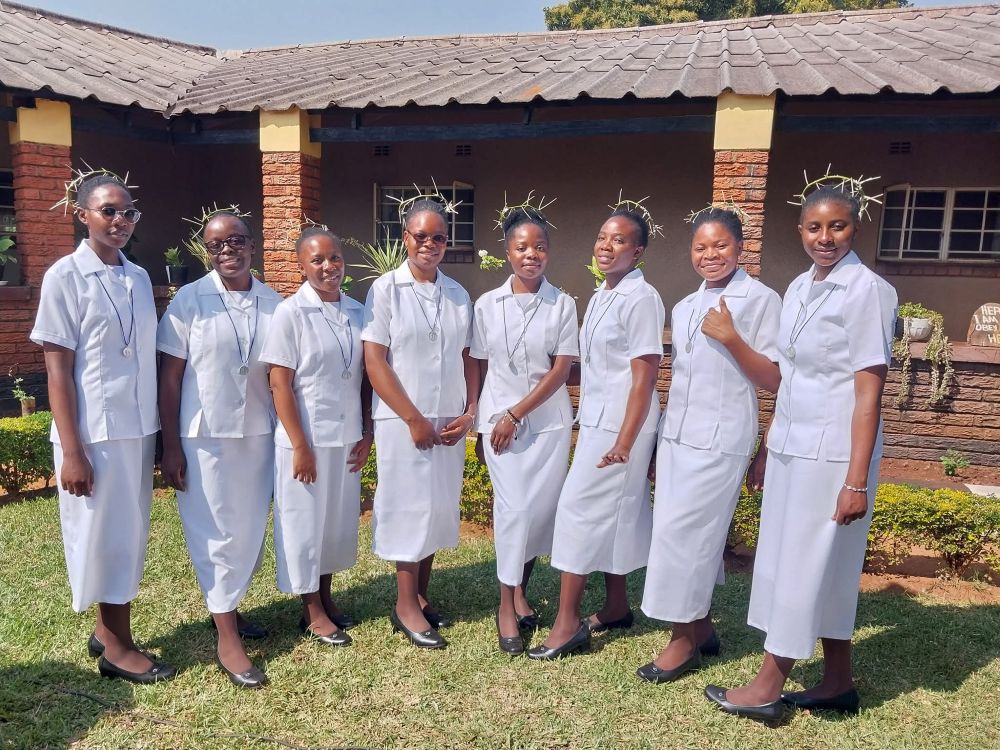
Members of the Congregation of the Handmaids of the Blessed Virgin Mary pose during their reception into the novitiate on July 2, 2025. They are, from left, Gift Miyoba, Alice Nyirenda; Mutinta Nyambe; Annette Mumba, Maimbo Hamoonga, Catherine Mwanza, Monica Mutale and Aoration Chilekwa Chishimba. (Courtesy of Prisca Chuzu)
Sr. Prisca Chuzu is a dedicated member of the Handmaids of the Blessed Virgin Mary of Lusaka, a diocesan congregation. Growing up in a Catholic family, she actively served as a youth secretary at parish level. With a strong passion for health care, she began her ministry as an enrolled nurse and later advanced to become a registered midwife. Currently, she serves as the hospital administrator at Mpunde Mission Hospital in Kapiri Mposhi District, Central Province of Zambia. Under her leadership, the hospital received an award from the Churches Health Association of Zambia for outstanding performance in income-generating activities.
Looking at my formation, one insight that continues to guide my decisions today, dating back 34 years to when I was in formation, is the rediscovery of early morning prayer. Waking up before dawn to speak to God has become not only a discipline, but a deeply personal encounter that guides my decisions and strengthens my faith each day. During my novitiate, this practice was part of my routine, yet I must admit that I did not fully appreciate its value at that time. It often felt like an obligation rather than a privilege. I followed it faithfully but without the depth of understanding or interior openness that I now experience. Looking back, I realize that my heart is still learning how to listen, how to be still and how to truly enter into prayer.
Today, however, my perspective has changed. There is a sense of conversion within me, a renewed awareness of God's presence and a deeper desire to begin each day in communion with Him. The quiet moment before dawn has become sacred in its stillness, free from distractions. I find clarity, peace and direction. It is a time where I can entrust my plans, struggles and hopes to God before the demands of the day begin.
The practice has proven to be both helpful and transformative. It grounds me spiritually and provides a sense of purpose that carries through the rest of the day. Decisions become clearer, challenges feel more manageable and I am reminded that I do not walk alone. Prayer in these early hours shapes my mindset, allowing me to approach life with greater patience, humility and trust.
What surprises me most is how something I once undervalued has now become essential. It is a reminder that growth often comes through experience and openness to change. God meets us in different ways at different times and what once seemed ordinary can become extraordinary when embraced with sincerity.
As I continue on this journey, I hold firmly to this practice, trusting that these early encounters with God will continue to guide, strengthen and transform me each day.
Advertisement