(GSR graphic/Olivia Bardo; vehicle photo by John Chukwu)

by John Chukwu
On a quiet, hilly stretch of road in Amawbia, in southeastern Nigeria, sits the gated compound of the Mater Christi Human Development and Religious Formation Centre. Young men pace restlessly; others sit in silence, while a few sing and pray. Some arrived in chains. Others were brought in by desperate families. Many did not believe they needed help.
Inside, Sisters of the Immaculate Heart of Mary, Mother of Christ are confronting one of Nigeria's most urgent and least examined crises: the accelerating surge in drug addiction among young people.
Their work at the center extends far beyond Anambra State. Families arrive from across Nigeria, seeking intervention after addiction has fractured households, derailed education and pushed young people toward violence, crime or psychological breakdown. What unfolds within these walls reflects a national emergency and an unconventional frontline response led by women religious trained not only in faith, but in clinical psychology and counseling.
At the heart of this work is Sr. Mary Frances Ezeakunne, a clinical psychologist who has spent more than a decade accompanying young Nigerians through addiction, withdrawal, relapse and recovery.
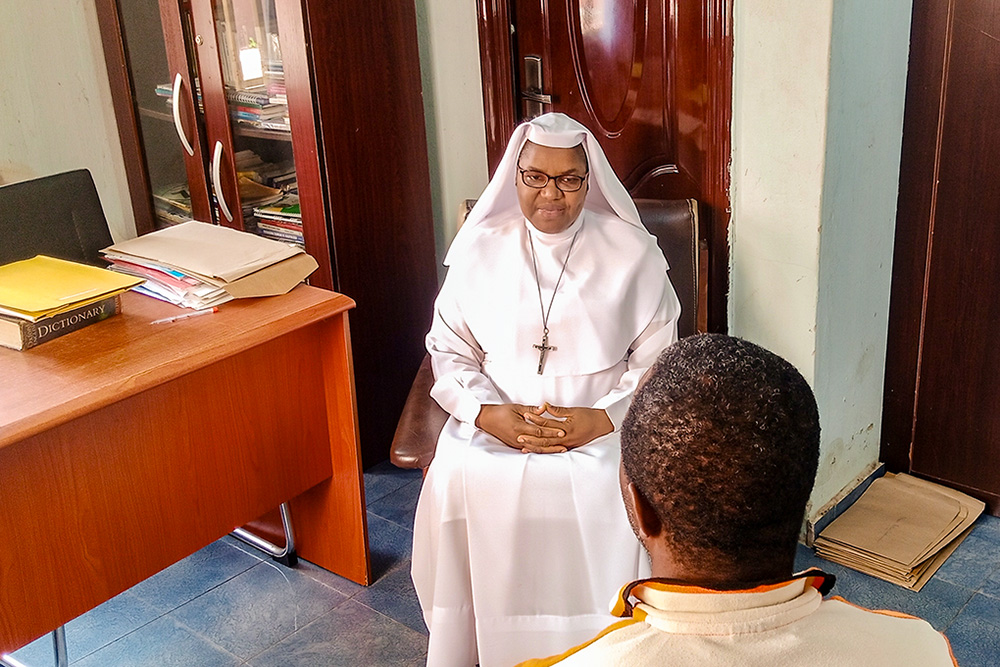
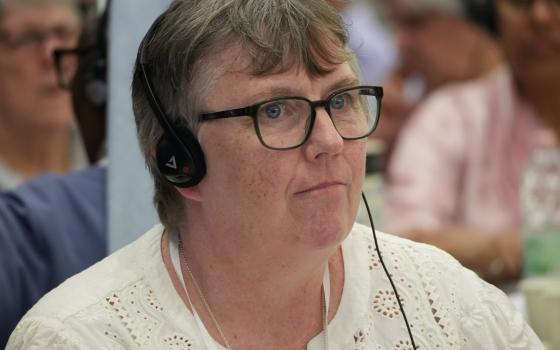
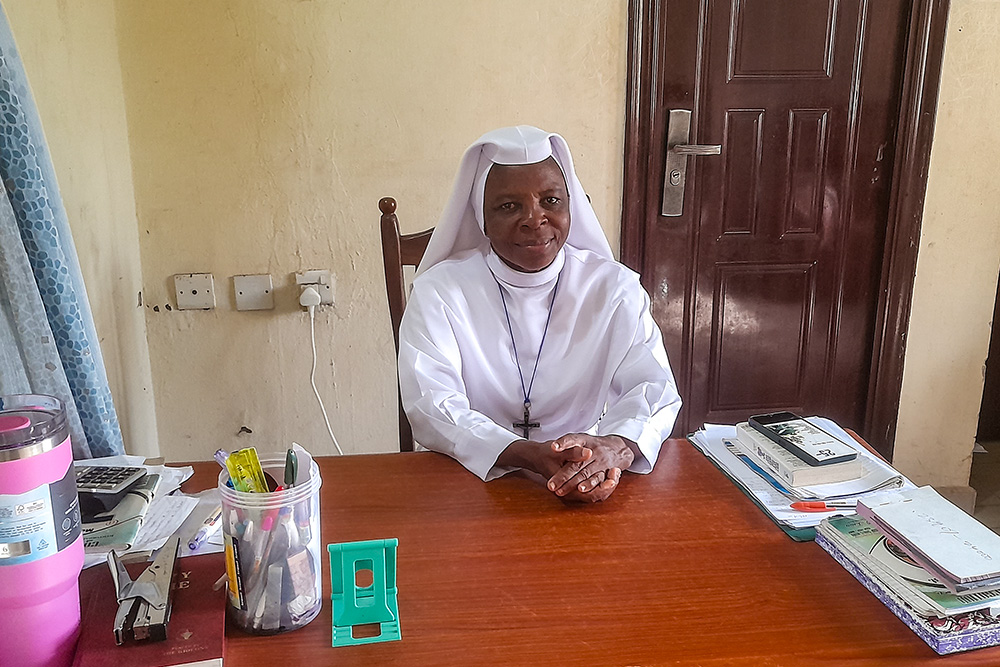
Sr. Mary Frances Ezeakunne, a Sister of the Immaculate Heart of Mary, Mother of Christ, listens to a client during a one-on-one therapy session in her office at the Mater Christi Human Development and Religious Formation Centre in Amawbia, Nigeria. (John Chukwu)
Nigeria is grappling with a deepening substance abuse crisis, one that disproportionately affects young people. According to the United Nations Office on Drugs and Crime an estimated 14.3 million Nigerians aged 15-64 use drugs — nearly three times the global average. Cannabis remains the most commonly used illicit substance, but the abuse of opioids such as tramadol and codeine, alongside synthetic drugs like methamphetamine — often called mkpuru mmiri in parts of southeastern Nigeria — and a synthetic cannabinoid called "Colorado," has risen sharply in recent years.
Data from the National Drug Law Enforcement Agency show that most people arrested or treated for drug-related offenses fall within the 18-35 age bracket, with southern Nigeria particularly affected. The agency attributes this trend to a mix of unemployment, trafficking routes, rapid urbanization and weak social safety nets. Between 2021 and 2024, the agency reports arresting more than 57,792 drug traffickers, including 65 high-profile drug barons. During the same period, 10,572 people were convicted, while 22,047 individuals underwent counseling and rehabilitation nationwide.
Mental health experts warn that Nigeria's treatment infrastructure has failed to keep pace with the scale of the crisis. Available data indicate that the country has about 1,000 psychiatric nurses, 319 licensed clinical psychologists, and about 200 practicing psychiatrists serving a population of more than 220 million people. Public psychiatric hospitals and rehabilitation centers remain severely overstretched. Persistent stigma and limited community-based treatment options further compound the problem, leaving critical gaps increasingly filled by faith-based centers such as Mater Christi, where care is both medical and pastoral.
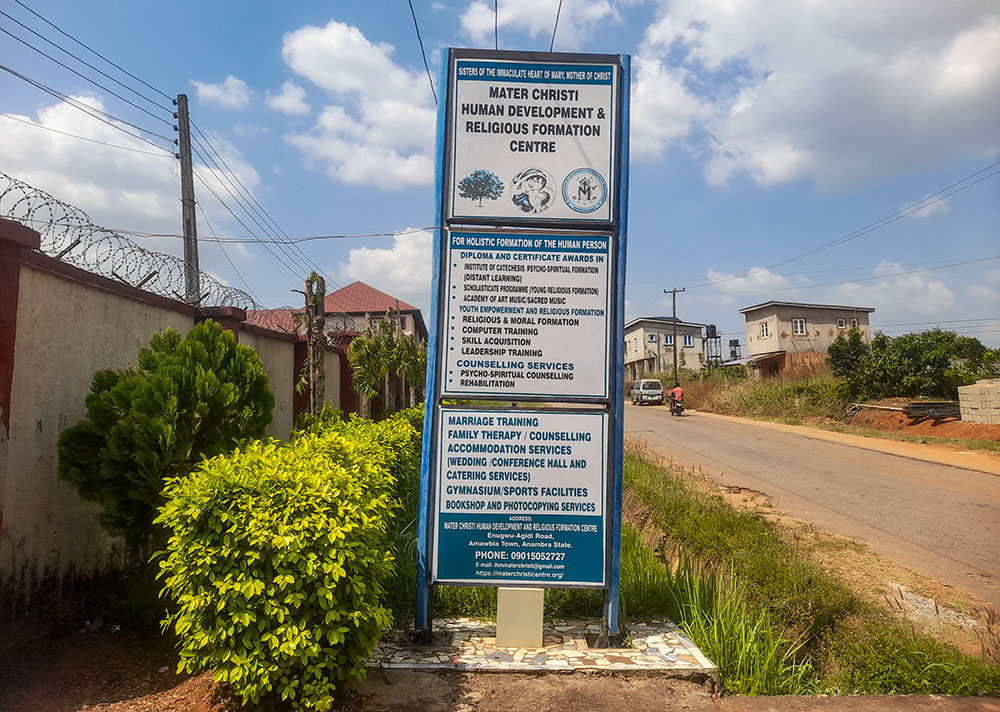
The sign outside the facility gate of the Mater Christi Human Development and Religious Formation Centre in Amawbia, Nigeria (John Chukwu)
Ezeakunne did not initially set out to specialize in addiction. She studied philosophy, theology and psychology in Rome. Upon her return to Nigeria in 2013, she helped establish the counseling and rehabilitation department at Mater Christi. What she encountered there reshaped her vocation.
"Over time," she said, "I realized that the majority of the clients I was getting were struggling with substance addiction. About 85% of the people who come here are clients with addiction."
Mater Christi officially began operations in 2014, and Ezeakunne has worked at the center since, serving as its director. While the facility treats a wide range of psychological and developmental conditions — including depression, schizophrenia, paranoia and family-related issues — clients with substance abuse disorders quickly became overwhelming in both number and severity.
"Most young people, once they become addicted, you'll see that their relationships with family members are affected," Ezeakunne told Global Sisters Report. "When you talk to them, they become aggressive. I know a recent issue of someone who killed his mother because of addiction. Many of them are school dropouts, because addiction affects the brain and concentration. You can hardly see them doing anything meaningful with their lives."
Confronted with the scale of the crisis, Ezeakunne returned to Europe to pursue a doctorate in substance addiction, traveling to Austria twice a year while continuing her work in Amawbia.
Advertisement
"Because of the increasing number of clients coming here with substance addiction, I needed to acquire the skills to provide adequate assistance," she said. "If I didn't go to do this specialization, I wouldn't have gotten enough knowledge that I have today to be of help to them."
Chains, withdrawal and treatment
Only a small number of clients arrive voluntarily. "Many are brought here by the police, the army or vigilante groups," Ezeakunne said. "Some arrive with their hands and legs in chains. When they come here, they are aggressive and resistant. They don't want to be here or listen to anyone."
Sr. Mary Lucella Ukaegbu, the center's administrator, oversees day-to-day operations. In just three months in the role, she has observed a steady flow of young clients, mostly aged 18-30, arriving in crisis linked to drug abuse.
Ezeakunne said the first days at the center are also the most dangerous. Withdrawal symptoms — including psychosis, hallucinations and extreme agitation — can make clients unpredictable and violent. The sisters respond using what she described as a bio-psycho-socio-spiritual approach, an integrated model that addresses the body, mind, social environment and spiritual life.
Medication is administered to stabilize brain function, while counseling begins immediately. Social workers guide therapy, and chaplains provide pastoral care tailored to each client's faith background.
"If you don't intervene immediately," she said, "they can damage property or even kill someone. That's why we start treatment as soon as they arrive. Once they begin to calm down, we can now come in with therapy."
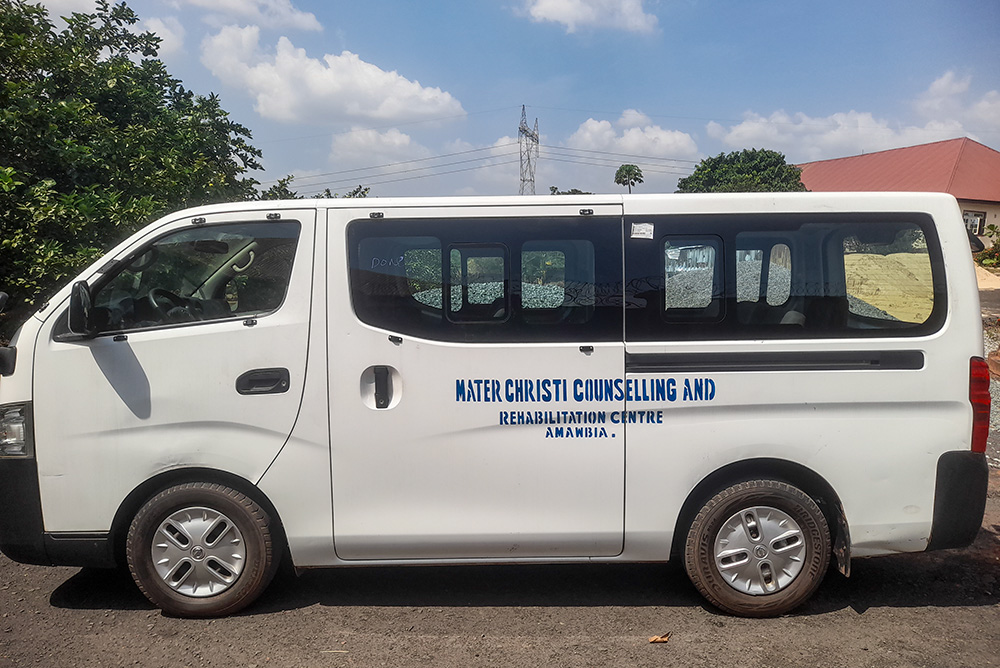
A bus belonging to the Mater Christi Human Development and Religious Formation Centre is seen parked inside the facility's compound in Amawbia, Nigeria. (John Chukwu)
In more than a decade at the center, she noted, no client has destroyed property upon arrival — a record she attributes to rapid, coordinated intervention during the critical early stages of treatment.
For families, addiction is more than a clinical emergency; it is an emotional and spiritual earthquake. "Sometimes parents come here crying," said Sr. Mary Bridie Ekwugha, a former director of Mater Christi and now one of its counselors. "I cry with them too. We give them hope."
Over six years at the center, Ekwugha has accompanied clients and their relatives through the shame, fear and stigma that often surround substance dependence. "Children are the hope of their parents," she said. "When addiction takes that hope, it feels like the world has collapsed."
Healing, she said, begins quietly with listening, forgiveness and rebuilding trust. Each client undergoes psychological testing to help therapists design appropriate treatment plans. Recovery, however, is rarely linear. "Some clients relapse after leaving rehabilitation," she said.
To strengthen long-term outcomes, Ekwugha advises a deliberate change of environment after discharge. Many young people, she said, return to the same peer groups that first drew them into drug abuse. "If they go back to mingle with those old friends, the risk is high," she added. "A new circle and a new setting can protect the progress they have made."
Sr. Mary Bridie Ekwugha, a Sister of the Immaculate Heart of Mary, Mother of Christ, in her office at Mater Christi Human Development and Religious Formation Centre in Amawbia, Nigeria (John Chukwu)
Ukaegbu identified funding as a persistent challenge the center faces. Some families are unable to pay for treatment; others abandon clients altogether. Still, she insists that dignity comes first. "We give them [the clients] maximum privacy," she said. "Their dignity is protected."
Despite the emotional and physical demands of the work, Ezeakunne said she does not feel worn down. "Rather, I feel more passionate," she said, "because it is not just helping the individual or the family or the society, it is also helping people find their way back to God."
One recovering client, in his late 20s, traces his addiction back 10 years to his days as a university student in Ogun State, southwestern Nigeria. "It started with peer pressure," he told GSR. "I bought marijuana for friends, then decided to try it myself."
From cannabis, he moved to codeine, tramadol and eventually the synthetic drug Colorado, which he described as "much more addictive." His education collapsed; he was expelled from school and sold personal belongings to fund his habit. "I wish I could turn back time," he said.
Another recovering client described relapse as part of his journey. After an earlier stay at the center, he returned to school, only to fall back to drug use after reconnecting with old friends. "This is my second time here," he said. "Relapse hurts, but it also teaches you humility."
For him, spiritual support has been as important as medication. "Change comes from within," he said. "The sisters can empower us with knowledge, but it is our resolve that makes the difference."