(GSR graphic/Olivia Bardo)

by John Chukwu
Behind the high walls of the Mater Christi Human Development and Religious Formation Centre, run by the Sisters of the Immaculate Heart of Mary, Mother of Christ, recovery does not announce itself through dramatic breakthroughs or sudden transformations. Instead, it unfolds slowly, through routines, discipline, and the daily work of rebuilding bodies and minds strained by prolonged substance use.
At the center's Counselling and Rehabilitation Department, most clients arrive physically depleted and emotionally vulnerable, uncertain whether lasting recovery is still possible. Years of substance use have left deep marks not only on their health, but also on their relationships and sense of self.
Recovery here goes beyond abstinence from drugs. Structure, faith, therapy and skills training are combined to prepare clients for life beyond the center's gates. Daily activities are scheduled around prayer, counseling, vocational classes and reflection, all geared toward restoring purpose and rebuilding basic habits.
Sr. Mary Frances Ezeakunne, a clinical psychologist and the director of the center, told Global Sisters Report that this is where recovery becomes most demanding. Healing, she noted, cannot be rushed or reduced to medication alone.
"It is quite challenging and difficult at the initial stage," Ezeakunne said. "Sometimes you feel, will this person ever recover? But with concerted effort — applying different mechanisms biologically, socially, spiritually, psychologically — you'll see that they are healing gradually."
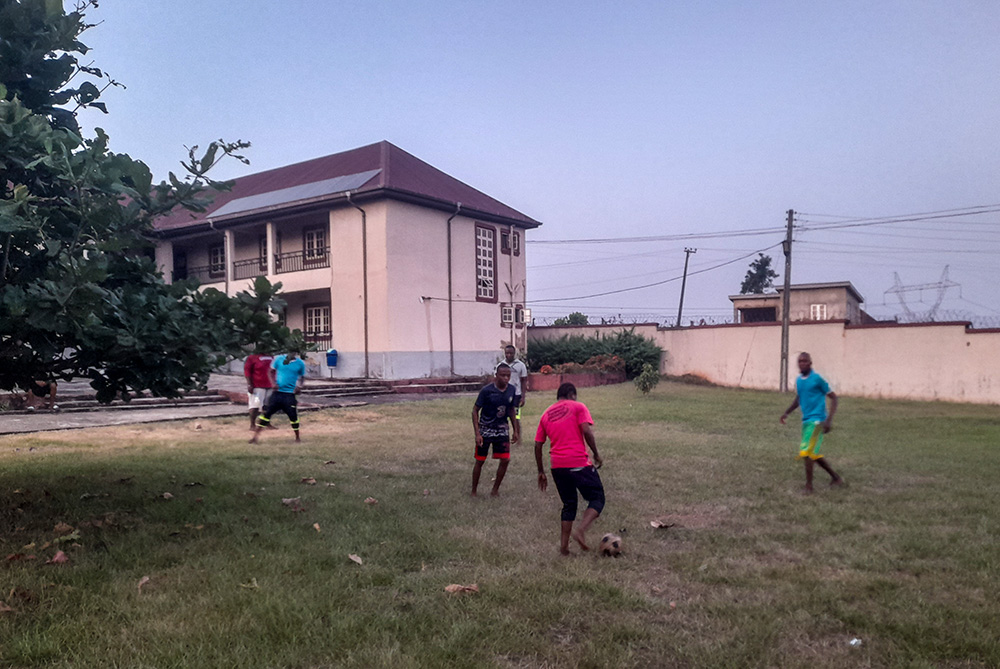
Clients play football at the Mater Christi Human Development and Religious Formation Centre in Amawbia, Nigeria. (John Chukwu)
For Sr. Maria Adanna Okafor, a therapist at Mater Christi, real healing begins the moment a client starts to recognize their physical, emotional and psychological condition.
"Some come in psychotic, violent or unconscious," she said. "But when they begin to talk about what they have lost and what addiction has cost them, that is when therapy truly begins."
She explained that clients who once denied their condition often reach a moment when they can say, "I know I am sick." That acknowledgement marks a turning point — not the end of suffering, but the point where self-awareness meets a willingness to change.
Okafor stressed that recovery does not follow a fixed timeline. Some clients engage quickly with therapy; others resist for months. Her work, she said, requires patience, persistence and creating space for reflection, rebuilding trust and helping clients reconnect with their own lived experiences.
"Self-awareness is a powerful tool for healing," she added. "When a person realizes that what they were doing was not helping them, they begin to struggle toward becoming better."
Beyond substance abuse itself, the sisters pay close attention to clients' emotional histories. Many carry unresolved trauma from childhood, family breakdowns or experiences of abandonment — factors that can deepen dependency and complicate recovery.
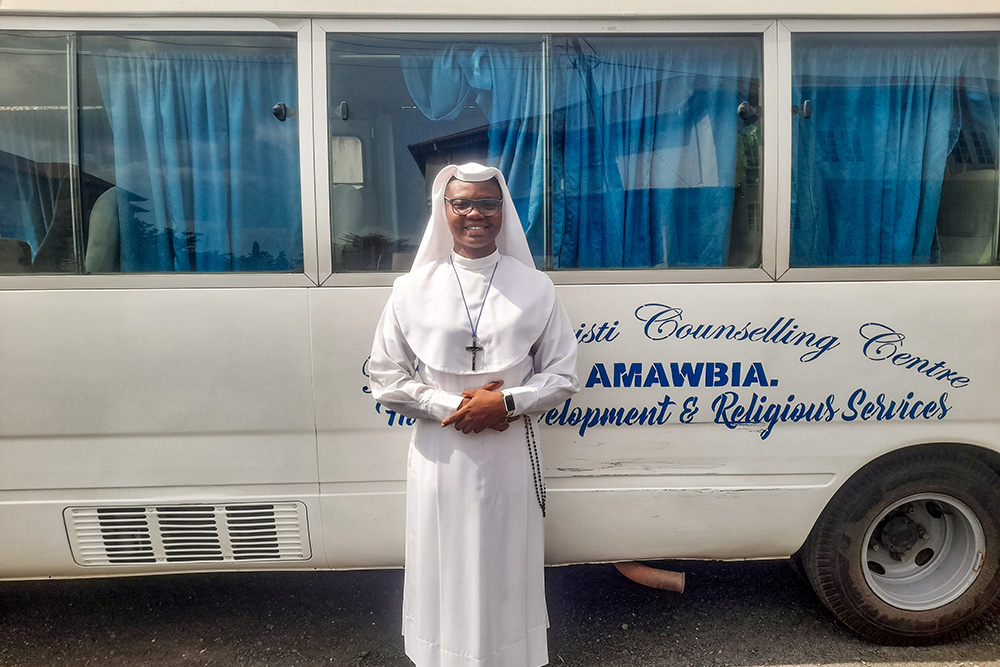
Sr. Maria Adanna Okafor, a Sister of the Immaculate Heart of Mary, Mother of Christ, stands by the bus used at the Mater Christi Human Development and Religious Formation Centre in Amawbia, Nigeria. (John Chukwu)
Preparing for life after treatment
The sisters are clear that rehabilitation cannot end at the center's gate. Clients may leave with new habits and skills, but they often return to environments where drugs are readily available, and support is scarce.
Ezeakunne explained that clients are prepared for this reality long before discharge.
"We tell them that once they leave here, they will still see people selling drugs," she said. "They must remind themselves of the setbacks addiction has caused them and consciously stay away."
"We prepare them before they leave so that even if they find themselves in that environment, they do not return to it," she added.
According to Sr. Mary Lucella Ukaegbu, the center's administrator, families are also encouraged to make difficult but necessary changes. In some cases, parents are advised to relocate their children away from neighborhoods where drug-using peers are easily accessible. Some families change phone numbers of their rehabilitated children to cut off contact with those peers.
Ukaegbu described how structured routines at the center help instill habits that clients can carry into daily life after treatment.
Advertisement
"We schedule their time so they stay busy in the gym, the music school, or in our skill-acquisition programs," she said. "Boredom creates risk. We teach them to sweep their surroundings, to be responsible, and to use the skills they've acquired."
Clients are also encouraged to set long-term goals, such as returning to school, securing employment, or starting small businesses. But Ukaegbu acknowledged that reintegration is often hindered by a lack of financial capital.
"Some have learned skills here," she said, "but without startup support, it becomes difficult to put those skills into practice."
The sisters' work comes into sharp relief through the experiences of two clients, whose personal journeys reflect both the difficulty and promise of recovery.
One client in his mid-30s told GSR that his own sister brought him to the center after he had episodes of drug use and uncontrolled anger, including an incident in which he nearly assaulted her. At Mater Christi, he said, the structured environment helped restore calm and focus.
"My family had been talking about my addiction," he said. "So my sister deemed it fit to bring me here. God has used the sisters to arrest me. They have rehabilitated me."
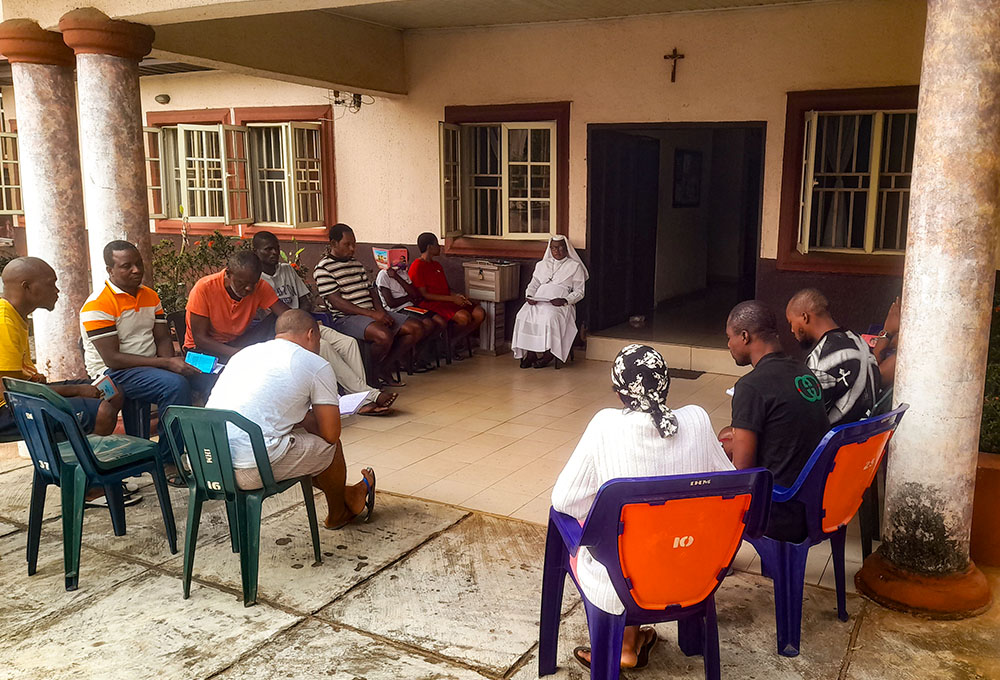
Sr. Mary Fideltherese Ngwoke, a Sister of the Immaculate Heart of Mary, Mother of Christ, holds a group therapy session with clients at the Mater Christi Human Development and Religious Formation Centre in Amawbia, Nigeria. (John Chukwu)
For this client, hope returned when medication helped stabilize his mind and he began participating in daily Mass. He said the center's quiet, orderly environment allowed him to rebuild his sense of self and regain emotional control.
Another client — tall, and soft-spoken — described the early days of recovery periods as especially difficult. "When I first came, I didn't have access to what I was used to smoking," he said. "That was the hardest part."
Still, he chose to persist. "I kept telling myself, I've been here three months and now I know I can live without drugs."
Recovery, however, came with loss. He said none of his friends — those he used drugs with — have contacted him since his admission. "I lost lots of friends even while I am here," he said. "They didn't call or text me."
His experience underscores a painful reality of rehabilitation — recovery often requires severing old ties before new ones can be formed. Both men, however, credited the center's holistic approach, combining therapy, spiritual support, structured routines and skills training with sustaining their progress.
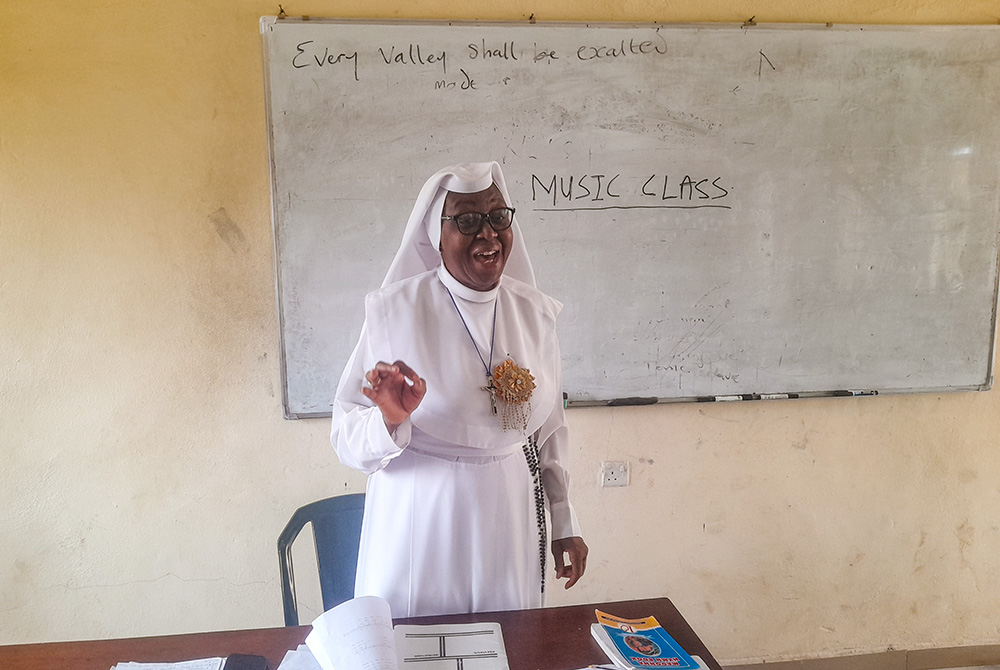
Sr. Mary Beth Anumba, a Sister of the Immaculate Heart of Mary, Mother of Christ, leads a music class at the Mater Christi Human Development and Religious Formation Centre in Amawbia, Nigeria. (John Chukwu)
What happens at Mater Christi reflects a much larger national challenge. In Lagos State, Nigeria's economic capital, a 2024 study by the National Drug Law Enforcement Agency and the Federal Ministry of Education found that 13.6% of secondary school students had experimented with drugs, while 6.9% were current users. This highlights the vulnerability of young people to substance use and early exposure.
Nationwide, drug addiction affects millions across urban and rural communities, underscoring the urgency of responses that go beyond law enforcement to include prevention, treatment, counseling and long-term reintegration.
This context frames both the responsibility and the limits of places like Mater Christi, where sisters work intensively with only a fraction of those in need.
Faith, gaps and hope
Spiritual life plays a central role in recovery at Mater Christi, but it is offered with sensitivity and respect for individual beliefs. Ezeakunne said that while some clients initially resist spiritual engagement, many come to draw strength from faith as healing progresses.
"We try as much as we can not to impose church activities or doctrines on anyone," she said. "We respect people's religion."
Some clients who initially rejected Christian practices later reconnect with spiritual routines, finding them supportive. Others find belonging through music, communal activities or service, rebuilding a sense of community that addiction often erodes.
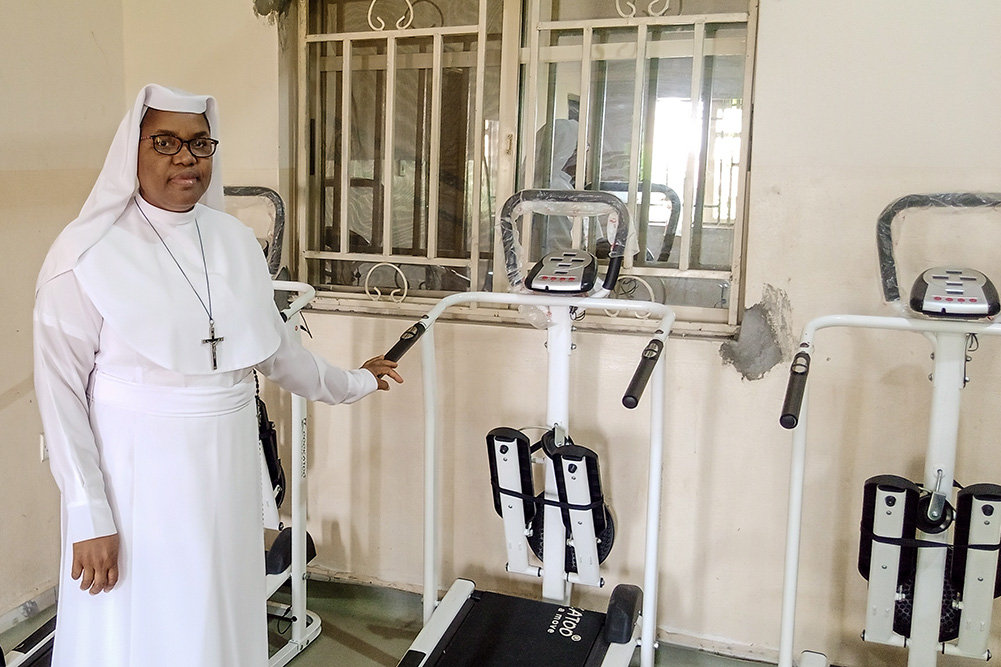
Sr. Mary Frances Ezeakunne, a Sister of the Immaculate Heart of Mary, Mother of Christ, stands by equipment in the gym at the Mater Christi Human Development and Religious Formation Centre in Amawbia, Nigeria. (John Chukwu)
Ezeakunne also stressed that the sisters avoid assigning blame to parents whose children struggle with addiction.
"We don't start projecting blame on the parents when something like this happens," she said. "Anyone bringing a child here is already traumatized."
Despite progress, the sisters acknowledge that recovery is rarely linear. Relapse is common, and repeated cycles of treatment are part of many clients' journeys.
"Sometimes parents call and say their child has relapsed," Okafor said. "Addiction is not something people come out of easily. It takes strong self will and control as addiction weakens both."
Still, the sisters remain committed to the long view of healing. Their work is grounded in faith, but driven by a deeply human conviction: that dignity can be restored, and change is possible.
"We are not just treating symptoms," Ezeakunne said. "We are helping people reconnect with themselves, their families, and plan their future from here."