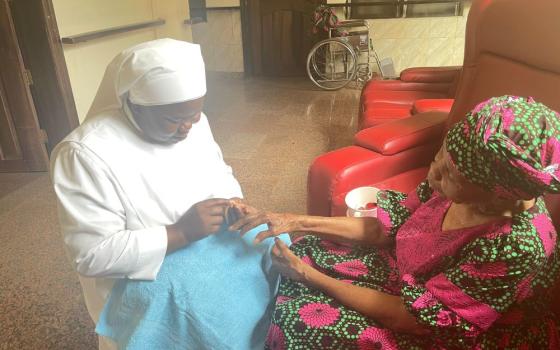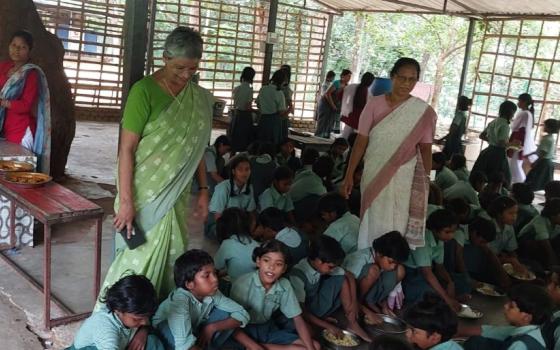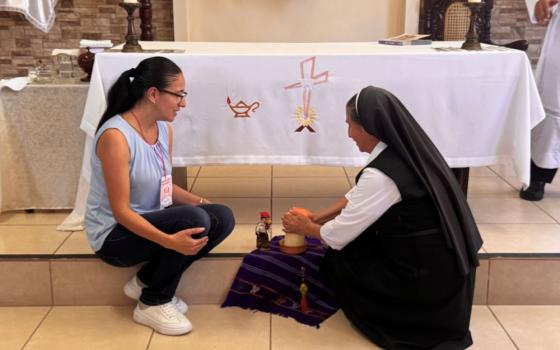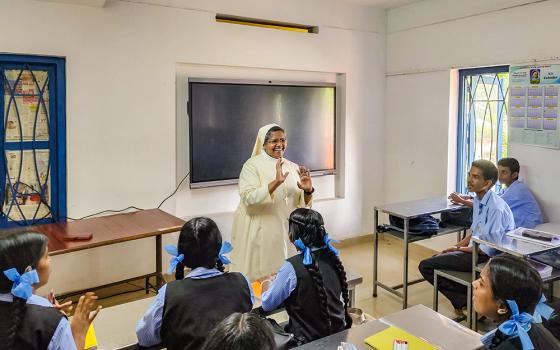
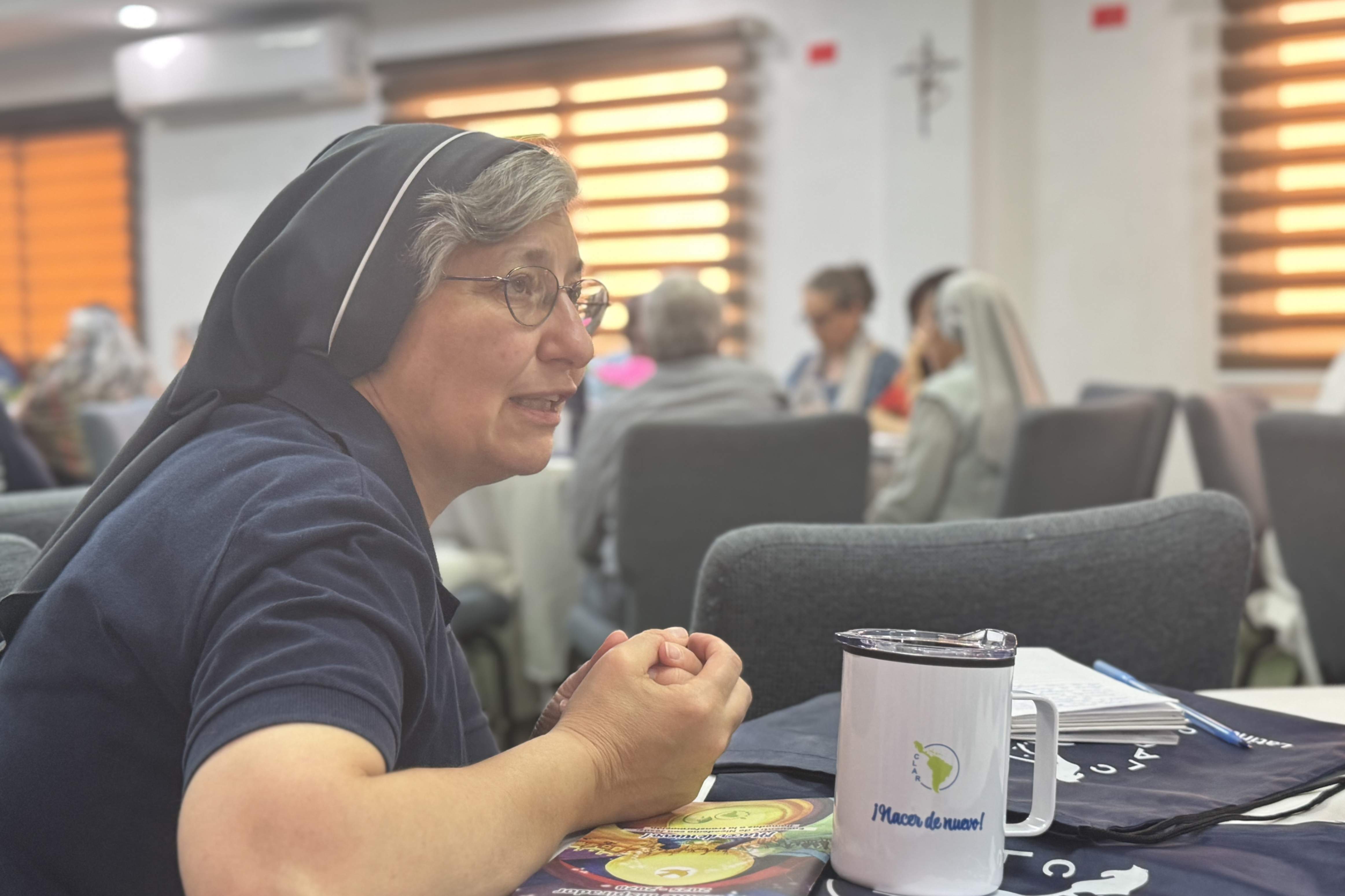
Sr. María Inés Castellaro speaks during a meeting of the executive board of the Latin American and Caribbean Confederation of Religious March 20, 2026, in the Dominican Republic. Castellaro, of the Congregation of the Sisters of the Virgin Child, became general secretary of CLAR in May 2025. (GSR photo/Rhina Guidos)

by Rhina Guidos
In the midst of challenges in Latin America, Sr. María Inés Castellaro, of the Congregation of the Sisters of the Virgin Child, took over in May 2025 as general secretary of the Latin American and Caribbean Confederation of Religious, known as CLAR, an organization that brings together more than 150,000 consecrated women and men.
As a new leadership team begins for CLAR's next four years, Castellaro emphasized to Global Sisters Report the importance of continuity in the organization's work, which includes providing encouragement and support to the region's religious conferences.
To do that, she said, it's important to advance synodality, or the process of "walking together" in religious life, promoted by Pope Francis for the entire church. Castellaro said different conferences and congregations find themselves at different stages when it comes to synodality: Some are "taking their first steps," while others "are still wondering about synodality."
"Sometimes we think that synodality is something we all have to do together, but it is something [that goes] beyond that, something more transcendent. That means accompanying each in their own processes. It means working through the process with the conferences. It means working through the process with the congregations," she said.
Castellaro said this accompaniment of religious life takes place as Latin America faces myriad sociocultural, political and economic challenges. That's why CLAR, she said, seeks to encourage the process through the document "Be Born Again," which invites men and women in consecrated life in the region to listen to the call of the Spirit, seek new ecclesial paths to "be reborn," and offer hope in difficult times.
Before the CLAR board meeting concluded in March, Castellaro indicated that accompanying others in difficult times implies, for religious life, standing by those who suffer and being prophets of the Gospel among those they serve. In some cases, this means remaining for long periods in countries with difficult political situations, because if women or men religious leave their posts, they may not be allowed to enter again.
'It is being a light in the midst of darkness, being sentinels of hope in the realities of today.'
—Sr. María Inés Castellaro
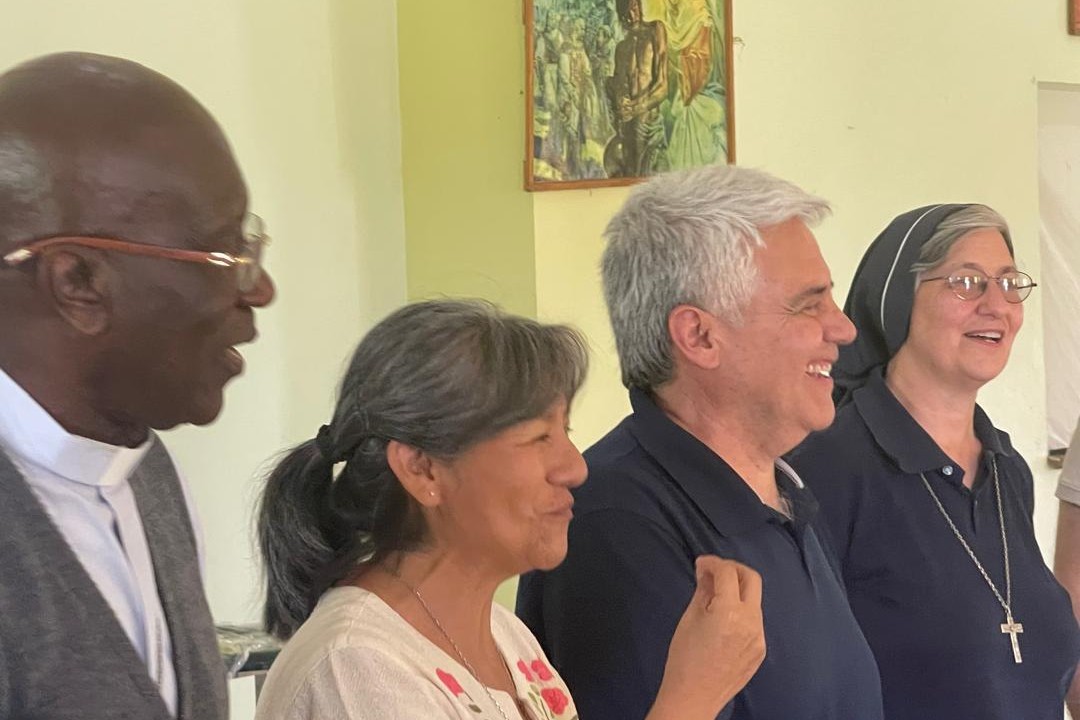
Sr. María Inés Castellaro, right, visits Haiti March 24, 2026, with other members of the Latin American and Caribbean Confederation of Religious. Castellaro, a member of the Congregation of the Sisters of the Virgin Child and CLAR's general secretary, says that part of the organization's role is to accompany religious life in difficult situations. (Courtesy of CLAR)
GSR: One of the topics discussed [during the CLAR meeting] was accompanying religious life in places like Haiti and Nicaragua more closely. Tell me a little about the challenges you see for religious life in those places.
Castellaro: I believe the challenge is to be present and to stay present: that religious life be present not only in these countries, but in all countries [of the region]. This involves solidarity and intercongregational collaboration, drawing closer to the suffering of others, and, like the good Samaritan, extending our hand to help — but also allowing ourselves to be helped.
The credibility of religious life exists. Often people come knocking on the doors of religious houses to be heard. Sometimes they are not asking for food or material aid, but simply to be heard and to share their pain and suffering.
How does that affect members of religious life when they stay in those places for a long time?
Sometimes it is not possible to stay in these situations for many years because it affects a person's health. But, for me, this verb is powerful: remain, and to remain by helping one another, not only as a congregation, but also with others. It's this journey with others amid difficulties and suffering that allows us to sustain one another.
In situations like these, the messages that come through also help and sustain you, knowing that others are praying for you, that they are with you, and that they are by your side in this moment of pain, it allows you to remain there with strength.
Despite so many problems and challenges, how does religious life manage to maintain joy?
I believe that our strength lies in the encounter with the Lord. I believe this is the key. If one comes to this encounter with the Lord, he comforts you, gives you strength, impels you to go out, and encourages you. I believe that is where the strength lies, and I also believe that's what sustains these countries, the strength is this encounter with the Lord. Sometimes people cannot even celebrate [Mass], but they do encounter [the Lord] through the Word.
I believe it is also important to return to the essence of the [congregation's] charism. It is not about repeating what [the founders] did, but rather taking up these values — their strength and boldness. They threw themselves into such situations because they, too, lived through the same circumstances as we do. Times must have been difficult — leaving their homeland, facing war, [caring for] orphaned children — and they threw themselves into it without fear.
Advertisement
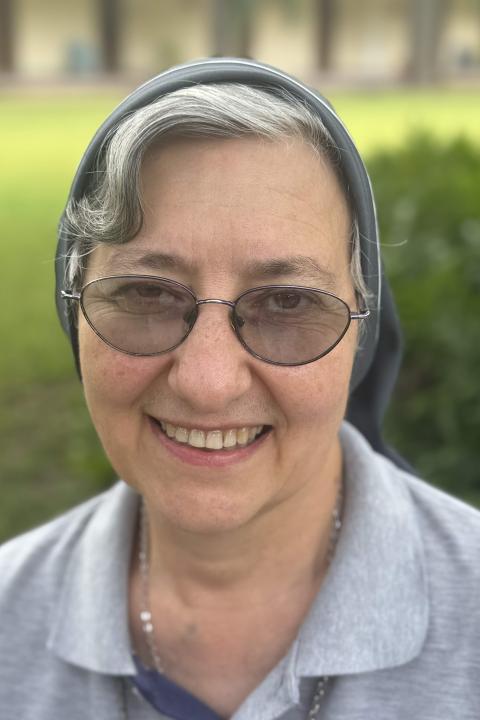
Sr. María Inés Castellaro, the general secretary of the Latin American and Caribbean Confederation of Religious, says religious life has credibility in many places because its members listen to the suffering of the poor. (GSR photo/Rhina Guidos)
Religious life has suffered greatly in Latin America and has had a prophetic dimension that has also produced many martyrs. What is the prophecy of religious life today?
It is not physical martyrdom, but sometimes it is that daily wear and tear, like a candle that slowly burns itself out in service to others. It is being a light in the midst of darkness, being sentinels of hope in the realities of today.
I think of the Amazon. Sometimes it takes hours and hours, and sometimes days, to go from one place to another. It is giving one's life, giving it with joy and generosity.
Staying is not easy, but how one stays, remains, that is important, because one can stay and be bitter. It seems to me that we must be sowers of hope, sowers of this Gospel prophecy in the midst of the different realities we are called to live, whether within religious life — watching decline and aging — or in the territories where we are embedded.
And speaking of that, it's also interesting to note the ties you have with the United States now, the presence of Latin America in the United States.
There's a presence of Latin American sisters in the United States and also this integration or seeking of ways to see how we can walk together as the Americas. There is a beautiful exchange and also an enrichment in this rapprochement between these two realities — that of Latin America and the Caribbean with that of the northern part of the American continent.
Although the issues and territories are different, the challenges of religious life are fundamentally the same. And how do we help this [process]? By sharing. Sometimes it means sharing goods, other times it means sharing human resources. But [above all through] solidarity and alliances.
Sr. Carol Zinn, of the [Leadership Conference of Women Religious in the United States], said in October in Mexico that perhaps the next time members meet with CLAR it will be as the "religious life of the Americas." Do you know when? Are things still moving in that direction?
Yes, it is moving in that direction. I think it's possible, but I don't know when.
This Q&A was originally published in Spanish April 16, 2026.