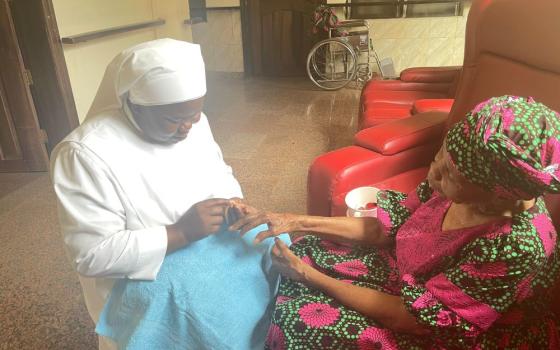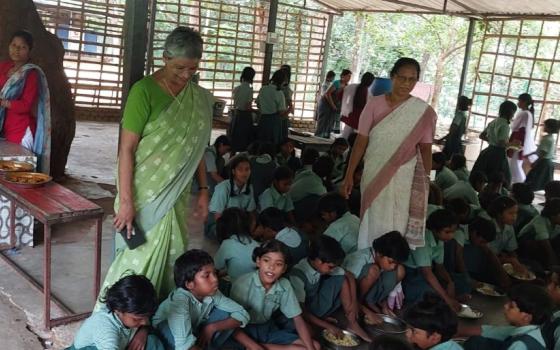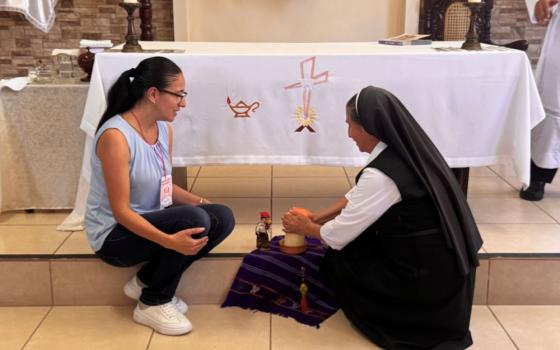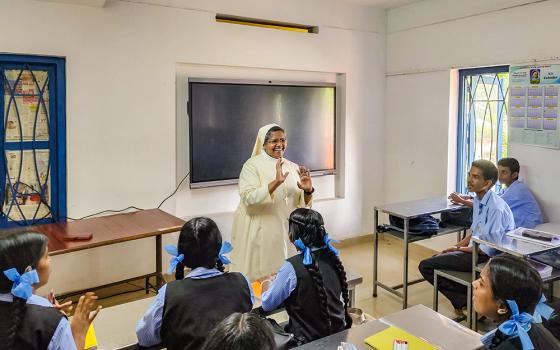
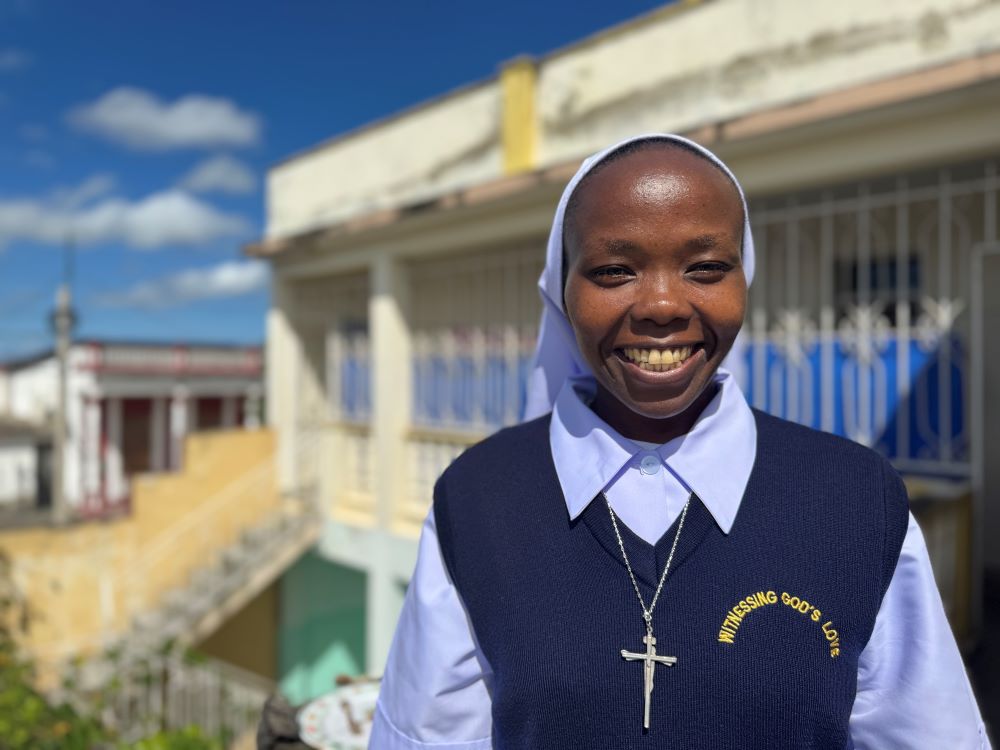
Sr. Esther Njoka, a member of the Missionary Congregation of the Evangelizing Sisters of Mary in Kenya, talks about her mission Nov. 15, 2025, in Puerto Padre, Cuba. Njoka said serving a mission is a dream come true, even with some of the challenges, such as food and gas shortages and a small number of practicing Catholics on the island. (GSR photo/Rhina Guidos)
by Rhina Guidos
Sr. Esther Njoka, a member of the Missionary Congregation of the Evangelizing Sisters of Mary in Kenya, always dreamed of going on a mission. It didn't matter where, she said, but she was surprised when an official from her order told her she was chosen to go to one of the most challenging places in the world for Catholics: Cuba.
"It was a dream," said a smiling Njoka, recalling with excitement the day she was told she was going abroad.
From vibrant parish life in Kitale, Kenya, a diocese of more than 315,500 Catholics, she arrived in 2024, more than 12,000 miles away, to a country whose government once declared Cuba an atheistic state. It's also a place where, even though many have been baptized as Catholics, few practice and instead hold beliefs that mix Christianity with African spirituality, something referred to as syncretism.
Auxiliary Bishop Marcos Pirán of the Diocese of Holguín, an Argentine missionary to Cuba for more than 25 years, said serving Catholics and others on the island is complex. Candidates need a certain maturity to handle the challenges and that's more important than accepting a mission assignment out of obedience, said Pirán, the Cuban bishops' liaison with the conference of religious women and men on the island.
With few vocations to consecrated life in Cuba, the church relies on missionaries like Njoka to help with catechesis and to take the Gospel to places where there's a reluctance to embrace religious beliefs. Those who stay and serve do so in the midst of recurring tensions between the Cuban government and the United States, which is presently restricting oil supplies to the island, resulting in blackouts, as well as food, medicine and transportation shortages. Because sisters like Njoka accompany Cubans in the worst of times, local communities, regardless of religious beliefs, have come to greatly respect them, Pirán said.
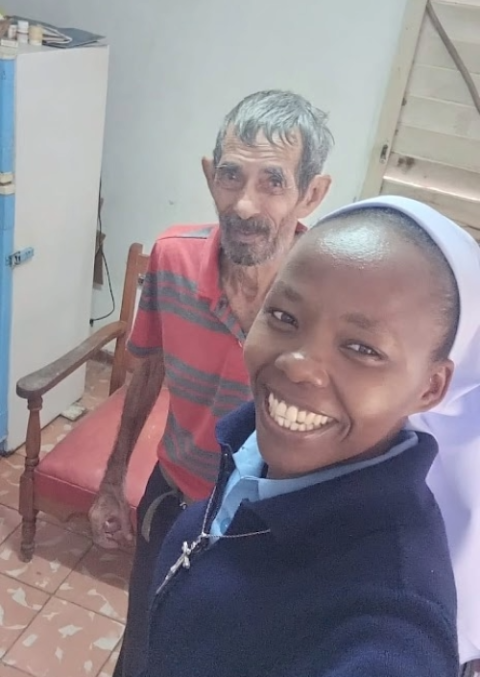
Sr. Esther Njoka, a member of the Missionary Congregation of the Evangelizing Sisters of Mary in Kenya, takes a selfie with a Cuban man she visited in July 2025 in Puerto Padre, Cuba. (Courtesy of Esther Njoka)
For Njoka, who's focused on the missionary task, learning a new language has been one of the biggest challenges on the island. But when it comes to being a missionary, the bishop said, adapting to a community's way of life is more important than language.
GSR: What has your experience been like in Cuba?
Njoka: I have been here one year. I have been learning the language. It wasn't easy, but now I'm able to go to the mission with my sisters and the apostolate that we do. It is catechesis mostly. One thing I have liked from them is that they are so sincere. They say, "Sister, I will not manage to come to church. I believe in Christ. So, let me pray in my house. But when the time comes, I will come to the church." When a person comes to the church, sometimes at the end of life, they come completely. That is the one thing that I experience.
Then another thing, they respect sisters and priests. They cooperate with us. When you need help with something, they are there to help you. When you don't know something, they're there to help you. And especially with their language, because they know that for us [missionaries], we are learning the language.
On the other hand … some left the church long ago. So, when you go to see them, they ask you, "who are you?" I say "I'm a monja," (sister). So, they start asking you many questions. Some of them, they reject the church. They say "No, no, no, not for us." For them, we're supposed to pray in their house. We are not supposed to pray in the church.
Sometimes that experience is very hard.
Sometimes you go to the mission [in a remote area], you arrive and the parents [of children in catechesis] tell you "The children are sleeping. They cannot go." And you've spent money on food, on transportation, then you come back without having done anything.
And now that you have been here one year, what have been the challenges and what have been the good parts?
The challenge is the language. The language is not easy. First of all, I didn't know anything when I came here, even the greetings. And another challenge is … where I come from, Christians are many, but here they are few. For me, that is a bit challenging. You see people in the church, some of them … they don't even know the [sign of the cross]. Another challenge is food because where I come from there is no lack of food. The food is there. As long as you have money, you go to the market, you buy food. But here in the market, even if you have money, it is not available.
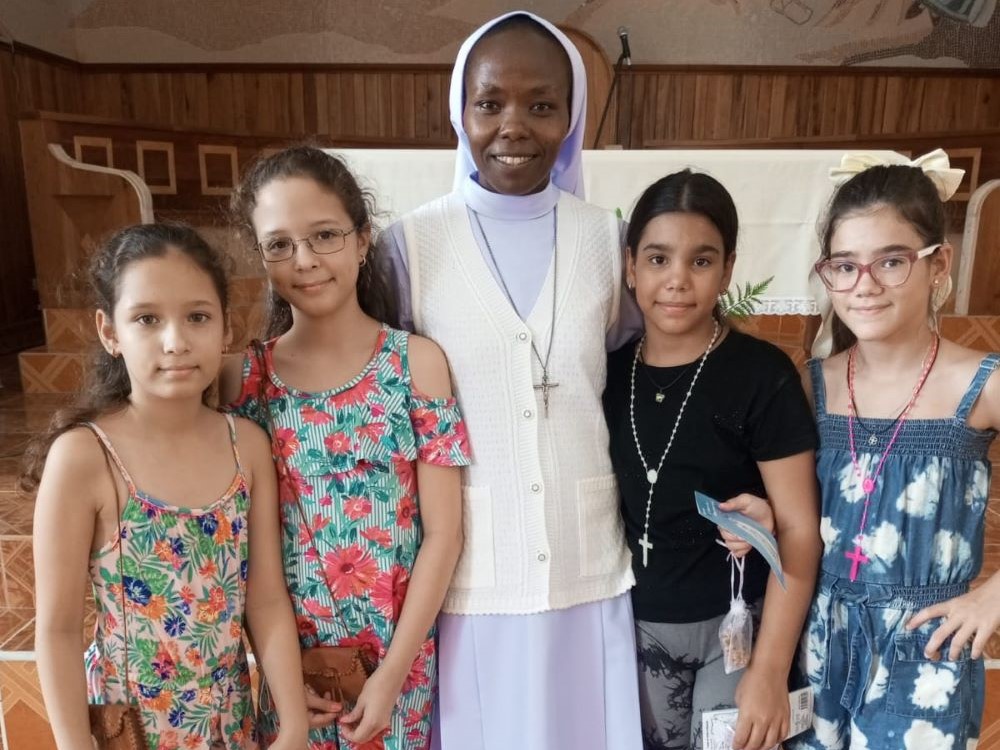
Sr. Esther Njoka, a member of the Missionary Congregation of the Evangelizing Sisters of Mary in Kenya, poses for a photo with a group of children in Puerto Padre, Cuba. She arrived in 2024 to serve a mission on the island, which in part involves catechizing young Catholics. (Courtesy of Esther Njoka)
Has there been anything about spirituality here that you have experienced that is different from what you are used to?
Even though people, some of them don't go to church, they have strong faith in Jesus Christ. They believe that if they pray, God will hear them. And another thing, whenever you go to their house, you see the image of the Blessed Mary de la Caridad (Our Lady of Charity of El Cobre). They have faith in her, that when they pray [for her intercession], miracles happen.
So, they have faith. The problem is to get them to come to the church. But the majority, they have faith.
Advertisement
Do you miss home sometimes?
As a human being, I miss my parents, my brothers and sisters, but when I professed, I said that I professed for the mission, and I told God, "I have left my family. I come to another family whereby it is now this congregation, this church. Whenever I miss them, may you take that and increase my faith." I feel like I miss them, but when I start, I remind myself "you're busy." I pray for them. I feel I am satisfied.
Has the mission changed you in any way?
Living with people, and different people, it has helped me a lot. I had lived with my parents, my brother and sisters. I didn't know how to go spend the night at the home of other people. But here, I sleep wherever I go. It has become part of me. It has helped me a lot to mingle with the people and to understand the character of people. Whenever you understand a person's character, you get used to it. I cope with it. I accommodate to you and your life.
So, you sleep anywhere, you eat anything?
Whenever I go, for example, for the mission, or maybe we are sent somewhere to go and work, that is not a big deal for me. I'm OK. I meet these people, I mingle with them, so that is a big thing that the church has helped me with.