(GSR graphic/Olivia Bardo)

by Gitonga Njeru
The sun is high with an average temperature of 34 degrees Celsius when Anne Mutiso reaches the gates of the mission clinic in Makueni County, Kenya.
Her worn-out black sandals are coated in dust and her breath is shallow. She is eight months pregnant and has walked nearly 15 km from her manyatta, crossing a dry riverbed that has not seen water in more than a year and a half.
The extreme heat presses down relentlessly, the air shimmering above the baked earth.
"I was afraid I would potentially give birth on the way," she says softly, lowering herself onto a bench.
"There was no one to help me at home," she said.
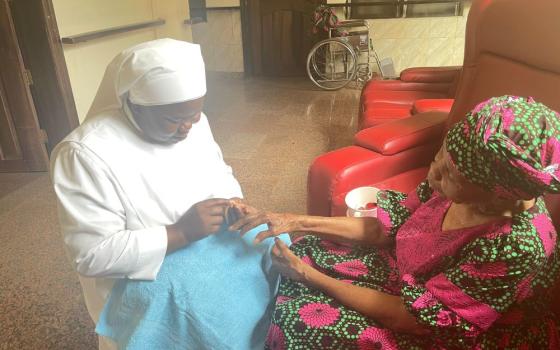
Waiting for her is Sr. Mary Mutua of the Assumption Sisters of Nairobi dressed in white with her sleeves rolled up.
The clinic is small — three rooms, unreliable electricity and a single delivery bed — but for women like Mutiso, it is a lifeline in Kenya's arid and semiarid lands. As climate change tightens its grip, Catholic sisters like Mutua have become the last line of defense for maternal health.
Across northern and eastern Kenya, prolonged droughts have stretched for years, livestock carcasses dot the landscape, and communities are forced to move constantly in search of water and pasture.
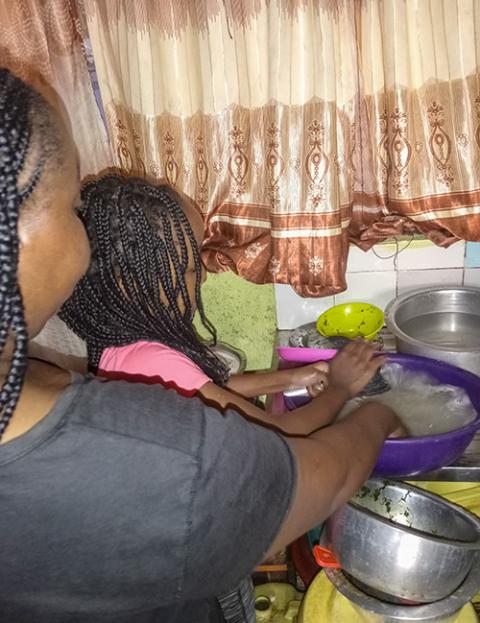
Anne Mutiso does some household cleaning, assisted by her oldest child. Eight months pregnant and with constant droughts in Makueni, Kenya, she has to manage the little water available. (Gitonga Njeru)
For pregnant women, the consequences are severe — and deeply gendered.
Studies show that extreme heat increases the risk of dehydration, preterm birth and pregnancy-related complications.
Food insecurity, driven by failed rains and lost livelihoods, has led to rising malnutrition among expectant mothers. Health facilities are often far apart, understaffed or completely absent, especially for pastoralist communities on the move.
"When the drought comes, women suffer first," said a county health worker in Makueni who did not want to be identified. "They eat last, they walk the farthest distances, and they give birth under the most difficult conditions."
Public health infrastructure in these regions has struggled to keep pace with the ever-growing crisis.
Clinics often close when staff are transferred or supplies run out. Ambulances are few, fuel is expensive, and roads are often impassable.
In this vacuum, faith-based institutions — particularly Catholic convents and missions — have quietly stepped in.
Also at the heart of this response are Catholic congregations such as the Assumption Sisters of Nairobi, the Sisters of Mercy and the Little Sisters of St. Francis of Assisi. Scattered across Kenya's most remote counties, they run mission clinics, modest maternity wards and outreach programs that bring care to women who would otherwise be invisible to the health system.
"Where climate change is affecting nutrition of pregnant or lactating women, we chip in to reduce mental health cases, as this can affect both mother and child," said Sr. Mary Musembi, who has achieved international recognition for her work based in nearby Machakos County.
She runs the Mercy Servants of the Poor Foundation, a home for abandoned children and vulnerable women in Kithyoko.
"Mental health, which my organization also focuses on, also deals obviously with pregnant women, too. The toll of climate change is real," she said.
Musembi said her organization works closely with other Catholic sisters in the vicinity to help provide adequate health care.
In Mbooni, in Makueni County, the Assumption Sisters of Nairobi manage a small maternity unit. It has no doctor, but highly trained nurses and midwives — many of them sisters — provide antenatal care, safe deliveries and postnatal follow-up.
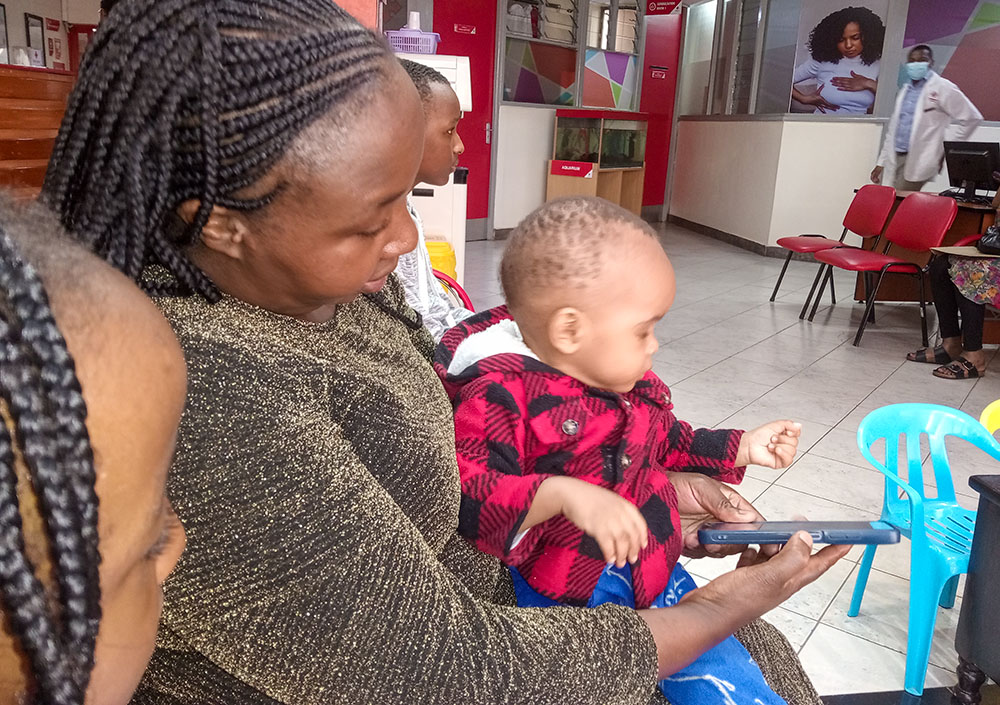
A Kenyan woman takes her 1-year-old son to the hospital for regular antenatal clinics. (Gitonga Njeru)
Mutua said that in Marsabit, the Assumption Sisters also run mobile clinics that follow displaced communities, offering prenatal checkups and nutrition advice under acacia trees.
"We do what we can with very little resources. Sometimes we have one blood pressure machine for dozens of women," Mutua said. "Sometimes the well dries up, and so do our funds. But the mothers keep coming."
Beyond clinical care, the sisters have improvised emergency transport systems that often make the difference between life and death.
Motorbikes fitted with stretchers ferry women in labor across rough terrain. In a few better-resourced missions, aging ambulances stand ready, though fuel shortages are constant.
"If a woman needs referral, we cannot wait and to delay is dangerous," Mutua said. "Our work is low-resource but very high-impact on these women."
In areas where government health messaging rarely reaches, sisters also run antenatal education sessions.
"We also teach women to recognize danger signs in pregnancy and to drink water even when it is scarce, and to seek help early."
For these sisters, this commitment is not merely professional — it is theological.
It is "a moral obligation to prioritize society's most vulnerable," said Sr. Teresa Kiragu of the Assumption Sisters of Nairobi Blessed Virgin Mary.
Advertisement
For many sisters, maternal health has become the clearest expression of this calling.
"Our faith tells us that every life has dignity. When a mother dies giving life, that dignity is violated. We cannot accept that as normal," said Franciscan Sr. Michelle Njeri, director of communication and advocacy at the Nairobi-based Communications Network of Catholic Sisters.
In many arid and semiarid lands, the church is one of the few structures that have endured throughout decades of marginalization, conflict and now climate shocks.
Churches and convents are trusted spaces, often doubling as shelters during drought or violence. This continuity gives faith-based health services a unique resilience that secular programs, tied to short funding cycles, often lack.
A Nairobi-based theologian, Philip Mbithi, notes that while the church's response is admirable, it should not absolve the state of its duties.
"The sisters are breathing for the nation but they should not be the nation's lungs forever. Overdependence is unacceptable," said Mbithi.
Back in Makueni, Mutiso's checkup is complete. Her blood pressure is stable, and the baby's heartbeat is strong. She schedules another visit.
She is told to return earlier if labor pains start. "We will find a way to bring you," Mutua said.
As Mutiso steps back into the heat, the landscape remains unforgiving — dry, vast and uncertain.
But for now, she carries something more than a child. She carries the assurance that, in a place where climate change has stripped away so much, someone is still watching over her.