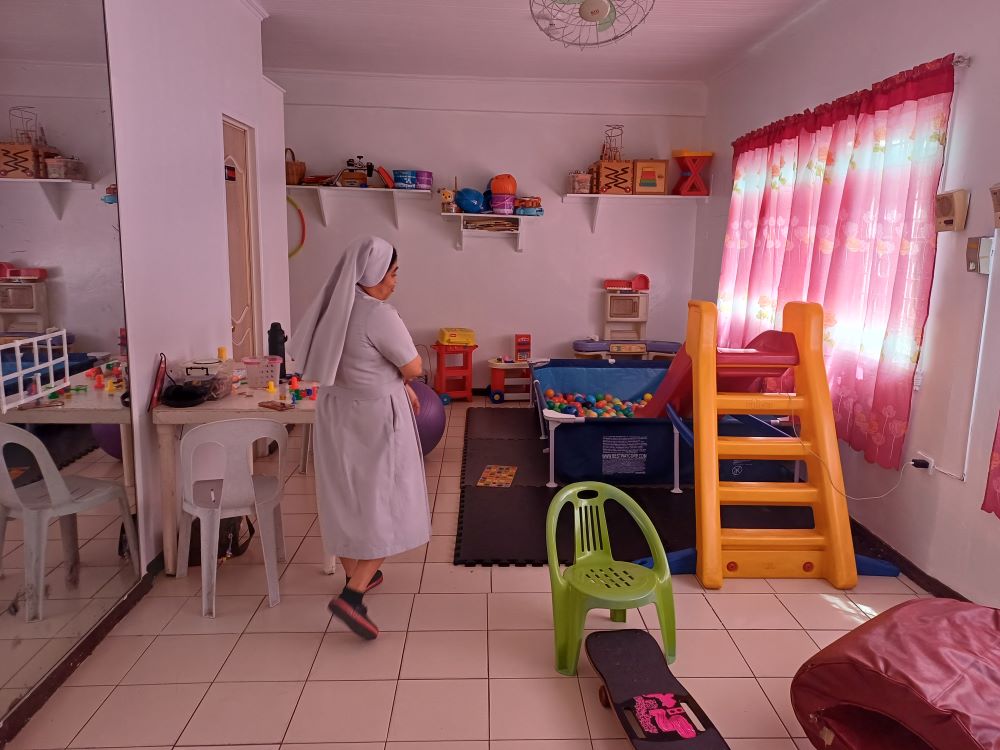
Sr. Eleanor Rosare walks through a play and therapy room at the Sacred Heart Center in Quezon City, Philippines. The Daughters of St. Mary of Providence run the center, where more than 60 children a week with autism, Down syndrome, ADHD and other developmental conditions receive support, therapy and care. (Oliver Samson)

by Oliver Samson
Every morning at the Sacred Heart Center begins with a familiar routine. Children gather to sing the Philippine national anthem, followed by a prayer, physical exercises and the rosary. They sing and sway beside their teachers and the staff.
Soon after, they climb upstairs for their lessons — learning to read, write, count, create art and develop crucial skills.
For the Daughters of St. Mary of Providence who run the center, this routine is more than just a schedule. It is a daily affirmation that children with developmental needs deserve dignity, patience and opportunity.
"We are the voice of [these] children," said Sr. Eleanor Rosare, the center's director. "Our charism is to care for 'special children,' especially in places where they are not given much attention."
At the center, the sisters care for children with autism, Down syndrome, ADHD and other developmental conditions. Almost 60 children visit the center from Monday to Friday.
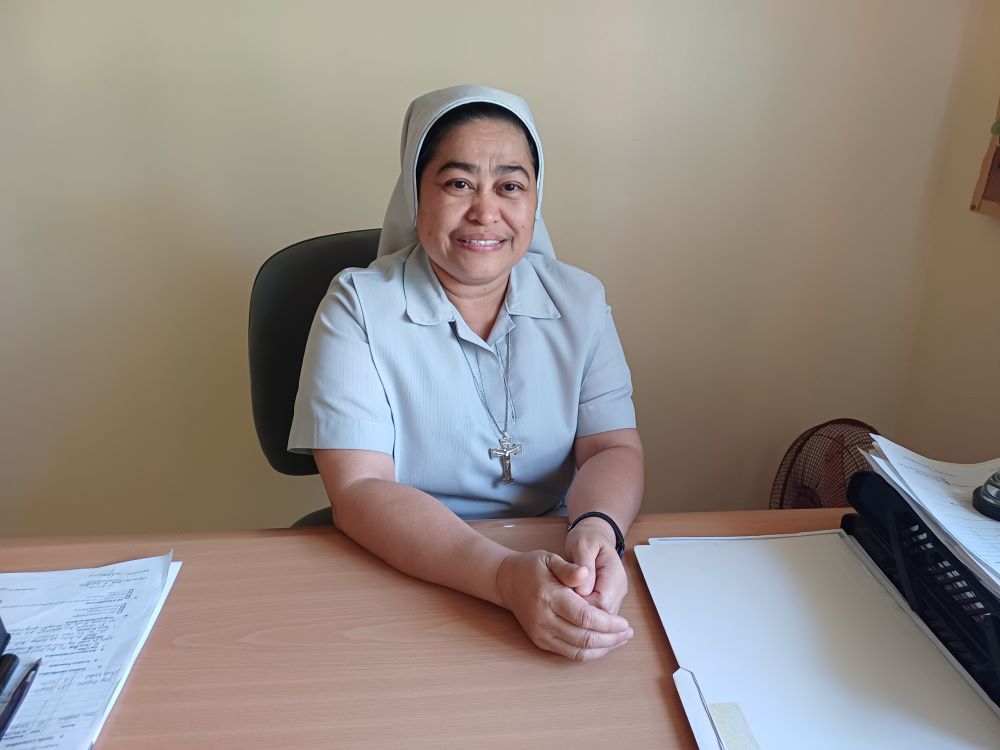
Sr. Eleanor Rosare directs the Sacred Heart Center in Quezon City, Philippines. There more than 60 children a week with autism, Down syndrome, ADHD and other developmental conditions receive support, therapy and care. (Oliver Samson)
The center operates as a day program focused on socialization and developmental learning. Younger children receive occupational therapy and physical therapy, while older ones attend classes designed to help them learn basic reading, writing and mathematics.
Progress often begins with something simpler: patience.
"Some children run around at first," Rosare said. "We allow them time. Later on, they calm down. With the help of our staff, we slowly guide them."
The sisters emphasize that their work requires more than professional skills.
"We always remind our staff that they are not here only to work," Rosare said. "They must put their heart into what they do. If not, the children will feel hurt. This ministry really tests your patience."
Many of the children arrive carrying emotional and behavioral struggles shaped by their experiences at home.
Rosare said parents often face challenges in raising children with developmental needs, often compounded by the reactions of society.
"One of the first difficulties parents talk about is how people look at their child," she said. "A child with autism may not stay in one place. Some drool or behave differently. Because of this, parents sometimes feel their child is not accepted."
Constant caregiving can also leave families exhausted. "Parents tell us that when their child is here, it feels like their rest day," Rosare said.
But beneath their exhaustion lies a deeper fear. "Parents often ask: What will happen to my child when I die?"
To support families, the sisters provide formation sessions for parents, inviting speakers to discuss ways of managing children with developmental needs. Spiritual guidance is also offered to help families cope emotionally.
Rosare said that acceptance within the family makes a profound difference in a child's development.
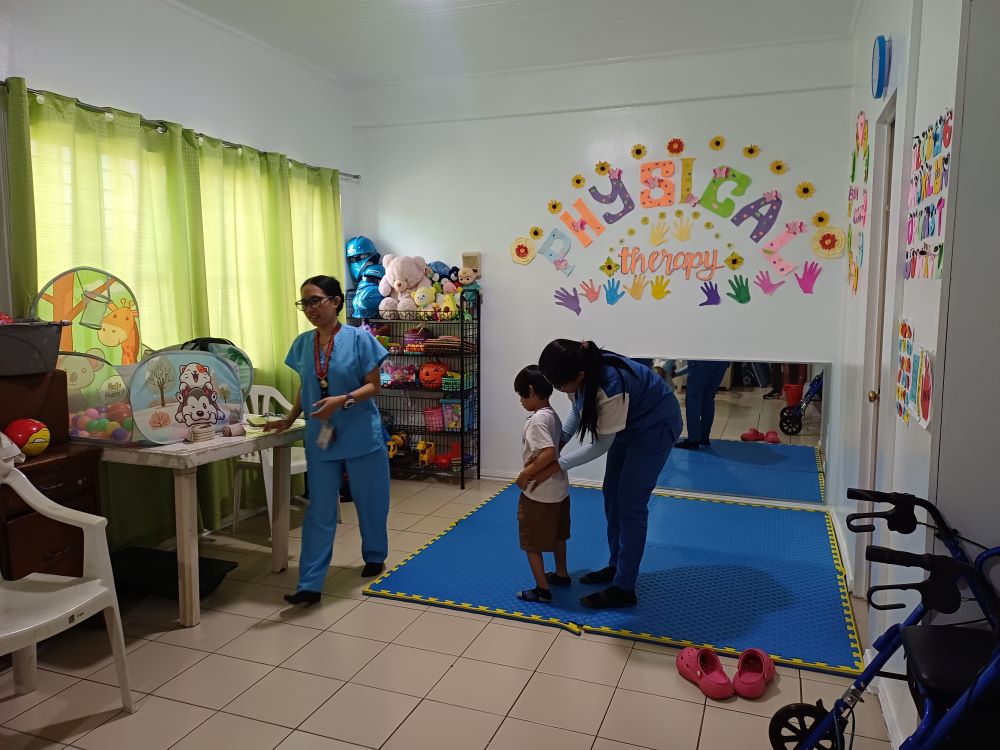
A therapist assists a child during a physical therapy session at the Sacred Heart Center, where more than 60 children a week with autism, Down syndrome, ADHD and other developmental conditions receive support, therapy and care. (Oliver Samson)
Some parents learn to see their child as a gift from God and raise them with patience and love. Others struggle with acceptance.
"When parents accept their child with all their heart, the difference is very clear," she said. "The child becomes more loving and secure."
Daily life at the center is not only about therapy and discipline but also joy, as children occasionally go on special outings.
"Sometimes the children go swimming," said Sr. Toni Lim, another member of the congregation working at the center. "We also take them to watch movies, and they join Visita Iglesia as well. They are very happy when they go out. They dance. They sing."
Every Friday, the children enjoy a sports day, which is one of their favorite activities. Sports activities help build confidence, coordination and friendships among the children.
Despite the progress many children make, resources remain limited.
"We hope the government can provide more support," Lim said. "The children still need speech and language therapy services."
For now, the center continues to operate largely through donations.
The sisters are hopeful about soon expanding their services to include a psychologist and hope to have one for the children in the future.
Despite challenges, the impact of their work is seen in the lives of former students.
Advertisement
Rosare shared the story of a former student, a young woman in her early 20s with Down syndrome who now works at a Shakey's restaurant and helps clear tables, wipe surfaces and mop floors.
Her mother once believed her daughter would never be able to work. "Now the family is very proud," Rosare said.
Many former students return to the center during celebrations and gatherings, visiting the sisters and staff who helped guide them.
"For them, this is like family," Rosare said.
Looking to the future, the sisters are hopeful that society will become more understanding and accepting of children with developmental needs. Until then, they will continue to help children discover their abilities and remind families that every child deserves to be seen, valued and loved.