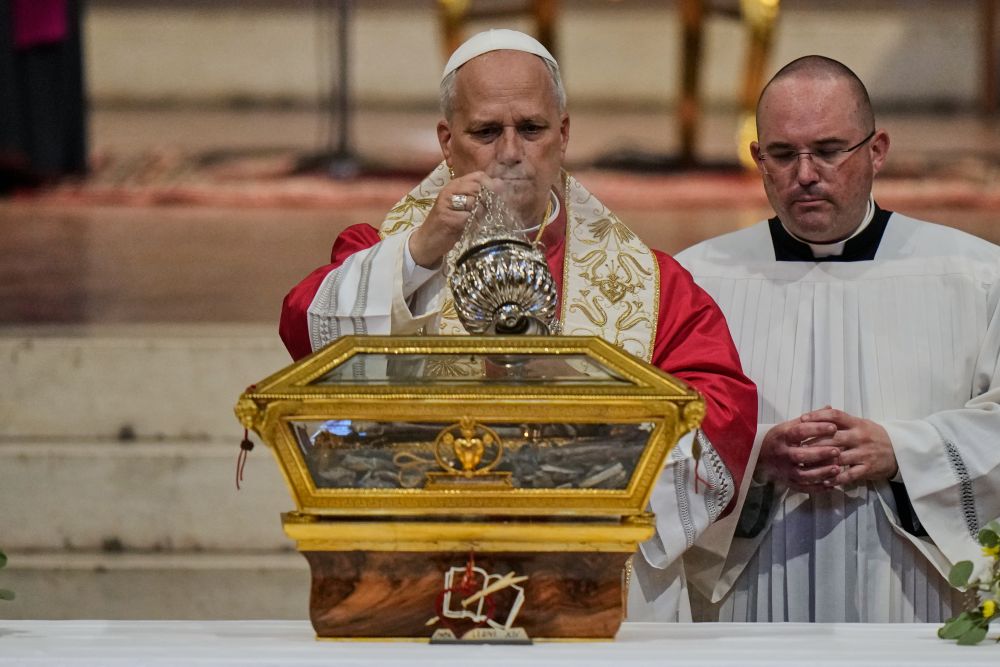
Pope Leo XIV incenses the relics of St. Augustine as he visits the San Pietro in Ciel d'Oro Basilica in Pavia, northern Italy, June 20, 2026. (AP/Luca Bruno)
Pope Leo XIV encouraged Italians June 20 to rediscover their lagging Catholic faith during a visit to northern Italy where he prayed before the relics of St. Augustine, the intellectual giant of the early Christian church and inspiration of his religious spirituality.
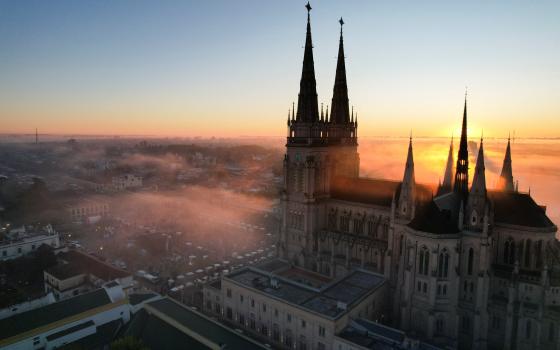
Leo traveled by helicopter to Pavia, near Milan, where the remains of the fifth-century saint are kept. Leo prayed quietly before the small gold-rimmed glass box containing the remains that had been brought to the altar of the San Pietro in Ciel d'Oro basilica for the occasion.
Leo's day trip, during which he also honored the first American saint, Mother Frances Cabrini at nearby Sant'Angelo Lodigiano. The American pope has scheduled a series of Saturday day trips up and down the peninsula and its islands to get to know his new flock.
The visit to Pavia was a required stop for history's first Augustinian pope. Leo proclaimed himself a "son of St. Augustine" on the night of his election and has cited Augustine prolifically in his first year, making clear that the saint is the guiding inspiration of his pontificate.
In his remarks to the faithful in the basilica, Leo urged Italians to discover or rediscover their faith and pointed to Augustine as a model. Like many once-Christian strongholds in Europe, Italy has seen its churches empty in recent years amid secularizing trends, with fewer and fewer Italians getting married in the church or going to Mass regularly.
"At a time when many people seem to have lost their spiritual appetite or, for various reasons, no longer find the Christian faith appealing for their lives, we are called first and foremost to proclaim the Gospel," Leo said.
He pointed to Augustine as a source of inspiration for today's faithful.
Augustine was born in 354 in what is today Algeria, but he lived for five years in and around Milan, where he converted to Christianity. He later became a bishop, developed a rule for monastic life and wrote some of the most important works of Western thought, including Confessions and The City of God.
"His thought, the story of his conversion, and his spirituality remind us of the value and primacy of interiority," of finding meaning inside oneself, Leo said.
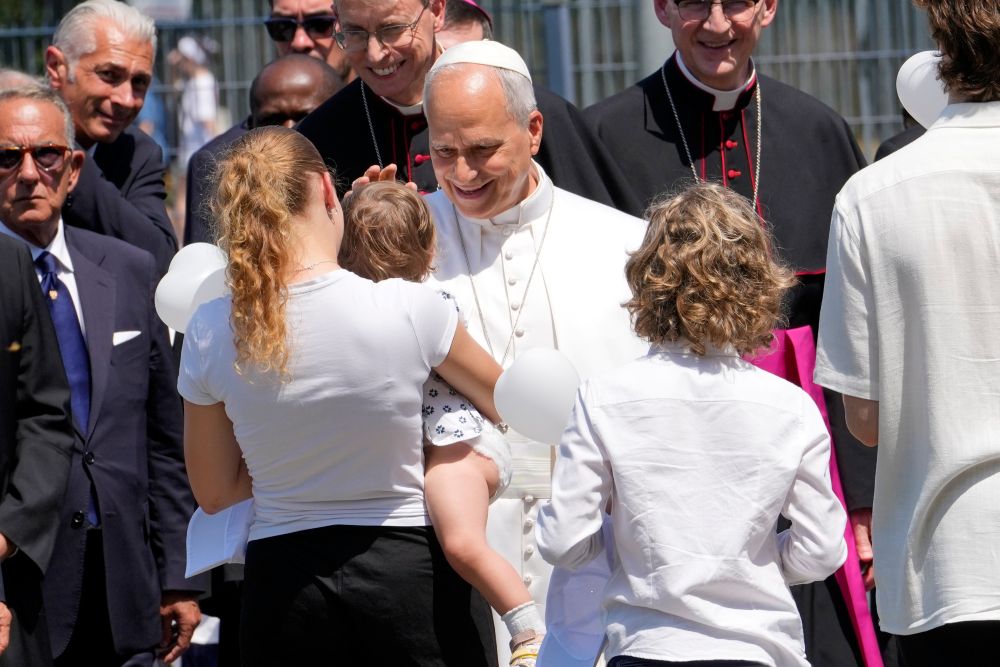
Pope Leo XIV is greeted as he arrives at Pavia, northern Italy, June 20, 2026. (AP/Luca Bruno)
Patron saint of migrants
Later he visited Sant'Angelo Lodigiano, the birthplace of Mother Frances Cabrini, the patron saint of migrants, exalting her as a model for Christians today to care for migrants in need.
As the late Pope Francis did before him, Leo has embraced the Catholic Church's Gospel-mandated call to "welcome the stranger" in his ministry to migrants. Last week, Leo spent two days in Spain's Canary Islands, a major destination for migrants leaving West Africa, where he called for welcoming and integrating those fleeing hardship and conflict.
Leo, who has clashed with the Trump administration over its migrant crackdown, urged young people in particular to learn about Cabrini’s life and service, once again confirming history’s first U.S. pope as the heir to Pope Francis in prioritizing the plight of migrants.
Leo prayed before Cabrini's tomb in a basilica named for her in her birthplace in Sant'Angelo Lodigiano, near Milan, and presided over an evening prayer service.
Advertisement
Cabrini is well known to many Americans for her work caring for Italian immigrants in the United States at the turn of the last century. Her work went beyond the U.S., however, as she crisscrossed the globe building schools, hospitals and orphanages for those who had nothing.
After she died in 1917, as a naturalized U.S. citizen in Leo's native Chicago, Cabrini was beatified and then canonized in 1946 as the first American saint.
In praising Cabrini, Leo said she was inspired by her faith to help those migrants who had left everything behind to try to find a better life.
"What could be more relevant today than a missionary charism dedicated to serving migrants?" he said.
"Let us ask ourselves: If Mother Francesca were alive today, what would her missionary spirit tell her?” Leo said. "And what would a pope like Francis — who, as the son of Italian immigrants, made service to migrants one of the key priorities of his pontificate — ask of her?"
"I therefore take this opportunity to make an appeal, especially to young people: get to know St. Frances Cabrini!" Leo said, urging them to read her writings, travel journals and notes from retreats.
Leo's next day trip is on July 4, when he heads to Lampedusa, the Sicilian island that is a major destination for migrants fleeing North Africa for Italy.
Nicole Winfield reported from Rome.
Editor's note: This story has been updated to include details about Pope Leo's visit to Sant'Angelo Lodigiano.