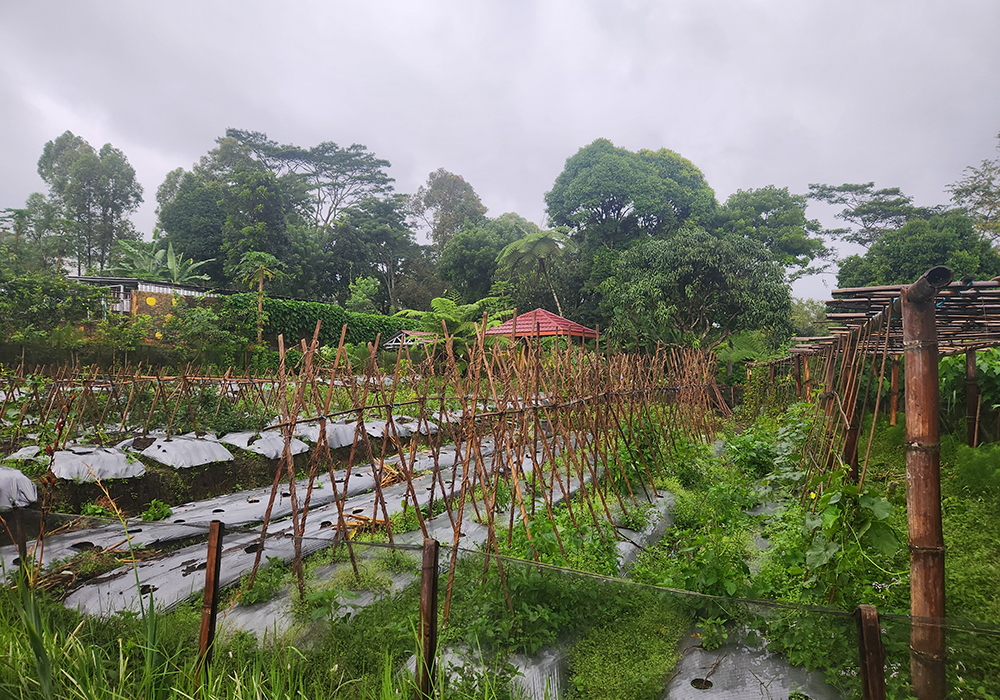
Well-tilled and cared for gardens at the convent of the Sisters of the Good Shepherd in Ruteng, Indonesia, reflect an environmental consciousness that the sisters affirmed even before Pope Francis' landmark 2015 encyclical Laudato Si'. (GSR photo/Chris Herlinger)

On a map, traveling from Maumere to Ruteng on the eastern Indonesian island of Flores looks easy enough — perhaps a 10-hour journey.
But the roads on this 225-mile-long island are extremely winding, and when you have to contend with frequent rainy-season downpours, travel becomes slower and more deliberate.
So, when I made the trip in late January, I heeded the advice of my travel companions, Divine Missionary Frs. Ignas Ledot and Karis Djuwa, that the journey take two days.

Indonesia's rainy season is evident along the coast of the island of Flores. (GSR photo/Chris Herlinger)
That ensured some safety and also the chance to see an island evolving — and facing a number of persistent challenges.
To an outsider, the challenges can sometimes appear hidden amid the island's striking physical beauty. Flores' lush verdant landscape can be breathtaking, as can rugged coastlines that are starkly beautiful even in the face of pending storms.
But Flores' challenges are real, with environmental concerns being very prominent. Fathers Ignas and Karis and I stopped briefly at Mataloko, a site of a geothermal mine that has garnered opposition from Archbishop Paulus Budi Kleden and "many of the faithful," as Father Karis put it, because of its environmental impact.
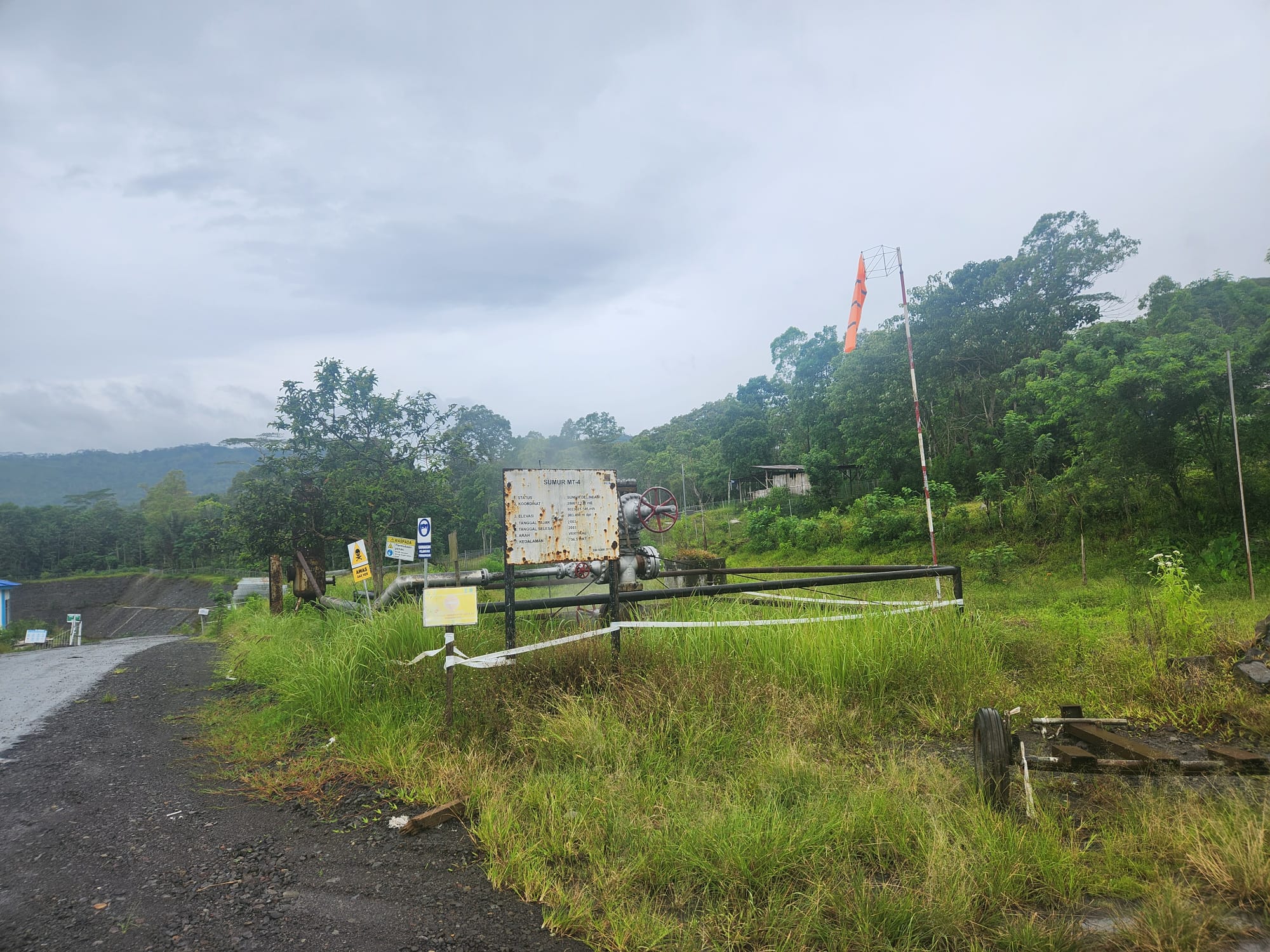
Outside a geothermal mine in Mataloko, which has garnered opposition from the Archdiocese of Ende, including Archbishop Paulus Budi Kleden (GSR photo/Chris Herlinger)
More broadly are worries about climate change. Anecdotally, my travel companions told me, the rainy season in Flores (roughly from November through March) had become more severe and menacing in recent years. That has led to more floods, posing risks to both urban and rural residents of what is Indonesia's only predominately Roman Catholic island.
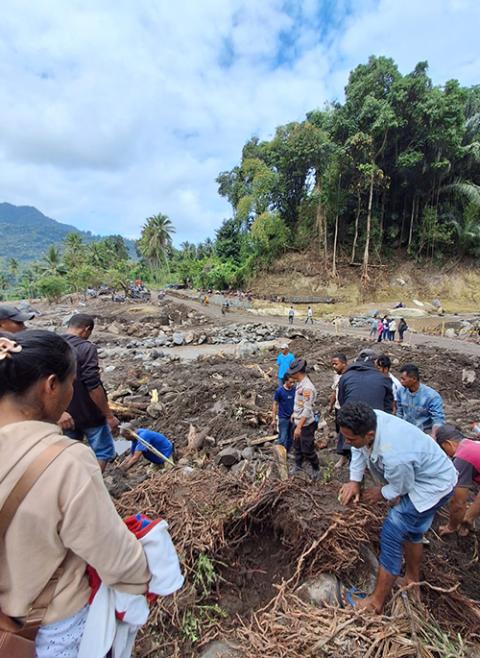
The aftermath of September 2023 flooding in the village of Maopomnggoh, about a two-hours' drive south of Soa on the island of Flores, Indonesia. (Courtesy of the Franciscan Missionaries of Mary)
A commitment 'from the depth of your heart'
During an overnight stop in the village of Soa the rains let up for a bit at night, but returned steadily in the morning, which is when I interviewed Sr. Yani Latief, a trained lawyer and member of the Franciscan Missionaries of Mary.
In Soa, Sister Yani balances ministries that include running a retreat house and bringing communion to the sick. Increasingly, that work includes disaster response, as floods and volcanic activity expose the vulnerability of local communities. Working with parishes and Catholic aid groups, the sisters distribute assistance while remaining focused on the needs of the poor — a commitment, she said, that "comes from the depth of your heart," having grown up in poverty herself.
That commitment includes paying attention to the larger structural issues at play, Sister Yani said. She understands that poor villagers will be drawn to building houses on or close to rivers, but that more must be done to mitigate those risks.
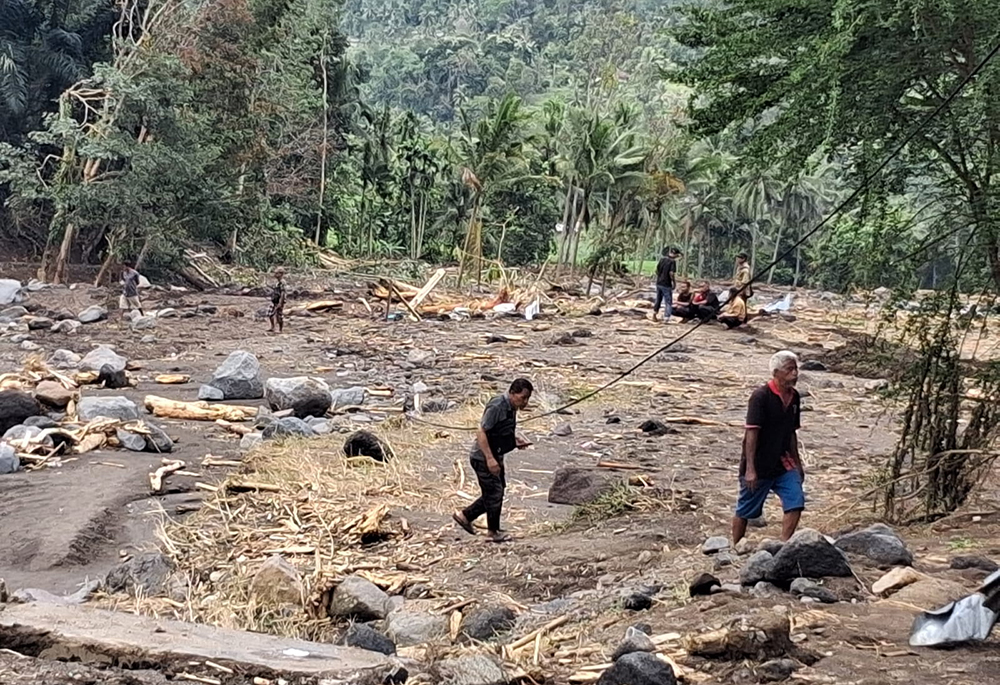
The aftermath of September 2023 flooding in the village of Maopomnggoh, about a two-hours' drive south of Soa on the island of Flores, Indonesia (Courtesy of the Franciscan Missionaries of Mary)
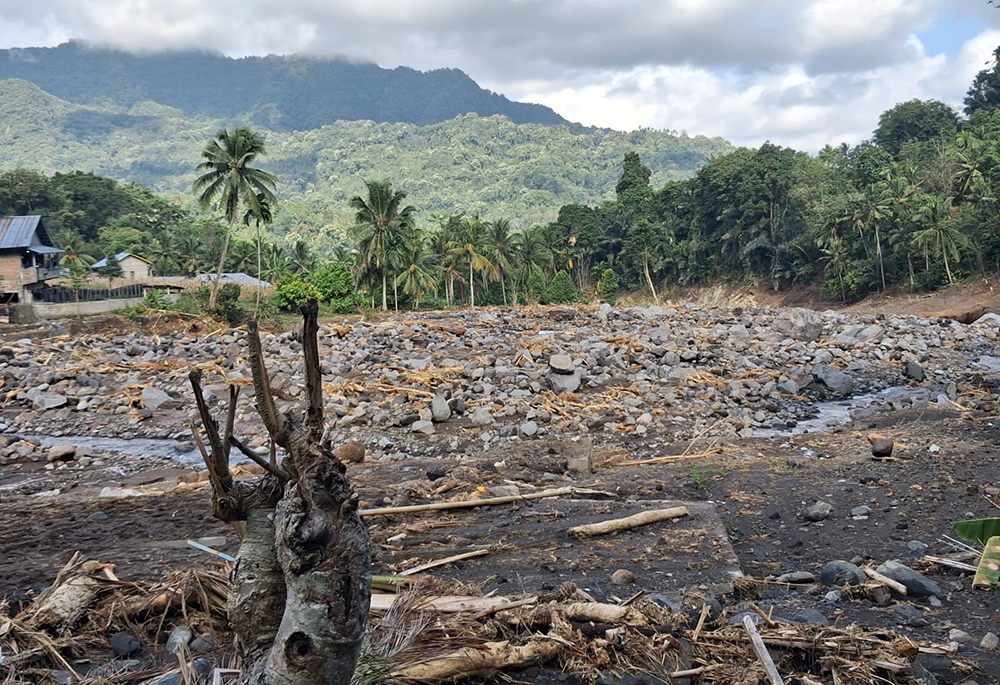
The aftermath of September 2023 flooding in the village of Maopomnggoh, about a two-hours' drive south of Soa on the island of Flores, Indonesia (Courtesy of the Franciscan Missionaries of Mary)
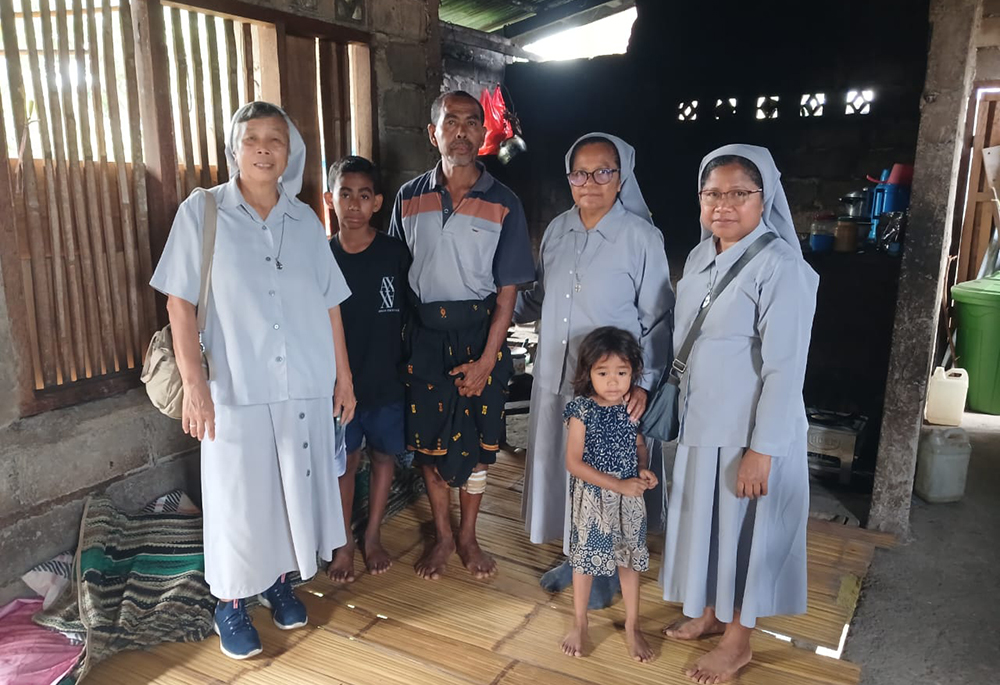
Members of the Franciscan Missionaries of Mary responded to 2023 floods in the village of Mauponggo, about a two hours' drive south of Soa on the island of Flores, Indonesia, where a group of the sisters reside. (Courtesy of the Franciscan Missionaries of Mary)
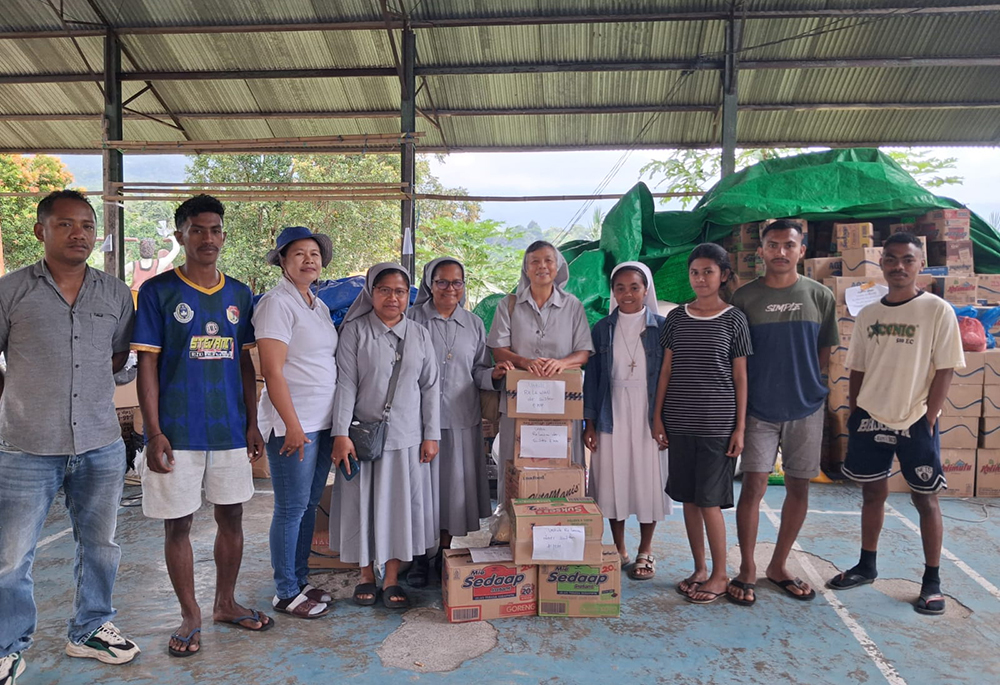
Members of the Franciscan Missionaries of Mary responded to 2023 floods in the village of Mauponggo, about a two hours' drive south of Soa on the island of Flores, Indonesia, where a group of the sisters reside. (Courtesy of the Franciscan Missionaries of Mary)
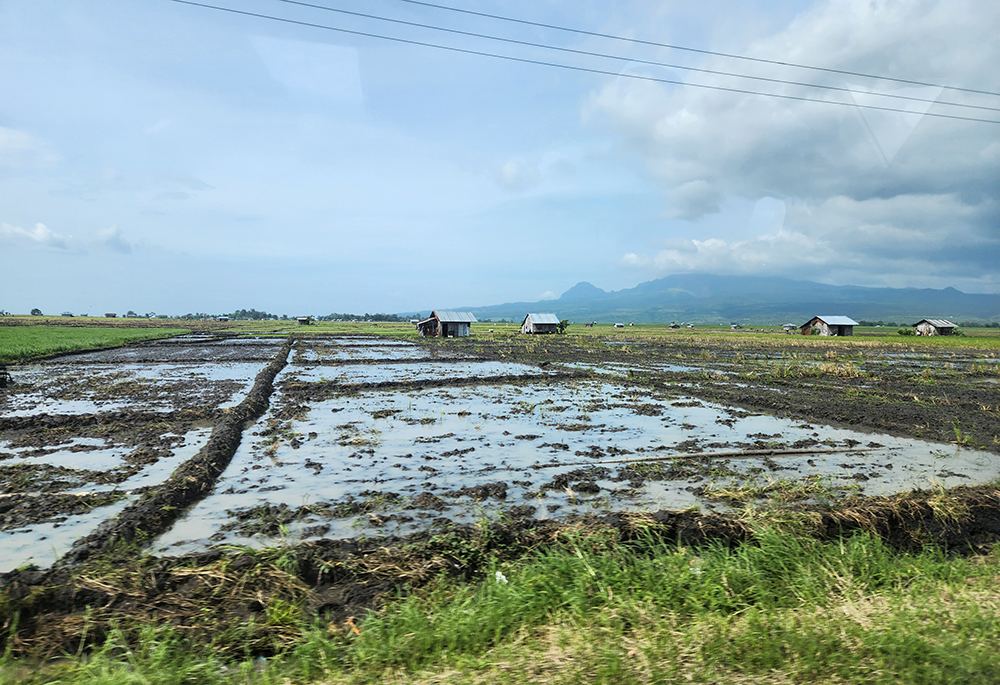
The evidence of heavy rains on farm fields on the Indonesian island of Flores (GSR photo/Chris Herlinger)
Underlining such concerns is the prevalence of poverty. The region around Soa is not desperately poor, she said, noting that most homes are built from concrete rather than more vulnerable bamboo.
Despite its natural beauty, poverty shapes life across Flores, Sister Yani said. Economic dependence often leaves women vulnerable, carrying the burden of domestic work while facing discrimination and gender-based violence, with their men engaged in drinking or gambling. "Women are suffering a lot," she said, stressing the importance of education and dignity, especially for children.
"I worry about the future."
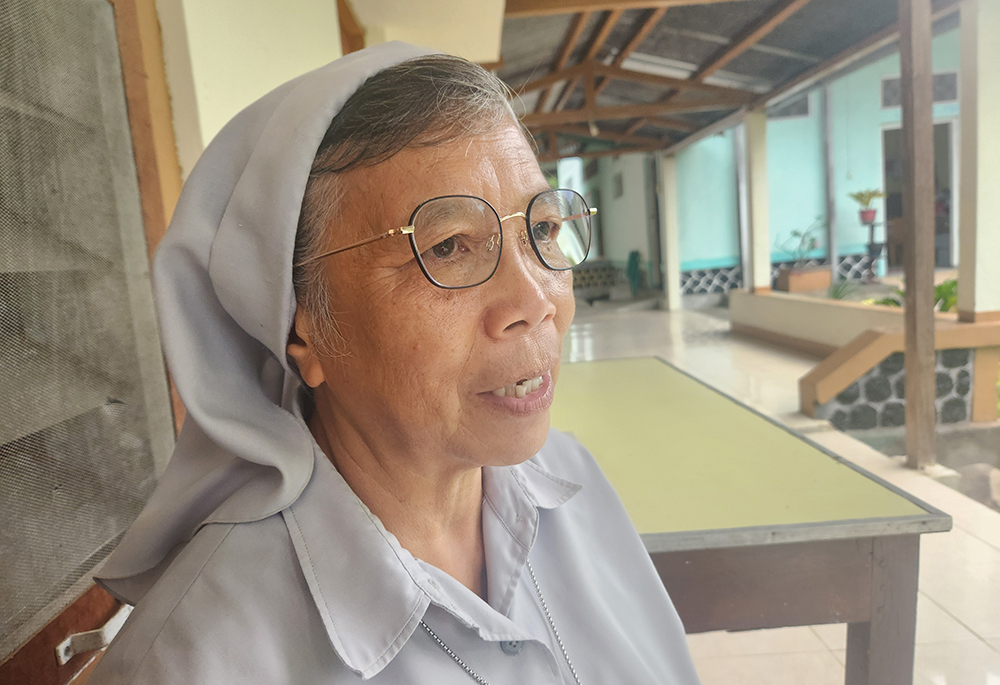
Sr. Yani Latief, a member of the Franciscan Missionaries of Mary, interviewed following an overnight stop in the village of Soa on the Indonesian island of Flores (GSR photo/Chris Herlinger)
A ministry focused on students in rented housing
The future, long-term and immediate, is also on the minds of the Sisters of the Good Shepherd I met in Ruteng who greeted me and Fathers Ignas and Karis after our two-day journey.
The rains continued: Storms cut off electrical power overnight and into the afternoon for about 16 hours.
The Good Shepherd sisters' convent, where I stayed, serves as residence for the sisters, as well as housing a shelter for abused women and their children; a retreat center for church groups; and as an outlet for crafts made by women and the sale of coffee grown by farming communities close to the sisters. The coffee is roasted and bagged on-site.
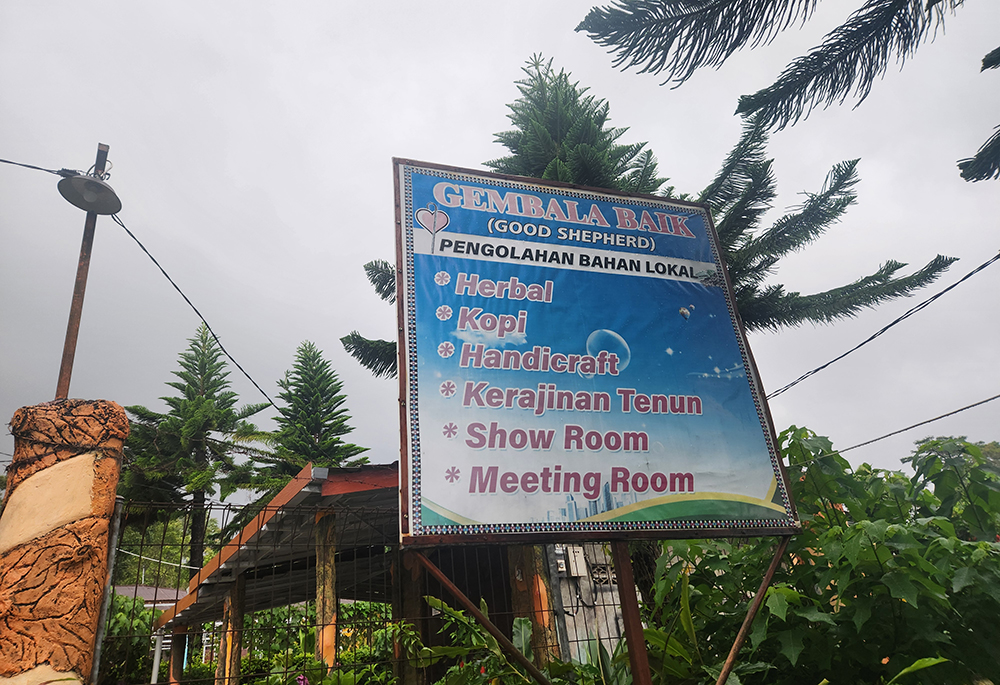
A sign outside the Sisters of the Good Shepherd's convent in Ruteng, Indonesia, notes the sisters' public ministries at the site, including a retreat center for church groups, and as an outlet for crafts made by women and the sale of coffee grown by farming communities near the sisters. (GSR photo/Chris Herlinger)
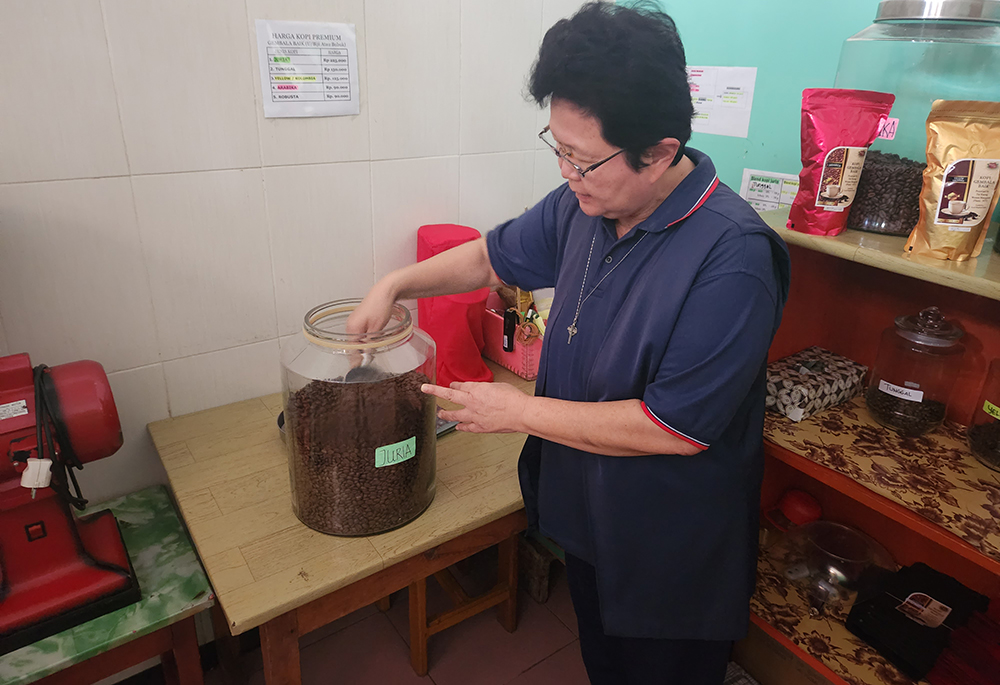
Good Shepherd Sr. Natalia Tanzil with coffee roasted and bagged on-site at the sisters' convent in Ruteng, Indonesia (GSR photo/Chris Herlinger)
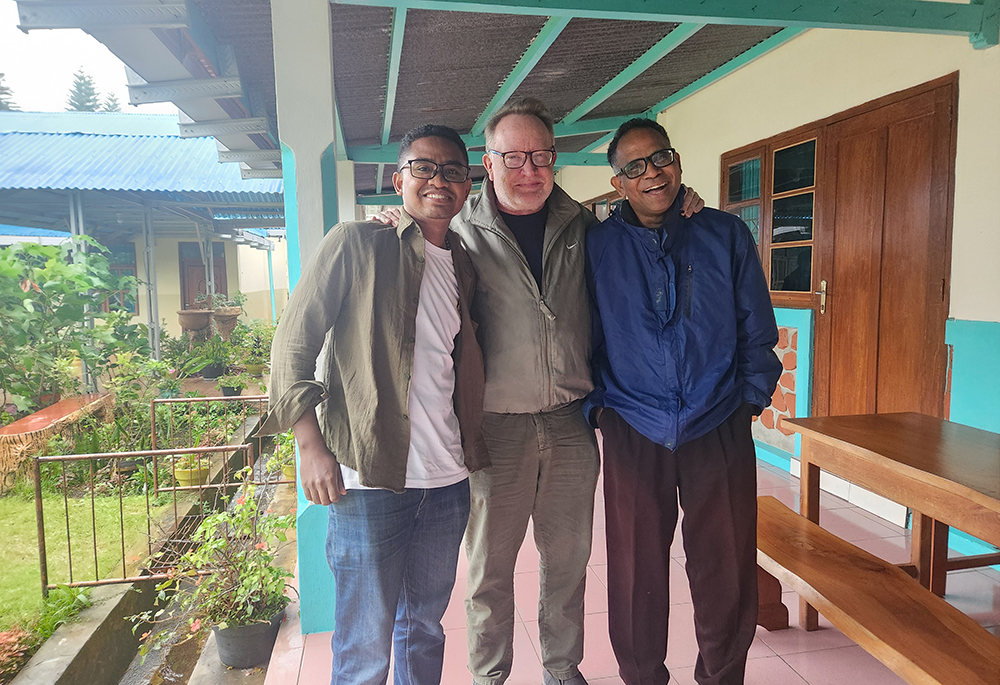
Divine Missionary Frs. Ignas Ledot, right, and Karis Djuwa, left, with GSR correspondent Chris Herlinger upon their arrival at the convent of the Sisters of Good Shepherd in Ruteng on the eastern Indonesian island of Flores. (Courtesy of Chris Herlinger/GSR)
A sense of peace prevails in this space, and that is partly due to the well-tilled and cared for gardens and center courtyard on a 24-acre site. That reflects an environmental consciousness that the sisters affirmed even before Pope Francis' landmark 2015 encyclical Laudato Si', with pioneering recycling and compost programs.
"To use and respect the land is part of our mission," Sr. Natalia Tanzil said.
A main focus of the Ruteng ministries, however, centers on a ministry to struggling students, many still teenagers, who are attending vocational schools and are residing in crowded and often unsafe rented housing.
A particular focus of the ministry is on helping girls and young women guard against being drawn into human trafficking.
That includes counseling, mentoring and social activities, and by working with humanitarian groups and local authorities, including police, to offer students some measure of safety and protection.
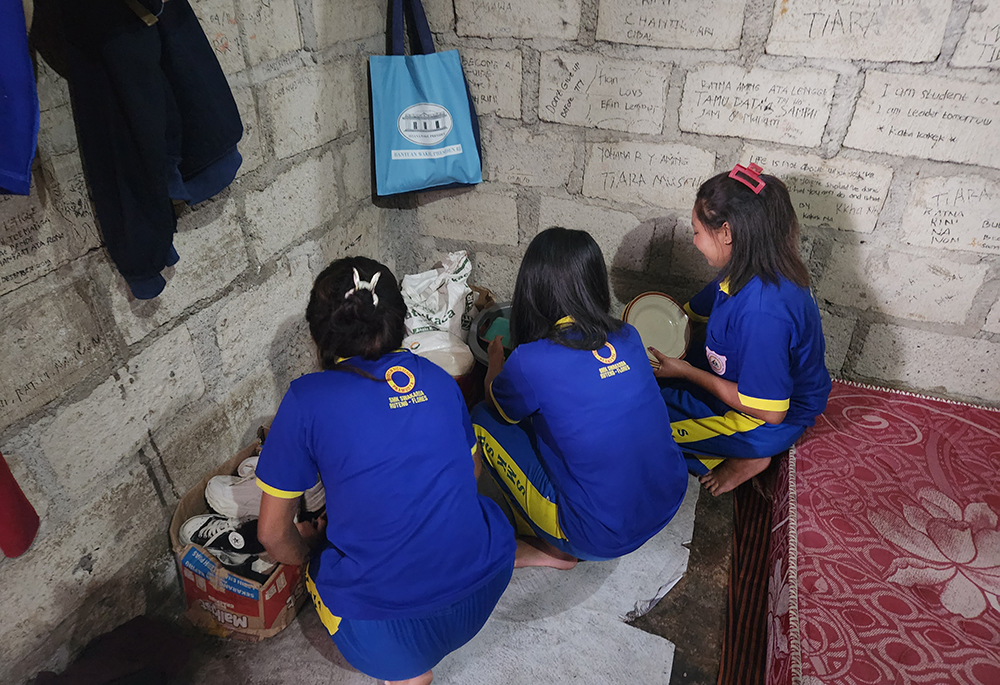
Three students in crowded rented housing in the city of Ruteng on the Indonesian island of Flores. The conditions of the housing and the well-being of the students are a focus of a group of Sisters of the Good Shepherd in Ruteng. (GSR photo/Chris Herlinger)
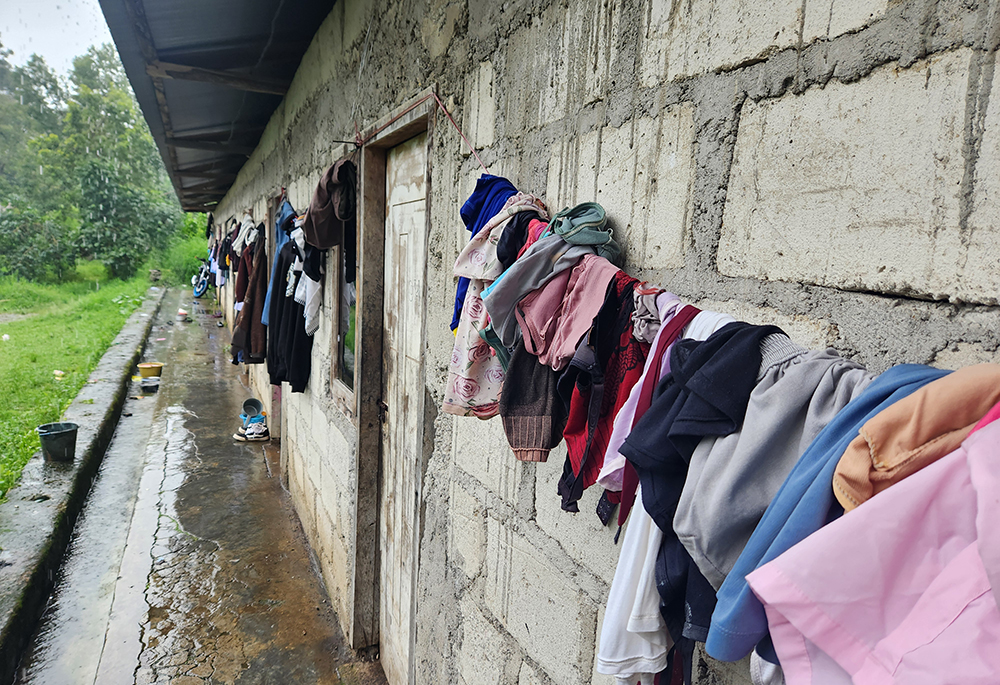
Blocks of rented housing occupied by students are pictured in the city of Ruteng on the Indonesian island of Flores. (GSR photo/Chris Herlinger)
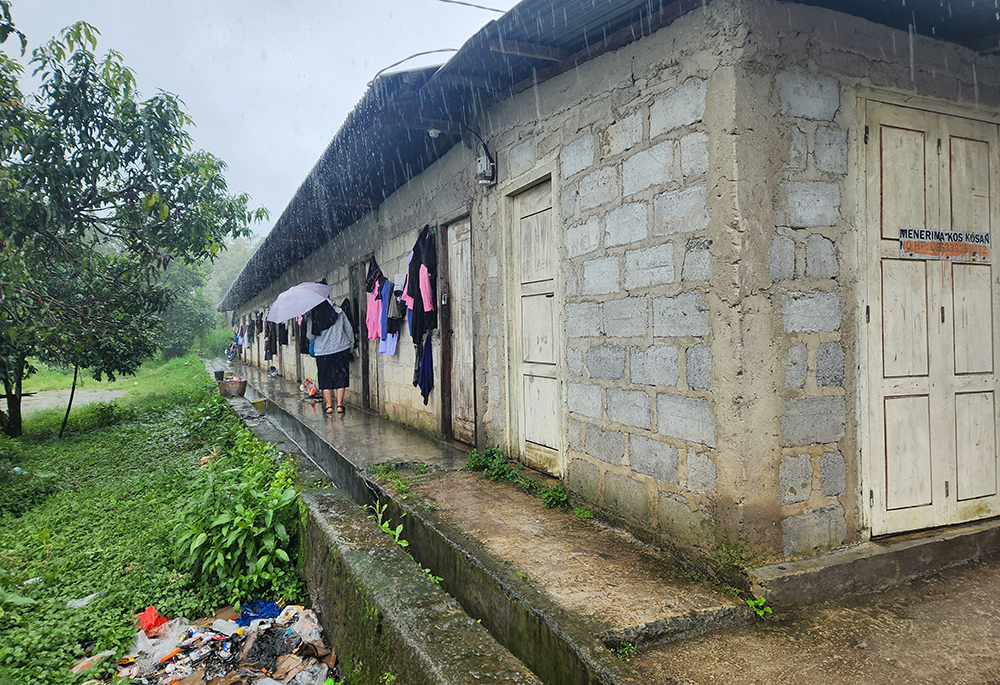
Blocks of rented housing occupied by students are pictured in the city of Ruteng on the Indonesian island of Flores. (GSR photo/Chris Herlinger)
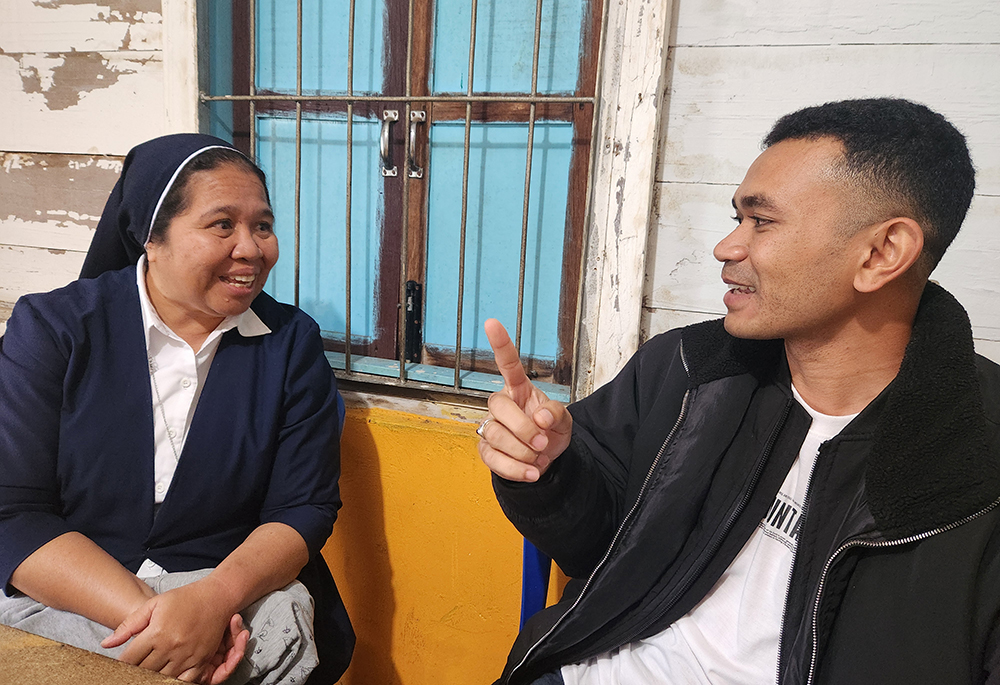
Sr. Flora Nirmala, unit leader of Good Shepherd Social Services in Ruteng, sits with Felix Magur, who heads governmental operations of the local subdistrict, who praised the ministries of the Good Shepherd sisters. (GSR photo/Chris Herlinger)
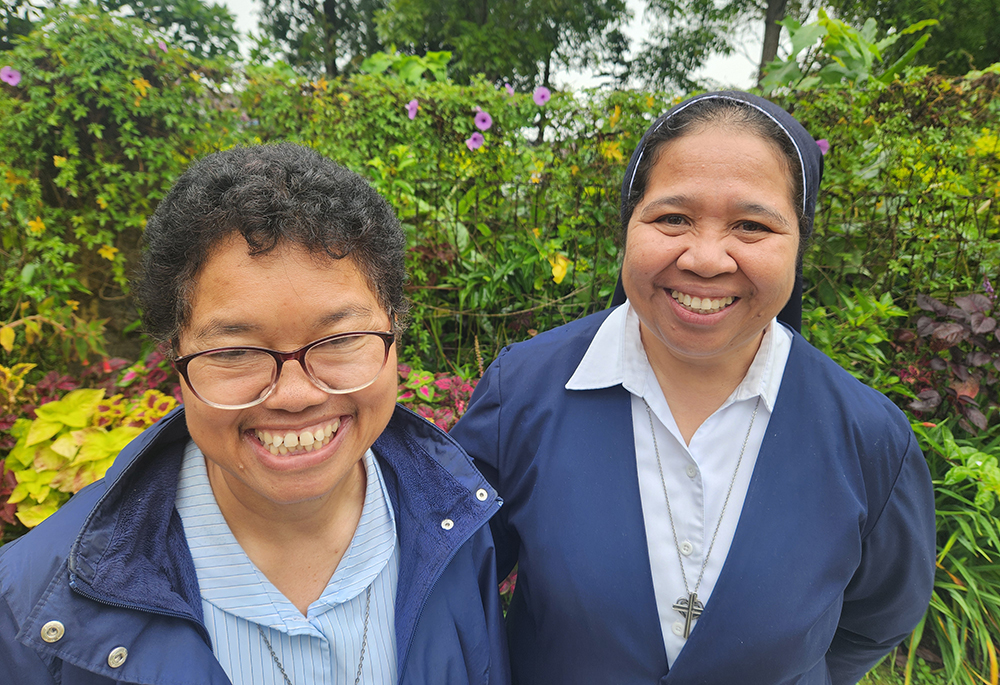
Good Shepherd Srs. Flora Nirmala, right, the unit leader of Good Shepherd Social Services, and Gabriella Mahos at the sisters' convent in Ruteng, Indonesia. (GSR photo/Chris Herlinger)
A foundation of the sisters' ministry is by engaging young people — about two dozen — in a cooperative program called Bring Changes, or BRIC, in Indonesian.
Rental housing for students is "a big industry" in Ruteng, since there is little institutional housing made available to about the 1,000 students, said Sr. Flora Nirmala, the unit leader of Good Shepherd Social Services in Ruteng.
"It's been part of the culture for this area," added Felix Magur, who heads governmental operations of the local subdistrict and who I interviewed one afternoon as the heavy rains continued.
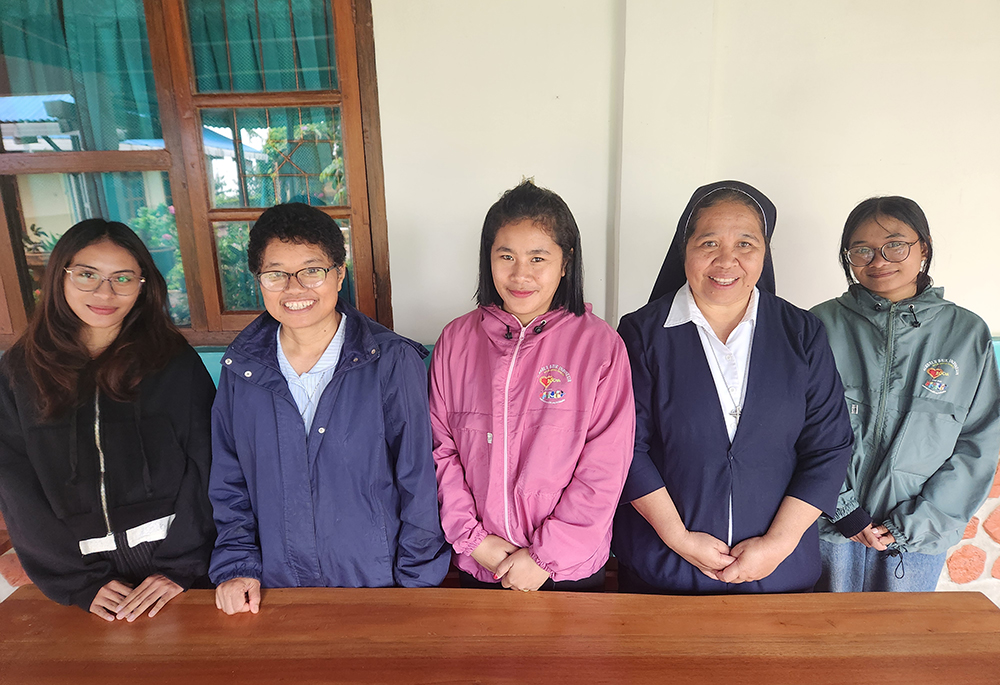
The staff of Good Shepherd Social Services in Ruteng, Indonesia, pose for a photo: From left to right, Eka Batmomolin; Good Shepherd Sr. Gabriella Mahos; Matildis Janu; Good Shepherd Sr. Flora Nirmala; and Giodaliva (GSR photo/Chris Herlinger)
That same afternoon I visited a row of the one-story, cinder block rental spaces, where conditions seemed hardly commodious; the space was noticeably cramped and offered no privacy — and with a small portable stove, seemed potentially unsafe.
It all pointed to some of Flores' ongoing challenges: students seeking schooling in order to improve their chances at work that might eventually take them to larger cities with better chances of work.
"There is a gap, a big gap, between the poor and the rich here," Sister Flora told me.
Advertisement
A ministry that offers stability to a community
Also present are the challenges endemic to girls and young women everywhere, including vulnerability to sexual abuse; being economically dependent on men; and dealing with the social advantages for males in schooling and employment.
"We always encourage girls to go to school because, through education, it's possible, even just a little bit, to change the patriarchal way," Sister Flora said during a roundtable interview with members of the Good Shepherd Social Services team.
"You can change a life through education," said Iva Delldon Batta, an administrative officer.
Working as a team of young people and sisters is important, and the joint ministry has won accolades from local government officials, including Magur.
"It's a social problem," Magur said of the challenges students face, adding that improving housing conditions for the students is a long-term civic goal.
"We are concerned about the living conditions and working on a solution," he said, that would include owners of the housing, students, government and the sisters and other groups.
In the immediate term, Magur said, the sisters' ministry is contributing to improving Ruteng's common life.
Being on the ground, the sisters offer stability and hope for the whole community, he said.
"We're very lucky to work with them."