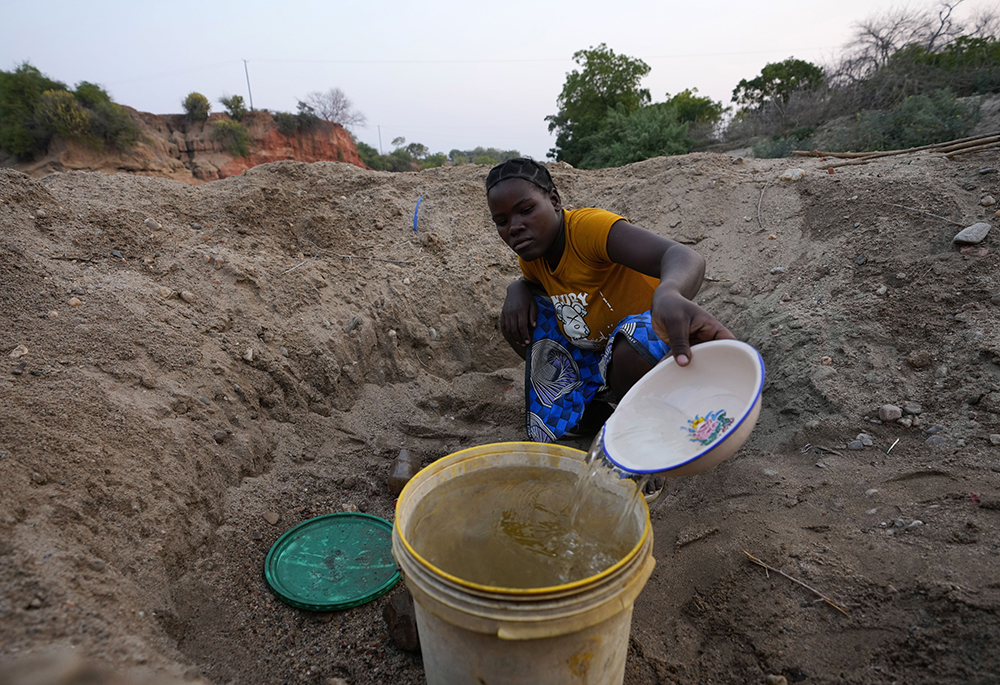
A woman scoops water from a hole she has dug in a dried up riverbed in Lusitu, Zambia, Sept. 18, 2024. (AP photo/Themba Hadebe)

by Doreen Ajiambo
In northern Kenya, drought can take away a pastoralist family's food and income when its livestock die. Yet the families Simone Ceciliani works alongside remain far removed from the climate funding intended to help them.
"As a person working every day on the ground with marginalized people in Nairobi and North Kenya, I witness the total disconnection between the communities most affected by climate change and climate finance," he said.
Ceciliani, a Nairobi-based member of the Community Pope John XXIII, went to COP31 seeking greater influence for those communities over funding decisions. Two sisters following the conference raised similar concerns about families losing homes, harvests and access to basic services.
Sr. Jean Quinn, executive director of UNANIMA International, wants assistance to reach shelters and women's groups serving displaced families. Sr. Constance Nsofwa, a Salesian sister in Zambia, proposed local grants that address food security, health care and energy together.
Their concerns extend beyond how much money governments promise. They want affected people to help determine what receives support and local organizations to have the resources to respond.
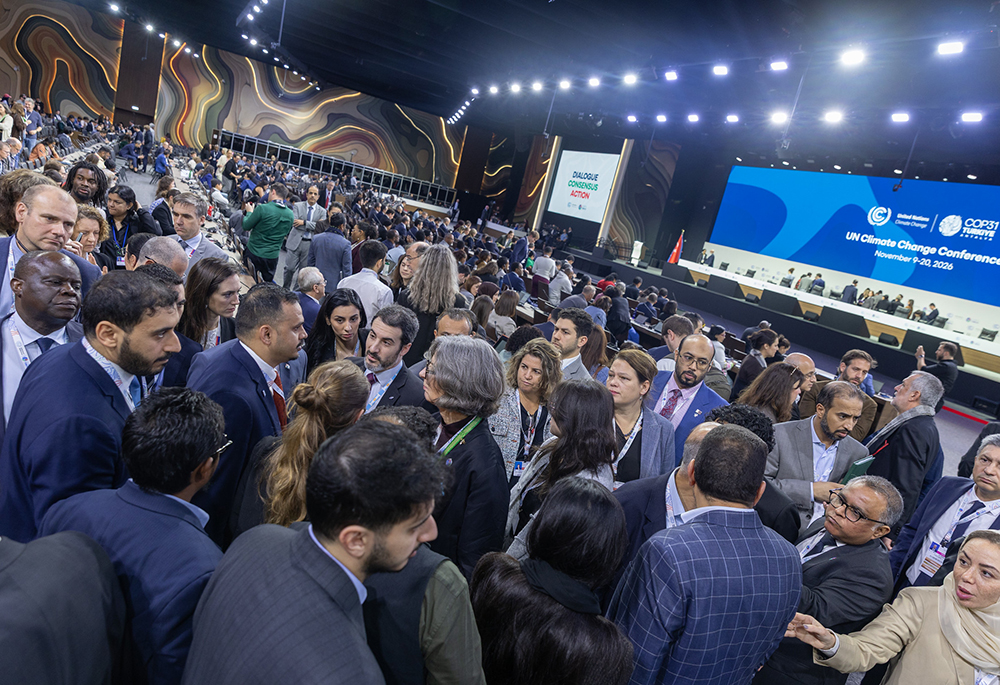
Delegates stand in the assembly hall Nov. 22 awaiting the conclusion of the final plenary at COP31 United Nations climate change conference in Antalya, Turkey. (UN Climate Change/Kiara Worth)
The United Nations climate conference in Antalya, Turkey, ended Nov. 22 without agreement on its main political texts. Governments adopted narrower decisions on adaptation and a just transition to cleaner economies, but left important operating details for 2027. The outcome leaves advocates pressing for stronger commitments while seeking improvements in how assistance reaches communities.
Quinn drew on experiences reported through UNANIMA's members in the Philippines, where losing a home can expose women to several risks at once. Displaced women may need sanitation, medical care and protection alongside somewhere to sleep.
"What communities need lies in the flow of direct, localized funding and the legal recognition of climate-induced homelessness," Quinn told Global Sisters Report.
She wants flexible resources for organizations providing emergency accommodation, protection services and mental health support. Such funding would allow local groups to address families' needs together as their circumstances change.
The loss of housing can also interrupt access to work and schools. A roof addresses an immediate need, but families may require continuing assistance to recover an income, obtain health care and keep children in class.
Quinn said UNANIMA and the Working Group to End Homelessness were advocating for women's experiences to shape climate finance, including support for grassroots shelters and local assistance networks.
She wants housing rights and human mobility included in the rules governing support from the Fund for Responding to Loss and Damage. This remains her proposal, rather than an entitlement adopted at COP31.
The distinction matters after Antalya. According to the U.N. climate secretariat, COP31 decisions on the Santiago Network (a U.N. initiative on delivering responses to climate change impacts) seek faster technical assistance and simpler access for vulnerable communities facing climate losses. That assistance is different from the direct funding Quinn wants for shelters and women's groups.
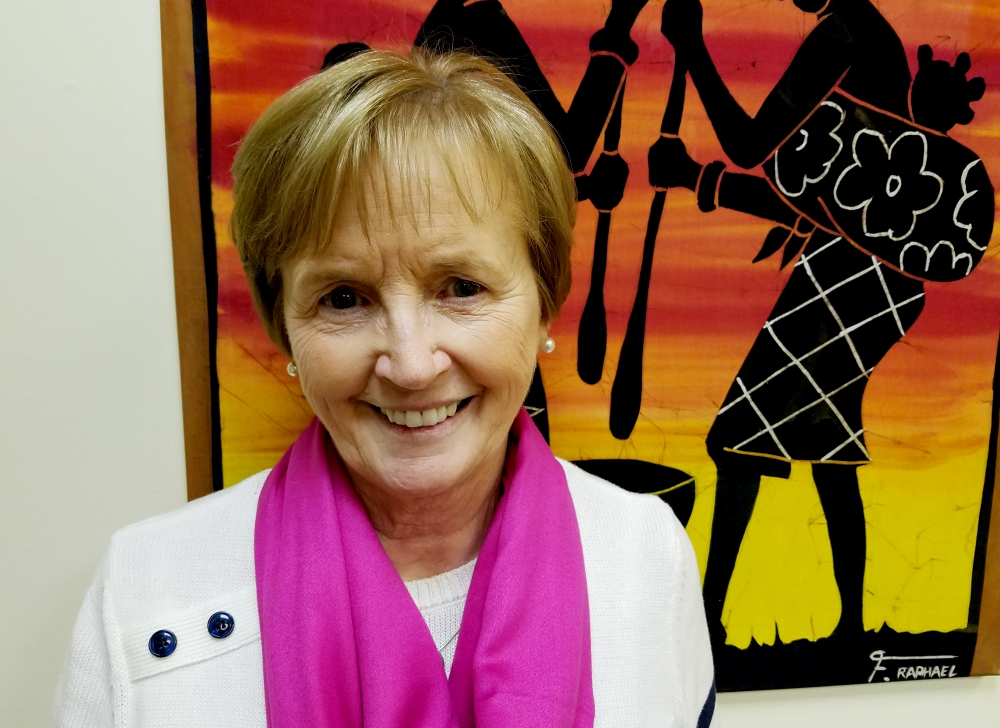
Daughter of Wisdom Sr. Jean Quinn, executive director of UNANIMA (GSR photo/Chris Herlinger)
Her proposal asks how improved access will translate into support for displaced families. Nsofwa's call to address food, health and energy together poses a similar test: whether climate programs respond to a household's connected needs rather than one shortage at a time.
The fund's first call for funding requests launched at COP30 and closed in June 2026. Its initial arrangements support country-led responses to climate losses.
Quinn's concern is how that international funding reaches organizations assisting displaced households. She wants the experiences of women seeking help to influence the decisions governing its use.
Advertisement
When shortages overlap
Nsofwa told GSR that food security, health care and affordable energy should be addressed together.
To explain those connections, she described how a rural student's education could depend on the family harvest, access to water and electricity. A failed crop can leave a child hungry. Fetching water can take time from school, while lack of electricity limits studying after dark.
Her proposed integrated fund for basic needs would provide local grants for food security, resilient health care and affordable clean energy. It would bring services often considered separately into the same funding discussion.
For a household facing several shortages, help with one may leave other barriers unresolved; food assistance alone cannot restore access to water or electricity. Nsofwa wants funding decisions to reflect those relationships.
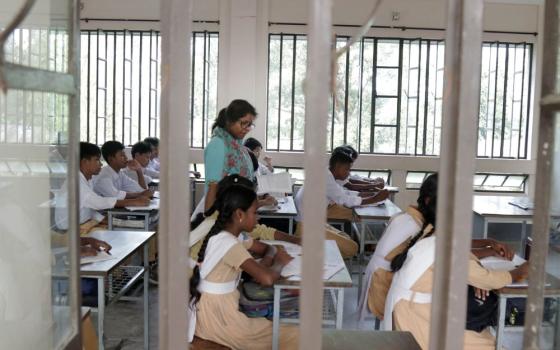
Her proposal connects climate assistance to the conditions children need to remain in school, as well as the resources adults need to support them.
Nsofwa also described prayer vigils and spiritual advocacy as ways to press leaders toward ethical decisions.
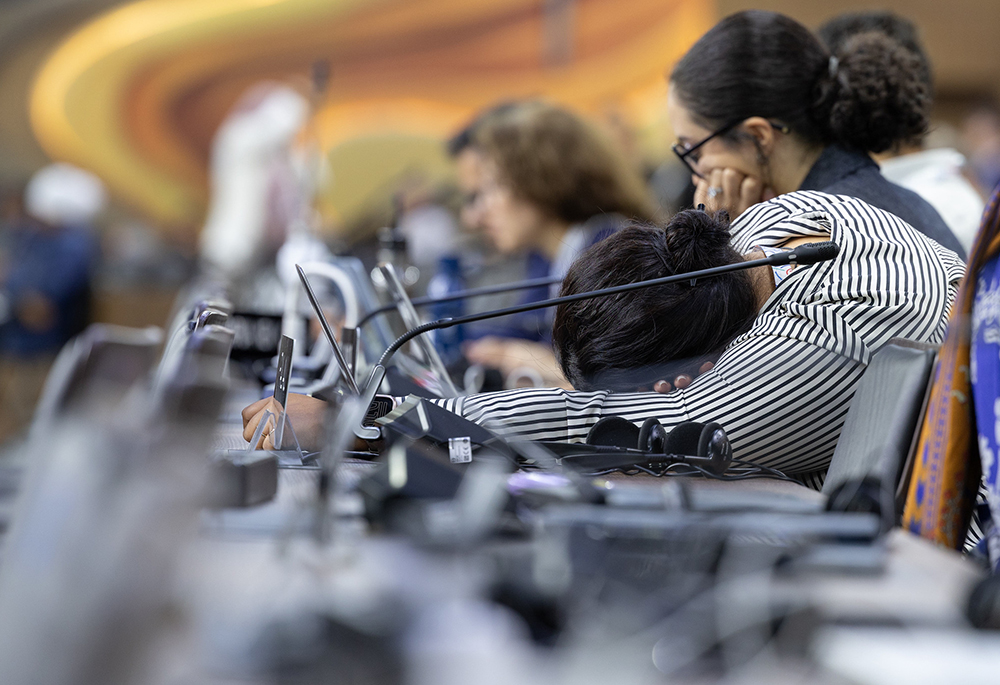
A woman rests her head during the final plenary Nov. 22 at COP31 United Nations climate change conference, the longest in the meeting's three-decade history. (UN Climate Change/Kiara Worth)
Lisa Sullivan, senior program officer for integral ecology at the Maryknoll Office for Global Concerns, urged faith communities to keep organizing after the deadlock. In an update circulated after the summit, she argued that governments willing to act should proceed without waiting for unanimous agreement.
"Walking away from a bad deal isn't surrender — it's integrity," she wrote.
Sullivan pointed to the second International Conference on Transitioning Away from Fossil Fuels, co-hosted by Ireland and Tuvalu, as an opportunity to advance that work. She also encouraged participation in the Global Faiths Rising week of action, April 4-11, 2027, calling for a fossil fuel phaseout and a fair transition to renewable energy.
A say in the spending
In northern Kenya, Ceciliani wants residents to understand how funding decisions are made, so they can participate and question how resources are used.
The pastoralist communities his organization accompanies face hunger, water scarcity and livestock losses during drought, he said. He called for funding mechanisms that reach grassroots organizations and stronger safeguards against misuse of public money.
"Governance and decision-making processes of climate finance funds and initiatives must be centred on meaningful participation, transparency and democratic control," he told GSR.
His organization was attending its second COP and was still learning how to navigate negotiations, he said. He wants education about the process to extend to residents themselves, rather than leave them dependent entirely on representatives.
That concern complements the sisters' proposals: Local groups need access to resources, and the people they serve need influence over the choices made on their behalf.
Filipe Martins, director of the Belgium-based Jesuit European Social Centre, said communities should help establish priorities before programs are designed and assess whether they work afterward.
Drawing on colleagues' work in Bendum, an Indigenous community in the Philippines, he cited food and water insecurity among families dependent on rainfall. He pointed to locally led adaptation grants that could support water security, agroecology and livelihoods.
Such participation also places responsibilities on organizations representing communities. Residents' involvement must continue after their experiences have been presented at an international conference.
For Quinn, women's accounts of displacement should shape decisions about housing and protection. Nsofwa wants local grants to address connected needs. Ceciliani wants families to understand and question funding decisions themselves.
"Communities also need greater influence over the decisions themselves," Martins said, "as too often their experience is heard at a side event but carries little weight when priorities and funding are decided."