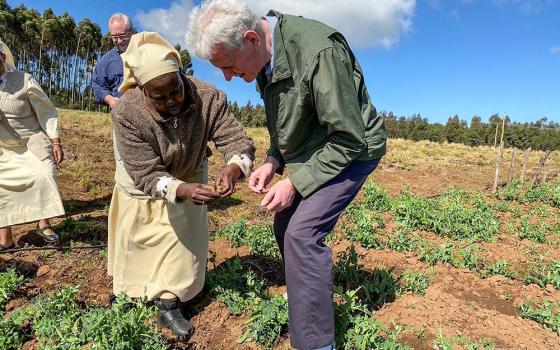
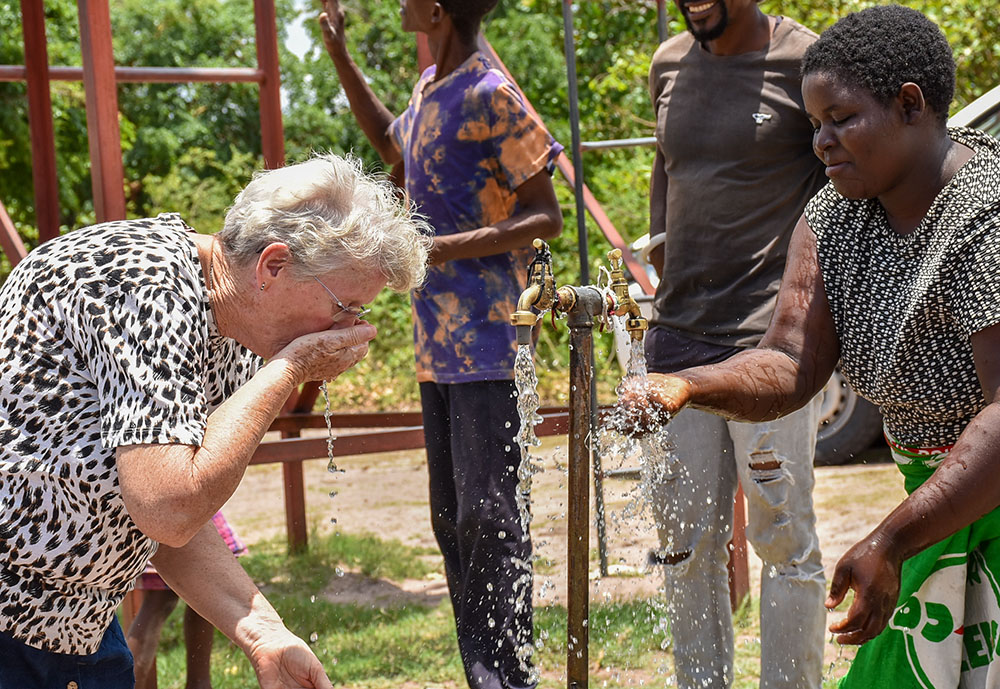
Presentation Sr. Cathy Crawford, left, and Winnie Liywali, right, inspect a borehole in Mwanambinyi, Zambia. (Derrick Siliminia)

by Derrick Silimina
In the heart of Mongu, Zambia, Sibeso Mulonda recalls suffering from a diarrheal disease not with the searing memory of pain, but with a horrifying sensation of death.
"I struggled with severe dehydration and later discovered that I had an abdominal infection after ingesting contaminated water, which posed a threat to my health," Mulonda told Global Sisters Report.
Mulonda, a fish trader at Mulamba Harbour, some 580 km from the capital of Lusaka, described her illness as so severe that during her feverish state, it felt as though the disease pulled her vital organs down, leaving her helpless against the unseen bacterial poison and stripping her of strength and life.
The moment of recovery was a pivotal point in Mulonda's experience, highlighting the importance of access to clean water, symbolized by the sweet taste of the oral rehydration salts her mother brought from a mission clinic.
"My predicament indicates how inadequate access to clean water poses serious health risks, hence the vital role of improved sanitation and water management in safeguarding community health and well-being," she said.
For this reason, the Sisters of the Presentation of the Blessed Virgin Mary's efforts in sinking deep wells and installing water pumps in the Mongu district are instrumental in improving access to clean water, as their initiatives support self-reliance among community members and help raise living standards.
The religious sisters' water projects, supported by Irish partners and the International Presentation Association through the Clean Water Initiative program, play a crucial role in improving health outcomes in affected communities. Their efforts contribute significantly to disease prevention and promote better sanitation and health conditions in vulnerable populations.
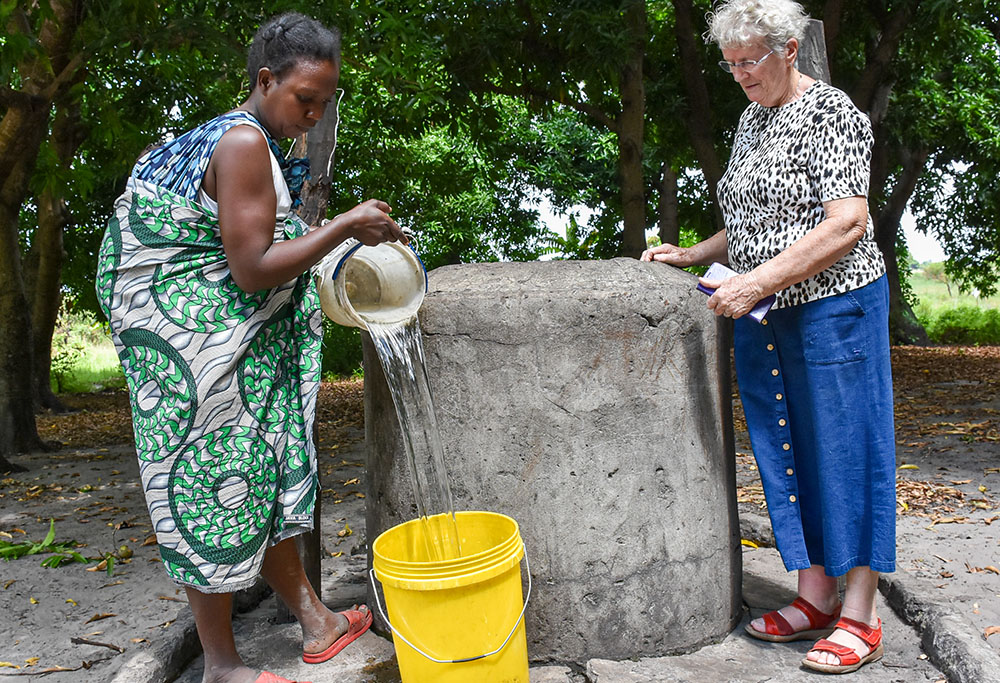
Chiyaze Biemba, left, and Presentation Sr. Cathy Crawford fetch water in one of the deep wells provided by the Sisters of the Presentation of the Blessed Virgin Mary in Singanda village at the edge of the Barotse floodplains in Mongu, Zambia. (Derrick Siliminia)
Since the 1990s, Sr. Cathy Crawford, a member of the Presentation Sisters, has actively participated in various development projects, notably contributing to Cheshire Home, a rehabilitation center in Mongu for children with disabilities. As circumstances in the local area evolved, her religious organization expanded its efforts to include additional programs like the Clean Water Initiative and building housing units for vulnerable communities.
"In 2005, due to drought in the Mwanambinyi and Mukulo areas along the edge of the Barotse Floodplain, we came to the community's rescue and sunk 12 deep wells and a borehole. Each of the wells was equipped with a windlass system of a bucket and chain to fetch the water as well as a steel cover on each to ensure the safety and cleanliness of water," Crawford told GSR.
Crawford, who arrived in Mongu more than 30 years ago, explained that the expansion of the organization's efforts demonstrates its adaptive strategy to meet the evolving needs of the community. Currently, the initiatives benefit more than 5,000 families in the villages along the edge of the plain and those living within the plain itself.
"The water proved to be a real godsend for the people because it provided a constant source. The wells never dried up. Even in seasons of very little and no rain, there was water. People were able to water small gardens, provide water for animals, and most importantly had clean drinking water throughout," she said.
Crawford said that the borehole in the Mwanambinyi community was equipped with a submersible pump and connected to electricity, facilitating water access in a newly developing area where residents were being allocated plots for housing. The community demonstrated ownership of the project by organizing maintenance and ensuring the sustainable use of the water supply, addressing a critical need in an area previously lacking nearby water infrastructure.
Advertisement
She said that the project primarily benefits women and children, who are typically responsible for fetching water. The Clean Water Initiative has eliminated the need for a water search, allowing children to attend school without the burden of water collection, thereby supporting their education and overall well-being.
Crawford, 80, said the water project has empowered people to cultivate a variety of vegetables, including tomatoes, cabbage, rape, okra and other traditional local varieties. When these vegetables are ready for sale, the community has a market at Mongu's Cheshire Home and various guesthouses around town, which enables beneficiaries to earn cash for their daily needs.
"It's amazing the difference it has made to people's productivity and initiative, considering that this project was the only one of its kind in the Mongu area, providing water for people not supplied by the Water Department because of distance from the mains supply," she said.
The communities along the edges of the Barotseland floodplain remain heavily reliant on shallow wells for their water supply, despite the area's scenic beauty.
In late 2023 to 2024, Zambia faced a severe cholera outbreak, with cases exceeding 23,000 and hundreds of deaths. The outbreak especially impacted children in Lusaka and drought-affected areas, highlighting significant public health challenges and the vulnerability of specific populations during such crises.
Similar to Mulonda's experience with contaminated water, Mubita Musangwa's horticulture business in Mongu's Mwanambinyi area illustrates how the dry season and water scarcity directly impacted agricultural productivity and livelihoods in arid western Zambia.
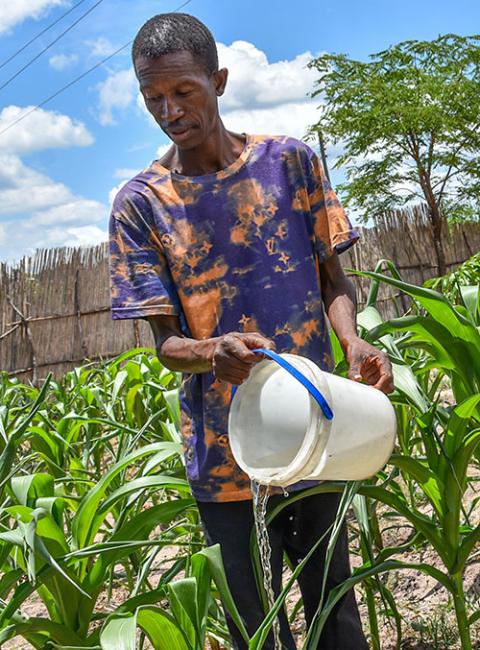
Mubita Musangwa, one of the beneficiaries of the water project in the Mwanambinyi area of Zambia (Derrick Siliminia)
"I fail to sustain my vegetable garden during the dry season due to limited water supply from a drying water hole, which disrupts horticultural activities and affects my income stability," Musangwa said.
Crawford said that her congregation's charism, which revolves around hospitality, caring for the sick and the most vulnerable, and educating those at the margins of society, aligns with the values of service and compassion demonstrated in the lifelong efforts of the congregation's founder, Nano Nagle.
Inspired by Nagle to make a positive impact on people's lives, Crawford initially worked several years as a social worker in Ireland. When she accepted an assignment to join the Presentation Sisters' mission in Mongu, she embraced the role willingly.
"Our work in Mongu, particularly on women and children, demonstrates hospitality to address various needs that arise regularly. I feel we are following in the footsteps of Nano Nagle, our foundress," Crawford said. "It gives me inspiration and courage to remember that I'm part of the larger Presentation family and working with people has given and taught me much more than I have given them. For that, I will always be grateful."
For Winnie Liywali, the sisters' approach went beyond simply gifting the water borehole to the Mwanambinyi community; they also established a water committee and provided training in maintenance and basic sanitation, ensuring sustainable management of the resource.
"This bolehole is an asset in the surrounding villages with over 20 household beneficiaries in the Mwanambinyi area. We are very grateful for the sisters to come to our aid and have access to clean running water because our livelihoods have significantly improved," said Liywali.
Musangwa credits the success of his horticultural business to the water facility, which enables year-round irrigation. He specifically attributes this achievement to the sisters' timely water project initiative, highlighting the impact of their intervention on sustaining his business activity throughout the year.
"I am super excited because the water facility has enabled my vegetables and orchard to be irrigated consistently, transforming my business from seasonal to year-round green productivity."